
New UN websites & publications
UN in General
2023-2024 Human Development Report – Breaking the gridlock: Reimagining cooperation in a polarized world (UNDP)
English, French & Spanish: https://hdr.undp.org/content/human-development-report-2023-24

Why does pursuing the ambitions of the 2030 Agenda for Sustainable Development and the Paris Agreement feel like a half-hearted slog through quicksand? Why in many places does restoring peace, even pauses or ceasefires as hopeful preludes to peace, feel so elusive?
Why are we immobilized on digital governance while artificial intelligence races ahead in a data goldrush? In short, why are we so stuck? And how do we get unstuck without resorting myopically to violence or isolationism? These questions motivate the 2023/2024 Human Development Report.

https://desapublications.un.org/publications/financing-sustainable-development-report-2024
A new UN report – published on 9 April 2024 – says financing challenges are at the heart of the world’s sustainable development crisis – as staggering debt burdens and sky-high borrowing costs prevent developing countries from responding to the confluence of crises they face. Only a massive surge of financing, and a reform of the international financial architecture can rescue the Sustainable Development Goals. The report says urgent steps are needed to mobilise financing at scale to close the development financing gap, now estimated at USD 4.2 trillion annually, up from USD 2.5 trillion before the COVID-19 pandemic. Meanwhile, rising geopolitical tensions, climate disasters and a global cost-of-living crisis have hit billions of people, battering progress on healthcare, education, and other development targets. With only six years remaining to achieve the SDGs, hard-won development gains are being reversed, particularly in the poorest countries. If current trends continue, the UN estimates that almost 600 million people will continue to live in extreme poverty in 2030 and beyond, more than half of them women.
The Blue Book collection (1946-1994) – Newly digitized
https://tinyurl.com/52yf3348
Who was the Vietnamese ambassador in 1987? Where is a list of Togolese ambassadors from the 1970s? Who were the members of the Chilean Mission in 1965? If you ask a UN research librarian, they will likely inform you that the best source for answering such questions is the Blue Book. The Blue Book is a list of the representatives of Member States to the United Nations. The official title of the New York edition is “Permanent Missions to the United Nations”, but it is better known by its popular title which owes to the blue cover colour of the earlier print edition. The Blue Book is prepared by the UN Protocol and Liaison Service as a service to delegations and Secretariat staff. It comprises comprehensive lists of permanent missions of Member States, permanent observer missions, and permanent observer offices accredited to the United Nations.
Until recently, information about Member State delegations from 1946 to 1994 could only be found in print copies of the Blue Book. Consulting these physical books for historical information was a time-consuming process for librarians and researchers. But now, the Dag Hammarskjöld Library has digitized 276 volumes of the Blue Book covering the period from 1946 to 1994. From this year onward, the Blue Book was published in digital format. The complete collection from 1946 to today is now conveniently accessible and searchable in the UN Digital Library. Additionally, a real-time version of the current Blue Book is available on the Protocol website. In the past, the changes to print versions of the Blue Book were recorded in weekly addenda. The Dag Hammarskjöld Library holds the physical copies of these addenda and is working to make them available online.
iGov: Portal to the work of intergovernmental bodies
https://igov.un.org/
Ever wonder where to easily access information on formal and informal meetings of UN intergovernmental bodies? Check out the newly launched iGov. Serving as the public face of e-deleGATE, iGov is a gateway to intergovernmental data. It allows users to cross-reference meetings, documents, and agenda items and obtain comprehensive information across different search criteria. It provides a snapshot overview of future and past meetings with links to the list of speakers, voting results, and other relevant materials such as those from informal documents and letters. iGov gives access to the latest information on the schedule of meetings, lists of proposals, draft and adopted resolutions and decisions, and documentation. Created by the General Assembly and Economic and Social Council Affairs Division of the Department for General Assembly and Conference Management (DGACM), iGov is part of the Secretariat’s response to mandates contained in General Assembly resolution 77/335, which calls upon its subsidiary organs to use, as much as possible, existing e-deleGATE modules and requested the Secretariat to consolidate such services. The initiative enhances the quality and availability of information on intergovernmental bodies for Member States, observers, UN entities, civil society, and the wider public. With a mobile-friendly design, iGov can be navigated using a keyboard and screen readers. The static text in the portal is available in all six UN languages. The current launch comprises information related to the General Assembly Plenary and the Third Committee.
Economic Growth and Sustainable Development
Communicating on climate change and health: Toolkit for health professionals (WHO)
https://www.who.int/publications/i/item/9789240090224


https://knowledge.unv.org/evidence-library/the-contribution-of-volunteering-to-climate-action-and-community-resilience
The report provides concrete evidence of how volunteers all over the world proactively engage in actions that help communities adapt to, as well as build resilience against, the impacts of climate change. The report contains case studies from Guatemala, India and Kenya. The effects of climate change have both immediate and long-term consequences that pose serious threats to food security, livelihood and the economy. To tackle this issue effectively, urgent action is required on three fronts: mitigating carbon emissions, adapting to reduce climate risks and addressing the losses caused by unavoidable climate risks. Volunteers at the local and global levels are critical for climate action – their efforts take different forms, from grassroots community initiatives to specialized support on a global scale. The report demonstrates the indispensable role of community volunteers in driving climate action and building resilience. Essentially contributing to four key areas: knowledge and capacity building, disaster preparedness and response, mitigation and adaptation measures, and climate governance.

https://tinyurl.com/545p5d4f
Removing discriminatory laws and putting in place legal frameworks that advance gender equality are prerequisites to ending discrimination against women and achieving gender equality (Sustainable Development Goal 5, Target 5.1). SDG indicator 5.1.1 is a key tool to track progress. This infographic: – analyses the latest data on this indicator for 120 countries, – emphasizes the importance of strong legal frameworks that advance gender equality, – showcases good practices by countries, – discusses continuing legal gaps, and – highlights priority actions to enhance progress.
Directory of resources for planning healthy environments
https://www.who.int/tools/integrating-health-in-urban-and-territorial-planning–the-directory
In an effort to address the pressing global challenges from environmental risks, the World Health Organization (WHO) has unveiled a comprehensive directory of resources aimed at guiding urban planners, policymakers and communities towards healthier environments. With around one quarter of human deaths globally attributed to environmental factors, and air pollution associated with 7 million premature deaths annually, prioritizing health in the planning and design of urban spaces has never been more critical. The directory, comprising nearly 200 open-access resources, serves as a vital online repository which offers invaluable insights and tools to promote the creation of healthier environments and enhance the well-being of communities worldwide.
The Economic Impacts and the Regulation of AI: A Review of the Academic Literature and Policy Actions (IMF Working Paper No. 2024/065)
https://www.imf.org/-/media/Files/Publications/WP/2024/English/wpiea2024065-print-pdf.ashx
We review the literature on the effects of Artificial Intelligence (AI) adoption and the ongoing regulatory efforts concerning this technology. Economic research encompasses growth, employment, productivity, and income inequality effects, while regulation covers market competition, data privacy, copyright, national security, ethics concerns, and financial stability. We find that: (i) theoretical research agrees that AI will affect most occupations and transform growth, but empirical findings are inconclusive on employment and productivity effects; (ii) regulation has focused primarily on topics not explored by the academic literature; (iii) across countries, regulations differ widely in scope and approaches and face difficult trade-offs.
FAO Publications – Potatoes: So Familiar, So Much More to Learn
English: https://www.fao.org/publications/home/news-archive/detail/potatoes-so-familiar-so-much-more-to-learn/en
French: https://www.fao.org/publications/home/news-archive/detail/potatoes-so-familiar-so-much-more-to-learn/fr
Spanish: https://www.fao.org/publications/home/news-archive/detail/potatoes-so-familiar-so-much-more-to-learn/es

Food Waste Index Report 2024 (UNEP)
https://www.unep.org/resources/publication/food-waste-index-report-2024


https://futurefuels.imo.org/
Access to latest information on zero and near-zero marine fuels and technologies, including pricing information and the latest research, can be found on this new website. It has been developed by the Future Fuels and Technology Project (FFT Project), a partnership project between the International Maritime Organization (IMO) and the Republic of Korea, supporting the development of new regulation within the possible IMO Net Zero Framework to achieve the targets contained in the 2023 IMO GHG Strategy.
Global E-waste Monitor 2024
https://api.globalewaste.org/publications/file/297/Global-E-waste-Monitor-2024.pdf

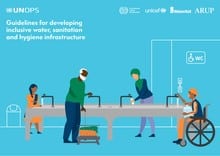
Guidelines for developing inclusive water, sanitation and hygiene infrastructure
https://content.unops.org/publications/Guidelines-for-developing-inclusive-WASH-infrastructure_EN.pdf
HIV Prevention: From Crisis to Opportunity (UNAIDS)
https://www.unaids.org/en/resources/documents/2024/2023-global-hiv-prevention-coalition-scorecards-key-findings

Levels and trends in child mortality – United Nations Inter-Agency Group for Child Mortality Estimation (UN IGME), Report 2023
https://data.unicef.org/resources/levels-and-trends-in-child-mortality-2024/


https://ephsm.who.int/
WHO is launching a repository of multilingual, multidisciplinary, multisectoral research articles on public health and social measures (PHSM) called the PHSM Bibliographic Library. This is part of the WHO’s initiative on measuring the effectiveness and impact of public health and social measures (PHSM) during health emergencies. The PHSM Bibliographic Library is updated through automated and manual searches across multiple electronic databases, preprint repositories, trial registries and other sources. It is designed to meet the diverse needs of users at all experience levels, providing an advanced search interface for efficient information retrieval. This interface includes functionalities such as filters aligned with the WHO PHSM conceptual framework and an extensive controlled vocabulary. Furthermore, the library offers data export options in multiple formats to facilitate saving and sharing of results, as well as a dashboard interface, offering insightful visualizations of indexed PHSM research. The PHSM Bibliographic Library is the first in the series of three interconnected tools of the PHSM Knowledge Hub. The other tools are the PHSM Research Atlas and the PHSM Living Systematic Reviews.

https://hdl.handle.net/10986/41193
The present study focuses on a particular group of actors along the plastics collection and recycling value chain—informal waste workers (IWWs)—on whom limited information has been collected at the country level. Specifically, the study examines two questions: (i) what is the profile and vulnerabilities of informal waste workers in the three countries including gender-specific vulnerabilities; and (ii) what livelihood opportunities and community-based innovation models have been piloted in the selected countries, and can be used as case study examples in future policies and interventions, with the objectives of reducing vulnerability of IWWs and contributing to improving solid waste management and recycling value chains.
Productivity measurement and analysis: A guidance note (ILO)
https://www.ilo.org/empent/Projects/productivity-ecosystems/WCMS_915962/lang–en/index.htm
Productivity dynamics are important across macro-, sector-, labour market- and micro-level economics, and in social policy and tripartite dialogue on fair wages, working time or the retirement age. They are also very relevant to environmental transition. Better productivity data are therefore essential for the work of the ILO’s tripartite constituents (governments, employers and workers), and for a broader community of stakeholders seeking to advance decent work. This guidance note seeks to assist national statisticians and economists in making the best use of available data to obtain detailed productivity measures, notably in developing countries. Guidance is provided on how to prepare labour and multifactor productivity measures, disaggregating by sector, with a particular emphasis on computing labour inputs. It builds on and complements international standards and guidelines issued by the United Nations and the Organisation for Economic Co-operation and Development (OECD). This guidance note is published as part of the ILO Productivity Ecosystems for Decent Work programme funded by the State Secretariat for Economic Affairs of Switzerland and the Norwegian Agency for Development Cooperation.
see also: Questions and Answers: On new guidance note for productivity measurement and analysis (15 March 2024): https://www.ilo.org/employment/Informationresources/%20Publicinformation/news/WCMS_917992/lang–en/index.htm
Profits and poverty: The economics of forced labour (ILO)
English: https://www.ilo.org/global/topics/forced-labour/publications/WCMS_918034/lang–en/index.htm
French: https://www.ilo.org/global/topics/forced-labour/publications/WCMS_918036/lang–fr/index.htm
This report estimates the profits generated from forced labour in the world today. These profits reflect the wages effectively stolen from the pockets of workers by the perpetrators of forced labour through their coercive practices. Understanding and addressing these illicit profits is critical to achieve progress in the fight against forced labour. 28 million people were trapped in forced labour on any given day in 2021. Forced labour is a criminal offence and a serious violation of fundamental human rights. Beyond the individual consequences for the victims, forced labour comes with economic and social costs for the entire society. This ILO report, which is funded by the government of France, will shed light on the link between forced labour and the economic incentive structures driving it.
Public health resource pack for countries experiencing outbreaks of influenza in animals: revised guidance (WHO)
English, French & Spanish: https://www.who.int/publications/i/item/9789240076884

Reversing direction in the used clothing crisis: Global, European and Chilean perspectives; Executive Summary
https://unece.org/sites/default/files/2024-02/UN%20EX%20sum%20-%20Improving%20the%20sustainability%20of%20used%20clothing%20-%20Final.pdf


https://library.wmo.int/idurl/4/68835
Extremes supplement: https://wmo.int/files/significant-weather-climate-events-2023
A new report from the World Meteorological Organization (WMO) shows that records were once again broken, and in some cases smashed, for greenhouse gas levels, surface temperatures, ocean heat and acidification, sea level rise, Antarctic sea ice cover and glacier retreat. Heatwaves, floods, droughts, wildfires and rapidly intensifying tropical cyclones caused misery and mayhem, upending every-day life for millions and inflicting many billions of dollars in economic losses, according to the WMO State of the Global Climate 2023 report. The WMO report confirmed that 2023 was the warmest year on record, with the global average near-surface temperature at 1.45 °Celsius (with a margin of uncertainty of ± 0.12 °C) above the pre-industrial baseline. It was the warmest ten-year period on record.
see also: https://storymaps.arcgis.com/stories/2545ecd62e594005bb196b0ba962d7cb
Survey of Economic and Social Developments in the Arab Region: 2022-2023 (ESCWA)
https://www.unescwa.org/news/escwa-war-gaza-and-sudan-conflict-weigh-arab-economies-grim-prospects-2024-2025

Turning the Tide: A Look into the European Union-to-Southeast Asia Waste Trafficking Wave (UNODC)
https://www.unodc.org/documents/bmb/environmental-crime/FINAL_for_printing_-_Turning_the_tide.pdf


https://collections.unu.edu/eserv/UNU:9489/WQ_and_GS_DIA_Report_FINAL_21.03.2024.pdf
The adverse effects of unsafe water on health have been widely acknowledged. But the comprehensive analysis of this impact remains poorly documented and overlooked. This new report by the United Nations University Institute for Water, Environment and Health (UNU-INWEH) underscores the largely unseen gender disparities in exposure to health-related risks of non-utility water sources i.e. water sources not supported by government infrastructure, in Abeokuta, Nigeria. Poor water quality leads to severe consequences on human health and well-being, including morbidity and mortality from water-related diseases affecting millions annually. These impacts disproportionately affect women, men, boys, and girls due to inequalities stemming from physiological composition, age, socioeconomic conditions, disability, and restrictive social norms. Such disproportional effects are further exacerbated by unequal control and access to water, sanitation, and health services.

Report in English, French & Italian; Executive summary in English, French, German, Italian, Portuguese, Spanish; Facts, figures and action examples in English, French, Italian, Portuguese, Spanish: https://www.unwater.org/publications/un-world-water-development-report-2024
The 2024 edition of UN-Water’s flagship annual report on water issues describes how developing and maintaining a secure and equitable water future underpins prosperity and peace for all and how poverty and inequality, social tensions, and conflict can amplify water insecurity. The report calls attention to the complex and interlinked relationships between sustainable water management, prosperity and peace, describing how progress in one dimension can have positive, often essential, repercussions in the others.
Coronavirus Disease (COVID-19)

WHO Coronavirus Network (CoViNet)
https://www.who.int/groups/who-coronavirus-network
WHO has launched a new network for coronaviruses, CoViNet, to facilitate and coordinate global expertise and capacities for early and accurate detection, monitoring and assessment of SARS-CoV-2, MERS-CoV and novel coronaviruses of public health importance. CoViNet expands on the WHO COVID-19 reference laboratory network established during the early days of the pandemic. Initially, the lab network was focused on SARS-CoV-2, the virus that causes COVID-19, but will now address a broader range of coronaviruses, including MERS-CoV and potential new coronaviruses. CoViNet is a network of global laboratories with expertise in human, animal and environmental coronavirus surveillance. The network currently includes 36 laboratories from 21 countries in all 6 WHO regions.
International Peace and Security
Analysis of war damage to the Ukrainian science sector and its consequences (UNESCO)
https://unesdoc.unesco.org/ark:/48223/pf0000388803

Gaza Strip – Interim Damage Assessment (Summary Note – March 29, 2024)
https://tinyurl.com/mrw8n7ka

Policy Brief on the Security Council’s Consideration of the Protection of Civilians in Armed Conflict (2019 – 2023) (OCHA)
https://reliefweb.int/report/world/policy-brief-security-councils-consideration-protection-civilians-armed-conflict-2019-2023
Developed by OCHA Operations and Advocacy Division (OAD), Policy Advice and Planning Section (PAPS), this policy paper is a non-paper. It is produced primarily for internal purposes and serves as a basis for promoting further discussion and policy analysis in their respective areas.

Department of Political and Peacebuilding Affairs
Turmoil and Hope: The Year in Review 2023
https://report.diplomacy4peace.org/
WASH for Peace: Conflict Sensitivity and Peacebuilding Guidance and Tools for the WASH Sector (UNICEF)
https://www.unicef.org/washforpeace/

Development of Africa

https://www.fao.org/documents/card/en/c/cc5044en
The Food and Agriculture Organization of the United Nations has launched a new Compendium of forgotten foods in Africa which is a first-of-its-kind comprehensive collection of 100 African forgotten food crops. Also referred to as neglected, underutilized or orphan crops, these species offer valuable benefits, including nutrition and diet diversification, while supporting resilient, climate-smart agriculture but they are at risk of being lost as foods such as maize, rice and wheat dominate African diets. The compendium list includes details on each crop’s botanical classification, agroecological suitability, agronomic requirements, traditional and medicinal uses, value-added prospects and nutritional content. Among the entries are: African locust beans, African nightshade, baobab, Bambara nut, bush mango, cassava, fonio, marula, moringa, teff and tigernut. Produced by the Food and Agriculture Organization (FAO)’s Regional Office for Africa with the Forum for Agricultural Research in Africa (FARA), the Compendium is a direct response to the UN Food Systems Summit and the Call for Collective Action in the Global Manifesto on Forgotten Foods.
Human Rights
Anatomy of a Genocide: Report of the Special Rapporteur on the situation of human rights in the Palestinian territories occupied since 1967, Francesca Albanese (A/HRC/55/73, 25 March 2024, Advance unedited version)
https://www.ohchr.org/sites/default/files/documents/hrbodies/hrcouncil/sessions-regular/session55/advance-versions/a-hrc-55-73-auv.pdf
Israel has destroyed Gaza during five months of military operations, the Special Rapporteur on the occupied Palestinian territory, Francesca Albanese said on 26 March 2024.
“The harrowing number of deaths, the irreparable harm done to those who survive, the systematic destruction of every aspect necessary to sustain life in Gaza – from hospitals to schools, from homes to arable land – and the particular harm to hundreds of thousands of children, and to pregnant and young mothers – this can only be interpreted as constituting prima facie evidence of an intention to systematically destroy the Palestinians as a group,” said Albanese said in a report to the UN Human Rights Council on 26 March 2024.
Following an analysis of Israel’s actions and patterns of violence in its onslaught on Gaza, underpinned by dehumanising rhetoric by high-ranking Israeli officials and often reflected in soldiers’ actions on the ground, the Special Rapporteur’s report found that the threshold indicating Israel’s commission of genocide had been met.

https://reporting.unhcr.org/background-note-gender-equality-nationality-laws-and-statelessness-7665
Nationality laws which do not grant women equality with men in conferring nationality on their children are a cause of statelessness and a concern for UNHCR. Since 2012, UNHCR has issued an annual background note on gender equality in provisions in nationality laws which relate to conferral of nationality on children. This background note provides the most up-to-date information available to UNHCR as of March 2024. Sixty years ago, the nationality laws of most States did not provide equal rights to women in nationality matters. This has radically changed for the better since the adoption in 1979 of the Convention on the Elimination of All Forms of Discrimination against Women (CEDAW). UNHCR’s survey of nationality legislation reveals that equality between men and women relating to conferral of nationality on children has not yet been attained in 24 countries, and these countries are located in almost all parts of the world. Many of these States are found in the Middle East and North Africa (twelve countries). Five States in Asia and the Pacific and five States in Sub-Saharan Africa do not grant mothers equal rights as fathers to confer their nationality on their children, and the same is the case in two States in the Americas. These States are listed in the table on page 8 and an analysis of those countries’ laws is presented on pages 8 to 13. It is important to note that an additional group of States grant equality to men and women with regard to the nationality of children but not with regard to acquisition, change or retention of nationality upon change in civil status.

A Common United Nations Agenda for Protection – Strengthening the ability of the United Nations System to protect people through their human rights (OHCHR)
https://www.ohchr.org/en/documents/tools-and-resources/common-united-nations-agenda-protection-strengthening-ability-united
Female Genital Mutilation: A global concern; 2024 update (UNICEF)
https://data.unicef.org/resources/female-genital-mutilation-a-global-concern-2024/

A focus on adolescent peer violence and bullying in Europe, central Asia and Canada. Health Behaviour in School-aged Children international report from the 2021/2022 survey. Volume 2 (WHO/Europe)
https://www.who.int/europe/publications/i/item/9789289060929
The Health Behaviour in School-aged Children (HBSC) study is a large school-based survey carried out every four years in collaboration with the WHO Regional Office for Europe. HBSC data are used at national/regional and international levels to gain new insights into adolescent health and well-being, understand the social determinants of health and inform policy and practice to improve young people’s lives. The 2021/2022 HBSC survey data are accompanied by a series of volumes that summarize the key findings around specific health topics. This report, Volume 2 in the series, focuses on adolescent peer violence and bullying, using the unique HBSC evidence on adolescents aged 11, 13 and 15 years across 44 countries and regions in Europe, central Asia and Canada. It describes the status of adolescent peer violence (bullying, cyberbullying and fighting), the role of gender, age and social inequality, and how adolescent bullying and fighting behaviour has changed over time. Findings from the 2021/2022 HBSC survey provide an important evidence benchmark for current research, intervention and policy-planning.

https://www.ohchr.org/en/documents/tools-and-resources/guide-human-rights-sex-workers
Compiled by Special Rapporteur on the right of everyone to the highest standard of physical and mental health (SR health), the Independent Expert on Protection against violence and discrimination based on sexual orientation and gender identity (IE SOGI), and the UN Working Group on discrimination against women and girls (WGDAWG).
Human Rights Situation during the Russian Occupation of Territory of Ukraine and its Aftermath: 24 February 2022 – 31 December 2023
https://www.ohchr.org/sites/default/files/2024-03/2024-03-20%20OHCHR%20Report%20on%20Occupation%20and%20Aftermath.pdf

IIMM Analytical Reports
- Anti-Rohingya Hate Speech on Facebook: Content and Network Analysis
https://iimm.un.org/wp-content/uploads/2024/03/Hate-Speech-Report_EN.pdf - Efforts to Investigate and Punish Sexual and Gender-based Crimes committed against Rohingya: Evidence Analysis
https://iimm.un.org/wp-content/uploads/2024/03/SGBC-Report_EN.pdf
On 27 March 2024, the Independent Investigative Mechanism for Myanmar is publicly releasing two analytical reports. One report details the Myanmar military’s covert Facebook network that systematically distributed hate speech against the Rohingya at the time of the 2017 clearance operations. The second report examines the response of Myanmar state authorities to allegations of sexual and gender-based crimes committed by security forces against the Rohingya. This report concludes that the authorities failed in their duty under international law to investigate and punish these acts. These reports form a small part of the evidence and analysis that the Mechanism has shared with authorities working on ongoing cases concerning the Rohingya at the International Criminal Court, the International Court of Justice and in Argentina. These two reports have been made public on an exceptional basis. The vast majority of the material the Mechanism has collected and analyzed must remain confidential. Confidentiality protects the security and privacy of witnesses and sources. It is also standard procedure to maintain the confidentiality of ongoing criminal investigations before evidence is presented at trial to prevent efforts to hide or destroy evidence, to protect the integrity of witness testimony, and to avoid alerting suspects who could evade arrest or detection.
https://www.who.int/publications/i/item/9789240089105
There is growing global recognition of the intersections between violence against women and violence against children. The current evidence shows intersections between intimate partner violence against women and violence against children by parents or caregivers, but limited evidence is available on the links between other forms of violence against women and violence against children. Both violence against women by their (male) intimate partners and violence against children by parents or caregivers are widespread globally. This report describes the process used to determine the priorities for research on the intersections between violence against children and violence against women, and the top 10 research questions identified.

OHCHR Poster: Learn, Speak Up, Act
https://www.ohchr.org/en/documents/infographics-and-posters/poster-learn-speak-act
The UN provides guidance and tools to act now and take concrete steps against racism, racial discrimination, xenophobia and related intolerance. This poster includes guidance that will help you navigate the highlights of three fundamental documents.

https://ukraine.un.org/en/264355-report-human-rights-situation-ukraine-1-december-2023-29-february-2024
The United Nations Human Rights Monitoring Mission in Ukraine (HRMMU) published on 26 March 2024 new findings about torture of Ukrainian prisoners of war (POWs) in Russian captivity and a sharp rise in credible allegations of executions of captured Ukrainian POWs. In this report on the human rights situation in Ukraine in December, January and February, HRMMU detailed findings from interviews with 60 recently released Ukrainian POWs.
Violence against women 60 years and older: Data availability, methodological issues and recommendations for good practice (WHO Scientific Brief)
https://www.who.int/publications/i/item/9789240090996
This briefing note, which focuses on the measurement of violence against women 60 years and older, is one in a series of methodological briefing notes for strengthening the measurement and data collection of violence against particular groups of women or specific aspects of violence against women. These briefing notes are meant for researchers, national statistics offices and others involved in data collection on violence against women.
Measuring violence against women with disability: Data availability, methodological issues and recommendations for good practice (WHO Scientific Brief)
https://www.who.int/publications/i/item/9789240089563
This briefing note, which focuses on the measurement of violence against women with disability, is one in a series of methodological briefing notes for strengthening the measurement and data collection of violence against particular groups of women or specific aspects of violence against women. These briefing notes are meant for researchers, national statistics offices and others involved in data collection on violence against women.
Humanitarian Affairs
Africa Migration Report: Second edition; Connecting the threads: Linking policy, practice and the welfare of the African migrant
https://publications.iom.int/books/africa-migration-report-second-edition

Artificial Intelligence in Humanitarian Action – new topics page on ReliefWeb
https://reliefweb.int/topic/artificial-intelligence-humanitarian-action
Artificial Intelligence (AI) has the potential to reshape the way we respond and coordinate humanitarian response – helping humanitarians offer more efficient and effective ways to deliver aid and support to people in need. The UN General Assembly’s draft resolution recognizes that safe, secure and trustworthy AI can contribute to the 17 Sustainable Development Goals and “… promote digital transformation; promote peace; overcome digital divides between and within countries; and promote and protect the enjoyment of human rights and fundamental freedoms for all …”. We’ve seen the interest in this subject grow firsthand. In the first quarter of 2024, the number of reports posted to ReliefWeb on AI doubled and we expect the number of news items, job ads and trainings around AI to continue to grow. In response, ReliefWeb has created a topics page – AI in Humanitarian Action, with curated content and key resources for partners actively using AI in their humanitarian work. In addition to understanding the potential benefits of AI in humanitarian action, the topics page explores the ethical and privacy concerns associated with implementing AI solutions. Several organizations are taking AI governance and security to heart. This includes the Office of the UN Secretary-General’s Envoy on Technology, the UN Office of Information and Communications Technology and the Humanitarian Data Science and Ethics Group.
A Decade of Documenting Migrant Deaths: Data analysis and reflection on deaths during migration documented by IOM’s Missing Migrants Project, 2014–2023 (IOM)
https://missingmigrants.iom.int/sites/g/files/tmzbdl601/files/publication/file/A%20decade%20of%20documenting%20migrant%20deaths.pdf

Diaspora, Climate-Induced Migration and Skills Mobility: A focus on Africa (AFD / IOM)
https://www.afdb.org/en/news-and-events/press-releases/african-development-bank-iom-launch-report-harnessing-migration-development-africa-69586

Migration Governance Insights: Informing People-centred Migration Policies (IOM)
https://publications.iom.int/books/migration-governance-insights-informing-people-centred-migration-policies

Justice and International Law
Global Health and Care Worker Policy Lab
https://www.hcwpolicylab.org/
On 4 April 2024, the World Health Organization and the O’Neill Institute for National and Global Health Law at Georgetown University released the Global health and care worker law and policy lab, a digital platform and tool to advance implementation of the Global health and care worker compact. The Law and policy lab houses national and international legal instruments and resources to support countries and their partners in strengthening their national policies and operations, populated with an initial compilation of laws, regulations and policies from over 150 countries worldwide.
Drug Control, Crime Prevention and Counter-terrorism

https://unicri.it/Publication-Digital-Rehabilitation-Prisons
This report examines the potential benefits and risks of introducing new technologies in prisons to facilitate prisoner rehabilitation. It aims to assist policymakers, practitioners, and those responsible for the design and delivery of rehabilitative programmes to understand how to leverage technologies to support prisoner rehabilitation effectively and ethically.
Newsletter Archive: https://unric.org/en/unric-info-point-library-newsletter-archive