
New UN websites & publications
TOPIC OF THE MONTH: Water

English: https://doi.org/10.54679/NXCL7067
French: https://doi.org/10.54679/MUJK6506
Italian: https://doi.org/10.54679/LAHR4571
Gender inequalities continue to undermine global water security, disproportionately affecting women and girls. While they are often responsible for collecting and managing household water, they remain underrepresented in water governance, leadership and technical roles.
The report highlights how unequal access to water and sanitation services impacts health, education, livelihoods and safety. Today, 2.1 billion people still lack safely managed drinking water, and women and girls spend an estimated 250 million hours every day collecting water.
The report examines how climate change, water scarcity and disasters are intensifying these inequalities and calls for stronger action to ensure equal rights, participation and opportunities in water management.

https://hdl.handle.net/10986/44472
Rebalancing water use across the global food system is key to meeting future food demand sustainably and could generate 245 million long-term jobs, largely in Sub-Saharan Africa, according to this new World Bank Group report launched on 19 March 2026.
The report notes that current agricultural water management practices, marked by overuse in some countries and underuse in others, can only sustainably support food production for less than half the global population. By 2050, 10 billion people will need to be fed. Addressing both the overuse that depletes water in stressed regions and the underuse that leaves available water and productive capacity untapped in water-abundant regions will be essential to meet that demand sustainably.

https://www.unwater.org/publications/un-water-policy-brief-towards-human-rights-based-approach-water-sanitation
Environmental degradation, including climate change and pollution, are increasingly recognized as a human rights crisis, with profound consequences for access to safe drinking water, sanitation and a healthy environment. This UN-Water Policy Brief, developed by the Office of the High Commissioner for Human Rights (OHCHR), highlights how environmental harms, including water scarcity, floods, droughts, biodiversity loss and ecosystem degradation, are closely linked to the realization and enjoyment of human rights.
The brief outlines the legal and policy foundations of the human rights to safe drinking water and sanitation, as well as the recently recognized human right to a clean, healthy and sustainable environment. It emphasizes that environmental degradation disproportionately affects persons in vulnerable and marginalized situations, deepening existing inequalities.
UN in General
1980 UN Women’s Conference documents now in UN Digital Library
https://www.un.org/en/delegate/1980-un-women%E2%80%99s-conference-documents-now-un-digital-library
The “World Conference of the United Nations Decade for Women: Equality, Development and Peace” convened in Copenhagen, Denmark, from 14 to 30 July 1980, and marked the second global gathering on women during the United Nations Decade for Women (1976–1985).
It served as a mid-decade review of progress made since the first World Conference on Women in Mexico City in 1975.
Attended by 145 Member States, the conference adopted a Programme of Action calling for stronger national measures to ensure women’s ownership and control of property, as well as improvements in protecting women’s rights to inheritance, child custody, and nationality.
As part of its mission to preserve and provide access to historical United Nations documents, the Dag Hammarskjöld Library has completed a comprehensive digitization project covering the documents of the 1980 Conference in all official UN languages.
In total, 692 documents—amounting to 17,098 pages—have been digitized.
Explore the World Conference of the United Nations Decade for Women: These documents, identified by the series symbol A/CONF.94/–, are now freely accessible in the Digital Library.

Women in Politics: 2026
https://www.unwomen.org/en/digital-library/publications/2026/03/women-in-politics-2026
The “Women in politics: 2026” map, prepared by the Inter-Parliamentary Union and UN Women, presents the latest data on women’s representation in executive positions and national parliaments as at 1 January 2026. The findings highlight the persistent overrepresentation of men in political decision-making worldwide.
see also:
- Facts and figures: Women’s leadership and political participation (11 March 2026): https://www.unwomen.org/en/articles/facts-and-figures/facts-and-figures-womens-leadership-and-political-participation
- Only 1 in 7 countries is led by a woman as global political power remains dominated by men: New Inter-Parliamentary Union (IPU) – UN Women data show women remain far from equal political power, holding just 22.4 per cent of cabinet posts and 27.5 per cent of parliamentary seats worldwide (11 March 2026): https://www.unwomen.org/en/news-stories/press-release/2026/03/only-1-in-7-countries-is-led-by-a-woman-as-global-political-power-remains-dominated-by-men

https://giga.global/digital-transformation/unesco-unicef-itu-charter/
As part of the global push to bring schools online, new guidance from United Nations organizations aims to help make digital learning platforms secure and interoperable.
The Charter for Public Digital Learning Platforms – prepared jointly by the UN Educational, Scientific and Cultural Organization (UNESCO), the UN Children’s Fund (UNICEF) and the International Telecommunication Union (ITU) – seeks to help countries support, extend and enrich school-based education through public digital learning platforms.
Its launch in Helsinki, Finland, on 19 March 2026, marked the International Day for Digital Learning.
The Charter outlines seven principles to guide how such platforms can be designed, governed and sustained anywhere in the world.

https://collections.unu.edu/eserv/UNU:10587/countries_walk_away_international_organizations.pdf
From Brexit to recent announcements of withdrawals from dozens of international bodies, exits from international organizations (IOs) have become a highly visible feature of global politics. But how common are these departures, and what do they actually mean for international cooperation?Drawing on a new dataset of 488 IO exits since 1914, this Policy Brief finds that withdrawals are typically strategic and costly moves, often used by States seeking institutional change after internal reform efforts fail. Contrary to common perceptions, withdrawals are not increasing and are frequently temporary, with many countries eventually returning.
The brief also highlights the political and reputational costs of exit and offers recommendations for how IOs and Member States can respond constructively, including creating structured opportunities to address grievances and remaining open to future reengagement.
Economic Growth and Sustainable Development

https://doi.org/10.4060/cd8319en
This publication provides governments and practitioners with practical guidance on how to align national drought plans (NDPs) with existing policy, legal and institutional frameworks to enable effective implementation. It positions policy alignment as a core requirement for moving from reactive drought response to proactive, risk-based drought management, in line with national development priorities and international commitments.

https://unctad.org/publication/beyond-creative-accounting-restoring-trust-climate-finance-regime
This new UN Trade and Development (UNCTAD) report warns that much of the reported rise in climate finance may not represent new funding for developing countries, with accounting practices sometimes creating the impression of increased support.
The analysis points to the growing role of accounting practices in shaping reported climate finance figures. Without clearer standards, reporting changes can misleadingly indicate that more funding is provided even when underlying financial commitments remain largely unchanged.
The report also notes that climate finance is being delivered in a context of growing fiscal pressures and competing spending priorities in many donor countries, making transparent accounting and credible reporting even more important.

https://eurohealthobservatory.who.int/publications/i/dealing-with-the-challenges-in-urgent-and-emergency-care-what-are-the-policy-options
This new report released jointly by WHO/Europe and the European Observatory on Health Systems and Policies sets out practical policy options to help countries address mounting pressures on urgent and emergency care in hospitals across the WHO European Region.
The report examines how countries can better organize, staff and coordinate services to ensure patients receive timely, high-quality care – while avoiding unnecessary strain on hospitals.
A central message of the report is that urgent and emergency care performance depends on system-wide planning and coordination.
The EU’s Energy Transition (IMF Working Paper No. 2026/046)
https://doi.org/10.5089/9798229040198.001
The EU has ambitious goals for climate and energy security. Its targets and policies may have large macroeconomic implications, but investment impacts are particularly uncertain. Detailed “bottom-up” approaches based on sectoral calculations point to investment increases of 2 to 3 percent of GDP annually, while “top down” general equilibrium models often yield negligible aggregate investment effects. Further, the investment and broader macroeconomic impacts of the EU’s energy transition will depend on how carbon pricing revenues are recycled. This paper addresses these issues using a modeling technique that bridges bottom-up and top-down approaches. A New Keynesian general equilibrium model (GMMET) is extended to feature a detailed representation of energy use in key emitting sectors, including buildings, transport and energy-intensive manufacturing. Simulations suggest that achieving the EU’s 2035 climate goals implies an increase in aggregate annual investment of just around 1 percent of GDP. More broadly, the EU’s energy transition only has modest macroeconomic impacts if it combines carbon pricing and green subsidies, partly because these are complementary—green subsidies lower energy prices and inflation and raise output, carbon pricing has opposite effects, and therefore combining both yields small effects on all accounts. The fiscal cost of the transition is modest provided decarbonization relies sufficiently on carbon pricing; while revenues from ETS1 and ETS2 could eventually reach about 1 percent of GDP, the public investment cost of the transition is less than 0.5 percent of GDP annually, leaving net fiscal space that could be used for other policy objectives.

https://www.undrr.org/publication/documents-and-publications/flames-change-children-and-youth-forefront-tackling-urban
This special report focuses on the important role that children and youth can play in tackling urban heat and the urban heat island effect. Both top-down and bottom-up approaches are highlighted to showcase comprehensive strategies in action. The diverse cases across Europe and Central Asia presented in this report highlight how local governments, schools, health systems and communities can work together to safeguard children’s well-being while building a more climate-resilient future.

https://www.unesco.org/gem-report/en/publication/equity-and-access
The number of children and young people out of school has risen for the seventh consecutive year, up to 273 million, driven by population growth, crises, and shrinking budgets. This is the main finding of UNESCO’s 2026 Global Education Monitoring (GEM) Report, the world’s reference on the state of education. One in six children of school age worldwide are excluded from education, and only two in three students complete secondary school. Yet many countries are making significant progress, highlighting the importance of national context when setting targets and designing policies.

Good practices in digital platform governance by European media regulators (UNESCO Communication and Information Paper No. 32)
https://unesdoc.unesco.org/ark:/48223/pf0000397647.locale=en
In a global landscape where regulatory frameworks for digital platforms are evolving at uneven speeds, a new study takes a pragmatic look: what can regulators do today when laws do not yet exist, are insufficient, or have gaps in their implementation?
This paper examines current experiences across Europe—both within and beyond the European Union—to identify practical approaches already in use.
The focus is on non-statutory measures: tools that can be implemented within existing mandates, while still allowing for future legal expansion.

English: https://www.ilo.org/resource/other/ilo-guidelines-promotion-fundamental-principles-and-rights-work-and
French: https://www.ilo.org/fr/resource/autre/directives-de-loit-pour-la-promotion-des-principes-et-droits-fondamentaux
Spanish: https://www.ilo.org/es/resource/otros/directrices-de-la-oit-para-la-promocion-de-los-principios-y-derechos
Government, employer and worker experts from the sport sector have adopted these new Guidelines on 6 March 2026 following five days of intense tripartite discussions at the International Labour Organization (ILO). The first-ever Guidelines aim to promote fundamental labour rights for professional athletes worldwide. Their adoption marks a significant step in the ILO’s ongoing efforts to promote decent work and strengthen protections in the world of sport.
The new Guidelines draw on the five fundamental principles and rights at work: freedom of association and the effective recognition of the right to collective bargaining; the elimination of all forms of forced or compulsory labour; the effective abolition of child labour; the elimination of discrimination in respect of employment and occupation; and a safe and healthy working environment.

https://www.undp.org/arab-states/publications/military-escalation-middle-east-economic-and-social-implications-arab-states-region-assessment
New estimates by the United Nations Development Programme (UNDP) suggest the military escalation in the Middle East, now into its fifth week, may cost economies in the region from 3.7 to 6.0 percent of their collective Gross Domestic Product (GDP). This represents a staggering loss of US$120-194 billion and exceeds the cumulative regional GDP growth achieved in 2025. Coupled with an estimated rise in unemployment of up to 4 percentage points or 3.6 million jobs lost—more than the total jobs created in the region in 2025, these reversals will push up to 4 million people into poverty. The assessment exposes the concerning reality of structural vulnerabilities characteristic to the region, which enable a short‑lived military escalation to generate profound and widespread socio‑economic impacts that may persist over a long-term.

https://wedocs.unep.org/items/17d9dbf5-e393-4230-8514-834bb284be8b
This UNEP publication produced with GRID-Arendal explores why mountains matter far beyond mountain regions themselves. Framed through the triple planetary crisis of climate change, biodiversity loss and pollution, the publication shows how changes in mountain ecosystems cascade downstream, affecting freshwater security, food systems, biodiversity, disaster risk, governance and human well-being. Drawing on recent peer-reviewed research, public datasets and national reporting under the Rio Conventions, the report connects mountain change to global systems. It examines shrinking glaciers and snow cover, groundwater recharge, biodiversity corridors, pollution flows, land degradation and environmental governance, while highlighting why mountain futures must be built through integrated, equitable and science-based action.

https://www.un.org/sites/un2.un.org/files/unen_working_paper_no_1_0.pdf
The United Nations Economist Network (UNEN) has launched its new Working Paper Series. This inaugural paper explores innovative approaches to measuring sustainable development and well‑being beyond traditional economic indicators.

https://hdl.handle.net/10986/44532
Globally, the agri-food system is facing an increasingly complex and volatile risk landscape. Traditional risks, related to production, markets, finances, and others, are now compounded by climate change, geopolitical instability, pandemics, and digital vulnerabilities.
To better understand the uptake of the common agricultural policy (CAP) funded agricultural risk management (ARM) instruments, the study uses cluster analysis to group and select deep-dive EU Member States based on five key variables: water stress, utilized agricultural area, agriculture’s share in GDP, farm structure, and yield volatility. Based on this, five distinct country segments were identified, each with unique risk exposure and structural characteristics. These clusters help streamline policy analysis and inform targeted recommendations. For deeper insight, five countries, Bulgaria, France, Latvia, Italy, and Slovakia, were selected for qualitative and quantitative deep dives, reflecting a range of experiences with CAP-funded risk management tools and diversity of agricultural structures across the EU.

https://unctad.org/publication/strait-hormuz-disruptions-implications-global-trade-and-development
The Strait of Hormuz is one of the world’s most critical maritime chokepoints, carrying around a quarter of global seaborne oil trade and significant volumes of liquefied natural gas and fertilizers. The ongoing military escalation in the region has disrupted shipping flows through this narrow passage. The resulting ripple effects go far beyond the region, affecting energy markets, maritime transport and global supply chains.
These developments raise concerns for global trade and development prospects. Oil markets have reacted quickly, with Brent crude prices now rising above US$90 per barrel. Higher energy, fertilizer and transport costs – including freight rates, bunker fuel prices and insurance premiums – may increase food costs and intensify cost-of-living pressures, particularly for the most vulnerable.

https://unhabitat.org/sites/default/files/2026/03/urban_october_report_2025.pdf
Cities around the world came together during Urban October 2025 to address some of the most pressing urban challenges of our time –from responding to crises and displacement to harnessing digital innovation for more inclusive urban futures.
The newly released Urban October Report 2025 highlights key discussions, events and outcomes from the global observances of World Habitat Day and World Cities Day, as well as hundreds of partner-led initiatives held throughout the month.
UN DESA Policy Brief No. 186: Gender Matters in an Ageing World: The Case for Gender-responsive Policies
https://desapublications.un.org/policy-briefs/un-desa-policy-brief-no-186-gender-matters-ageing-world-case-gender-responsive
Women constitute the majority of older persons globally, and the number of older women is projected to increase rapidly over the next decades. Although women live longer than men on average, they tend to spend a higher proportion of their later years living in poor health or with disability, often due to a higher burden of non-communicable diseases and chronic conditions. Integrating a gender perspective into health, social protection and care systems is critical to improve the quality of life of all older persons and to enable their full contributions to advancing sustainable development.
UN DESA Policy Brief No. 187: Revealing the Generational Economy: An Essential System at Risk
https://desapublications.un.org/policy-briefs/un-desa-policy-brief-no-187-revealing-generational-economy-essential-system-risk
The “generational economy” refers to the system of social institutions, economic mechanisms and intergenerational flows through which different age groups produce, consume, share and allocate resources over the life course. As the share of older persons rises, the system of mutual support between generations comes under increasing strain, including pressures of fiscal sustainability driven in part by increasing expenditures for health care at older ages. New accounting tools like National Transfer Accounts, National Time Transfer Accounts and National Inclusion Accounts can be used to reveal this generational economy.

Report in English, Executive Summary in English, French & Spanish: https://hdl.handle.net/10986/44141
What a Waste 3.0 is the third edition of the World Bank Group’s What a Waste series, following the 2012 and 2018 publications. It updates and expands these earlier publications and provides a global reference dataset on municipal solid waste in the context of a transition toward circularity, drawing on the most recent publicly accessible data from 217 countries and economies and 262 cities. This edition consolidates data on waste generation, composition, collection, treatment, and disposal, and presents trends by region and income group. It also includes information on legislation, institutional arrangements, plastics management, private sector participation, employment, environmental impacts, and the costs and financing of municipal waste services.
International Peace and Security

Report & Key findings: https://www.worldbank.org/en/topic/fragilityconflictviolence/publication/handle-with-care-resilience-to-fragility-conflict-and-violence
This study arrives at a moment when conflicts are becoming more frequent and severe, impacting countries across all income levels. Globally, one in six people is exposed to conflict. And nearly 60 percent of the world’s extreme poor are projected to be living in FCV countries by 2030. Success in FCV contexts is essential to achieving the WBG’s development mandate. Understanding FCV Resilience and its challenges provides a realistic expectation of what development can aspire to support instead of merely seeking to identify deficits and fill gaps or only reacting to acute moments of shock and distress. This study offers a clear way forward for understanding the full potential of FCV Resilience but also its risks.

https://doi.org/10.37559/MEAC/26/02
This Managing Exits from Armed Conflict Research into Action report examines why children’s participation in peacebuilding so often fails to translate rights commitments into meaningful political influence. The research finds that children’s participation is constrained less by their capacity or willingness to engage, but more by adult gatekeeping, safeguarding regimes, institutional fragility and political volatility. The findings – drawn from original research with practitioners – offer crucial insights into the organisational and political work required to ensure children’s influence in post-conflict contexts.

https://tinyurl.com/448ac2vj
This guide provides practical, principled guidance for Security Council Member States to anticipate, mitigate, and respond to the growing risks of reprisals faced by women civil society representatives who participate in public meetings. It addresses the specific ways women are targeted, including through gender-specific harms like sexualized harassment, digital smear campaigns, and pressure on family members, noting that these attacks undermine the Women, Peace and Security agenda and the integrity of the United Nations.
Organized into four components, the tool offers strategies for informed consent and risk-sensitive preparation, the use of protective diplomatic language during briefings, and sustained post-engagement follow-up for 60 to 90 days. Ultimately, the publication asserts that while zero risk is impossible, the goal of Member States should be risk mitigation rather than silence, ensuring that the burden of safety does not fall solely on the briefer and that authentic voices continue to inform the world’s highest security body.

https://tinyurl.com/2k9a4b34
Over the last 25 years, UN Women and its predecessor organizations have worked across multiple entry points, regions, and actors to move the women, peace and security (WPS) agenda forward.
This timeline demonstrates that sometimes what looks like a series of seemingly unrelated activities is actually a set of strategic choices, gaining momentum and coalescing over time to affect larger impacts—as small streams flow into a mighty river. This timeline also shows that the WPS agenda can be a solution to even the most entrenched conflicts—yet it is a solution that has never been fully implemented.
The successes showcased in this timeline suggest that, with broader—and deeper—political support and adequate financing, the transformative potential of the WPS agenda can be realized.

https://www.undp.org/publications/youth-peace-and-security-and-electoral-processes-times-youth-led-protests-around-world
This thematic paper was developed as a contribution to the Secretary‑General’s Report on Youth, Peace and Security and the Progress Study on Youth, Peace and Security (YPS). The paper responds to growing interest among development, democracy, peacebuilding and youth empowerment practitioners in understanding how the YPS agenda can strengthen youth‑inclusive electoral and political processes amid rapid shifts in civic engagement. These shifts include the increasing influence of youth-led movements and digital forms of participation that are reshaping how young people engage with political systems and civic spaces.
Drawing on evidence and field experience across regions and informed by consultations with members of the Global Coalition on YPS and the Electoral Assistance Division of the UN Department of Political and Peacebuilding Affairs (DPPA), the paper highlights practical examples, lessons learned, and emerging approaches to advance more peaceful, inclusive, and meaningful youth participation in electoral and political processes worldwide.
Human Rights

Report in English, French & Spanish: https://docs.un.org/A/HRC/61/38
Child-friendly version: https://violenceagainstchildren.un.org/en/media/1009
This year’s annual report of the UN Special Representative of the Secretary-General on Violence against Children highlights alarming trends in cyberbullying, one of the top concerns expressed by children themselves. A recent poll carried out by her Office with over 30,000 children across all regions found that 66% think that cyberbullying has increased, and 1 in 2 children do not know where to and how to report and get support.

https://ukraine.ohchr.org/en/Forced-displacement-from-territory-of-Ukraine-occupied-by-the-Russian-Federation
This thematic report by the Office of the United Nations High Commissioner for Human Rights (OHCHR) documents the direct and indirect forcible transfers and deportations of persons from territory occupied by the Russian Federation, barriers for displaced persons to return to occupied territory, and the limitations in the ability of people displaced from occupied territory to fully exercise their rights in territory controlled by the Government of Ukraine. It covers the period 24 February 2022 to 31 December 2025.

https://www.unfpa.org/publications/human-rights-accountability-mechanisms-end-fgm-compendium-advocacy-and-engagement
This document provides practical guidance for advocates, policymakers and civil society actors on how international and regional human rights systems can be used to accelerate the elimination of female genital mutilation (FGM). The publication explains key accountability mechanisms, such as treaty bodies, special procedures, regional human rights courts and national human rights institutions, and demonstrates how they can be leveraged to strengthen laws, policies and access to justice for girls at risk and survivors. Through concrete examples and advocacy strategies, the compendium supports governments, activists and partners in using human rights frameworks more effectively to hold institutions accountable, advance gender equality and drive coordinated action to end FGM.

https://tinyurl.com/y38meynb
This framework is UN Women’s strategy to address discriminatory social norms implicated in gender equality and women’s empowerment.
Based on extensive research by UN Women, primarily in the Global South, on “how change happens” and on the advice of an expert group, the framework defines social norms as embedded in social institutions and proposes pathways for changing discriminatory norms.
https://tinyurl.com/2nt8xmp5
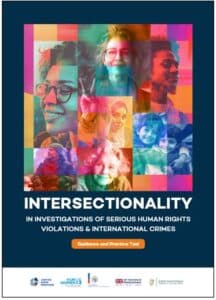
This publication provides practical guidance for investigators, legal practitioners, and human rights professionals on how to integrate an intersectional approach into their work. Developed by Justice Rapid Response and UN Women, the tool explains the concept of intersectionality and its relevance to accountability processes, and offers step-by-step guidance across all stages of investigations, including planning, information collection, analysis, and reporting. It is designed to support international commissions of inquiry, courts, national institutions, civil society organizations, and others involved in documenting and investigating violations.
Israeli settlements in the Occupied Palestinian Territory, including East Jerusalem, and in the occupied Syrian Golan – Report of the United Nations High Commissioner for Human Rights (A/HRC/61/70, Advance edited version)
https://www.ohchr.org/en/documents/country-reports/ahrc6170-israeli-settlements-occupied-palestinian-territory-including
The Government of Israel has accelerated unlawful settlement expansion and annexation of large parts of the occupied West Bank, including East Jerusalem, forcibly displacing over 36,000 Palestinians amid increasing violence by Israeli security forces and settlers, says this UN Human Rights Office report. It covers the 12-month period up to 31 October 2025 and documents 1,732 incidents of settler violence resulting in casualties or property damage, compared to 1,400 in the previous reporting period. This includes relentless harassment, intimidation, and destruction of homes and farmland.
Humanitarian Affairs

https://data.unhcr.org/en/documents/details/121687
This toolkit is designed as a modular, flexible, and nonprescriptive resource to strengthen UNHCR’s engagement with Refugee Led Organizations (RLOs) and other community based structures. Grounded in UNHCR’s commitments to localization, community based protection, and accountability to affected people (AAP), it consolidates lessons learned from field operations, emerging practices within RLO networks, and standards drawn from interagency frameworks such as the IASC Localization Guidance, UN Community Engagement Guidelines, and the Core Humanitarian Standard.
Justice and International Law

https://tinyurl.com/3z7ehc36
More than 2.5 billion women and girls worldwide continue to live under the shadow of discriminatory legal systems that erode their dignity, restrict opportunities, and violate fundamental human rights. Discriminatory laws, whether constitutional, civil, criminal, labour, or administrative, remain one of the most entrenched barriers to gender equality, undermining sustainable development and the realization of human potential.
In response to this challenge, UN Women and a diverse, global coalition of 20 partner organizations launched “Equality in law for women and girls by 2030: A multistakeholder strategy for accelerated action” in 2019. The strategy set a bold vision: to fast-track the repeal of discriminatory laws across six thematic areas in 100 countries, with the aim of impacting the lives of more than 50 million women and girls.
A review of strategy implementation at the midpoint confirmed both substantial progress and persistent challenges. To sustain and accelerate progress, the strategy’s targets have been updated to reflect current realities while preserving shared ambition. While the original strategy continues to anchor this work, including through levels of engagement and implementation accelerators, the new document outlines the progress achieved to date, the recalibrated targets for each priority area, and the next steps required to ensure that equality in law for women and girls can be realized by 2030.

https://www.unrisd.org/en/library/publications/strategic-responses-to-backlash-against-gender-justice
What is often strategically framed as a “values debate” is, in practice, a coordinated transnational effort to use gender as a lever for civic repression, institutional capture, and the repression of women’s and LGBTQIA+ rights. Situated within contemporary democratic decline, backlash against gender justice is not peripheral to democratic erosion, it is one of its key drivers. Drawing on a UNRISD–FES expert group meeting and recent research, this paper shows how anti-gender actors have shifted from reactive mobilization to proactive agenda-setting, becoming deeply embedded in political parties, state institutions, religious networks, digital ecosystems, and multilateral arenas. It traces how gender functions both symbolically – to mobilize moral panic, nationalism, and resentment – and materially, through legal, policy, and institutional rollbacks that weaken democratic safeguards. The paper concludes with concrete entry points for governments, multilateral actors, civil society, and democratic allies to act in coordinated and politically informed ways, protecting both rights on paper and the conditions that make those rights real in practice.

https://www.unwomen.org/en/digital-library/publications/2026/03/voices-from-the-bench-women-shaping-international-justice
Women remain significantly underrepresented in international courts, tribunals, and other decision-making bodies that shape international law, human rights, and accountability. This persistent imbalance raises concerns not only about equality, but also about the legitimacy, inclusiveness, and quality of international justice. Ensuring women’s equal participation in these institutions is essential to strengthening the credibility and effectiveness of global justice systems.
This publication examines women’s access to, participation in, and impact within international justice institutions. Drawing on feminist legal scholarship and in-depth interviews with women judges, commissioners, mandate holders, and experts from international and regional courts and mechanisms, the publication explores the pathways women take into these roles, the structural and institutional barriers they face, and their contributions to legal development and institutional change.
Nuclear, Chemical and Conventional Weapons Disarmament

https://unidir.org/publication/arms-trade-treaty-reporting-on-small-arms-transfers-what-have-we-learned/
Since 2015, States Parties to the Arms Trade Treaty (ATT) have been required to report annually on imports and exports, including international transfers of small arms and light weapons (SALW), as part of the Treaty’s transparency framework.
After a decade of reporting under the ATT, how much transparency exists regarding transfers of SALW? What has changed in practice? This policy brief examines reporting trends for the period 2015–2024 and assesses what the available data reveal about how ATT States Parties implement the Treaty’s obligations.
It highlights both the progress and the worrying trends in State reporting on international transfers of SALW and explores how additional national reporting practices, such as information on brokering authorisations and licence denials, could further strengthen understanding of the global authorised SALW trade. The analysis aims to provide food for thought ahead of the March 2026 meetings of the ATT Working Group on Transparency and Reporting.
Drug Control, Crime Prevention and Counter-terrorism

https://www.unodc.org/documents/human-trafficking/2025/Publications/Corruption_and_TIP.pdf
Trafficking in persons and corruption are among the most entrenched challenges to global security, in particular as they are increasingly linked to organized crime and involve structured criminal organizations. While both corruption and trafficking in persons are serious crimes in their own right, the present study is focused on their intersection, demonstrating how corruption enables and facilitates trafficking at every stage of the process, while the profits from trafficking fuel further corruption. The analysis of cases from around the world confirms that trafficking in persons could not occur on a large scale without the involvement, whether active or passive, of corrupt officials and complicit private sector actors.
This study builds on the analysis of over 120 cases involving almost 80 countries, consultations with policymakers, prosecutors, investigators and independent experts from more than 30 countries, and contributions from Member States.
Newsletter Archive: https://unric.org/en/unric-info-point-library-newsletter-archive