
New UN websites & publications
UN in General
UN System Chart – July 2021 version
https://www.un.org/en/delegate/page/un-system-chart
 The UN System Chart is a public information and non-exhaustive document, which reflects the structure of the Organization. This document is updated every two years by the Department of Global Communications, with the support of the Office of Legal Affairs and various other Departments in the Secretariat. The 2021 version of the chart in English, reflecting the changes that took place in the structure of the Organization in the last two years, is already available. The chart in all other languages still shows the 2019 version, those will be updated soon. The next review process has been scheduled for 2023. The Chart is available in all six official languages.
Coronavirus Disease (COVID-19)

COVID-19 data portals and platforms
https://unric.org/en/info-point-library/online-databases/covid-19/
We have updated our page on the UNRIC Info Point & Library website providing an overview of UN data portals and platforms with COVID-19 information.
COVID-19: reopening and reimagining universities, survey on higher education through the UNESCO National Commissions
English & French: https://unesdoc.unesco.org/ark:/48223/pf0000378174
In the wake of the unprecedented COVID-19 education disruptions which affected more than 220 million tertiary-level students around the world, UNESCO conducted a global survey aimed at providing an evidence-based overview of the current situation of the higher education system at national and global levels. The results provide insights on how some countries were able to transform challenges, brought by the rapid digitalization of education, into opportunities through strong government support and international cooperation. The survey attempts to assess the varying impact the pandemic had on higher education systems in terms of access, equity and quality of teaching and learning, university operation, national challenges, emerging issues, and strategic responses.
The effects of the COVID-19 pandemic on trafficking in persons and responses to the challenges: A global study of emerging evidence (UNODC)
https://www.unodc.org/documents/human-trafficking/2021/The_effects_of_the_COVID-19_pandemic_on_trafficking_in_persons.pdf
 A new study released on 8 July 2021 by the United Nations Office on Drugs and Crime (UNODC) illustrates the devastating impact of COVID-19 on victims and survivors of human trafficking and highlights the increased targeting and exploitation of children. The study further assesses how frontline organizations responded to the challenges posed by the pandemic and continued to deliver essential services despite restrictions. Meanwhile, traffickers took advantage of the global crisis, capitalizing on peoples’ loss of income and the increased amount of time both adults and children were spending online. The publication shows that measures to curb the spread of the virus increased the risk of trafficking for people in vulnerable situations, exposed victims to further exploitation and limited access to essential services for survivors of this crime.
Global Dashboard for Vaccine Equity
https://data.undp.org/vaccine-equity/
 COVID-19 vaccine inequity will have a lasting and profound impact on socio-economic recovery in low- and lower-middle income countries without urgent action to boost supply, share vaccines and ensure they’re accessible to everyone now. The Global Dashboard for Vaccine Equity combines the latest data on the global roll-out of COVID-19 vaccines with the most recent socio-economic information to illustrate why accelerating vaccine equity is not only critical to saving lives but also to driving a faster and fairer recovery from the pandemic with benefits for all. It provides new, actionable insights and possibilities for policy makers to dive into the implications of vaccine inequity for socio-economic recovery, jobs and welfare. Analyses can be generated and compared by country, region and globally, and organised per income group. The Dashboard is a joint initiative of UNDP, WHO and the University of Oxford with cooperation across the UN system, anchored in the SDG 3 Global Action Plan for Healthy Lives and Well-being for All.
see also: Vaccine inequity undermining global economic recovery (22 July 2021) – https://www.undp.org/press-releases/vaccine-inequity-undermining-global-economic-recovery
Holding gatherings during the COVID-19 pandemic: WHO policy brief, 2 August 2021
https://www.who.int/publications/i/item/holding-gatherings-during-the-covid-19-pandemic-who-policy-brief-2-august-2021
Gatherings are events characterized by the concentration of people at a specific location for a specific purpose over a set period of time. The aim of this policy brief is to present WHO’s position on, and guidance in relation to, holding gatherings during the COVID-19 pandemic. It is intended for policy-makers; the information is derived from WHO publications and on a review of evidence extracted from the scientific literature.
 Key Messages and Advocacy Points on COVID-19 Vaccination Plans (IOM / UNDP / UNHCR)
https://data2.unhcr.org/en/documents/details/87887
Summary: The Issue-Based Coalition (Europe and Central Asia) on Large Movements of People, Displacement and Resilience (IBC LMPDR) calls for the inclusion of refugees, asylum-seekers, internally displaced persons (IDPs), stateless people and migrants (hereafter refugees and migrants) in COVID-19 National Deployment and Vaccination Plans prepared by national authorities regardless of legal status and on par with nationals, without fear or risk of deportation, immigration detention or other penalties as result of their legal status. The IBC LMPDR supports a collaborative and transparent prioritization process.
Mind Matters: Lessons from past crises for child and adolescent mental health during COVID-19 (Innocenti Research Report)
https://www.unicef-irc.org/publications/1215-mind-matters-lessons-from-past-crises-for-child-and-adolescent-mental-health-during-covid-19.html
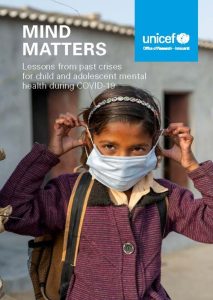 COVID-19 is a crisis like no other in modern times. It has reached every population and community. While the evidence base is still nascent, this report looks at the impacts of disasters and past epidemics – such as Ebola, HIV, SARS/MERS and Zika – on child and adolescent mental health and psychosocial wellbeing, and examines how these insights can guide policies and progammes to support children, their families and communities during the current pandemic. COVID-19 – its associated public health responses and social and economic impacts – is likely to have multiple deleterious effects on mental health, including elevated risks of anxiety and depression, trauma, loss of family and friends, violence, loneliness and social isolation. However, this pandemic also offers opportunities for positive coping and resilience. While there is no magic formula to address the mental health and psychosocial impacts of crises, there are proven and promising interventions from past experiences to mitigate the impact today – especially for the most vulnerable children and adolescents. These include social protection, caregiver skills and support, community and social support, life skills and school-based programmes, and specialized care, to name a few.
Task Force on COVID-19 Vaccines, Therapeutics, and Diagnostics
https://www.covid19taskforce.com/en/programs/task-force-on-covid-19-vaccines
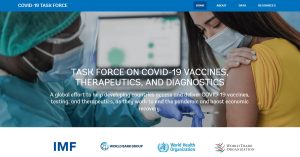 The heads of the International Monetary Fund, World Bank Group, World Health Organization and World Trade Organization launched a new website on 30 July 2021 which will serve as a platform for information on access to COVID-19 vaccines, therapeutics and diagnostics and on the activities of the organizations in tackling the pandemic. The website is an initiative of the Task Force on COVID-19 Vaccines, Therapeutics and Diagnostics for Developing Countries, which was set up to identify and resolve impediments to vaccine production and deliveries. The Task Force held its first meeting on 30 June. The website provides an array of data on rates of vaccination and the purchase and deliveries of vaccines, diagnostics and therapeutics broken down by country, region and level of income. A resources section directs users to the activities and initiatives of the four international agencies on COVID-19 related matters.
WHAT’S NEXT? Lessons on Education Recovery: Findings from a Survey of Ministries of Education amid the COVID-19 Pandemic
http://uis.unesco.org/sites/default/files/documents/lessons_on_education_recovery.pdf
 Around one in three countries where schools are or have been closed are not yet implementing remedial programmes post-COVID-19 school closures, according to a UNESCO, UNICEF, World Bank and OECD global “Survey on National Education Responses to COVID-19 School Closures”. At the same time, only one-third of countries are taking steps to measure learning losses in primary and lower second levels – mostly among high-income countries. Fewer than a third of low- and middle-income countries reported that all students had returned to in-person schooling, heightening their risk of learning loss and drop-out. However, the majority of countries reported using at least one form of outreach to encourage students’ return to school, including community engagement, school-based tracking, modification to water, sanitation and hygiene services, financial incentives and review of access policies.
Economic Growth and Sustainable Development
2021 UNAIDS Global AIDS Update: Confronting inequalities; Lessons for pandemic responses from 40 years of AIDS
https://www.unaids.org/en/resources/documents/2021/2021-global-aids-update
The UNAIDS Global AIDS Update 2021, launched on 14 July 2021, highlights evidence that people living with HIV are more vulnerable to COVID-19, but that widening inequalities are preventing them from accessing COVID-19 vaccines and HIV services. Studies from England and South Africa have found that the risk of dying from COVID-19 among people living with HIV was double that of the general population. In sub-Saharan Africa, which is home to two thirds (67%) of people living with HIV, less than 3% had received at least one dose of a COVID-19 vaccine by July 2021. At the same time, HIV prevention and treatment services are eluding key populations, as well as children and adolescents. COVID-19 vaccines could save millions of lives in the developing world but are being kept out of reach as rich countries and corporations hold on tightly to the monopoly of production and delivery of supplies for profit. This is having a severe impact around the world as health systems in developing countries become overwhelmed, such as in Uganda, where football stadiums are being turned into makeshift hospitals.
 Climate Box (UNDP)
http://climate-box.com/
Climate Box is a comprehensive learning toolkit that educates school children about climate change and inspires them to take action. Designed to make learning fun and interesting, the Climate Box provides up-to-date information on climcate change with a range of creative tasks, games, quizzes and experiments, as well as resources for teachers/educators.
Climate Change 2021: the Physical Science Basis (IPCC Working Group I report)
https://www.ipcc.ch/report/ar6/wg1/
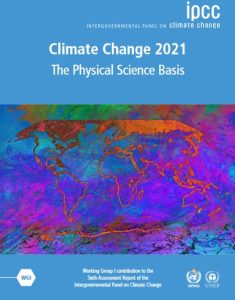 Scientists are observing changes in the Earth’s climate in every region and across the whole climate system, according to the latest Intergovernmental Panel on Climate Change (IPCC) Report, released on 9 August 2021. Many of the changes observed in the climate are unprecedented in thousands, if not hundreds of thousands of years, and some of the changes already set in motion—such as continued sea level rise—are irreversible over hundreds to thousands of years. However, strong and sustained reductions in emissions of carbon dioxide (CO2) and other greenhouse gases would limit climate change. While benefits for air quality would come quickly, it could take 20-30 years to see global temperatures stabilize, according to the IPCC Working Group I report, Climate Change 2021: the Physical Science Basis, approved on 6 August by 195 member governments of the IPCC, through a virtual approval session that was held over two weeks starting on July 26. The Working Group I report is the first instalment of the IPCC’s Sixth Assessment Report (AR6), which will be completed in 2022.
A European Union Carbon Border Adjustment Mechanism: Implications for developing countries (UNCTAD)
https://unctad.org/system/files/official-document/osginf2021d2_en.pdf
 The European Union (EU) carbon border adjustment mechanism (CBAM) announced on 14 July could change trade patterns in favour of countries where production is relatively carbon efficient but do little to mitigate climate change, UNCTAD has warned. This UNCTAD report, published on 14 July 2021, shows the CBAM’s potential implications on international trade, carbon dioxide (CO2) emissions, income and employment for countries inside and outside the EU, with a special focus on developing and vulnerable countries. The CBAM is expected to introduce new CO2 emissions-cutting measures transitionally in 2023 and finalize them before 2026. The report confirms that introducing the CBAM would reduce part of the carbon leakage produced by the different climate change ambitions between the EU and other countries. Carbon leakage refers to the relocation of production to other countries with laxer emissions constraints for costs reasons related to climate policies, which could lead to an increase in their total emissions.
 Financing Sustainable Urban Development
https://unhabitat.org/online-reports/financing-sustainable-urban-development
As requested by the European Parliament, the European Commission, European Investment Bank and UN-Habitat, supported by the International Growth Centre, are working on a pilot initiative to identify measures to mobilize financing for sustainable urban development in low-income countries. During the virtual InfoPoint conference hosted by the European Commission on 28 June 2021, an interactive web report was launched as one of the outcomes of the initiative. The report is based on review of empirical literature, case study research, several meetings with experts and practitioners (videos with key messages here), and guidance by an international Advisory Board.
A Future for All: The Need for Human-Wildlife Coexistence (WWF / UNEP)
https://www.unep.org/resources/report/future-all-need-human-wildlife-coexistence
 Conflict between people and animals, from China’s famed wandering elephants raiding farms for food and water to wolves preying on cattle in Idaho is one of the main threats to the long-term survival of some of the world’s most emblematic species, warns a new report from WWF and the UN Environment Programme (UNEP), out on 8 July 2021. Human-wildlife conflict – when struggles arise from people and animals coming into contact – often leads to people killing animals in self-defence, or as pre-emptive or retaliatory killings, which can drive species to extinction. The report highlights that globally, conflict-related killing affects more than 75% of the world’s wild cat species, as well as many other terrestrial and marine carnivore species such as polar bears and Mediterranean monk seals, and large herbivores such as elephants.
 Guidelines on Recreational Water Quality (WHO)
https://www.who.int/publications/i/item/9789240031302
WHO has launched updated Guidelines for Recreational Water Quality on 13 July 2021, as the northern hemisphere summer reaches its peak and beaches, lakes and riversides are likely to see the return of visitors after months spent close to home amid COVID restrictions. The guidelines, which should be applied alongside COVID-19 prevention measures, outline health-based water quality targets and best practice for monitoring and surveillance, pollution control and communication approaches such as predictive models to let users know in real time when it is safe to go in the water.
Recreational water use has long been recognized as a major influence on health and well-being. The benefits are evident when watching children play in the water or observing families taking much needed time together relaxing on a beach. Water sports can offer invigorating and healthy exercise options for all ages. Spending time at the waterside observing uplifts the spirit and can enhance physical and mental well-being.
Hydromet Gap Report 2021
Report & Executive Summary: https://www.unep.org/resources/report/hydromet-gap-report-2021
The first Hydromet Gap Report tells us how far we have to go to tap the benefits of effective weather and climate services. It presents the challenges of the complex global and local undertaking required and proposes priority actions to scale up support to developing countries to strengthen their capacity. It highlights how investments in multi-hazard early warning systems create benefits worth at least ten times their costs and are vital to build resilience to extreme weather. And yet,only 40 percent of countries currently have effective warning systems in place, and large gaps remain in the vital underpinning observations data upon which these services depend, particularly in Least Developed Countries (LDCs) and Small Island Developing States (SIDS).
Inclusive Growth at a Crossroads: Part One of Strengthening Inclusion and Facilitating the Green Transition
https://bit.ly/2V7fmJk
EU member states must ensure careful and efficient implementation of economic recovery plans that support inclusion and growth to bounce back from the worst impacts of the COVID-19 pandemic, says a new World Bank report, released on 26 July 2021. The World Bank’s latest EU Regular Economic Report finds that the unprecedented and exceptional policy response of governments and EU institutions has cushioned the worst impacts on employment and income. However, the pandemic has exposed and exacerbated deep-seated inequalities, halting progress in multiple areas including gender equality and income convergence across the EU member states. A further three to five million people in the EU today are estimated to be ‘at risk of poverty,’ based on national thresholds benchmarked before the crisis. The report highlights that effective recovery programs can reinforce progress on the green and digital transitions underway across the region. With the crisis continuing to unfold, government support schemes and the rollout of vaccines in a timely manner will remain essential to bolstering the resilience of firms, workers, and households. Given the longevity of the crisis and the impact on the most vulnerable, many governments have opted to extend the duration of support throughout 2021.
 New Global Framework for Managing Nature Through 2030
https://www.cbd.int/article/draft-1-global-biodiversity-framework
The UN Convention on Biological Diversity (CBD) Secretariat released on 12 July 2021 the first official draft of a new Global Biodiversity Framework to guide actions worldwide through 2030 to preserve and protect nature and its essential services to people.
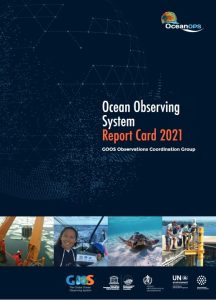 Ocean Observing System Report Card 2021
https://www.ocean-ops.org/reportcard2021/
The 2021 Ocean Observing System Report Card has been released on 15 July 2021. Each year this provides a key insight into the status of the Global Ocean Observing System, assessing observing networks’ progress, focusing on what is needed to meet the challenges and demands for ocean information, and encouraging collaborations and new partners to join the ocean observing community. The 2021 Report focuses on several key areas: – impact of the Covid-19 pandemic on ocean observation activities and the remarkable effort of the international community to carry-on observing operations under pandemic restrictions, – monitoring ocean oxygen and deoxygenation – vital to ocean health and marine resources, – status of the global ocean observing system and how we can meet key demands for ocean information.
 Policy Options to Eliminate Additional Marine Plastic Litter (IRP / UNEP)
Report in English, Fact Sheet in English, French & Spanish: https://www.unep.org/resources/publication/policy-options-eliminate-additional-marine-plastic-litter
Plastic litter entering the ocean is increasing, the impacts of plastic pollution on marine and coastal ecosystems are worsening, and our increasing understanding of the negative impacts of plastic pollution on human health is creating greater urgency to act. The annual discharge of plastic into the ocean is estimated to be 11 million tonnes (Lau et al 2020). New modelling by SYSTEMIQ and The Pew Trusts shows that under business as usual conditions, by 2040 municipal solid plastic waste is set to double, plastic leakage to the ocean is set to nearly triple and plastic stock in the ocean is set to quadruple.
A Practical Guide to Climate-resilient Buildings and Communities (UNEP)
https://www.unep.org/resources/practical-guide-climate-resilient-buildings
 The past decade was the hottest in human history. Apocalyptic fires and floods, cyclones and hurricanes are increasingly the new normal, and emissions are 62 per cent higher now than when international climate negotiations began in 1990. The evidence is clear. We are in a race against time to adapt to a rapidly changing climate – one of the three planetary crises we face along with biodiversity loss, pollution and waste. Accounting for 38 per cent of total global energy-related CO2 emissions, the construction industry will play an important role in achieving our goal to limit global warming to well below 2°C. According to some estimates, investing in more resilient infrastructure could also save humanity a whopping $4.2 trillion from climate change damages. UNEP’s new report shows how buildings and community spaces can be constructed to increase resilience, especially in developing countries, where settlements are largely self-built. The report also demonstrates how combining ‘grey’ building solutions with ‘green’ nature-based solutions can have promising results.
 Start Free, Stay Free, AIDS Free — Final report on 2020 targets (UNAIDS)
https://bit.ly/3zspyLs
In the final report from the Start Free, Stay Free, AIDS Free initiative, UNAIDS and partners warn that progress towards ending AIDS among children, adolescents and young women has stalled and none of the targets for 2020 were met. The report shows that the total number of children on treatment declined for the first time, despite the fact that nearly 800 000 children living with HIV are not currently on treatment. It also shows that opportunities to identify infants and young children living with HIV early are being missed—more than one third of children born to mothers living with HIV were not tested. If untreated, around 50% of children living with HIV die before they reach their second birthday.
The State of Food Security and Nutrition in the World 2021: Transforming food systems for food security, improved nutrition and affordable healthy diet for all

http://www.fao.org/state-of-food-security-nutrition/en/
There was a dramatic worsening of world hunger in 2020, the United Nations said on 12 July 2021 – much of it likely related to the fallout of COVID-19. While the pandemic’s impact has yet to be fully mapped, a multi-agency report estimates that around a tenth of the global population – up to 811 million people – were undernourished last year. The number suggests it will take a tremendous effort for the world to honour its pledge to end hunger by 2030. This year’s edition of The State of Food Security and Nutrition in the World is the first global assessment of its kind in the pandemic era. The report is jointly published by the Food and Agriculture Organization of the United Nations (FAO), the International Fund for Agricultural Development (IFAD), the United Nations Children’s Fund (UNICEF), the UN World Food Programme (WFP) and the World Health Organization (WHO). Previous editions had already put the world on notice that the food security of millions – many children among them – was at stake. “Unfortunately, the pandemic continues to expose weaknesses in our food systems, which threaten the lives and livelihoods of people around the world,” the heads of the five UN agencies write in this year’s Foreword. They go on to warn of a “critical juncture,” even as they pin fresh hopes on increased diplomatic momentum. “This year offers a unique opportunity for advancing food security and nutrition through transforming food systems with the upcoming UN Food Systems Summit, the Nutrition for Growth Summit and the COP26 on climate change.” “The outcome of these events,” the five add, “will go on to shape the […] second half of the UN Decade of Action on Nutrition” – a global policy commitment yet to hit its stride.
WHO Report on the Global Tobacco Epidemic 2021: New and Emerging Products
https://www.who.int/teams/health-promotion/tobacco-control/global-tobacco-report-2021
The eighth WHO report on the global tobacco epidemic was launched on 27 July 2021. This report tracks the progress made by countries in tobacco control since 2008 and, for the first time, presents data on electronic nicotine delivery systems, such as ‘e-cigarettes’. The report shows that many countries are making progress in the fight against tobacco, but some are not addressing emerging nicotine and tobacco products and failing to regulate them.
World Heritage Capacity-Building Programme – new website
https://whc.unesco.org/en/capacity-building/
The World Heritage Committee, during its extended 44th session, has officially taken note of the 10th Anniversary of the adoption of the World Heritage Capacity-Building Strategy (2011 – 2021). To mark this celebration, the World Heritage Centre is pleased to announce that a dedicated capacity building webpage has been made available to centralize all on-going and future capacity building activities: https://whc.unesco.org/en/capacity-building/. These tools and activities are conceived to help build the capacity of all stakeholders in World Heritage – whether they are practitioners, institutions, communities or networks.
World Tariff Profiles 2021
https://www.wto.org/english/news_e/news21_e/publ_14jul21_e.htm
The World Trade Organization (WTO) issued on 14 July the 2021 edition of World Tariff Profiles, a joint publication of the WTO, International Trade Centre and the United Nations Conference on Trade and Development (UNCTAD). The publication provides comprehensive information on the tariffs and non-tariff measures imposed by over 170 countries and customs territories.
International Peace and Security
Concept note for the briefing of the Security Council on the protection of humanitarian space
English, French & Spanish: https://undocs.org/S/2021/618
The Security Council held a public briefing on the protection of humanitarian space on 16 July 2021. France, the Security Council President for July 2021, has prepared this concept note.
Concept note for the Security Council high-level open debate on the theme “Enhancing maritime security: a case for international cooperation”
English, French & Spanish: https://undocs.org/S/2021/680
The Security Council held an open debate on the theme “Enhancing maritime security: a case for international cooperation”, under the item “Maintenance of international peace and security”, as a videoconference on 9 August 2021. India, the Security Council President for August 2021, has prepared this concept note in order to guide the discussions on the topic.
The Evolving Nature of DDR: Study on Engaging armed groups across the peace continuum
https://peacekeeping.un.org/en/evolving-nature-of-ddr
The absence of comprehensive peace agreements; the fragility of existing peace agreements; the increase in violence by non-state actors and the prevalence of localized conflict; the designation of armed groups as terrorist organizations; the continued fragmentation and multiplication of armed groups; the rise of transnational armed violence and criminal networks, as well as the impact of climate change, epidemics and pandemics in conflict settings: these are all key features in almost all the contexts in which DDR now takes place. The constantly evolving nature of conflicts has pushed DDR practice to evolve in lockstep. Along the way, new approaches, new tools, new ways of working but also new risks have emerged from these global trends that further complicate how the United Nations supports peace processes and member states to meet the needs of ex-combatants, their dependents, and the communities into which they reintegrate. This study represents an important effort in capturing these lessons in a manner that will be useful to policy makers and practitioners alike. In doing so, the study will contribute to a better understanding on how to operationalize the recently launched Integrated DDR Standards (IDDRS), which now cover peace operations and non-mission settings. Some of the recommendations captured in this study go beyond DDR and will be useful in shaping the next phase of implementation of the Secretary General’s A4P initiative, across key commitments such as those around politics, women, peace and security, peacebuilding and sustaining peace. Additionally, the study could also contribute to the ongoing discussions on the future of peace operations.
United Nations Security Council in Review – new newsletter
June edition: https://twitter.com/UNDPPA/status/1413936057041686530
July edition: https://twitter.com/UNDPPA/status/1423706987901202432
The Security Council Affairs Division (SCAD) of the Department for Political and Peacebuilding Affairs (DPPA) has launched a monthly newsletter offering an overview of the activity of the Security Council for the previous month. It is an addition to the existing research tools and information products available here.
Human Rights
Global fund for social protection: international solidarity in the service of poverty eradication: Report of the Special Rapporteur on extreme poverty and human rights, Olivier De Schutter (A/HRC/47/36, 22 April 2021)
English, French & Spanish: http://undocs.org/A/HRC/47/36
The COVID-19 pandemic triggered the worst economic fallout since the Great Depression of 1929. The pandemic and the procedures put in place to protect people led to a downward spiral, ultimately pushing an estimated 115 million additional into extreme poverty in 2020, and 35 million more may follow this year, according to Olivier De Schutter, Special Rapporteur on Extreme Poverty and Human Rights. “The reality is that we have been caught unprepared,” he said. “61 percent of the global workforce is still made up of informal workers or workers in precarious forms of employment, with little or no access to social protection. 55 percent of the world’s population, 4 billion people, lack any form of social protection and an additional 26 percent are covered only against some forms of economic insecurity.” De Schutter presented the report at the 47th Session of the Human Rights Council, on 30 June 2021, in Geneva, Switzerland.
Freedom of Expression and the Safety of Foreign Correspondents: Trends, Challenges and Responses
https://unesdoc.unesco.org/ark:/48223/pf0000378300
A new UNESCO report highlights trends and challenges regarding the safety of foreign correspondents, as well as the crucial role they play in informing the public around the globe. The environment and nature of the work of foreign correspondents has significantly changed in recent years under the influence of the digital revolution, which has also enabled them to reach wider audiences than ever before. Foreign correspondents are nowadays increasingly diverse, with more women, and more local and freelance journalists. While foreign correspondents were historically thought of as foreigners reporting to foreign audiences, more and more of them are local journalists serving external media. Like many of their fellow journalists, foreign correspondents are affected by growing hostility and violence towards the press, including gender-based violence and harassment against women journalists as well as killings. They also face specific threats and a particular brand of political hostility, as they are at times branded as foreign agents who spread disinformation or as threats to national security. In some countries, they are blocked from obtaining accreditation or visas, and may even be expelled to deter scrutiny and reporting on elections, public protests along with political and social issues. These kinds of measures have been particularly visible during the COVID-19 crisis.
Humanitarian Affairs
New! UNRIC Library Backgrounder: Ethiopia
https://unric.org/en/unric-library-backgrounder-ethiopia/
 Migrant deaths on maritime routes to Europe in 2021
https://missingmigrants.iom.int/Med_deaths_Jan-Jun_2021
At least 1,146 people died attempting to reach Europe by sea in the first six months of 2021 according to a new briefing released on 14 July 2021 by the International Organization for Migration (IOM). Deaths along these routes more than doubled so far this year compared to the same period in 2020, when 513 migrants are known to have drowned. The brief sheds light on the ongoing situation along some of the most dangerous maritime migration routes worldwide. While the number of people attempting to cross to Europe via the Mediterranean increased by 58 per cent between January and June this year compared to the same period in 2020, more than twice as many people have lost their lives.
 Open South America Portal (IOM)
English: https://opensouthamerica.info/en
Spanish: https://suramericaabierta.info/
Portuguese: https://suramericaabierta.info/pt-br
IOM, the International Organization for Migration, launched on 9 July 2021 the Open South America Portal, a web platform providing migrants and stakeholders in the region with access to reliable and timely information on human mobility restrictions and health and safety measures adopted by governments in the COVID-19 pandemic. Open South America shares official information by country on the latest measures, including border restrictions, quarantine requirements and COVID-19 tests for migrants and travellers. The portal also provides updated information on authorized entry points and key places for travellers and migrants, such as consulates, migrant care and health centres, airports, border crossings points and ports. This information can be explored through an interactive map.
Overlooked: Examining the Impact of Disasters and Climate Shocks on Poverty in Europe and Central Asia (World Bank)
http://documents.worldbank.org/curated/en/493181607687673440/Overlooked-Examining-the-Impact-of-Disasters-and-Climate-Shocks-on-Poverty-in-the-Europe-and-Central-Asia-Region

Social isolation and loneliness among older people (Advocacy Brief)
https://www.who.int/teams/social-determinants-of-health/demographic-change-and-healthy-ageing/social-isolation-and-loneliness
Released in advance of the International Day of Friendship, a new advocacy brief highlights that social isolation and loneliness among older people are widespread globally. The COVID-19 pandemic and the resultant physical distancing measures have exacerbated these conditions. The UN Decade of Healthy Ageing 2021 – 2030 presents a major opportunity for the World Health Organization (WHO) and other United Nations agencies to address social isolation and loneliness in a more sustained way. Produced by WHO, International Telecommunication Union, UN Women and the UN Department of Economic and Social Affairs, the advocacy brief proposes a three-point strategy for addressing social isolation and loneliness during the UN Decade of Healthy Ageing 2021 – 2030: – Create a global coalition to increase the political priority of social isolation and loneliness; – Improve research and strengthen the evidence for effective interventions; and – Implement and scale up effective interventions.
Talent on the Move: Listening to children and young people on the move to unlock their potential (UNICEF)
 https://www.unicef.org/reports/talent-move
Nearly 40 per cent of migrant and displaced youth identified education and skills training as their top priorities, while 30 per cent named employment opportunities, according to a new UNICEF poll announced on the eve of World Youth Skills Day. Approximately 70 per cent of those surveyed also said limited financial resources prevent them from accessing learning opportunities, while almost 40 per cent reported a lack of available jobs as their biggest barrier to earning an income. These findings were revealed through a U-Report poll of more than 26,000 people, including almost 9,000 young people (aged 14-24), across 119 countries. The poll, conducted between 6 May and 1 June 2021, asked respondents about their aspirations to learn and earn, and the unique barriers they face – as a girl or as a refugee, trying to access the labour market with or without legal status. Insights from the poll along with stories from migrant and displaced youth themselves are included in the newly released ‘Talent on the Move’ report from UNICEF.
Drug Control, Crime Prevention and Counter-terrorism
Nearly twelve million people imprisoned globally nearly one-third unsentenced with prisons overcrowded in half of all countries (UNODC Data Matters 1)
https://bit.ly/3iy1ShT
 One in every three prisoners worldwide are held without a trial, which means that they have not been found guilty by any court of justice, according to the first global research data on prisons published by the United Nations Office on Drugs and Crime. The research brief, released ahead of Nelson Mandela International Day on 18 July, examines the long-term trends of imprisonment, stating that over the past two decades, between 2000 and 2019, the number of prisoners worldwide has increased by more than 25 per cent, with a global population growth of 21 per cent in the same period, with 11.7 million people incarcerated at the end of 2019. This is a population comparable in size to entire nations such as Bolivia, Burundi, Belgium, or Tunisia.
Justice and International Law
A Legal Framework for Impact: sustainability impact in investor decision-making
https://www.unepfi.org/legal-framework-for-impact/
Freshfields Bruckhaus Deringer (Freshfields) has released a new report on 21 July 2021, commissioned by The Generation Foundation, the United Nations-supported Principles for Responsible Investment (PRI), and the United Nations Environment Programme Finance Initiative (UNEP FI). The report provides the first ever comprehensive analysis of how far the law requires or permits investors to take deliberate steps to tackle sustainability challenges in discharging their duties, described as investing for sustainability impact. Investors are increasingly focusing on the impact of their activities on the environment and society. This report brings much needed clarity and also looks at the opportunities for policy reform that would better enable investors to have coherence on the legal frameworks to invest sustainably. The jurisdictions covered are Australia, Brazil, Canada, China, the EU, France, Japan, the Netherlands, South Africa, the United Kingdom and the United States.
Newsletter Archive: https://unric.org/en/unric-info-point-library-newsletter-archive