
New UN websites & publications
UN in General

English: https://press.un.org/en/2025/sgsm22735.doc.htm
French: https://press.un.org/fr/2205/sgsm22735.doc.htm
On 22 July 2025, the UN Secretary-General focused on a hopeful story emerging amidst the ongoing climate devastation and turmoil: that of a new energy era. He outlined a compelling and evidence-backed case for why a just transition away from fossil fuels to renewable energy is inevitable – and the vast benefits it will bring for people and economies. Underlining the importance of seizing this moment of opportunity, the Secretary-General outlined the key action areas and steps required to turbocharge a renewables revolution that can deliver clean and affordable energy for all.
see also:
UN News Story in English, French, Spanish, Portuguese
Special Website “A Moment of Opportunity” in English, French, Spanish

https://www.un.org/sites/un2.un.org/files/un-energy-transition-report_2025.pdf
A special technical report, “Seizing the moment of opportunity: supercharging the new energy era of renewables, efficiency, and electrification,” provides a high-level synthesis of the state of play of — and the economic imperative and opportunity for — accelerating the transition away from fossil fuels to clean energy, with a particular focus on the roles of renewables, electrification, and energy efficiency. The report was prepared by the UN Secretary-General’s Climate Action Team with the support of UN specialized agencies, funds and programmes as well as leading international institutions.
The Sustainable Development Goals Report 2025
https://unstats.un.org/sdgs/report/2025/


https://www.un.org/un80-initiative/en
In March 2025, the Secretary-General launched the UN80 Initiative to transform how the UN works – identifying efficiencies, reviewing how mandates are implemented, and examining potential structural changes and programme realignment within the United Nations system.
UN80 Initiative: Workstream 2 – Report of the Mandate Implementation Review
https://www.un.org/un80-initiative/en/report-mandate-implementation-review
The United Nations has released this report examining how its mandates are created, delivered and reviewed, and offering proposals for the consideration of Member States to strengthen each of these functions. The report forms part of the UN80 Initiative, which overall seeks to support a more aligned, efficient, and results-oriented UN system.

https://unsdscoalition.org/
The United Nations Coalition on Combating Sand and Dust Storms is an inter-agency network that promotes cooperation on sand and dust storms. The Coalition brings together expertise from different areas relevant to addressing sand and dust storm issues, offering targeted cross-sectoral and cross-cutting technical support at the at global, regional and national levels.

https://unric.org/en/unric-library-backgrounder-extreme-heat/
This new backgrounder provides an overview of the information available throughout the UN system on extreme heat & heatwaves.
For backgrounders on other topics – check our website at https://unric.org/en/info-point-library/backgrounders/
Economic Growth and Sustainable Development

https://aiforgood.itu.int/ai-for-food-systems/
This new Global Initiative on AI for Food Systems launched at the AI for Good Global Summit 2025 aims to ensure that artificial intelligence (AI) helps boost productivity, resilience, and global food security. The initiative is led by the International Telecommunication Union (ITU), UN Food and Agriculture Organization (FAO), World Food Programme (WFP), and International Fund for Agricultural Development (IFAD).
https://aiforgood.itu.int/ai-standards-exchange/
This new AI Standards Exchange Database launched at the latest AI for Good Global Summit will help establish the technical foundations for artificial intelligence (AI) innovations to achieve global impact. The database forms part of broader collaboration to ensure standards provide practical tools to shape better AI. It will help standards bodies to coordinate their work and empower companies, policymakers and regulators with comprehensive suites of AI standards.
Arab Vision 2045: A journey of hope through thought, will and action (UNESCWA)
https://www.unescwa.org/publications/arab-vision-2045


https://tinyurl.com/2rh8uaf6
The newly launched Action Plan for Sciences, developed by UNESCO since 2024 with more than 60 local partners, outlines concrete measures to strengthen research infrastructure, support young scientists, foster international cooperation, and to integrate Ukraine more deeply into the European and global research space. The Plan foresees an estimated funding need of USD 18 million for 2025–2026 to implement its core activities.

https://hdl.handle.net/10986/43411
Climate change is a global challenge requiring unprecedented levels of collective action. In this context, this paper asks: do appeals to historical responsibility facilitate or hinder collective action? This paper uses a simple lab experiment simulating climate mitigation bargaining between high- and low-income countries. A key design feature is that the need for mitigation is triggered based on historical actions that were undertaken without knowledge of their impact on the environment (and hence, the need for mitigation).

https://www.undp.org/publications/economic-diversification-push-landlocked-developing-countries-achieving-awaza-programme-action
This paper explores the persistent trade and development challenges faced by landlocked developing countries (LLDCs), including high transport costs, limited market access, and economic reliance on a narrow set of raw exports. As global trade dynamics shift, through rising tariffs, new supply chain patterns, and increasing uncertainty, LLDCs face a risk of deeper marginalization. In response, the paper outlines two potential futures: one that reinforces existing trade patterns, and another that embraces economic diversification to expand export markets and build resilience. Broad policy directions are presented to support this transformation, including stronger regional integration, improved infrastructure, targeted industrial strategies, and deeper partnerships. While challenges are significant, the paper emphasizes that with strategic choices and the right support, LLDCs can reposition themselves within a changing global trade system and unlock more inclusive, sustainable development.
see also: 10 things you need to know about landlocked developing countries (4 August 2025): https://www.undp.org/stories/10-things-you-need-know-about-landlocked-developing-countries

https://unesdoc.unesco.org/ark:/48223/pf0000394614
UNESCO and its partners released on 15 July 2025 this report which shows the extent to which extractive industries are encroaching upon UNESCO World Heritage sites. It offers the most comprehensive analysis to date on the presence and proximity of areas licenced for oil, gas, and mineral exploration and production in and around some of the world’s most treasured cultural and natural heritage sites. Jointly released by UNESCO, the Church of England Pensions Board, Greenbank, the International Union for Conservation of Nature (IUCN), and the World Wildlife Fund (WWF), the report also emphasizes the critical role investors can play in assessing their risk exposure and influencing extractive companies’ practices. The data and analysis in the report help investors identify and manage the risks, aligning their investment decisions with global heritage protection commitments.

https://www.unep.org/resources/frontiers-2025-weight-time
As extreme heat grips many countries and becomes “the new normal”, the UN Environment Programme (UNEP) warns of heightened health risks for older persons in the Frontiers 2025 Report published on 10 July 2025. Other highlighted impacts of climate change include the melting of glaciers that reawaken ancient pathogens and floods that risk releasing dangerous chemicals. The 7th edition of the Frontiers Report is part of UNEP’s Foresight Trajectory initiative and highlights emerging environmental issues as well as potential solutions. The first edition in 2016, warned of the growing risk of zoonotic diseases, four years before the COVID-19 pandemic. This report is released as communities across China, Japan, India, Europe, USA and elsewhere face weeks of extreme heat and flooding.
Global Youth Consultations on Trade: A report by the WTO Young Trade Leaders
https://www.wto.org/english/news_e/news25_e/ytl_14jul25_e.pdf

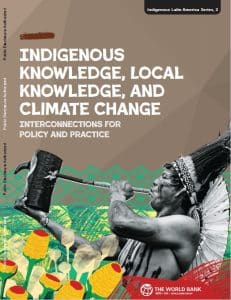
Indigenous Knowledge, Local Knowledge, and Climate Change: Interconnections for Policy and Practice (World Bank)
https://hdl.handle.net/10986/43486

http://hdl.handle.net/10986/43428
Climate risks are worsening and threaten food and nutrition security and global food markets. This report explores how shocks, food price policies, and food trade affect Food and Nutrition Security (FNS) in an era of changing climate. It aims to guide policy responses to climate change’s projected impacts on FNS by examining the relationship between shocks, food trade, and price volatility from other contexts. The report analyzes the food shock related to Russia’s invasion of Ukraine to better understand future food security and price shocks driven by climate change. It also assesses the effects of price insulation policies on global and domestic food markets. The report argues that open trade and integrated markets, free from price distorting policies, offer the greatest benefits for FNS and household welfare in a warming world.
Mapping the application of artificial intelligence in traditional medicine: technical brief (WHO / ITU / WIPO)
https://www.who.int/publications/i/item/9789240107663
Artificial intelligence (AI) is ushering in a transformative era for traditional medicine, one where centuries-old healing systems are enhanced by cutting-edge technologies to deliver more safe, personalized, effective, and accessible care. At the AI for Good Global Summit, the World Health Organization (WHO), the International Telecommunication Union (ITU), and the World Intellectual Property Organization (WIPO) released this new technical brief. Launched under the Global Initiative on AI for Health, this brief offers a roadmap harnessing this potential responsibly while safeguarding cultural heritage and data sovereignty.

https://www.undp.org/publications/ndc-insights-series
The NDC Insights Series, a flagship knowledge product of UNDP’s Climate Promise 2025 initiative, provides the latest updates and emerging trends on the preparation of new Nationally Determined Contributions (NDCs) due for submission to the UNFCCC in 2025. Tasked by the United Nations Secretary-General, UNDP is leading a coordinated UN system wide effort to support developing countries in their preparation of these new NDCs. This Insight Series, released monthly by UNDP, will share timely analysis, critical insights and explore the latest thematic trends we are seeing in the 2025 submission cycle.
May/June Issue 4: This NDC Insight issue explores how countries are boosting the implementability and investability of their new NDCs including leveraging carbon market opportunities and aligning with sustainable development financing processes. It also spotlights Nepal’s new NDC as the first full submission from a least developed country (LDC).

https://hdl.handle.net/10986/43452
Wildfires pose significant environmental and socioeconomic challenges, necessitating efficient management and prevention through proper resource allocation and financial oversight. Despite evidence on risks, drivers, and opportunity costs of intervention, there is little information on how countries’ policies and practices are evolving with increased wildfire risk, particularly regarding additional investments needed to strengthen response and prevention and risk reduction capacities. To address this gap, the World Bank has developed this guide to wildfire management public expenditure review to help governments and relevant agencies review their wildfire management expenditures, align spending with strategic goals, and enhance the efficiency and effectiveness of funding usage.

https://unesdoc.unesco.org/ark:/48223/pf0000394338
Developed by UNESCO in partnership with Dr. Rumman Chowdhury and Humane Intelligence, this Playbook offers a practical, step-by-step guide to help organizations, policymakers, educators, and civil society actors test generative AI models for bias, stereotypes, and potential harm—especially those enabling technology-facilitated gender-based violence (TFGBV). Grounded in a real Red Teaming exercise held at UNESCO, the Playbook empowers users to uncover risks, engage in ethical AI development, and advocate for safer, more inclusive digital spaces.

https://unesdoc.unesco.org/ark:/48223/pf0000394521
New research published by UNESCO and University College London (UCL), shows that small changes to how Large Language Models are built and used can dramatically reduce energy consumption without compromising performance. The report advocates for a pivot away from resource-heavy AI models in favour of more compact models. Used together, these measures can reduce energy consumption by up to 90%. This new report calls on governments and industry to invest in sustainable AI research and development, as well as AI literacy, to empower users to better understand the environmental impact of their AI use and make more informed decisions.

https://unescwa.org/publications/socioeconomic-impacts-lebanon-2024-war
The United Nations has called for urgent and coordinated recovery efforts in Lebanon to prevent the ongoing crisis from deepening in the already war-torn and heavily impacted country. The call follows the release of a multi-agency report by UNDP and ESCWA, in collaboration with UNICEF, ILO, and UN-Habitat. The report highlights the devastating impact of the conflict that began on 8 October 2023 and escalated in September 2024, examining loss and damage to human lives, infrastructure, economic disruption, and the wider effects on livelihoods and society. These impacts unfolded against the backdrop of a multifaceted crisis that had already gripped Lebanon for six years.

Full Digital Report in English: https://www.fao.org/3/cd6008en/online/cd6008en.html
PDF Report in English: https://doi.org/10.4060/cd6008en
In Brief in English, French and Spanish: https://doi.org/10.4060/cd6015en
An estimated 8.2 percent of the global population, or about 673 million people, experienced hunger in 2024, down from 8.5 percent in 2023 and 8.7 percent in 2022. However, progress was not consistent across the globe, as hunger continued to rise in most subregions of Africa and western Asia, according to this year’s The State of Food Security and Nutrition in the World (SOFI 2025) report published on 28 July 2025 by five specialized agencies of the United Nations. Launched during the Second UN Food Systems Summit Stocktake (UNFSS+4) in Addis Ababa, SOFI 2025 indicates that between 638 and 720 million people faced hunger in 2024. Based on the point estimate* of 673 million, this represents a decrease of 15 million people from 2023 and of 22 million from 2022. While the decline is welcome, the latest estimates remain above pre-pandemic levels, with the high food inflation of recent years contributing to the slow recovery in food security.
see also: Beating hunger through social protection, investments and resilience: FAO Chief Economist: Interview with Máximo Torero on key takeaways from SOFI 2025 report (28 July 2025): https://www.fao.org/newsroom/detail/beating-hunger-through-social-protection–investments-and-resilience–fao-chief-economist/en

https://trackingsdg7.esmap.org/
Almost 92% of the world’s population now has basic access to electricity, according to the latest data released in Tracking SDG 7: The Energy Progress Report 2025, at a virtual briefing on 25 June. While this is an improvement, 666.4 million people remain without access, with current progress insufficient to reach the target of universal access by 2030. Calling for urgent action to meet basic energy needs, the report also stresses that continued progress on renewable energy and energy efficiency are key to achieve both sustainable development and climate goals. The report is prepared annually by the five indicator custodian agencies that monitor data on Sustainable Development Goal 7 — IEA, IRENA, UN Statistics Division, World Bank and WHO.

https://www.who.int/europe/publications/i/item/WHO-EURO-2025-12307-52079-79927
Integrating lived/living experience practitioners into health-care and social systems is crucial to realizing recovery-oriented mental health care. Practitioners model recovery and bridge gaps between traditional health-care structures and service users, humanizing and promoting inclusivity of services. This roadmap, co-created under the WHO Regional Office for Europe’s collaboration with the European Commission under the “Addressing mental health challenges in the European Union, Iceland and Norway” project, provides a structured framework to integrate lived/living experience expertise into mental health systems and workforce through six essential actions. Case studies from a variety of European countries are presented to illustrate these actions in practice. The roadmap is for use by governments, mental health policy-makers, service providers, people who use services, lived/living experience workers and advocates.
UN DESA Policy Brief No. 180: Anticipating the extent and pace of population ageing in SIDS can help build a more sustainable future in these vulnerable states
https://desapublications.un.org/policy-briefs/un-desa-policy-brief-no-180-anticipating-extent-and-pace-population-ageing-sids-can
Over the next decades, most small island developing States (SIDS) are projected to experience a rapid increase in both the share and the number of people aged 65 years or over. In half of the SIDS, the size of the older population will double between now and 2055. All SIDS, even those with youthful populations today, should embrace forward-looking strategies to capitalize on the opportunities that population ageing will bring, while also addressing the context-specific challenges it may pose.
UNESCO Media and Information Literacy (MIL) Alliance Platform
https://community.unesco.org/milAlliance/

International Peace and Security

https://www.undp.org/publications/2024-voluntary-national-reviews-through-lens-peaceful-just-and-strong-institutions
This analytical report explores how SDG 16 is being taken up and integrated into national priorities. It addresses key questions: Are SDG 16 targets reflected in national plans? What challenges are countries facing in advancing SDG 16? How are data and statistics being used to track progress? The report highlights growing demand and opportunity to strengthen the focus on SDG 16 within the VNR process, not only as an enabler of the 2030 Agenda, but also as a vehicle to promote its core principles of accountability, inclusion, and justice. Unlocking the full potential of SDG 16 and mobilizing the necessary political and financial support requires a clearer understanding of how it contributes to progress across all SDGs. This latest installment in UNDP’s series examining SDG 16 in VNRs reviews the 39 VNRs presented by Member States at the 2024 High-Level Political Forum.

https://childrenandarmedconflict.un.org/wp-content/uploads/2025/07/Gender-paper-CAAC-LISD-7-3.pdf
Reintegration programmes for children formerly associated with armed forces and armed groups are critical elements of building and sustaining peace in conflict and post-conflict situations, contributing to security, stability and social cohesion, and supporting transitions from military to civilian life. Reintegration programmes play a central role in mitigating the potential negative impacts of the return of these children to communities and families and provide services to redress harms, support resilience and establish meaningful livelihoods. This paper, released on 8 July 2025, provides research-based analysis as well as child-inclusive and gender-responsive considerations for practitioners working along the spectrum of reintegration programming, including how programmes can be designed to address these gaps.
Concept note for the Security Council high-level open debate on the theme “Promoting international peace and security through multilateralism and peaceful settlement of disputes”
English, French & Spanish: https://docs.un.org/S/2025/443
The Security Council held a high-level open debate on the theme “Promoting international peace and security through multilateralism and peaceful settlement of disputes”, convened on 22 July 2025 by the delegation of the Islamic Republic of Pakistan in its capacity as President of the Council for July 2025.
Concept Note for the Security Council high-level open debate on the theme “Maritime security: prevention, innovation and international cooperation to address emerging challenges”
English, French & Spanish: https://docs.un.org/S/2025/483
As President of the Security Council, Panama intends to convene an open debate as their high-level signature event on the theme “Maritime security: prevention, innovation and international cooperation to address emerging challenges” under the item “Maintenance of international peace and security” on 11 August 2025. This concept note was issued, outlining the thematic scope of the event.

https://disarmament.unoda.org/unoda-occasional-papers-no-45-july-2025/
The objective of this handbook is to compile basic knowledge and means for artificial intelligence (AI) practitioners to understand, evaluate and mitigate, in the research and innovation process, the risks of the diversion and misuse of civilian AI technology by irresponsible actors. The handbook shows why and how decisions around the development and diffusion of research and innovation can impact risks of misuse, and in turn generate risks or even opportunities for international peace and security.
Human Rights

“Beijing+30: From words to action” is a five-part policy paper series produced by UN Women under the ACT to End Violence against Women Programme, a transformative partnership with the European Union. Released as part of the 30-year review of the Beijing Declaration and Platform for Action, the series offers governments, practitioners, and advocates practical guidance to accelerate efforts to end violence against women and girls.
The series includes:
- Preventing violence against women and girls
- Data and research on violence against women and girls
- National action plans to end violence against women and girls
- Support services, including access to justice, to end violence against women and girls
- The critical role of women’s rights organizations for ending violence against women and girls
Briefing Paper on Trafficking in Persons and the Rights of Persons with Disabilities (UN HCR)
https://www.ohchr.org/en/documents/policy-briefs/briefing-paper-trafficking-persons-and-rights-persons-disabilities

Guidance framework for creating a Human Rights City (OHCHR)
https://www.ohchr.org/en/documents/tools-and-resources/guidance-framework-creating-human-rights-city
This guidance framework, elaborated in cooperation with the European Union Fundamental Rights Agency, is intended to help cities to embed human rights, including the right to development and the right to a clean, healthy and sustainable environment, into all aspects of urban governance.
HRC mapper
https://hrcmap.ohchr.org/
The Secretariat of the Human Rights Council has the pleasure to share a link to the preliminary version of the Human Rights Council mapping tool, HRC mapper, developed pursuant to A/HRC/PRST/OS/18/1. The HRC mapper is a structured database that maps existing Human Rights Council initiatives, including reports, mechanisms, and mandated activities from adopted texts. The tool also contains forward-looking information on projected resolutions and the Council’s 3-year programme of work. Guidance and further information are available within the tool.
No safe haven: Human rights risks faced by persons involuntarily returned to Afghanistan (OHCHR / UNAMA)
https://unama.unmissions.org/afghanistan-un-report-documents-human-rights-violations-forced-returnees
This UN report published on 24 July 2025 documents the cases of individuals involuntarily returned to Afghanistan who have experienced serious human rights violations on the basis of their specific profiles. These violations have included torture and ill-treatment, arbitrary arrest and detention, and threats to personal security – at the hands of the de facto authorities. Since 2023, large numbers of Afghans have been involuntarily returned to the country, primarily by Pakistan and Iran. The report issued by the UN Assistance Mission in Afghanistan and the UN Human Rights Office found that groups of people returning to the country who were at particular risk of reprisals and other human rights violations by the de facto authorities were women and girls, individuals affiliated with the former government and its security forces, media workers and civil society. It is based on interviews conducted in 2024 with 49 individuals involuntarily returned to Afghanistan.

UNICEF’s Action against Child Trafficking: Strengthening systems to prevent child trafficking, protect children, and enable recovery and reintegration of survivors
https://www.unicef.org/reports/unicefs-action-against-child-trafficking
This white paper assesses the scale of child trafficking, sets out UNICEF’s unique value proposition in this space, shares concrete examples of UNICEF’s programmatic footprint, and outlines strategic priorities for stronger global action.

Women belonging to communities discriminated against based on work and descent: Advancing intersectional rights and justice (UN Women)
https://www.unwomen.org/en/digital-library/publications/2025/07/women-belonging-to-communities-discriminated-against-based-on-work-and-descent
Around the world, 270 million geographically diverse people belong to communities that face deep-rooted discrimination based on their family’s traditional work and social status. These communities—including Dalits in South Asia, Roma in Europe, Haratines in Africa, and Quilombola in Latin America—experience systematic exclusion that passes from one generation to the next, often encompassing notions of “pollution” and “purity”. Women and girls in these communities face both inherited discrimination and gender inequality, making their situation particularly severe. This policy paper examines how women from communities discriminated against based on work and descent (CDWD) experience multiple, overlapping forms of discrimination that affect every aspect of their lives. It brings together research, legal analysis, and consultations with grassroots organizations to provide a comprehensive look at this underrecognized human rights issue.
Humanitarian Affairs

https://dtm.iom.int/reports/global-overview-migration-routes-january-april-2025
This edition of the Global Overview of Migration Routes aims to provide a snapshot of global migration between January and April 2025, from a route-based perspective. Spotlight sections have been added to this edition to include routes in Asia and the Pacific. Additional spotlights also present a deep dive into key migration trends during the reporting period, such as emerging southbound flows in the Americas and the new mobility dynamics of Syrian nationals following the rapid power shift in Damascus in December 2024. This edition has also integrated foresight analysis to provide a look ahead at possible scenarios along each of the major routes as the year unfolds.

https://www.who.int/publications/i/item/9789240112452
This is the seventh report in the Global Evidence Review on Health and Migration (GEHM) series. The publication examines how health systems are responding to the health needs of migrant and displaced populations in the context of climate change. Drawing on a review of 95 health system interventions across WHO’s six health system building blocks, it highlights current approaches, evidence gaps, and opportunities for strengthening migrant-inclusive and climate-resilient health systems. Key findings include the adaptation of existing interventions to new scenarios as well as innovative new practices. The review also identified main gaps in the evidence, particularly regarding longer-term interventions, broader planning and preparedness, and building resilience into health systems.

https://www.unicef.org/ukraine/en/reports/nurturing-future-investing-every-child-ukraines-recovery
This UNICEF Advocacy Brief highlights the urgent need to place children at the heart of Ukraine’s recovery. The war has devastated children’s lives, disrupted essential services, and reversed decades of progress. With nearly a third of children displaced and 70% facing material deprivation, rebuilding a future for Ukraine means investing in early childhood development, education, health, family-based care, and inclusive services. UNICEF works alongside the Government of Ukraine and local partners to deliver sustainable, locally led recovery efforts. From rebuilding schools and water systems to supporting families and empowering youth, the brief outlines a roadmap to help every child not just survive, but thrive. The time to act is now—for children, for Ukraine, for the future.

https://www.unhcr.org/media/brink-devastating-toll-aid-cuts-people-forced-flee
Following major cuts to humanitarian budgets, up to 11.6 million refugees and others forced to flee risk losing access this year to direct humanitarian assistance from UNHCR, the UN Refugee Agency, according to this report published on 18 July 2025. The figure represents about one-third of those reached by the organization last year. The report highlights a deadly confluence of factors pummeling millions of refugees and displaced people: rising displacement, shrinking funding and political apathy. And women and children are, as ever, the hardest hit. Altogether, $1.4 billion of essential programmes are being cut or put on hold, according to the analysis of UNHCR programmes and funds received this year. Millions now face deteriorating living conditions, heightened risks of exploitation and abuse, and may be pushed into further displacement. Behind these numbers are real lives, hanging in the balance. Families are seeing the support they relied on vanish, forced to choose between feeding their children, buying medicines or paying rent, while hope for a better future slips out of sight. Every sector and operation has been hit, and critical support is being suspended to keep life-saving aid going.
Policy Brief: Leveraging Assistive Technology for Disability-inclusive Disaster Risk Reduction and Climate Action (UNDRR / ATscale)
https://www.undrr.org/news/help-shape-future-inclusive-disaster-risk-reduction-and-climate-action-assistive-technology
Persons with disabilities, older persons, and others who use assistive technology (AT)-such as mobility aids, hearing devices, or communication tools-face increased risks during disasters and climate-induced emergencies. Too often, they are left behind due to inaccessible early warning systems, unsafe evacuation procedures, and a lack of continuity in essential services. To address these gaps, the United Nations Office for Disaster Risk Reduction (UNDRR), in partnership with the ATscale Global Partnership for Assistive Technology, has led a global study on inclusive disaster risk reduction and climate action for AT users. The study engaged nearly 300 stakeholders across 90 countries, including persons with disabilities, older persons, and their representative organizations. The findings have informed the development of a draft policy brief, now available for public consultation. The brief outlines key challenges, good practices, and concrete policy recommendations to ensure AT users are no longer left behind in disaster and climate planning.
Special report on the use of technology for disaster risk reduction
English & Spanish: https://www.undrr.org/publication/documents-and-publications/special-report-use-technology-disaster-risk-reduction

UNHCR Policy Brief: Forecasting refugee return to Ukraine amid ongoing war and uncertainty
https://data.unhcr.org/en/documents/details/117421

Justice and International Law
Latest Additions to the Audiovisual Library of International Law
- Convention on the Non-Applicability of Statutory Limitations to War Crimes and Crimes Against Humanity: Introductory note by Prof. Sandesh Sivakumaran: https://legal.un.org/avl/faculty/Sivakumaran.html
- Convention on the Political Rights of Women: Introductory note by Ms. Ruth Aura-Odhiambo: https://legal.un.org/avl/faculty/Aura.html
- The Rights of the Suspect and Accused under the Rome Statute of the International Criminal Court / by Mr. Xavier-Jean Keïta
English & French: https://legal.un.org/avl/ls/Keita_CLP.html
- International Law and Sustainability: Introduction
English & French: https://legal.un.org/avl/ls/Trevisanut_EL.html
Nuclear, Chemical and Conventional Weapons Disarmament

https://yearbook.unoda.org/en-us/2024/
For nearly five decades, this publication has provided an objective record of developments in multilateral disarmament, non-proliferation and arms control. Now in its forty-ninth volume, the Yearbook continues its vital mission to document efforts by the United Nations, Member States and other stakeholders to advance international peace and security through disarmament initiatives and arms control measures. Its enhanced preview edition equips policymakers and the public with a timely and authoritative overview of the most salient developments in this field.
Newsletter Archive: https://unric.org/en/unric-info-point-library-newsletter-archive