
New UN websites & publications
UN in General

UDHR 75 – Dignity, Freedom, and Justice for All
A movement to rekindle the spirit of the Universal Declaration of Human Rights
English: https://www.ohchr.org/en/get-involved/campaign/human-rights-day/udhr-75
French: https://www.ohchr.org/fr/get-involved/campaign/human-rights-day/udhr-75
Spanish: https://www.ohchr.org/es/get-involved/campaign/human-rights-day/udhr-75
On Human Rights Day (10 December), UN Human Rights will launch a year-long campaign to promote and recognise the 75th anniversary of the Universal Declaration of Human Rights (UDHR 75), which will be celebrated on 10 December 2023. The year-long campaign will showcase the UDHR by focusing on its legacy, relevance and activism using the slogan, “Dignity, Freedom, and Justice for All.”
English: https://www.fao.org/millets-2023
French: https://www.fao.org/millets-2023/home/fr
Spanish: https://www.fao.org/millets-2023/home/es
The United Nations General Assembly at its 75th session in March 2021 declared 2023 the International Year of Millets (IYM 2023). FAO is the lead agency for celebrating the Year in collaboration with other relevant stakeholders. Millets can grow on arid lands with minimal inputs and are resilient to changes in climate. They are therefore an ideal solution for countries to increase self-sufficiency and reduce reliance on imported cereal grains.
#IYM2023 will be an opportunity to raise awareness of, and direct policy attention to the nutritional and health benefits of millets and their suitability for cultivation under adverse and changing climatic conditions. The Year will also promote the sustainable production of millets, while highlighting their potential to provide new sustainable market opportunities for producers and consumers.

https://news.un.org/en/podcast/amplifyher
On 24 November 2022, the UN launched amplifyHER; a vibrant, music-filled podcast, celebrating exciting women artists from around the world. Many women produce art in the face of, and sometimes inspired by, the challenges they face in society, whether related to insecurity, human rights, climate change, inequality, or simply because of their gender. In amplifyHER, we will hear directly from some of the most exciting and talented women singers in the business, from teenage Thai rapper Milli, to EDM powerhouse Faouzia, and Emel, the voice of the Tunisian revolution. The series is a compelling mix of music, interviews, and natural sound, featuring inspiring women musicians from diverse cultural backgrounds, talking about their challenges as women in a male-dominated industry, how they’ve overcome barriers, and what drives them to continue creating music.
Coronavirus Disease (COVID-19)
Human Rights implications of COVID-19 response measures in the context of climate change (OHCHR)
https://www.ohchr.org/sites/default/files/2022-11/Policy-Brief-Covid19-Climate-change.pdf

Managing the Impact of COVID-19 on City Finances (UNU-IAS Policy Brief No. 37, 2022)
https://collections.unu.edu/eserv/UNU:9002/UNU-IAS-PB-No37-2022.pdf
This policy brief provides advice for local policymakers and financial administrators to manage the short- and medium-term impacts of the COVID-19 crisis on city finances by improving fiscal policy effectiveness and building robust financial management systems. Recommendations: (i) conduct fiscal optimisation and crisis budgeting to improve own source revenue; (ii) adapt budgeting formats and link urban planning with investments to facilitate long-term financial planning; (iii) undertake comprehensive finance reviews to inform policy and increase budget transparency and accountability; (iv) introduce e-government tools in city financial management and participatory budgeting; and (v) leverage public–private and civil society partnerships for public service provision.
Economic Growth and Sustainable Development
2022 Global Status Report for Buildings and Construction (UNEP)
https://www.unep.org/resources/publication/2022-global-status-report-buildings-and-construction

Dangerous Inequalities: World AIDS Day Report 2022 (UNAIDS)
Report in English, Introduction in English, French & Spanish:
https://www.unaids.org/en/resources/documents/2022/dangerous-inequalities


https://library.wmo.int/index.php?lvl=notice_display&id=22154
It will cost the equivalent of just 50 cents per person per year for the next five years to reach everyone on Earth with early warnings against increasingly extreme and dangerous weather, according to a plan unveiled on 7 November 2022 by United Nations Secretary-General António Guterres. The Executive Action Plan for the Early Warnings for All initiative calls for initial new targeted investments between 2023 and 2027 of US$ 3.1 billion – a sum which would be dwarfed by the benefits. This is a small fraction (about 6 percent) of the requested US$ 50 billion in adaptation financing. It would cover disaster risk knowledge, observations and forecasting, preparedness and response, and communication of early warnings. Mr Guterres announced the plan at a meeting of government and UN organization leaders, financing agencies, Big Tech companies and the private sector during the World Leaders Summit at the UN climate change negotiations, COP27. The plan was drawn up by the World Meteorological Organization and partners, and it was supported by a joint statement signed by 50 countries.
The Economics of E-Mobility for Passenger Transportation (World Bank)
https://openknowledge.worldbank.org/handle/10986/38265
The Future of Food and Agriculture: Drivers and triggers for transformation (FAO)
https://www.fao.org/documents/card/en/c/cc0959en
https://www.fao.org/global-perspectives-studies/fofa
The world’s ability to nourish its burgeoning population is under threat and without broader socioeconomic and environmental change, sustainable agrifood systems will be impossible to achieve, according to a new report by the Food and Agriculture Organization of the United Nations (FAO) issued on 2 December 2022. The report analyses current and emerging drivers of agrifood systems and their possible future trends. The report identifies the issues at stake and the threats and problems that have an impact on future food consumption and agrifood production. The report urges decision makers to think beyond short term needs, warning that a lack of vision, piecemeal approaches and ‘quick fixes’ will come at a high cost for everyone. A new mindset that prioritizes long-term objectives, sustainability and resilience is urgently needed, it adds. The report goes onto identify key ‘triggers’ for agrifood systems transformation that can help achieve food security, nutrition, natural resource preservation, ecosystems restoration and climate change mitigation. Trends such as increasing population and urbanization, macroeconomic instability, poverty and inequalities, geopolitical tensions and conflicts, fiercer competition over natural resources, and climate change are reaping havoc in socio-economic systems and damaging environmental systems, the report says.
Global Food and Nutrition Security Dashboard
https://www.gafs.info/
The Global Alliance for Food Security (GAFS), jointly convened by the German Group of Seven (G7) Presidency and the World Bank Group, launched on 9 November 2022 the “Global Food and Nutrition Security Dashboard” as a key tool to fast-track a rapid response to the unfolding global food security crisis. Following a multi-stakeholder consultative process, the Dashboard is designed to consolidate and present up-to-date data on food crisis severity, track global food security financing, and make available global and country-level research and analysis to improve coordination of the policy and financial response to the crisis. It will bring together disparate and vast information on food security into one place, to help reduce transaction costs, improve transparency, and strengthen analysis. It can also help speed up financing by highlighting funding needs and gaps. The goal is to inform a coordinated global food crisis response while also helping to advance medium to long-term food security interventions. A global hunger crisis is being exacerbated largely by violent conflict, increasingly extreme weather events, and record high food prices. Quality data and transparent reporting have the potential to boost food and nutrition security – enhancing global cooperation and enabling the development of sound national policies.
Global Peatlands Assessment – The State of the World’s Peatlands: Evidence for action toward the conservation, restoration, and sustainable management of peatlands (UNEP)
https://www.unep.org/resources/global-peatlands-assessment-2022

Global Review of Smart City Governance Practices (UN-Habitat)
https://unhabitat.org/global-review-of-smart-city-governance-practices
Through smart city initiatives, digital technologies are increasingly applied in cities to modernize city operations and transform service delivery. The ongoing digital transformation provides new opportunities but also creates challenges, and it is increasingly apparent that delivering effective urban digital services is a complex task. Nowadays, smart city projects are typically driven by technology and little attention is given to governance dynamics. In addition, the novelty and complexity of many smart city initiatives make it difficult for public sector organizations to fully grasp how to effectively manage digital transformation processes. As many cities and public sector organizations across the world have been experimenting with smart city initiatives, their actions have generated a data-rich environment from which to learn. As such, this report features findings from a systematic literature review and a global online survey completed by approximately 300 respondents, who have reported on the smart city governance practices of more than 250 municipalities in Africa, Asia, Europe, Latin America, and North America. With the objective to support both urban managers and practitioners, the report highlights several dimensions for effective smart city governance and ways to foster a people-centered approach to smart cities. It serves as a knowledge resource to present best practices, gaps in smart city governance mechanisms, and the various elements to consider when governing the planning and implementation of smart city initiatives. The report is part of UN-Habitat’s strategy to promote a people-centered approach to digital transformation supporting local governments in establishing the right capacities, regulatory frameworks, collaborations and arrangements for using technology to advance human developments and show commitment to human rights, both in online and offline environments.
https://www.fao.org/documents/card/en/c/cc3124en
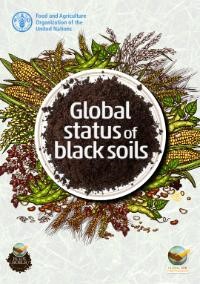
This crucial publication presents the state of knowledge on black soils and explains why they are under severe threat. Black soils are well known as the world’s food basket or the “giant panda on arable land”. For decades, these fertile soils have been widely cultivated, and have played a key role in global agricultural production of cereals, tuber crops, oilseed, pastures, and forage systems. In addition, black soils are paramount for climate change mitigation and adaptation. However, this black treasure is under threat. Because of land use change from natural grasslands to cropping systems, unsustainable management practices and excessive use of agrochemicals, most of the black soils have lost half of their SOC stocks and suffer from moderate to severe erosion processes, as well as nutrient imbalances, acidification, compaction and soil biodiversity loss. FAO and its Global Soil Partnership are committed to the conservation and sustainable management of black soils and established the International Network of Black Soils. This report constitutes a fundamental step to guide decision making regarding the future of black soils. The main recommendation of this report is the establishment of a global agreement for the sustainable management of black soils.
Global Wage Report 2022-2023: The Impact of inflation and COVID-19 on wages and purchasing power (ILO)
https://www.ilo.org/digitalguides/en-gb/story/globalwagereport2022-23
The severe inflationary crisis combined with a global slowdown in economic growth – driven in part by the war in Ukraine and the global energy crisis – are causing a striking fall in real monthly wages in many countries. According to a new International Labour Organization (ILO) report, the crisis is reducing the purchasing power of the middle classes and hitting low-income households particularly hard. The report estimates that global monthly wages fell in real terms to minus 0.9 per cent in the first half of 2022 – the first time this century that real global wage growth has been negative. Among advanced G20 countries, real wages in the first half of 2022 are estimated to have declined to minus 2.2 per cent, whereas real wages in emerging G20 countries grew by 0.8 per cent, 2.6 per cent less than in 2019, the year before the COVID-19 pandemic.
Green Technology Book 2022: Solutions for climate change adaptation (WIPO)
https://www.wipo.int/en/green-technology-book/

Inclusive Infrastructure for Climate Action (UNOPS)
https://content.unops.org/publications/Inclusive-infrastructure_EN.pdf


https://www.un.org/sites/un2.un.org/files/high-level_expert_group_n7b.pdf
To avert a climate catastrophe, we need bold, credible net-zero emissions pledges matched by concrete actions. Governments have the biggest responsibility, but businesses, investors, cities, states, and regions must also live up to their emissions cuts promises. A high-level expert group convened by the UN Secretary-General has developed a report with stronger and clearer findings, recommendations, and standards for net-zero emissions pledges by non-State entities. António Guterres stressed on 8 November 2022 that “using bogus ‘net-zero’ pledges to cover up massive fossil fuel expansion is reprehensible.”

https://unhabitat.org/sites/default/files/2022/11/un-habitat_niva_report_leaving_no_one_behind.pdf
The United Nations Human Settlements Programme (UN-Habitat) and the Norwegian Institute for Water Research (NIVA) unveiled a new report that highlights the role of more than 15 million people worldwide informally collecting and recovering solid waste to end plastic pollution. The report was launched at the UN complex in Gigiri, Nairobi, Kenya, on 22 November 2022. In some countries, the informal waste and recovery sector contributes to up to 90% of recycling. This means that the informal sector is essential in closing material loops and tackling the estimated 60 million tonnes of plastic annually escaping from municipal solid waste and polluting the environment, including water bodies.
Making good on the Glasgow Climate Pact: a call to action to achieve one gigaton of emissions reductions from forests by 2025
https://www.unep.org/resources/report/making-good-glasgow-climate-pact-call-action-achieve-one-gigaton-emissions


Railways at the centre of a post-pandemic recovery: Measures to support international rail carriers (UNECE)
https://unece.org/sites/default/files/2022-11/2214280_E_final_web.pdf
Study on role of the railways during the pandemic and how they can assist in the post-pandemic recovery. The study identifies good practices within member States and provides information on how to facilitate the recovery of the railways in order to encourage passengers back to transport in a more sustainable manner.

https://www.who.int/europe/publications/i/item/WHO-EURO-2022-6594-46360-67071
WHO/Europe has published a new Childhood Obesity Surveillance Initiative (COSI) report, the fifth in a series measuring trends in overweight and obesity among primary school aged children since 2007. The new report’s findings are based on the latest data gathered in 2018–2020 in 33 countries of the WHO European Region. In total, almost 411 000 children aged 6–9 years were measured. For the first time, the report presents data from Armenia, Germany (City of Bremen) and Israel – countries that recently joined the WHO surveillance initiative.
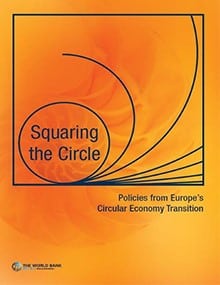
Squaring the Circle: Policies from Europe’s Circular Economy Transition (World Bank)
https://www.worldbank.org/en/region/eca/publication/squaring-circle-europe-circular-economy-transition
The report examines the European Union’s experience in furthering the circular economy agenda to elicit lessons that can benefit countries within and beyond Europe’s borders. This is the World Bank’s first comprehensive report that provides an assessment of the problem, and proposes solutions to decouple growth from material consumption.

https://www.unep.org/resources/report/state-finance-nature-2022
The second edition of the State of Finance for Nature report – launched on 1 December 2022 – reveals that nature-based solutions are still significantly under-financed. If the world wants to halt biodiversity loss, limit climate change to below 1.5C and achieve land degradation neutrality by 2030, current finance flows to NbS must urgently double by 2025 and triple by 2030. Delayed action is not an option in the face of the devastating effects of climate change, the extinction crisis, and severe land degradation globally. The first edition of the report indicated that annual investments in nature-based solutions will have to triple by 2030 and increase four-fold by 2050 from the current investments into nature-based solutions of USD 133 billion (using 2020 as the base year).
State of Global Water Resources 2021 (WMO)
https://library.wmo.int/index.php?lvl=notice_display&id=22168

STOCKHOLM+50: A Global Synthesis Report of National Consultations (UNDP)
https://www.undp.org/publications/stockholm50-global-synthesis-report-national-consultations


https://www.unep.org/resources/report/sustainable-food-cold-chains-opportunities-challenges-and-way-forward
An estimated 14 percent of the total food produced for human consumption is lost, while 17 per cent is wasted. This is enough to feed around 1 billion people in a world where currently 811 million people are hungry and 3 billion cannot afford a healthy diet. The lack of effective refrigeration is a leading contributor to this challenge, resulting in the loss of 12 percent of total food production, in 2017. Moreover, the food cold chain is responsible for 4 percent of global greenhouse gas emissions, including from cold chain technologies and food loss and waste due to lack of refrigeration. This report explores how food cold chain development can become more sustainable and makes a series of important recommendations. These include governments and other cold chain stakeholders collaborating to adopt a systems approach and develop National Cooling Action Plans, backing plans with financing and targets, implementing and enforcing ambitious minimum efficiency standards.

https://www.unicef.org/documents/sanitation-game-plan
Progress towards universal sanitation is alarmingly off track, unevenly distributed between countries, and inadequate to eliminate the inequalities to ensure that the most vulnerable are reached. In 2020, the JMP estimated that 3.6 billion people globally lacked safely managed services, and that the rate at which sanitation coverage was increasing would need to quadruple to achieve universal access to safely managed services by 2030. UN-Water has developed an SDG 6 Global Acceleration Framework— a unifying initiative designed to deliver fast results. UNICEF’s Sanitation Game Plan is aligned with this framework; the vision is to work alongside UNICEF’s partners to achieve the shared ambition of safely managed sanitation for all. The Game Plan to Reach Safely Managed Sanitation will cover the eight years between 2022 and 2030. The Game Plan aims to help governments achieve safely managed sanitation for their populations and meet the sanitation target of the Sustainable Development Goals (SDGs). Through the Game Plan, UNICEF will support 1 billion people gain access to safely managed sanitation, through direct and indirect support, in collaboration with partners.

World Trade Report 2022: Climate Change and International Trade (WTO)
https://www.wto.org/english/res_e/booksp_e/wtr22_e/wtr22_e.pdf
The 2022 edition of the WTO’s World Trade Report presents new analysis and recommendations on how international trade and greater cooperation can amplify global efforts to address climate change and put the planet on a sustainable trajectory. The WTO’s flagship publication, released on 7 November at the 27th United Nations Climate Change Conference (COP27) in Sharm el-Sheikh, Egypt, also examines the consequences of climate change on trading patterns and future prosperity.
International Peace and Security
Concept note for the Security Council high-level debate on the subject “Counter-terrorism in Africa: an imperative for peace, security and development”
English, French & Spanish: https://undocs.org/S/2022/822
The President of the Security Council for the month of November 2022, Ghana, convened a high-level debate with Heads of State and Government entitled “Counter-terrorism in Africa: an imperative for peace, security and development”, under the agenda item “Threats to international peace and security” on 10 November 2022. This concept note was prepared to guide the discussions during the debate.
Concept note for the open debate of the Security Council to be held on the theme “New orientation for reformed multilateralism” under the item entitled “Maintenance of international peace and security”
English, French & Spanish: https://undocs.org/S/2022/880
The President of the Security Council for the month of December 2022, India, plans to hold a ministerial-level open debate on the theme “New orientation for reformed multilateralism” under the item entitled “Maintenance of international peace and security” on 14 December 2022. This concept note intended to guide the discussions on the topic was prepared.
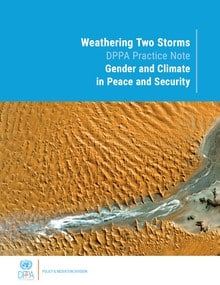
https://bit.ly/3ENI3ht
“Introduction: The world is facing unprecedented risks from climate change. Droughts, erratic rainfall, and extreme weather events affect people, livelihoods, and economies across the world. Populations in fragile contexts, where past or current conflicts have undermined the capacity of institutions and communities to adapt to the changing environment, are particularly affected. In many places, climate impacts are compounding existing grievances and exacerbating pre-existing vulnerabilities, including those linked to gender and social inequity. … The questions discussed in this practice note are meant as a food for thought for peace and security practitioners. The analysis draws on emerging work on the linkages between insecurity, gender inequality and climate vulnerability, as well as a series of interviews with practitioners and researchers in this field. This work is part of a broader effort by DPPA and the Climate Security Mechanism (CSM) – composed of DPPA, UNEP, UNDP, and the Department of Peace Operations (DPO) – to advance policy and practice on the interlinkages between climate change and peace and security.”
Human Rights
Advancing a rights-based approach to climate change resilience and migration in the Sahel (OHCHR)
https://www.ohchr.org/sites/default/files/2022-11/Climate-Change-migration-Sahel-report.pdf

Children of African descent: Report of the Working Group of Experts on People of African Descent (A/HRC/51/54, 18 August 2022)
English, French & Spanish: https://undocs.org/A/HRC/51/54
The unresolved legacies of trade and trafficking of enslaved Africans and colonialism, post-colonial apartheid and segregation, continues to harm children of African descent in all areas of life, UN experts said. In a report presented to the General Assembly by the Working Group on people of African descent, they highlighted discrimination against children of African descent in areas including the administration of justice, law enforcement, education and health. The report details how false racial stereotypes of criminality, culpability and dangerousness influence decision-making in relation to children and youth of African descent, including by legal system personnel, such as police officers, prosecutors, lawyers and judges globally.
Experiences of Violence and Harassment at Work: A global first survey
https://www.ilo.org/global/publications/WCMS_863095/lang–en/index.htm


https://www.unwomen.org/en/digital-library/publications/2022/11/gender-related-killings-of-women-and-girls-improving-data-to-improve-responses-to-femicide-feminicide
A new study by UNODC and UN Women shows that, on average, more than five women or girls were killed every hour by someone in their own family in 2021. The report comes ahead of the International Day for the Elimination of Violence against Women on November 25 and is a horrific reminder that violence against women and girls is one of the most pervasive human rights violations worldwide. Of all the women and girls intentionally killed last year, some 56 percent were killed by intimate partners or other family members (45,000 out of 81,000), showing that home is not a safe place for many women and girls. Meanwhile, 11 percent of all male homicides are perpetrated in the private sphere.

https://www.ohchr.org/en/publications/policy-and-methodological-publications/protecting-minority-rights-practical-guide
This Practical Guide, jointly published by the Office of the United Nations High Commissioner for Human Rights (OHCHR) and the Equal Rights Trust (ERT), sets out in detail the content of comprehensive anti-discrimination law. It provides legislators and advocates with the tools to develop anti-discrimination legislation consistent with international legal standards on the rights to equality and non-discrimination. It aims to assist States in meeting their core international law obligations to respect, protect and fulfil the rights to equality and non-discrimination. The publication includes practical examples to assist law- and policy-makers. It also provides specific guidance on the link between anti-discrimination law on the one hand, and minority rights on the other.
Rights denied: The impact of discrimination on children (UNICEF)
English, French & Spanish: https://www.unicef.org/reports/rights-denied-discrimination-children

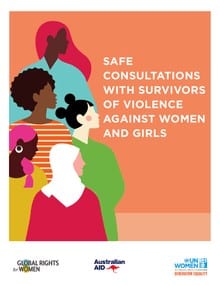
Safe consultations with survivors of violence against women and girls
https://www.unwomen.org/sites/default/files/2022-12/Safe-consultations-with-survivors-of-violence-against-women-and-girls-en.pdf

What works to prevent violence against children online? (WHO)
https://www.who.int/publications/i/item/9789240062061
The report ways to address the growing worldwide concern of keeping children safe online, with a specific focus on two forms of online violence: child sexual abuse including grooming and sexual image abuse; and cyber aggression and harassment in the form of cyberbullying, cyberstalking, hacking and identity theft. The report recommends implementing school-based educational programmes that have multiple sessions, promote interaction among youth and engage parents.
Humanitarian Affairs

https://www.undrr.org/publication/data-and-digital-maturity-disaster-risk-reduction-informing-next-generation-disaster
A new report launched by UNDP and UNDRR is intended to boost the development of a new state-of-the-art disaster losses and damages tracking system. ‘Data and digital maturity for disaster risk reduction: Informing the next generation of disaster loss and damage databases’ provides a detailed assessment of national disaster loss databases in a representative sample of 13 countries and is a collaboration between UNDP and UNDRR. The report’s findings have been further confirmed by over 100 experts from some 40 UN Member States and international organisations meeting over two days in November 2022 in a Technical Forum in Bonn to address challenges in ‘Tracking of hazardous events and disaster losses and damage.’

https://reliefweb.int/report/world/global-humanitarian-overview-2022-october-update-snapshot-31-october-2022
The 2022 Global Humanitarian Overview (GHO) has increased considerably since its launch in December 2021 due to the Ukraine crisis and the combined effects of conflict, climate change and natural disasters, the cost-of-living crisis and public health emergencies. Financial requirements have increased by almost US$10 billion or close to 25 per cent this year – from $41 billion to the current $50.8 billion. The number of people in need of humanitarian assistance in 63 countries has also increased by 18 percent, reaching 324 million this month.
Turning The Tide on Internal Displacement: A Development Approach to Solutions
(UNDP)
https://www.undp.org/sites/g/files/zskgke326/files/2022-11/UNDP-Turning-The-Tide-on-Internal-Displacement.pdf

A World in Crisis: Global Humanitarian Crises and Conflicts Increase Human Trafficking Concerns – Call to Action
https://icat.un.org/publications/icat-calls-stronger-action-and-cooperation-counter-human-trafficking-humanitarian

Justice and International Law
Towards a More Just World: Every Day: Annual Report of the Office of the Prosecutor – 2022 (ICC)
https://www.icc-cpi.int/sites/default/files/2022-12/2022-12-05-annual-report-of-the-office-of-the-prosecutor.pdf

Nuclear, Chemical and Conventional Weapons Disarmament

https://www.un.org/disarmament/disarmament-education-strategy
The Disarmament Education Strategy of the UN Office for Disarmament Affairs (UNODA) provides a common framework for the Office’s disarmament education efforts. It aims at enhancing coordination and coherence across various UNODA educational activities, diversifying partnerships and audiences reached, and fostering more sustainable and impactful initiatives.
Drug Control, Crime Prevention and Counter-terrorism

https://www.unodc.org/documents/data-and-analysis/AOTP/Afghan_Women_Opiate_Trade.pdf
A research study on Afghan Women and the Opiate Trade was launched by the Afghan Opiate Trade Project (AOTP) at CRIMJUST, Border Management Branch, United Nations Office on Drugs and Crime (UNODC). The report provides a unique insight into the role of Afghan women in the opiate trade in Afghanistan. According to the research study, Afghan women are involved in a wide range of roles within the illicit opiate trade, including trafficking outside Afghanistan and selling heroin to users. Having entered the drug trade for a combination of social and economic motives, the women remained involved mostly for financial reasons. They directly managed the income earned from the opiate trade and used it primarily on family expenses and savings. Often working within family-based drug trafficking organisations, the women remained at the periphery of the wider organization due to social restrictions and cultural norms. Some women had left the opiate trade following the return to power by the Taliban – conversely, some women reported that trafficking had become easier. This is the first study to understand opiate trafficking from the perspective of Afghan women. Their testimonies provide novel insight into an otherwise hidden population. Not only does this report contribute to wider research on the topic of women’s involvement in drug trafficking, it also provides an evidence base upon which targeted interventions to help women leave the opiate trade can be developed.
Crime, Corruption and Wrongdoing in the Transfer of Football Players and Other Athletes (UNODC)
https://www.unodc.org/documents/Safeguardingsport/Publications/Advocacy_Paper_Crime_Athlete_Corruption_Transfers_Football_NOV22.pdf

Gaming and the Metaverse: The Alarming Rise of Online Sexual Exploitation and Abuse of Children Within the New Digital Frontier (UNICRI)
https://unicri.it/sites/default/files/2022-11/Gaming%20and%20the%20Metaverse.pdf

Newsletter Archive: https://unric.org/en/unric-info-point-library-newsletter-archive