
New UN websites & publications
TOPIC OF THE MONTH: Climate Change

https://library.wmo.int/records/item/69061-2024-state-of-climate-services-five-year-progress-report-2019-2024
The report highlights that 2023 was the warmest year on record to date, with the unprecedented warmth continuing into 2024. Many climate extremes are becoming more frequent and intense. While weather and climate-related reported deaths are decreasing over time due to better early warnings and disaster risk management, economic losses are increasing. The latest edition of the report explores the current state of play and also documents the progress that has been made in the last five years. It includes analyses and stories to explain how specific countries, including Seychelles, Mauritius, Laos, and Ireland, have succeeded in developing and using climate services to deliver a range of socioeconomic benefits and to advance climate action.

https://www.unep.org/resources/adaptation-gap-report-2024
The report finds that progress in adaptation financing is not fast enough to close the enormous gap between needs and flows, which contributes to a continued lag in adaptation planning and implementation efforts. International public adaptation finance flows to developing countries increased from US$22 billion in 2021 to US$28 billion in 2022: the largest absolute and relative year-on-year increase since the Paris Agreement. This reflects progress towards the Glasgow Climate Pact, which urged developed nations to at least double adaptation finance to developing countries from US$19 billion (2019 levels) by 2025. However, even achieving the Glasgow Climate Pact goal would only reduce the adaptation finance gap, which is estimated at US$187-359 billion per year, by about 5 per cent. The report calls for nations to step up by adopting a strong new collective quantified goal for climate finance and including stronger adaptation components in their next round of climate pledges, or nationally determined contributions, due in early 2025.
Advancing gender-responsive synergies across the Rio Conventions: Gender equality at the intersection of climate action, biodiversity protection and sustainable land management (UN Women)
https://www.unwomen.org/en/digital-library/publications/2024/11/brief-advancing-gender-responsive-synergies-across-the-rio-conventions


https://www.undp.org/publications/advancing-sdg-push-equitable-low-carbon-pathways
The ‘SDG Push x NDC 3.0’ research, a collaboration between UNDP and the Frederick S. Pardee Center, outlines a framework for a fair, low-carbon energy transition that considers the needs of both wealthy and lower-income nations. The report updates the second flagship publication, Leaving No One Behind: Impact of COVID-19 on the Sustainable Development Goals (SDGs), examining an integrated set of policy strategies that accelerates climate actions while promoting human development. By supporting equitable access to energy, green investments, and digital infrastructure, it aims to foster inclusive, sustainable growth and align with the Paris Agreement targets. The research finds that an additional 60 million people could be lifted from poverty by 2030, and upwards of 175 million people by 2050, through these ambitious, yet feasible policy choices. In addition, nine out of ten low-human development countries could make significant strides towards improving their current development outcomes by 2050 while carbon emissions are reduced by two-thirds by 2050.

https://www.undp.org/publications/advancing-zero-emission-trucks-and-green-ports
As global transport emissions continue to rise, the urgency for actionable solutions to mitigate environmental and health impacts grows. This report examines the challenges hindering the adoption of zero-emission trucks (ZETs), focusing on infrastructure, technology, operations, logistics, finance, and policy barriers. It proposes strategic approaches, including expanding EV charging infrastructure, investing in technological innovations to address interoperability, battery weight, and range issues, and diversifying supply chains. The study highlights the importance of R&D investment, innovative business models, and public-private partnerships to reduce capital barriers and attract investment. Clear regulatory frameworks are identified as critical to developing a cohesive roadmap for ZET adoption. With a specific focus on the role of ZETs in sustainable port logistics, this report offers a comprehensive analysis and actionable recommendations to accelerate the transition to a zero-emission transport future.
https://www.preventionweb.net/publication/analysis-heat-waves-and-urban-heat-island-effects-central-european-cities-and
This report provides an overview of the urban heat island (UHI) effect in Central European cities and its implications for sustainable development. Directed at policy makers, practitioners, and the wider public, the report explains the UHI effect and its drivers, as well as potential risk management and adaptation measures to address them. One of the report’s key messages is that in the context of cities and changing climate, policy and investment decisions can be facilitated by scientific approaches that provide information on current and future climate, and that increase understanding of measures to reduce UHI effects. Along with potential adaptation measures, this report also highlights the need to increase public awareness of, and emergency preparedness for, urban heat impacts on people and societies. The report also includes a number of city examples and case studies, selected based on availability of information, and relevance for other cities in the region.

https://climatepromise.undp.org/research-and-reports/capturing-collective-progress-adaptation-proposal-move-forward-unfccc-global
The UNFCCC Paris Agreement at COP21 introduced Global Goals on Adaptation (GGA) and periodic progress assessments. In December 2023, COP28 adopted the UAE Framework for Global Climate Resilience, outlining seven adaptation targets and four policy cycle targets to assess adaptation efforts and risk reduction. The first stock take at COP28 revealed insufficient data to determine the adequacy of current and planned adaptation measures against expected climate impacts. This paper suggests methodologies for future Global Stocktakes, starting in 2028, to better measure adaptation progress.

https://wedocs.unep.org/20.500.11822/46485
Climate change is taking a toll on the six countries of the Caucasus, causing glaciers to shrink and impacting river flows, finds this new UN Environment Programme (UNEP) report launched ahead of the UNFCCC COP29 on 6 November 2024. Glaciers have already retreated by an average of 600 metres over the past century, while more than 11 billion tonnes of freshwater — previously stored in ice — has been lost since the year 2000, according to the second edition of the Caucasus Environment Outlook (CEO-2) report. The publication focuses on the ecoregion covering Armenia, Azerbaijan, and Georgia, as well as regions of the Islamic Republic of Iran, the Russian Federation and Türkiye. The new report includes 20 maps to visualize environmental trends.
Climate Action Report 2024 – Green Horizons: A Year of Climate Action for People, Resilience and Biodiversity (IFAD)
https://www.ifad.org/en/w/publications/climate-action-report-2024


Climate Change and Nuclear Power 2024: Financing Nuclear Energy in Low Carbon Transitions (IAEA)
https://www.iaea.org/publications/15754/climate-change-and-nuclear-power-2024-financing-nuclear-energy-in-low-carbon-transitions
The 2024 edition of the IAEA’s Climate Change and Nuclear Power report has been released, highlighting the need for a significant increase in investment to achieve goals for expanding nuclear power. The new report was launched in October 2024 on the margins of the Clean Energy Ministerial (CEM) in Brazil.

https://www.unaids.org/sites/default/files/media_asset/climate-crisis-HIV-policy-brief_en.pdf
The climate crisis could disrupt HIV services and lead to increasing HIV risk for some of the most vulnerable populations, the Joint United Nations Programme on HIV/AIDS (UNAIDS) and United Nations Development Programme (UNDP) have warned at the COP29 Climate Conference in Baku, Azerbaijan. In this new report, the UN agencies warn that eroded public health infrastructure, heightened prevalence of diseases that interact with HIV, food insecurity, water scarcity, and the mass displacement of people – all likely to intensify due to climate change – could drive new HIV infections and lead to more AIDS-related deaths.
The Climate Dictionary: Nature Edition (UNDP)

French: https://www.undp.org/fr/publications/le-dictionnaire-du-climat-edition-nature
Spanish: https://www.undp.org/es/publicaciones/el-diccionario-climatico-edicion-sobre-la-naturaleza
Our relationship with our natural world is broken. This is why it is important that more and more people get involved in action to protect and restore nature and biodiversity. Everyone deserves to have a voice and this is easier when we have a common understanding of the key terms used to discuss what’s happening. That is why UNDP has produced this guide to the most frequently used and important terms and concepts, keeping the facts but leaving out the jargon.
 Climate landscape analysis for children in Greece (UNICEF)
https://tinyurl.com/5y32x42w
The present report strategically addresses the intersection of climate change and child well-being, contributing to national objectives related to health, education, and social equity. It provides an analysis of the state of climate in Greece; a review of the climate policy and regulatory framework assessing the extent of child sensitivity and inclusivity; a children’s vulnerability mapping of the 13 Regions of Greece; and lastly how climate change affects children in Greece, mainly in the domain of education, overall service provision, mental health and well-being. The key outcomes have been shaped into a set of recommendations to competent Authorities and stakeholders that directly address the critical challenges faced by children in Greece in the aftermath of environmental disasters, exacerbated by climate change.

https://cdn.who.int/media/docs/default-source/environment-climate-change-and-health/cop29-special-report_full.pdf
Ahead of the 2024 UN Climate Change Conference in Baku (COP29), the World Health Organization (WHO) called for an end to reliance on fossil fuels and advocates for people-centred adaptation and resilience. Launching the COP29 special report on climate and health and a technical guidance on Healthy Nationally Determined Contributions on 7 November 2024, WHO urges world leaders at COP29 to abandon the siloed approach to addressing climate change and health. It stresses the importance of positioning health at the core of all climate negotiations, strategies, policies and action plans, to save lives and secure healthier futures for present and future generations.

http://documents.worldbank.org/curated/en/099111324172540265/P5005831a1804a05f19aae18bc0f1396763
This report aims to address the existing knowledge gap and provide a deeper understanding of the interconnection between climate and health, in terms of the risks to human health and the economic burden of these risks. Specifically, it provides a quantitative assessment of the potential impacts of climate change based on the number of cases and the number of deaths resulting from selected vector- and waterborne diseases, stunting, and extreme heat. An assessment of the economic cost of climate change on health (in terms of both morbidity and mortality) is also provided. The analysis covers 69 low-income and middle-income countries with national populations exceeding 10 million people in the base year 2020. These 69 countries comprise 96 percent of the total population of all LMICs.

https://www.unep.org/resources/emissions-gap-report-2024
Nations must collectively commit to cutting 42 per cent off annual greenhouse gas emissions by 2030 and 57 per cent by 2035 in the next round of Nationally Determined Contributions (NDCs) – and back this up with rapid action – or the Paris Agreement’s 1.5°C goal will be gone within a few years, according to this new UN Environment Programme (UNEP) report. Updated NDCs are to be submitted early next year ahead of the COP30 climate talks in Brazil. The report finds that a failure to increase ambition in these new NDCs and start delivering immediately would put the world on course for a temperature increase of 2.6-3.1°C over the course of this century. This would bring debilitating impacts to people, planet and economies.
Enabling global trade in renewable hydrogen and derivative commodities (WTO / IRENA)
https://www.wto.org/english/res_e/publications_e/hydrogenirena112024_e.htm
The International Renewable Energy Agency (IRENA) and the WTO Secretariat launched on 14 November at the 29th UN Climate Change Conference (COP29) in Baku this new report which outlines key policy considerations for fostering trade in renewable hydrogen and its derivatives. The report highlights, in particular, their crucial role in helping economies achieve decarbonization goals by 2050.

https://www.unep.org/resources/eye-methane-2024
The fourth edition of UNEP’s International Methane Emissions Observatory (IMEO) publication takes stock of progress harnessing a methane data revolution that can accelerate methane reduction at a global scale. UNEP’s IMEO provides data to the individuals who can act to reduce emissions. To do this, IMEO collects and publishes data through rigorous industry reporting via the Oil and Gas Methane Partnership 2.0 (OGMP 2.0), from satellites via the Methane Alert and Response System (MARS), from its series of global methane science studies, and from national emissions inventories.

http://documents.worldbank.org/curated/en/099110124091065202/P5070741a72eab08b1aa48171a975a0f1f3
The World Bank Group’s Country Climate and Development Reports (CCDRs) integrate climate change and development. They help countries identify and prioritize the most impactful investment and reform actions that can reduce greenhouse gas emissions and boost adaptation and resilience, while delivering on broader development goals. As of October 2024, the World Bank Group has published CCDRs for 60 countries and economies. CCDRs analyze how climate change and global decarbonization may impact a country’s development path and priorities, and identify potential areas for action in resilience, adaptation, and mitigation to improve development outcomes. By considering each country’s specific vulnerabilities, emissions, and development priorities, CCDRs can help countries navigate the complex interplay between climate change and development, ensuring they integrate climate action into their broader development agendas.

https://openknowledge.fao.org/items/cf38b56b-bbb2-455c-8ce6-58d0c9fb0d6b
Nitrous oxide (N₂O), a potent greenhouse gas, is rapidly accelerating climate change and damaging the ozone layer, jeopardizing the 1.5°C warming target and posing a serious threat to public health, according to this new United Nations Global Nitrous Oxide Assessment. Launched at the 2024 United Nations Climate Change Conference (COP29) in Baku, Azerbaijan, the Assessment, published by the United Nations Environment Programme (UNEP) and the Food and Agriculture Organization of the United Nations (FAO), signals that emissions are rising faster than expected, and that immediate action is required to curb the environmental and health impacts of this super pollutant.

https://www.unep.org/resources/report/global-peatland-hotspot-atlas-2024
177 out of 193 UN Member States have peatlands – critical carbon sinks and biodiversity hotspots, yet agriculture, urbanization, deforestation, and industrial activities put them – and the essential ecosystems services they provide – at risk everywhere. This is shown in the Global Peatland Hotspot Atlas, published on 21 November 2024 by the UN Environment Programme (UNEP). The atlas provides evidence for the need to enhance protection and restoration of peatlands, along with investments in research and monitoring. Released during the UN Climate Change Conference in Baku (COP29), it introduces updated hotspot maps of global peatland distribution, highlighting the threats they face and the opportunities for peatland restoration and conservation.
Implementation of gender-responsive climate policies, plans, strategies and action as reported by Parties in regular reports and communications under the UNFCCC. Synthesis report by the secretariat (FCCC/CP/2024/5, 5 September 2024, Advance version)
https://undocs.org/FCCC/CP/2024/5
This new report from the UN Climate Change secretariat reveals that 85 percent of Parties referenced gender in their latest reports and communications submitted to the United Nations Framework Convention on Climate Change (UNFCCC), including in their national climate plans, known as Nationally Determined Contributions (NDCs), their National Adaptation Plans (NAPs), and their Long-Term Low Emission Strategies (LT-LEDS).
see also: New UN Climate Change Report: Climate policies and actions around the world are increasingly gender-responsive; Least Developed Countries leading the way (4 October 2024): https://unfccc.int/news/new-un-climate-change-report-climate-policies-and-actions-around-the-world-are-increasingly-gender
Integrating Crimes that affect the Environment in National Climate Action (UNODC)
https://www.unodc.org/res/environment-climate/resources_html/CAE_Climate_Action.pdf

Nationally determined contributions under the Paris Agreement: Synthesis report by the secretariat (FCCC/PA/CMA/2024/10, 28 October 2024)
https://unfccc.int/documents/641792
This report synthesizes information from the 168 latest available nationally determined contributions communicated by 195 Parties to the Paris Agreement and recorded in the registry of nationally determined contributions as at 9 September 2024.
No Escape: On the Frontlines of Climate Change, Conflict and Forced Displacement (UNHCR)
https://www.unhcr.org/media/no-escape-frontlines-climate-change-conflict-and-forced-displacement

see also: No Escape – Tens of millions of people uprooted by conflict and violence are increasingly left with nowhere to escape from the devastating effects of the global climate crisis (12 November 2024): https://dataviz.unhcr.org/product-gallery/2024/11/no-escape/

https://documents.worldbank.org/en/publication/documents-reports/documentdetail/099102024200013611/p18094817eceb40b319c361bf2dedd9fab6
This Country Climate and Development Report (CCDR) explores the unique climate change challenge faced by the Pacific Atoll Countries (Pacific Atolls), the Republic of Kiribati, the Republic of the Marshall Islands (RMI), and Tuvalu. It explores the key sources of climate vulnerability, as well as the development and adaptation strategies that are needed for preserving livelihoods, ecosystems, and the countries’ long-term viability. The Pacific Atolls confront some of the most severe existential threats from climate change of any region in the world. This CCDR notes the urgent need for action on the part of each island country and the global community of nations in the face of severe climate change impacts.
People in a Changing Climate: From Vulnerability to Action – Insights from World Bank Group Country Climate and Development Reports covering 72 economies
https://hdl.handle.net/10986/42395
This report is structured into three main parts, covering both new content and confirming key conclusions of the first two summary reports. First, it summarizes CCDR findings on the impacts of climate change on people and explores how putting people at the core of climate-development policies enhances their effectiveness and generates larger benefits. Next, it explores how people’s vulnerability and ability to transition toward resilient, low-emission development depend on key infrastructure systems, the energy, water, transport, and digital sectors, and highlights the potential benefits of green value chains and green minerals. Finally, it summarizes key conclusions on macroeconomic impacts, with a focus on the diversity of impacts across countries and the large investment needs, especially in lower-income countries.
Protection of persons displaced across borders in the context of disasters and the adverse effects of climate change: A review of literature, legislation and case law to support the implementation of the global compact on refugees (UNHCR)
https://www.preventionweb.net/publication/protection-persons-displaced-across-borders-context-disasters-and-adverse-effects


English, French & Spanish: https://unfccc.int/ttclear/tec/early_warning_systems.html
The joint policy brief provides overview of the relevant technology policy and implementation needs and priorities of countries, including analysis of national action and planning documents, including NDCs, NAPS and TNAs; showcases a wide array of scalable technology measures, platforms and services and their applications for improving risk knowledge and information to advance MHEWS in different country or regional contexts; presents key findings and recommendations for Parties, international organisations and stakeholders to scale up policies and implementations with fit-for-purpose technology solutions.
Refugees for Climate Action Network (UNHCR)
https://www.unhcr.org/news/press-releases/refugees-climate-action-network-launched-cop29-champion-displaced-communities
UNHCR, the UN Refugee Agency, unveiled on 14 November 2024 the “Refugees for Climate Action” network, an initiative designed to amplify the voices of displaced communities in the global climate debate. The network brings together for the first time eight forcibly displaced people from across the world who are passionate about climate activism and advocating for climate justice, action and inclusion of refugees and displaced communities in policy discussions. The Refugees for Climate Action group was initially convened in 2023 by UNHCR to create a space where refugees and displaced communities on the frontlines of climate change could share their unique experiences and knowledge.
https://hdl.handle.net/10986/42268
Climate change is a serious issue in the Western Balkans, with extreme weather events on the rise. Since the 2000s, the region has been experiencing more heatwaves. What’s more, both droughts and heavy rainfall have become more frequent, reversing a trend of decline seen from the 1970s to the 1990s. To ready cities in the Western Balkans in the face of a changing climate, the report “Reshaping Cities” lays out four pathways: green, resilient, inclusive, and competitive.
Rising to the Challenge: Success Stories and Strategies for Achieving Climate Adaptation and Resilience (World Bank)
https://www.worldbank.org/en/publication/rising-to-the-challenge-climate-adaptation-resilience


Snapshot of Loss and Damage in SIDS under the Climate Promise (UNDP)
https://www.undp.org/publications/snapshot-loss-and-damage-sids-under-climate-promise
As discussions on climate-related loss and damage evolve, due in large part to the leadership of Small Island Developing States (SIDS) and frontline communities, increasing emphasis is being placed on the needs of countries and communities to respond to loss and damage. Loss and damage has been identified as an emerging area of interest in SIDS’ national climate plans. This report provides an analysis and overview of loss and damage concerns in the 32 SIDS’ supported by the Climate Promise.
State of the Climate 2024: Update for COP29 (WMO)
https://library.wmo.int/records/item/69075-state-of-the-climate-2024


Supervisory Thinking on Insurance-Related Climate Transition Plans (UNDP)
Report: https://sustainableinsuranceforum.org/wp-content/uploads/2024/11/TPWG-Report.pdf
Summary: https://sustainableinsuranceforum.org/wp-content/uploads/2024/11/TPWG-Summary.pdf
On Finance Day at COP29, UNDP’s Sustainable Insurance Forum (SIF) released this pivotal report. This comprehensive document offers valuable insights into the current supervisory landscape regarding transition plans and highlights the challenges in developing regulatory guidance for the insurance sector as it shifts toward a net-zero future.

https://www.undp.org/publications/turning-tide-climate-crisis-climate-action
The report presents results of the Japan-funded Climate Promise project (FY 2022) across 16 countries (Armenia, Bhutan, Georgia, India, Indonesia, Jordan, Kenya, Kyrgyz Republic, Malawi, Namibia, Nepal, Serbia, South Africa, Sri Lanka, Thailand, Viet Nam), demonstrating impact through human-centered stories of people that benefitted from the project activities. It also covers main achievements and role of the project in implementation of NDC targets in participating countries.
WMO Greenhouse Gas Bulletin No. 20
https://library.wmo.int/records/item/69057-no-20-28-october-2024
Greenhouse gas levels surged to a new record in 2023, committing the planet to rising temperatures for many years to come, according to this report from the World Meteorological Organization (WMO) released on 28 October 2024. Carbon dioxide (CO2) is accumulating in the atmosphere faster than any time experienced during human existence, rising by more than 10% in just two decades. In the course of 2023, large vegetation fire CO2 emissions and a possible reduction in carbon absorption by forests combined with stubbornly high fossil fuel CO2 emissions from human and industrial activities to drive the increase, according to the WMO’s annual Greenhouse Gas Bulletin.

https://publications.iom.int/books/who-are-climate-migrants-global-analysis-profiles-communities
This new IOM research report provides first-of-its-kind global insights into the demographic and socio-economic characteristics of communities affected by weather-related displacement. With an estimated 218.6 million internal displacements caused by weather-related disasters over the past decade, this analysis fills a critical data gap, revealing detailed profiles of these populations, including age, income, education, and livelihoods.
see also: Who are Climate Migrants? New Data Reveals Stark Socio-Economic Differences in Disaster-Displaced Populations (8 November 2024): https://weblog.iom.int/who-are-climate-migrants-new-data-reveals-stark-socio-economic-differences-disaster-displaced-populations

Working together for better climate action: Carbon pricing, policy spillovers, and global climate goals
https://www.wto.org/english/res_e/publications_e/climate_action_e.htm
The report of the Joint Task Force on Climate Action, Carbon Pricing and Policy Spillovers, with participation by the IMF, OECD, UNCTAD, World Bank and WTO, makes four main contributions to working together for better climate action. The report stresses that climate action needs to be stepped up to meet global emission reduction targets, while contributing to broader development goals.

https://unhabitat.org/wcr/
UN-Habitat has unveiled on 5 November 2024 its latest World Cities Report, focusing on the pressing challenges posed by climate change and rapid urbanization. Released to coincide with the twelfth session of the World Urban Forum, the report warns that over 2 billion city dwellers could face an additional temperature increase of at least 0.5 degrees Celsius by 2040. The report reveals that efforts to combat climate change in urban areas are falling short of the scale required to address escalating challenges.

https://www.preventionweb.net/publication/young-peoples-guide-climate-change-and-childrens-health
The Young Climate Activists toolkit was created by advocates of all ages who, like you, are deeply concerned about our planet’s future. Having faced numerous challenges in advocacy and action, our aim is to provide clear, concise and easily understandable information about global, regional and national climate action. This will equip you for meaningful and informed participation. The toolkit booklets are designed to be read sequentially to build a comprehensive understanding of each topic, though they can also be consulted independently based on your needs. This is the global volume of the Young Climate Activists Toolkit and is designed to complement the regional toolkits for Latin America and the Caribbean, and the Middle East and North Africa Region.
UN in General
For 2025, the General Assembly has declared four new international years.
In addition, two decades will start in 2025:
International Year of Glaciers’ Preservation (IYGP) 2025

English: https://www.un-glaciers.org/en
French: https://www.un-glaciers.org/fr
Spanish: https://www.un-glaciers.org/es
Glaciers are crucial for regulating the global climate and providing freshwater, essential for billions of people. However, due to climate change, driven mainly by human activities since the 1800s, these vital resources are rapidly melting. The United Nations has designated 2025 as the International Year of Glaciers’ Preservation to highlight the importance of glaciers and ensure that those relying on them, and those affected by cryospheric processes, receive the necessary hydrological, meteorological, and climate services. These efforts underscore the critical role mountain regions play as a key source of global freshwater and ecosystem services.
The international year is co-chaired by UNESCO and WMO.
International Year of Peace and Trust, 2025
(A/RES/78/266)
“… the International Year of Peace and Trust constitutes a means of mobilizing the efforts of the international community to promote peace and trust among nations based on, inter alia, political dialogue, mutual understanding and cooperation, in order to build sustainable peace, solidarity and harmony …”
International Year of Quantum Science and Technology, 2025

English: https://quantum2025.org/en/
French: https://quantum2025.org/fr/
Spanish: https://quantum2025.org/es/
On June 7, 2024, the United Nations proclaimed 2025 as the International Year of Quantum Science and Technology (IYQ). According to the proclamation, this year-long, worldwide initiative will “be observed through activities at all levels aimed at increasing public awareness of the importance of quantum science and applications.” The year 2025 was chosen for this International Year as it recognizes 100 years since the initial development of quantum mechanics.
International Year of Cooperatives 2025 (IYC2025)
(A/RES/78/289)
https://social.desa.un.org/issues/cooperatives/un-international-year-of-cooperatives
On 19 June 2024, the UN General Assembly declared 2025 as the International Year of Cooperatives (IYC2025) to be celebrated under the theme “Cooperatives Build a Better World.”
The theme highlights the lasting global impact of cooperatives and emphasizes that the cooperative model is a crucial solution for addressing various global challenges. Additionally, it underscores the significant role cooperatives play in advancing the implementation of the Sustainable Development Goals (SDGs) by 2030.
United Nations Decade on Combating Sand and Dust Storms (2025–2034)
(A/RES/78/314)
Crossing borders silently and impacting millions globally, sand and dust storms are the ‘underappreciated’ extreme weather events, yet they profoundly affect the environment and the lives of hundreds of millions worldwide, across all continents. According to the UN Convention to Combat Desertification (UNCCD), every year, an estimated 2 billion tonnes of sand and dust, an amount equal in weight to 350 Great Pyramids of Giza, enter the atmosphere. In recognition of these challenges, the General Assembly proclaimed 2025-2034 as the United Nations Decade on Combating Sand and Dust Storms. Introduced by Uganda on behalf of the Group of 77 developing countries and China, the initiative underscores international concern over sand and dust storms and promotes proactive measures through awareness and action.
Decade of Action for Cryospheric Sciences, 2025–2034
(A/RES/78/321)
In August 2024, the United Nations General Assembly (UNGA) adopted the resolution to declare the period from 2025 to 2034 as the “Decade of Action for Cryospheric Sciences”. This initiative, championed by the Republic of France and the Republic of Tajikistan and supported by a coalition of nations, aims to stimulate international scientific cooperation and foster sustainable development efforts in response to the alarming impact of climate change on glaciers, ice sheets, and permafrost.
Economic Growth and Sustainable Development
Addressing Mpox (Monkeypox): Effective Science and Rights-Based Responses
https://www.undp.org/publications/addressing-mpox-monkeypox-effective-science-and-rights-based-responses

Empowering public health advocates to navigate alcohol policy challenges: alcohol policy playbook (WHO/Europe)
https://www.who.int/europe/publications/i/item/WHO-EURO-2024-5624-45389-76520


Fire risk management guide: protecting cultural and natural heritage from fire
English, Spanish & Portuguese: https://doi.org/10.58337/UJGT3887
Experts from five continents gathered in Valparaíso, Chile, on 11–12 November 2024 to discuss strategies to address the growing risk of fires in the context of climate change. During an international conference organised by UNESCO, the Fire risk management guide: protecting cultural and natural heritage from fire was launched.

https://doi.org/10.4060/cd2773en
This publication delves into the practice of foraging, highlighting its historical roots, resurgence, and modern-day relevance. It emphasizes the nutritional and environmental benefits of foraged plants, which enrich diets, support biodiversity, and align with sustainable agrifood systems like agroecology and permaculture. Modern interest in foraging is driven by concerns over dietary health and sustainability. The publication differentiates between hobbyist and professional foragers, explores profit opportunities through spontaneous plants, and offers practical tips, seasonal recipes, and examples of edible wild plants. It serves as a comprehensive guide for those seeking to incorporate foraging into their lifestyle.

https://www.who.int/publications/i/item/9789240103986
Nearly five years since COVID-19 was first reported, this new global report on infection prevention and control (IPC) by the World Health Organization (WHO) shows there has been slow progress in addressing critical gaps to prevent healthcare-associated infections (HAIs). A large proportion of HAIs can be prevented with improved IPC practices and basic water, sanitation and hygiene (WASH) services, which are also a highly cost-effective “best buy” to reduce antimicrobial resistance (AMR) in health-care settings. This report, launched at a G7 side-event hosted by Italy, provides a baseline assessment for policymakers, IPC professionals, health care workers and stakeholders to guide action.

https://www.ilo.org/publications/flagship-reports/global-wage-report-2024-25-wage-inequality-decreasing-globally
This new report from the International Labour Organization (ILO) reveals that wage inequality has decreased in about two-thirds of all countries since 2000. Despite this positive trend, significant wage differentials persist worldwide. The report finds that since the early 2000’s, on average, wage inequality, which compares the wages of high and low wage earners, decreased in many countries at an average rate that ranged from 0.5 to 1.7 per cent annually, depending on the measure used. The most significant decreases occurred among low-income countries where the average annual decrease ranged from 3.2 to 9.6 per cent in the past two decades.

Health-enhancing physical activity in the European Union, 2024 (WHO/Europe)
https://www.who.int/europe/publications/i/item/WHO-EURO-2024-10606-50378-76030
This new report from WHO/Europe presents the latest data on physical activity across the European Union (EU), reflecting on the progress achieved in making health-enhancing physical activity an integral part of people’s lives. The report reveals that there has been a notable improvement in the implementation of physical activity policies in the EU from 2015 to 2024.

https://unesdoc.unesco.org/ark:/48223/pf0000391797
Nearly one in three students worldwide says they have been physically attacked at least once during the year, the UN educational and cultural organization UNESCO said on 6 November 2024. The agency is calling for pupils to be better protected from physical, verbal and psychological aggression in this report published on the eve of the International Day against Violence and Harassment in Schools, including Cyberbullying.
Second Advisory Panel Annual Summary Report for the UN Secretary-General’s Early Warnings for All Initiative
https://www.preventionweb.net/publication/second-advisory-panel-annual-summary-report-un-secretary-generals-early-warnings-all


https://doi.org/10.4060/cd2616en
This refined study by the Food and Agriculture Organization of the United Nations (FAO) involving 156 countries confirms that hidden costs within global agrifood systems amount to approximately $12 trillion annually. Of this figure, around 70 percent ($8.1 trillion) arise from unhealthy dietary patterns and are linked to alarming non-communicable diseases (NCDs) such as heart disease, stroke, and diabetes, far exceeding the costs related to environmental degradation and social inequalities The State of Food and Agriculture 2024 (SOFA), builds on the 2023 edition to provide an even more in-depth analysis, utilizing true cost accounting to expose the full range of costs and benefits associated with food production, distribution, and consumption, including those that are not reflected in market prices – the so-called “hidden costs and benefits”. The report updates those cost estimates, divides them by agrifood system types, and charts a course for transformative change in our agrifood systems. The study details how global hidden costs are largely driven by health hidden costs, followed by environmental hidden costs, in more industrialized agrifood systems in upper-middle- and high-income countries.

https://www.who.int/europe/publications/i/item/WHO-EURO-2024-10363-50135-75508
In a major step towards enhancing the quality and accessibility of long-term care (LTC) across Europe, the WHO Regional Office for Europe launched its new State of Long-term Care Toolkit on 12 November 2024. This practical, innovative resource aims to support policy-makers at regional, national and local level in reshaping LTC systems to be more responsive, inclusive and sustainable. Every country in Europe is experiencing population ageing, and with ageing and increased prevalence of chronic conditions come increased needs for LTC. LTC includes support and services that help people at ongoing or high risk of losing physical or mental capacity to maintain a level of independence and quality of life that respects their basic rights, freedoms, and dignity.

Report in English, Executive Summary in English, French & Spanish: https://www.unicef.org/reports/state-of-worlds-children/2024
The future of childhood hangs in the balance if urgent action is not taken to safeguard children’s rights in a changing world, UNICEF warned in its flagship report released on World Children’s Day, 20 November 2024. The report projects how three major global forces – or megatrends – will impact children’s lives by 2050 and beyond. The megatrends – demographic change, climate and environmental crises, and breakthrough technologies – provide key indications of the challenges and opportunities children may face in the future.

https://library.wmo.int/idurl/4/69077
This new report published by the World Meteorological Organization and the World Trade Organization points to the role that trade can play to help supply meet demand for electricity from renewable sources. Launched at the 29th UN Climate Change Conference (COP29) in Baku, this first joint WMO-WTO report underscores how interconnection projects can tap into supplies of hydro-, solar- and wind-generated energy from regions with comparative advantage in renewable electricity generation and help to bring down the cost of the transition to low-carbon energy.
Trade in non-plastic substitutes – UNCTAD Database
https://unctadstat.unctad.org/datacentre/dataviewer/US.NonPlasticSubstsTradeByPartner
A new database tracking international trade in non-plastic substitutes is now available on UN Trade and Development’s (UNCTAD) online Data Hub. Such materials can be minerals, wood pulp, or natural fibres like cotton, bamboo and seaweed. They can be used to make more environmentally friendly versions of the shopping bags, utensils, wrappers and other plastic products we consume daily. The database comes as United Nations-led negotiations are underway between 25 November and 1 December 2024 in Busan, the Republic of Korea, to develop a global treaty aimed at ending plastic pollution to safeguard human and planetary health. These negotiations will be a hard test of the political will needed to tackle this global threat to all life on Earth. The database allows users to track evolving patterns of global trade in non-plastic substitutes based on export values reported by member states.

https://www.wto.org/english/res_e/publications_e/trading_with_intelligence_e.htm
This new report published on 21 November 2024 by the World Trade Organization (WTO) discusses the potential impact of artificial intelligence (AI) on world trade. The report examines key trade-related policy considerations raised by this technology and discusses the critical role of the WTO in facilitating AI-related trade, ensuring trustworthy AI, and promoting global regulatory convergence. The report was launched at an event at the WTO attended by representatives from government, academia and the private sector.

https://apps.who.int/dhis2/uhcwatch/#/
Up to 20% of households across Europe experience catastrophic health spending – costs driven mainly by out-of-pocket payments for medicines – restricting people from paying for other basic needs such as food, housing and heating. This is according to data collected by WHO through UHC Watch, a new digital platform tracking progress on affordable access to health care in 45 countries and unveiled in full today in the run-up to Universal Health Coverage (UHC) Day, 12 December 2024. UHC Watch is the first digital platform of its kind dedicated to tracking UHC indicators and health coverage policy in Europe and central Asia. Developed by WHO/Europe’s Barcelona Office for Health Systems Financing, the platform will support countries in the WHO European Region in accelerating their move towards UHC.
What are healthy diets? Joint statement by the Food and Agriculture Organization of the United Nations and the World Health Organization (FAO / WHO, 2024)
https://doi.org/10.4060/cd2223en

see also: What are healthy diets? The answer is nuanced, but unambiguous.
https://openknowledge.fao.org/server/api/core/bitstreams/988a45a8-ec61-42e8-a239-58a3bd76badd/content/quest-secure-healthy-diets-2024/what-are-healthy-diets.html
World AIDS Day Report 2024: Take the Rights Path (UNAIDS)
https://www.unaids.org/en/resources/documents/2024/take-the-rights-path-to-end-aids

Of the 39.9 million people living with HIV, 9.3 million people are still not accessing life-saving treatment. Last year, 630 000 people died of AIDS-related illnesses, and 1.3 million people around the world newly acquired HIV. In at least 28 countries, the number of new HIV infections is on the rise. To bring down the trajectory of the pandemic, it is imperative that lifesaving programmes can be reached without fear by all who need them.
The report includes ten guest essays from leaders in the global AIDS response including: Elton John; Archbishop of Cape Town, Thabo Makgoba; Irish President, Michael D. Higgins; United Nations High Commissioner for Human Rights, Volker Türk; and former President of the International AIDS Society, Adeeba Kamarulzaman.
World Revenue Longitudinal Database (WoRLD)
https://www.imf.org/en/Topics/fiscal-policies/world-revenue-longitudinal-database
This IMF database tracks government revenue trends in 193 countries since the early 1990s. This invaluable resource offers policymakers, researchers, and the public crucial insights into the evolution of both the level and composition of revenues. With its consistent and reliable source—IMF surveillance data—the database enables cross-country comparisons and longitudinal analysis, making it an essential tool for shaping policies that advance the Sustainable Development Goals, climate action, and economic equity.
International Peace and Security

https://peacekeeping.un.org/sites/default/files/the_future_of_peacekeeping_new_models_and_
related_capabilities_-_nov1.pdf
This independent study was commissioned by the United Nations (UN) Department of Peace Operations at the request of Germany and the other co-chairs of the UN Peacekeeping Ministerial process. It is intended to inform the 2025 UN Peacekeeping Ministerial in Berlin (May 2025), whose overarching theme is “The Future of Peacekeeping.”

https://unidir.org/publication/picturing-conflict-child-perspectives-from-their-time-with-boko-haram-and-their-exit-journeys/
This report features the experiences of girls and boys formerly associated with the Boko Haram factions – their entry and exit trajectories and post-exit needs, challenges and aspirations, including as narrated by the children themselves. The findings are informed by a multi-method study in the North East of Nigeria that included a participatory photography and action research intervention with 16 conflict-affected children in April 2024. Some of the children had left the Boko Haram factions years ago while others exited just months ago.
https://unidir.org/publication/quantum-technology-peace-and-security-a-primer/
This primer provides policymakers and diplomats with an introduction to quantum technology and its anticipated impact on international security, focusing on both its potential benefits and its risks. Quantum advancements promise transformative changes in sensing, computing, communication and cryptography, and they offer enhanced capabilities for intelligence, surveillance and reconnaissance (ISR) as well as critical advancements in information security and cryptographic resilience. However, these same technologies also introduce challenges that could destabilize the security frameworks that underpin global peace.
Development of Africa
Book in English, Executive Summary in English & French: https://hdl.handle.net/10986/42159
How can countries—in particular, African countries—build a pathway to prosperity for adolescent girls? This report seeks to answer this key question. Drawing on recent initiatives and rigorous research geared toward identifying and addressing the distinct challenges faced by adolescent girls in Africa, the report presents new analyses and a comprehensive conceptual framework for understanding, measuring, and improving adolescent girls’ empowerment. This approach considers the diverse range of experiences and needs among adolescent girls, taking into account factors such as their educational status, marital status, and whether they have children. The report concludes by charting a course of policy action to build pathways to prosperity for adolescent girls.

https://www.unrisd.org/en/library/publications/roots-of-african-resilience-a-transformative-approach
The Roots of African Resilience (RoAR) report provides a flexible, holistic approach to resilience tailored to Africa’s challenges and opportunities. Developed through stakeholder engagement and research, RoAR integrates local knowledge with scientific insights. It introduces a “tree of resilience” and links structural drivers and enablers and policy entry points to guide stakeholders in assessing risks and developing strategies. RoAR’s adaptability to various contexts fosters a shared understanding of resilience across Africa.

https://www.un.org/osaa/content/unpacking-debt-africa-towards-lasting-and-durable-solution
The 2024 flagship report of the United Nations Office of the Special Adviser on Africa (OSAA) dispels myths about African debt and proposes sustainable solutions. Contrary to the belief that Africa suffers from a debt overhang, the report emphasizes the need for increased financing, including debt financing. The report recommends pragmatic policy actions and equitable global financing reforms to promote sustainable development, accelerating the achievement of the Sustainable Development Goals and the aspirations of the African Union’s Agenda 2063.
Human Rights
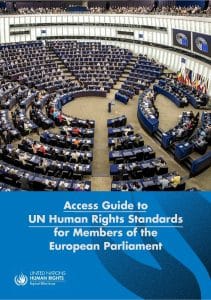
Access Guide to UN Human Rights Standards for Members of the European Parliament (OHCHR)
https://europe.ohchr.org/sites/default/files/2024-10/OHCHR_Access%20Guide%20to%20Human%20Rights.pdf
This web-based publication is meant as a reference tool for Members of the European Parliament and staff on information about and useful contacts for the international human rights framework and, more generally, to raise awareness about the normative work of the United Nations and its funds, programmes and specialized agencies.

https://www.unwomen.org/en/digital-library/publications/2024/11/femicides-in-2023-global-estimates-of-intimate-partner-family-member-femicides
On the International Day for the Elimination of Violence against Women, 25 November, this report by UN Women and UNODC reveals that femicide—the most extreme form of violence against women and girls—remains pervasive globally.
Globally, 85,000 women and girls were killed intentionally in 2023. 60 per cent of these homicides –51,100- were committed by an intimate partner or a family member. The data shows that 140 women and girls die every day at the hands of their partner or a close relative, which means one woman or girl is killed every 10 minutes.
see also: Explainer – What are Femicide Reviews? https://www.unodc.org/unodc/frontpage/
2024/November/explainer_-what-are-femicide-reviews.html

https://www.unwomen.org/en/digital-library/publications/2024/11/discussion-paper-measuring-social-norms-for-gender-and-development-lessons-and-priorities
This discussion paper reviews seven key examples of how social norms are being measured in efforts to achieve gender equality. Through this analysis, several cross-cutting shortcomings become evident, limiting the effectiveness of norms-based work in improving gender equality outcomes. The paper concludes by outlining components of a future framework for measuring social norms and gender equality, suggesting what should be measured, why, how, and by whom.

https://unama.unmissions.org/un-urges-afghanistan%E2%80%99s-de-facto-authorities-protect-media-freedom
The UN Assistance Mission in Afghanistan (UNAMA) and UN Human Rights Office published on 26 November 2024 this report documenting increasing challenges faced by journalists, media workers and media outlets in Afghanistan, where they operate under an environment of censorship and tight restrictions on accessing information. Women journalists and media workers were found to face particularly restrictive and discriminatory measures affecting their ability to undertake their professional work. The report covers the period from 15 August 2021 to 30 September 2024. During this period, it documented instances of human rights violations affecting 336 journalists and media workers – including 256 instances of arbitrary arrest and detention, 130 instances of torture and ill-treatment, and 75 instances of threats or intimidation.

https://www.ohchr.org/en/documents/reports/six-month-update-report-human-rights-situation-gaza-1-november-2023-30-april-2024
Introduction: “This report presents grave concerns regarding the human rights situation in occupied Gaza since the last report of the UN High Commissioner for Human Rights to the UN Human Rights Council, and covers a period of six months, from 1 November 2023, when the last Human Rights Council report covered the events on the ground, up to 30 April 2024. The report is based on monitoring and documentation by the Office of the United Nations High Commissioner for Human Rights (OHCHR). The High Commissioner has asked Israel for access to Israel and the Occupied Palestinian Territory (OPT) in order to investigate human rights violations on and since 7 October 2023, pursuant to its mandate, which so far has not been granted.”
Humanitarian Affairs
IASC Policy on Protection of Internally Displaced Persons
https://interagencystandingcommittee.org/sites/default/files/2024-11/IASC%20Policy%20on%20Protection%20of%20Internally%20Displaced%20Persons.pdf
This Policy serves as an update to the 1999 IASC Policy Paper on the Protection of Internally Displaced Persons (henceforth, “1999 IDP Protection Policy”), which was endorsed following the adoption of the Guiding Principles on Internal Displacement in 1998 (henceforth “Guiding Principles”). Since then, there have been significant developments within the IASC and UN relevant to addressing internal displacement.
Integrating disease outbreaks and strengthening of health in whole-of-society disaster risk management (UNDRR)
https://www.preventionweb.net/publication/integrating-disease-outbreaks-and-strengthening-health-whole-society-disaster-risk


Lebanon Interim Damage and Loss Assessment (DaLA), November 2024 (GFDRR / World Bank)
https://documents1.worldbank.org/curated/en/099111224112085259/pdf/P5063801c62fbe0c21beff1d0a436d07e02.pdf
The cost of physical damages and economic losses due to the conflict in Lebanon is estimated at US$8.5 billion, according to this new World Bank report that provides an initial assessment of the impact of conflict on Lebanon’s economy and key sectors. The report finds that damages to physical structures alone amount to US$3.4 billion and that economic losses have reached US$5.1 billion.
The Socioeconomic Impact of Armed Conflict on Sudanese Urban Households (UNDP / IFPRI)
https://www.undp.org/sudan/publications/socioeconomic-impact-armed-conflict-sudanese-urban-households


https://globalprotectioncluster.org/sites/default/files/2024-11/gpc_good_practices_on_legal_aid_in_humanitarian_settings_4.pdf
This report is the result of a consultation with humanitarian, development, human rights and peace actors working on legal aid and access to justice in the framework of the Global Protection Cluster Task Team on Law and Policy (GPC TTLP) Legal aid in humanitarian settings Project. It consolidates the collective learning resulting from the exchange of reflections, views, perspectives and experiences among the many legal aid and access to justice experts and practitioners working in a variety of crisis settings that actively participated in the webinars and throughout the project implementation. Through their voices, the report aims to enrich global learning and promote relevant action in this crucial sphere of humanitarian, development and peace response.
Justice and International Law
Not Just Another Tool: Public Perceptions of Police Use of Artificial Intelligence (UNICRI)
https://unicri.it/sites/default/files/2024-11/Public-Perceptions-Police-Use-Artificial-Intelligence.pdf

Policy on Slavery Crimes (ICC – Office of the Prosecutor)
English: https://www.icc-cpi.int/sites/default/files/2024-12/policy-slavery-web-eng.pdf
French: https://www.icc-cpi.int/sites/default/files/2024-12/policy-slavery-web-fra.pdf

see also: Questions and Answers: The ICC Office of the Prosecutor’s Policy on Slavery Crimes – https://www.icc-cpi.int/about/otp/questions-and-answers-the-icc-office-of-the-prosecutors-policy-on-slavery-crimes
Securing the Seas: A Comprehensive Assessment of Global Maritime Security (UNIDIR)
https://unidir.org/publication/securing-the-seas-a-comprehensive-assessment-of-global-maritime-security/

Newsletter Archive: https://unric.org/en/unric-info-point-library-newsletter-archive