
New UN websites & publications
TOPIC OF THE MONTH: Volunteers & Volunteering
The UN General Assembly has proclaimed 2026 as the International Year of Volunteers for Sustainable Development

https://www.unv.org/index.php/news/2026-swvr-redefining-true-value-volunteerism
The State of the World’s Volunteerism Report (SWVR) stands as the United Nations’ flagship publication, offering deep insights into the power and impact of volunteerism in shaping our world. It highlights volunteerism’s universality, its vast scope, and its far-reaching influence in the twenty-first century. The 2026 edition, released on International Volunteer Day, 5 December 2025 – takes a bold step forward and offers the most comprehensive analysis yet of the global scale and impact of volunteer work.
Further information:
- United Nations Volunteers over the years (6 May 2025)
- UNtoday – FOCUS ON (1 May 2025)
- UNV Knowledge Portal
UN in General

https://news.un.org/en/story/2025/11/1166429
The United Nations outlined how it intends to advance one of its most comprehensive system-wide reform efforts in decades, as Under-Secretary-General for Policy Guy Ryder presented the UN80 Initiative Action Plan. The plan brings the Secretary-General’s major UN80 reform proposals into a single, coherent structure to streamline efforts that will make the UN system deliver better.
The plan does not introduce new proposals but sets out how the UN system intends to advance the ones already on the table: 87 actions, grouped into 31 work packages across 3 workstreams, stretching from peace operations and humanitarian response to technology, shared services and institutional mergers.
To help make sense of a reform that touches almost every corner of the UN system, the Secretariat has launched an interactive UN80 Initiative Actions dashboard.
The online platform allows users to see, at a glance, each work package, its objectives and leadership, and how it connects back to the three foundational reports. The dashboard will be expanded with timeline and milestones and updated regularly as work advances.
For an initiative whose success will ultimately be measured not in new documents but in real-world impact, the Action Plan is a turning point: moving from design into a phase where progress, gaps, and results will be tracked in one place.
see also: Ask Dag! Where can I find the reform proposals of Secretary-General António Guterres? https://ask.un.org/faq/207525
 UNRIC Library Backgrounder: Appointment of the Secretary-General – Selected Online Resources
https://unric.org/en/unric-library-backgrounder-sg-appointment/
A joint letter of the President of the General Assembly and the President of the Security Council addressed to Member States, published on 25 November 2025, formally initiated the selection process for the next Secretary-General. We therefore updated the existing version of our UNRIC Library Backgrounder.
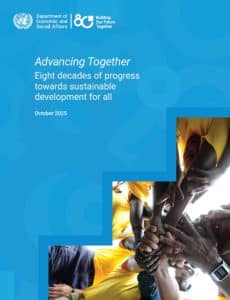
Advancing Together: Eight decades of progress towards sustainable development for all (DESA)
https://desapublications.un.org/advancing-together
As the United Nations marks its 80th anniversary in 2025, this report by the Department of Economic and Social Affairs (UN DESA) traces the evolution of sustainable development within the UN system. It highlights the organization’s role in shaping both the understanding and the practical application of sustainable development.
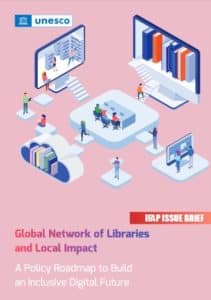
https://unesdoc.unesco.org/ark:/48223/pf0000396214
For centuries, libraries have been vital pillars of information access and knowledge sharing. Today, the global network includes over 2.8 million libraries, supported by 1.6 million staff and more than half a million volunteers. As closing the digital divide becomes increasingly urgent, libraries are uniquely positioned to advance information and digital accessibility for all.
In line with the framework of IGF Dynamic Coalition on Measuring Digital Inclusion, the UNESCO Information for All Programme (IFAP) launched its 3rd Issue Brief, developed in collaboration with the International Federation of Library Associations and Institutions (IFLA).
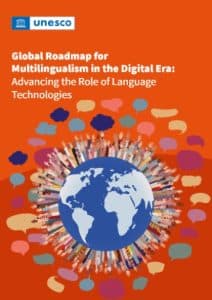
https://unesdoc.unesco.org/ark:/48223/pf0000393920
As the world becomes increasingly reliant on artificial intelligence (AI) and digital technologies, the ability to communicate, learn, and participate online depends heavily on language. Yet, most of the world’s linguistic diversity remains excluded from the digital realm — and with it, millions of people risk being left behind. To address this growing inequality, UNESCO launched the Global Roadmap on Multilingualism in the Digital Era: Advancing the Role of Language Technologies during the Second World Summit for Social Development.
The Roadmap advances the Doha Political Declaration adopted at WSSD+2, reaffirming global commitments to social inclusion, equal opportunity, and “leaving no one behind.” Its focus on eliminating inequality and exclusion aligns with UNESCO’s call to “leave no language behind.” By promoting language-inclusive AI and enabling marginalized language communities to participate fully in digital life, the Roadmap helps put these commitments into practice.
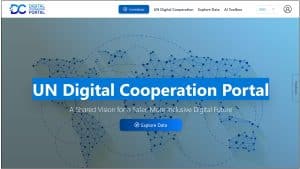
https://undigitalcooperation.org/
The UN Digital Cooperation Portal went live on 4 December 2025, giving fresh impetus to implementing the Global Digital Compact. The tool aggregates cooperation initiatives globally, on issues related to inclusive digital economies, artificial intelligence (AI) governance, digital infrastructure and the protection of human rights online. It allows partners to align activities for greater impact and coordinate effectively within globally agreed frameworks, such as the Pact for the Future, the Sustainable Development Goals, and the World Summit on the Information Society. The portal is developed by the UN Office for Digital and Emerging Technologies (ODET), with contributions from UN Trade and Development (UNCTAD) and the UN Industrial Development Organization (UNIDO).
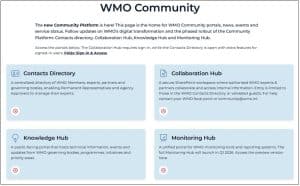
https://wmo.int/community/wmo-community
The World Meteorological Organization (WMO) is rolling out four connected tools that make it easier to find experts, collaborate, access technical resources and track progress. Contacts directory, Collaboration Hub and Knowledge Hub are now live!
Climate Change

https://doi.org/10.4060/cd7579en
Developing countries recognize the urgent need to adapt agrifood systems to climate change, but most National Adaptation Plans (NAPs) are struggling to address key risks or protect vulnerable groups due to severe financing and capacity gaps, according to a landmark report released on 18 November 2025 by the Food and Agriculture Organization of the United Nations (FAO) and the United Nations Development Programme (UNDP).
The report was published during the 2025 United Nations Climate Change Conference (COP30) in Belém, Brazil. It is the first comprehensive study of its kind to examine the agrifood component of National Adaptation Plans (NAPs) – key frameworks that help countries, especially least developed nations, reduce climate vulnerability and integrate adaptation across sectors and communities. NAPs also play a vital role in mobilizing finance for national priorities.
Based on original analysis by FAO and UNDP of NAPs in 64 developing countries, the report closes critical knowledge gaps on how agrifood systems are addressed in climate strategies, examining risks, priority actions, financing needs, implementation barriers, monitoring, gender equality, and loss and damage.

https://decarbonization.unido.org/resources/city-industry-climate-nexus/
Cities consume most of the world’s energy and generate the majority of greenhouse gas emissions. Yet urban areas – especially in low and middle income countries – are also frontline implementers of climate solutions. This new white paper from the UN Industrial Development Organization (UNIDO) argues that decarbonizing cities is not only environmental policy but a strategic industrial agenda. By concentrating people, infrastructure and industries, cities are pivotal arenas where net zero transitions must take shape.
COP30 Special report on he
https://www.who.int/publications/m/item/cop30-special-report-on-climate-and-health
Climate change is already driving a global health emergency, with over 540 000 people dying from extreme heat each year and 1 in 12 hospitals worldwide at risk of climate-related shutdowns, warns this new special report, released jointly on 14 November 2025 by the World Health Organization (WHO), the Government of Brazil (COP30 Presidency) and the Brazilian Ministry of Health. The report notes that rising temperatures and collapsing health systems are claiming more lives, and calls for immediate and coordinated action to protect health in a rapidly warming world. It follows the launch of the Belém Health Action Plan, a flagship initiative of Brazil’s COP 30 Presidency, unveiled on the dedicated Health Day of COP30 – 13 November 2025.

https://www.undrr.org/publication/documents-and-publications/extreme-heat-risk-governance-toolkit-and-framework
As the world faces record-breaking temperatures, this new toolkit was launched on 11 November 2025 at COP30 to help countries strengthen governance, coordination, and investment in response to escalating heat risks. Developed by an international collaboration of national and global experts-led jointly by the UN Office for Disaster Risk Reduction (UNDRR), the World Meteorological Organization (WMO), the Global Heat Health Information Network (GHHIN), and Duke University-the Framework and Toolkit respond to the UN Secretary-General’s Call to Action on Extreme Heat. The initiative recognizes that extreme heat has become one of the most deadly, economically and ecologically damaging, and least managed climate-related threats worldwide.
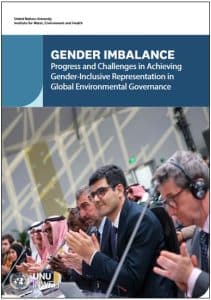
https://unu.edu/inweh/collection/gender-imbalance-progress-and-challenges-achieving-gender-inclusive-representation
This report by the United Nations University Institute for Water, Environment and Health (UNU-INWEH) analyzes gender representation among national focal points of the three Rio Conventions—the UNFCCC, UNCCD, and CBD—using 2024 sex-disaggregated data from 194 UN Member States. It highlights persistent gender imbalances, particularly in regions like Africa, where systemic barriers and social norms limit women’s participation in environmental decision-making. UNCCD shows the most significant gender gap, followed by UNFCCC and CBD. The report stresses that gender-inclusive representation is crucial for effective environmental governance, especially in addressing the interconnected crises of climate change, biodiversity loss, and land degradation.

https://www.unep.org/resources/global-cooling-watch-2025
Amid rising heatwaves and surging cooling demand, adopting sustainable cooling – with a strong focus on passive techniques low-energy and hybrid cooling that combines fans and air conditioners that consume little or no power – could cut greenhouse gas emissions, save trillions of dollars and expand life-saving cooling access to those who need it, according to a new UN Environment Programme (UNEP) report. Global Cooling Watch 2025, launched on 11 November 2025 at COP30 in Belém, Brazil, finds that cooling demand could more than triple by 2050 under business as usual, driven by increases in population and wealth, more extreme heat events and low-income households increasingly gaining access to more polluting and inefficient cooling. This would almost double cooling-related greenhouse gas emissions over 2022 levels – pushing cooling emissions to an estimated 7.2 billion tons of CO2e by 2050 – despite efforts to improve energy efficiency, phase down climate-warming refrigerants and overwhelm power grids during peak load.

https://www.undrr.org/publication/documents-and-publications/global-synthesis-report-comprehensive-risk-management
This report provides a snapshot of how countries, regions, and institutions are advancing integrated approaches to disaster risk reduction (DRR) and climate action for sustainable development. Climate and disaster risks are escalating, interconnected, and increasingly complex — demanding a shift from reactive crisis response to proactive, risk-informed action. provides the first global snapshot of how countries, regions, and institutions are advancing Comprehensive Risk Management (CRM) to align disaster risk reduction (DRR) and climate action for sustainable development.
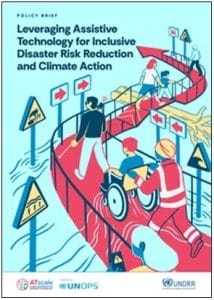
https://www.undrr.org/publication/documents-and-publications/leveraging-assistive-technology-inclusive-disaster-risk
The policy brief outlines clear and actionable recommendations to address the challenges faced by assistive technology users. The United Nations Office for Disaster Risk Reduction (UNDRR) and ATscale undertook a global study and developed this policy brief to examine how the rights and needs of assistive technology users can be more effectively addressed in DRR and climate action. Assistive technology users are often invisible in data systems, excluded from early warning and preparedness planning, and not facilitated in emergencies due to missing or inappropriate assistive products.
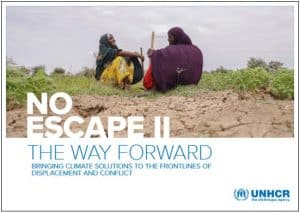
https://www.unhcr.org/media/no-escape-ii-way-forward
Millions of refugees, people forced to flee, and their hosts are trapped in an increasingly vicious cycle of conflict and climate extremes, according to this new report released on 10 November 2025 by UNHCR, the UN Refugee Agency. The report warns that climate shocks are undermining chances of recovery, increasing humanitarian needs, and amplifying the risks of repeated displacement. By mid-2025, 117 million people had been displaced by war, violence and persecution. Three in four of them are living in countries facing high-to-extreme exposure to climate-related hazards. Over the past 10 years, weather-related disasters have caused some 250 million internal displacements – equivalent to around 70,000 displacements per day. Whether it is floods sweeping South Sudan and Brazil, record-breaking heat in Kenya and Pakistan, or water shortages in Chad and Ethiopia, extreme weather is pushing already fragile communities to the brink.
Fact sheet no. 1: The Gender Equality and Climate Policy Scorecard: Advancing accountability in nationally determined contributions: https://tinyurl.com/yrd7r2vt
Fact sheet no. 2: Driving gender-responsive climate action: The role of institutional enablers: https://tinyurl.com/5n6de6mu
These fact sheets provide accessible, evidence-based insights on critical issues at the intersection of gender equality and climate action. Each fact sheet distills key findings from UN Women’s research and data initiatives to inform policy dialogue and advocacy, serving as a foundation for the flagship report “Progress of the world’s women 2026”.
The fact sheets explore priority themes such as the Gender Equality and Climate Policy Scorecard, gender and climate change action plans, and strategies and institutional enablers for gender-responsive climate action. By highlighting trends, gaps, and good practices, they aim to support governments, civil society, and development partners in advancing gender-responsive climate action.
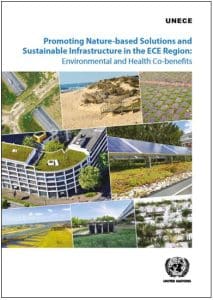
https://unece.org/info/publications/pub/409200
As countries increasingly feel the impacts of climate change and seek cost-effective, green solutions to cut emissions and accelerate adaptation efforts, UNECE has launched this new report on Promoting Nature-based Solutions and Sustainable Infrastructure on the margins of the 2025 UN Climate Change Conference (COP-30) in Belém, Brazil. The report shows how nature-based solutions (NbS) can complement or replace traditional infrastructure to reduce floods, heat and pollution, protect public health, and help countries meet climate and biodiversity goals.
https://www.unhcr.org/what-we-do/build-better-futures/climate-change-and-displacement/strengthening-climate-adaptation-0
UNHCR, the UN Refugee Agency, launched on 13 November 2025 the Refugee Environmental Protection (REP) Fund, the world’s first large-scale, refugee-driven carbon finance initiative. The Fund will support reforestation, cleaner cooking and green jobs that link environmental recovery with sustainable livelihoods and protection outcomes.
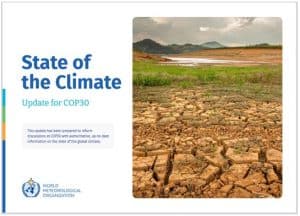
https://wmo.int/files/state-of-climate-update-cop30
The alarming streak of exceptional temperatures continued in 2025, which is set to be either the second or third warmest year on record, according to the State of the Global Climate Update from the World Meteorological Organization (WMO). The update reveals that the past 11 years (2015-2025) are set to be the warmest on record, with each year surpassing previous temperature highs. The global mean temperature for January-August 2025 was 1.42 °C ‡ 0.12 °C above pre-industrial levels, underscoring the accelerating pace of climate change.
Economic Growth and Sustainable Development
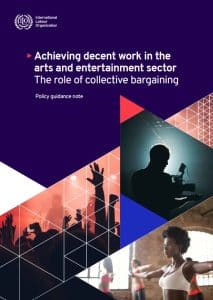
https://doi.org/10.54394/QUAO2432
This new International Labour Organization (ILO) Policy Guidance Note shows how collective bargaining and social dialogue can advance fair pay, safety and social protection for millions of workers in the arts and entertainment sector. The arts and entertainment sector spans from film, music, theatre, broadcasting and visual arts to the fast-growing digital media segment. It is a major source of employment, innovation and cultural expression. Yet, it continues to face persistent decent work deficits, including informality, unpredictable work arrangements and limited access to social protection. Drawing on more than 50 collective agreements and national examples from around the world, the new guidance shows how effective social dialogue can make the creative economy more fair, inclusive and sustainable.
https://tinyurl.com/m266ye62
Public-Private Partnership (PPP) projects often face long preparation period and high transaction costs. These have traditionally been the bottlenecks for governments especially in developing countries, delaying critical infrastructure projects and limiting their impact. To address these challenges, the UNECE has launched a new Policy Brief Series on Artificial Intelligence (AI) and PPPs to explore the extent to which AI can help reduce these costs and expedite the preparation process, making PPPs more efficient and effective.
The First Policy Brief, published on 10 November 2025, sets the stage by highlighting opportunities to enhance efficiency, transparency, and decision-making through AI, while addressing critical challenges such as defining AI strategies, harnessing data and algorithms, closing the digital divide, and building capacity and talent.
https://www.ilo.org/publications/ai-human-resource-management-limits-empiricism
This new working paper from the International Labour Organization (ILO) that examines how artificial intelligence (AI) is being integrated into human resource management (HRM) has found that that many systems are built on unclear objectives, biased or incomplete data, and opaque programming processes. These shortcomings can distort decision-making, reinforce inequalities and expose employers to legal and ethical risks, warn the paper’s authors. This new analysis from the ILO provides a critical assessment of and highlights structural risks that policymakers and employers should address to ensure decent work outcomes.

https://iris.who.int/handle/10665/383353
WHO/Europe, through its Office on Quality of Care and Patient Safety in Athens, Greece, and its mental health and well-being team, launched this new report on 13 November 2025. The report brings together, for the first time, comprehensive data on the state of child and youth mental health across the Region. It reveals significant and growing mental health needs among young people, alongside critical gaps in the quality and accessibility of care.
https://www.ilo.org/publications/demographic-change-europe-and-central-asia
As unprecedented demographic shifts are reshaping societies and economies in Europe and Central Asia, countries must work towards making their labour markets more inclusive by increasing the participation of underrepresented groups in the workforce, according to this new policy brief released jointly by the International Labour Organization (ILO), the United Nations Economic Commission for Europe (UNECE), and the United Nations Population Fund (UNFPA).
The brief, launched on 10 November 2025, calls for coherent and coordinated actions to remove barriers that underrepresented groups such as women, older workers, youth, persons with disabilities, migrants and refugees face in accessing the labour market. It also stresses the necessity to create decent work opportunities and supportive environments across the life course, through access to education, healthcare, decent work, and anti-discrimination measures.
https://www.undp.org/publications/energy-digital-and-anticorruption
This policy paper sets out a practical, integrity-by-design agenda for energy transitions. Developed by UNDP’s Sustainable Energy Hub and the Governance, Rule of Law and Peacebuilding Hub, the paper reframes corruption risks through a digital lens—showing how they migrate from physical transactions to data governance as systems digitalize. It presents a theory of change and concrete entry points that embed accountability across the value chain: AI-driven forecasting to reduce discretion in contracting and dispatch; real-time anomaly detection to surface irregularities in grid operations and payments; open energy and fiscal data to trace public resource flows and lower the cost of capital; blockchain-based registries to secure RECs, PPAs, and procurement trails; and e-participation platforms to extend oversight to communities.
https://collections.unu.edu/eserv/UNU:10363/interoperability_in_AI_Safety_Governance.pdf
The United Nations University Institute in Macau has released this new policy report offering critical recommendations to strengthen global AI safety frameworks through enhanced interoperability. Drawing on country studies from China, South Korea, Singapore, and the United Kingdom, the report identifies effective tools and key barriers to interoperability in AI safety governance. It highlights practical ways to build a governance ecosystem that is globally informed yet locally grounded.
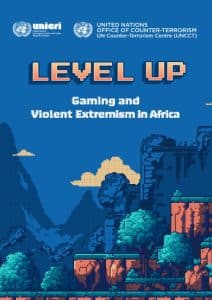
https://unicri.org/Publication-Level-Up-Gaming-and-Violent-Extremism-in-Africa
This report aims to deepen understanding of online harms in gaming spaces, particularly in the context of violent extremism. As gaming becomes increasingly social — especially through online mobile multiplayer titles with in-game chat — the potential for terrorist and violent extremist exploitation continues to grow. Global trends show how terrorists and violent extremists have begun to leverage gaming spaces to spread propaganda, recruit, livestream attacks, launder funds, and weaponize gender-based harassment. At the same time, law enforcement capacities, platform moderation in diverse languages, and safety standards in gaming cafés remain limited. Yet there is still a critical window to integrate safety measures before large-scale exploitation takes hold.
https://www.unesco.org/mil4teachers/en/toolkit-media
As part of the Global MIL Week 2025 celebrations, UNESCO launched this new practical resource for media organizations. The toolkit aims to help media outlets empower, engage and better inform audiences through the integration of Media and Information Literacy into editorial practices and organizational strategies.
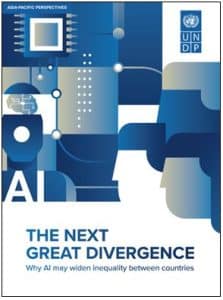
https://www.undp.org/asia-pacific/publications/next-great-divergence
Artificial Intelligence is advancing rapidly, yet many countries remain without the infrastructure, skills, and governance systems needed to capture its benefits. At the same time, they are already feeling its economic and social disruptions. This uneven mix of slow adoption and high vulnerability may trigger a Next Great Divergence, where inequalities between countries widen in the age of AI. This UNDP flagship report highlights how these pressures are playing out most visibly in Asia and the Pacific, a region marked by vast differences in income, digital readiness, and institutional capacity. The report outlines practical pathways for countries to harness AI’s opportunities while managing its risks in support of broader human development. The result of a multinational effort spanning Asia, Europe and North America, the paper draws on 9 nine background papers prepared with partners including the Massachusetts Institute of Technology (USA), the London School of Economics and Political Science (UK), the Max Planck Institute for Human Development (Germany), Tsinghua University and the Institute for AI International Governance (China), the University of Science and Technology of China, the Aapti Institute (India) and the Digital Future Lab (India).
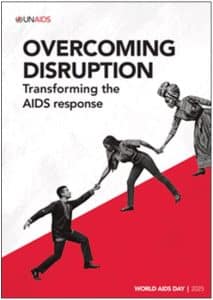
https://www.unaids.org/en/resources/documents/2025/2025-WAD-report
The global response to HIV has suffered its most significant setback in decades, warns this new UNAIDS report released on 25 November 2025 ahead of World AIDS Day 2025. It details the far-reaching consequences of international funding reductions and lack of global solidarity which sent shockwaves through low- and middle-income countries heavily affected by HIV.

English: https://tinyurl.com/4m3xwfxw
French: https://tinyurl.com/2d53jc48
Spanish: https://tinyurl.com/2j2tjn74
The International Labour Organization (ILO) has published the first ever guidelines aimed at improving the working conditions and livelihoods of the millions of workers who extract value out of our waste and care for the environment. Recycling provides livelihoods for millions of workers worldwide and plays a critical role in the circular economy. However, the sector continues to face significant decent work deficits. The guidelines, developed during a tripartite meeting of experts held in Geneva from 5–9 May 2025, provide practical and concrete steps for governments, employers and workers to help them address decent work deficits in recycling, and unlock the potential for a just transition.
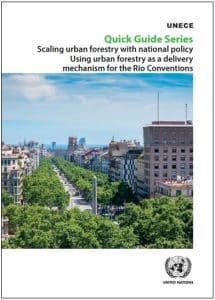
https://unece.org/info/publications/pub/409186
Drawing on insights from over 600 national plans and reports and shaped by extensive stakeholder interviews and real-world case studies, this quick guide series provides governments, planning authorities, and development partners with practical strategies to scale sustainable urban and peri-urban forestry through national policies and global agreements. Sustainable urban and peri-urban forestry is a transformative nature-based solution for climate resilience, biodiversity conservation, and sustainable urban development.
The quick guide series explores how to embed urban forestry into national policy and legislation, unlock blended finance, build capacity, mobilize community stewardship, and harness digital ecosystems for greener cities. In so doing, it showcases how countries can move from fragmented urban greening efforts to systemic, well-resourced strategies that deliver measurable impact—locally and globally.

https://doi.org/10.4060/cd7701en
Although fisheries sustainability in the Mediterranean and the Black Sea remains a source of concern, the percentage of overfished stocks has dropped to its lowest level in a decade, a milestone that coincides with aquaculture’s rapid expansion as a major source of aquatic foods in the region, according to a report released on 28 November 2025 by FAO’s General Fisheries Commission for the Mediterranean (GFCM). The 2025 State of Mediterranean and Black Sea Fisheries (SoMFi) report, produced with contributions from more than 700 regional experts, demonstrates that strong cooperation and evidence-based management are paying off. Fishing pressure has been cut by half over the past 10 years and key stocks are recovering.
Human Rights
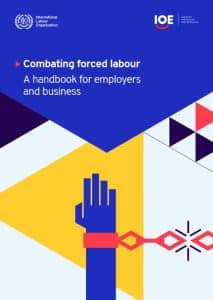
https://www.ilo.org/publications/combating-forced-labour-handbook-employers-and-business-1
The International Labour Organization (ILO) and the International Organisation of Employers (IOE) have released the third edition of Combating Forced Labour: A Handbook for Employers and Business. This practical guide helps companies identify, prevent, mitigate and account for actual and potential forced labour impacts in operations and supply chains operations and supply chains, and support employers’ organizations to help their members in these efforts.
Forced labour affects more than 27 million people worldwide, cutting across borders, sectors and supply chains. The handbook is grounded in international labour standards, including the ILO Forced Labour Convention, 1930 (No. 29) and its 2014 Protocol, and draws on internationally recognized frameworks such as the UN Guiding Principles on Business and Human Rights and the ILO Tripartite Declaration of Principles concerning Multinational Enterprises and Social Policy.

https://www.ohchr.org/en/documents/tools-and-resources/ensuring-respect-human-rights-while-taking-measures-counter-financing
The Guidance Note provides practical and actionable recommendations to Member States, financial institutions, and other stakeholders to ensure that efforts to counter financing of terrorism (CFT) fully comply with international human rights law, international humanitarian law, and international refugee law. It provides human rights guidance in nine areas: defining terrorism financing offences; financial intelligence and information-sharing; terrorism financing investigations and prosecutions; targeted financial sanctions in the context of countering terrorism; impact of CFT measures on non-profit organizations; impact of CFT measures on exclusively humanitarian activities; gender impact of CFT measures; the nexus between terrorism financing and trafficking in persons; and the role and responsibilities of the private sector, including financial institutions.

https://www.unwomen.org/en/digital-library/publications/2025/11/femicides-in-2024-global-estimates-of-intimate-partner-family-member-femicides
Marking the International Day for the Elimination of Violence against Women, the 2025 femicide report from the United Nations Office on Drugs and Crime (UNODC) and UN Women confirms that femicide continues to take the lives of tens of thousands of women and girls worldwide, with no sign of real progress. Last year, 83,000 women and girls were killed intentionally. Of them, 60 per cent – 50,000 women and girls – were killed at the hands of intimate partners or family members. This means one woman or girl is killed by a partner or family member almost every 10 minutes – an average of 137 every day. In contrast, just 11 per cent of male homicides were perpetrated by intimate partners or family members.
see also: UN Women Explainer – Five essential facts to know about femicide (25 November 2025): https://www.unwomen.org/en/articles/explainer/five-essential-facts-to-know-about-femicide
https://www.undp.org/publications/human-rights-vs-competitiveness-false-dilemma
This study – authored by UNDP and supported by the World Benchmarking Alliance – challenges the long-held belief that strong human rights performance comes at a cost to business competitiveness. Through a five-year quantitative analysis of 235 global firms, it provides compelling evidence that improving corporate human rights policies, processes and practices does not negatively impact their financial performance. On the contrary, the report reveals a positive link between improved human rights records of companies and enhanced asset efficiency. It thereby reframes human rights due diligence as a strategic investment in resilience and long-term value.
https://tinyurl.com/j3r4meaf
This policy brief explores the risks to migrant women working in sectors that are poorly regulated and at a heightened risk of trafficking in persons. It explores a range of high-risk sectors to identify the sectoral characteristics from a gender perspective that make women migrant workers more exposed to trafficking in persons. It concludes with a set of recommendations on how to enhance the protection of women migrant workers in sectors with a greater risk of trafficking in persons.

https://unesdoc.unesco.org/ark:/48223/pf0000396332
Strategies to counter antisemitism: A handbook for educators (UNESCO)
https://www.unesco.org/en/articles/strategies-counter-antisemitism-handbook-educators
Antisemitism remains a persistent threat, to Jewish communities and democratic societies as a whole. With the conviction that education is one of the most powerful tools to fight its root causes and of hatred, UNESCO just launched these two complementary publications. Their aim is to equip educators, policymakers, and curriculum developers with a toolbox that helps prevent and address antisemitism and promotes inclusive learning environments in Europe.
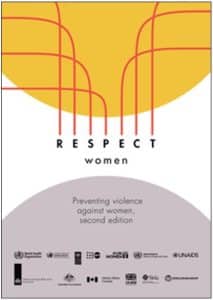
https://www.unfpa.org/publications/respect-women-preventing-violence-against-women-second-edition
Violence against women is a major public health problem rooted in gender inequality and is a gross violation of women’s human rights, affecting the lives and health of millions of women and girls. Aiming to accelerate progress towards achieving the SDG 5.2 target – eliminating violence against women and girls, the second edition of RESPECT women is published with updated evidence, including from humanitarian settings. This framework, endorsed by multiple UN, bilateral and multilateral agencies, aims to support policy-makers with the latest evidence-based interventions across seven strategies reflected in each letter of RESPECT:
R – elationship skills strengthened
E – mpowerment of women
S – ervices ensured
P – overty reduced
E – nvironments made safe
C – hild and adolescent abuse prevented
T – ransformed attitudes, beliefs, and norms
Humanitarian Affairs

https://www.fightfoodcrises.net/hunger-hotspots
The latest Hunger Hotspots report, which covers the period from November 2025 through May 2026, finds that in 14 of the 16 hotspots¬ identified, conflict and violence are the primary drivers of hunger. The report cites six countries and territories of highest concern – Haiti, Mali, Palestine, South Sudan, Sudan and Yemen – where populations face an imminent risk of catastrophic hunger. Six more countries – Afghanistan, the Democratic Republic of the Congo (DRC), Myanmar, Nigeria, Somalia, and the Syrian Arab Republic – are classified as “very high concern”. The other four hotspots are Burkina Faso, Chad, Kenya and the situation of the Rohingya refugees in Bangladesh.

Report in English, French & Spanish: https://doi.org/10.4060/cd7185en
Brief in English, French & Spanish: https://doi.org/10.4060/cd7187en
This biennial flagship report provides comprehensive evidence on the escalating impact of disasters on global agricultural systems, revealing losses of USD 3.26 trillion over the period 1991–2023. The 2025 edition introduces enhanced methodologies for assessing disaster impacts across crops, livestock, fisheries and aquaculture subsectors, offering Member States robust data for evidence-based policymaking. Aligned with the 2030 Agenda for Sustainable Development and the Sendai Framework for Disaster Risk Reduction, this edition provides actionable recommendations for integrating disaster risk reduction into agricultural policies and investments through digital innovations. From AI-powered early warning systems to mobile-based insurance reaching millions of smallholder farmers, the report demonstrates how technology is revolutionizing agricultural risk management.
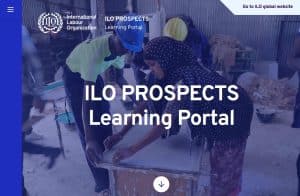
https://www.ilo.org/resource/news/ilo-prospects-launches-learning-portal-transform-forced-displacement
The International Labour Organization (ILO) has launched this learning portal to transform the forced displacement response. The portal turns years of field experience into practical, interactive resources to help practitioners, policymakers, and partners improve responses to forced displacement worldwide. Designed for policymakers, practitioners, and key stakeholders in forced displacement contexts, this platform offers actionable tips and learnings across 10 key interventions.
Justice and International Law
https://unesdoc.unesco.org/ark:/48223/pf0000396582
UNESCO developed these new guidelines in response to the rapid, uneven adoption of AI across justice systems worldwide. The Guidelines provide practical principles, safeguards and recommendations to ensure AI strengthens, rather than undermines, human-led justice.
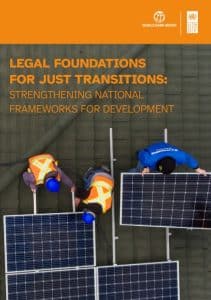
https://www.undp.org/publications/legal-foundations-just-transitions-strengthening-national-frameworks-development
This report provides a comprehensive overview of legal foundations that can anchor just transitions in durable, equitable, and enforceable rules. It synthesizes relevant international law, from the Paris Agreement and ILO instruments to emerging human rights jurisprudence and shows how countries increasingly translate these principles into national legislation governing labor protections, energy transitions, critical minerals, agriculture, natural resources, and financing mechanisms.

English, French & Spanish: https://www.icc-cpi.int/news/policy-addressing-environmental-damage-through-rome-statute
On 4 December 2025, the Office of the Prosecutor (OTP) of the International Criminal Court (ICC) launched its Policy on Addressing Environmental Damage Through the Rome Statute. The first Policy issued by the OTP in this area outlines how the Office may use its mandate and powers to investigate and prosecute Rome Statute crimes with an environmental dimension. Consistent with the OTP’s mandate and its Policy on Complementarity and Cooperation, the Policy also highlights the Office’s support for national efforts to investigate and prosecute environmental crimes.

English & French: https://www.icc-cpi.int/news/policy-cyber-enabled-crimes-under-rome-statute
The Office of the Prosecutor (OTP) of the International Criminal Court (ICC) issued on 3 December 2025 its Policy on Cyber-Enabled Crimes under the Rome Statute. This represents the first major policy response by an international prosecuting authority to the impact of new technologies on its mandate. This policy reflects the Office’s ongoing commitment to applying the law faithfully, while ensuring that it can respond effectively to the evolving ways in which Rome Statute crimes may be committed. This is crucial in fulfilling the Statute’s promise for all those it protects.
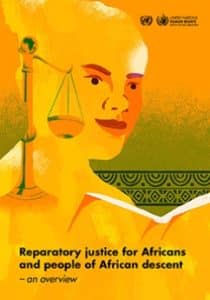
https://www.ohchr.org/en/reparatoryjustice
Over 30 million people were violently uprooted from Africa for enslavement. No country with a legacy of enslavement, the trade in enslaved Africans and colonialism has fully confronted this past or repaired its continuing impact. Around the world, calls for reparatory justice have been growing. Some States, universities, religious groups and businesses that profited or continue to profit from this past have started to act. Delivering reparatory justice is more urgent than ever. And international human rights law offers a powerful framework to move forward. To help unpack this issue, UN Human Rights has created a series of easy-to-read thematic explainers based on UN reports. These explainers highlight the key elements needed to deliver reparatory justice — along with concrete examples of action already taken.
Nuclear, Chemical and Conventional Weapons Disarmament
https://unidir.org/publication/neurotechnology-in-the-military-domain-a-primer/
Neurotechnology is an emerging but rapidly advancing field that offers significant promise across various domains, while also posing considerable risks. These risks have prompted an emerging discussion over the need for governance to ensure that the technology is developed in ways that are ethical, safe and secure. In particular, the dual-use nature of neurotechnologies raises the potential for them to become disruptive military technologies. Militaries worldwide have explored the integration of a wide suite of neurotechnologies into the military domain throughout the 21st century, with some initiatives dating back to the late 20th century. Recent advances in various scientific and technological fields have rendered the integration of neurotechnology into military contexts increasingly likely to become a reality in the near future. In contrast to civilian neurotechnology, this trend has received comparatively less attention, while carrying with it significant potential risks for international peace and security. A preliminary mapping of the potential risks, challenges and opportunities specifically associated with the militarization of neurotechnology is therefore both timely and necessary.
Newsletter Archive: https://unric.org/en/unric-info-point-library-newsletter-archive