
New UN websites & publications
UN in General
Secretary-General’s priorities for 2022

Press Release
- Outlining priorities for 2022, Secretary-General underscores fighting pandemic, reforming global financial system, tackling climate crisis, delivering peace (SG/SM/21113, 21 January 2022): https://www.un.org/press/en/2022/sgsm21113.doc.htm
- Assemblée générale : le Secrétaire général sonne l’alarme sur « cinq foyers d’incendie » qui ravagent le monde (SG/SM/21113, 21 janvier 2022) : https://www.un.org/press/fr/2022/sgsm21113.doc.htm
UN News Story
- UN chief calls for action to put out ‘5-alarm global fire’ (21 January 2022): https://news.un.org/en/story/2022/01/1110292
- Covid-19, finance, climat, cyberespace et conflits : Guterres appelle à la mobilisation pour affronter ces cinq défis (21 janvier 2022) : https://news.un.org/fr/story/2022/01/1112762
- El Secretario General delinea cinco grandes emergencias mundiales y llama a resolverlas (21 enero 2022): https://news.un.org/es/story/2022/01/1502902
- Guterres espera que todos os países apaguem “incêndio global” em cinco frentes [BR] (21 janeiro 2022): https://news.un.org/pt/story/2022/01/1777182

https://www.stockholm50.global/
“Stockholm+50” is an international meeting convened by the United Nations General Assembly to be held in Stockholm, Sweden from 2-3 June 2022. It will commemorate the 50 years since the United Nations Conference on the Human Environment, which made the environment a pressing global issue for the first time. Some 122 countries attended, and participants adopted a series of principles on the environment, including the Stockholm Declaration and Action Plan for the Human Environment. The United Nations Environment Programme was created as a result of the conference.

https://www.unep.org/50-years/
UNEP was created in 1972 to be the environmental conscience of the UN and the world. For 50 years the United Nations Environment Programme (UNEP) has coordinated a worldwide effort to confront the planet’s biggest environmental challenges. UNEP’s convening power and rigorous scientific research has provided a platform for countries to engage, act boldly and advance the global environmental agenda.
see also: UNEP@50 Communications Toolkit for Member States:
https://www.unep.org/resources/publication/unep50-communications-toolkit-member-states
The Year in Review from the Security Council and General Assembly
- Security Council
English: https://www.un.org/press/en/2022/sc14763.doc.htm
French: https://www.un.org/press/fr/2022/cs14763.doc.htm - General Assembly
English: https://www.un.org/press/en/2021/ga12399.doc.htm
French: https://www.un.org/press/fr/2021/ag12399.doc.htm
The two flagship products of the Department of Global Communications Meetings Coverage Section have just been published: Executive summaries of the work carried out by the Security Council in 2021, and by the General Assembly and its six Main Committees during the main part of the Assembly’s seventy-sixth session. Organized around themes, these reference documents offer an overview of issues discussed during the official meetings of the two bodies: 246 meetings, including 95 by videoconference – held by the Security Council in 2021, during which 57 resolutions and 24 presidential statements were adopted; as well as 147 meetings of the General Assembly and its Main Committees since the start of the seventy-sixth session, including its general debate, held from 21 to 27 September 2021, which featured 194 speakers, including 152 Heads of State and Government. Useful for delegations, as well as the media and general public, these summaries highlight the debates, texts adopted and issues addressed by Member States. In accordance with its mandate (General Assembly resolution 41/68), the Meetings Coverage Section’s team of press officers, editors and editorial assistants covers each public meeting of the main United Nations organs and their subsidiary bodies, at United Nations Headquarters in New York or abroad, publishing press releases in French and English on its website.
 Newsletter: 100-days of the ‘Presidency of Hope’
Newsletter from the President of the General Assembly reflecting on the first 100-days in Office (September – December 2021)
https://www.un.org/pga/76/2022/01/10/newsletters/
The newsletter summarizes amongst other things, the High-Level Week and General Debate; the Thematic Dialogue on Delivering Climate Action; the return of civil society to the United Nations; and the mandated and non-mandated efforts of the General Assembly, including high-level meetings on Road Safety, and Trafficking in Persons.

Combat Misinformation – Selected Online Resources on Misinformation, Disinformation and Hate Speech
https://unric.org/en/unric-library-backgrounder-combat-misinformation/
Coronavirus Disease (COVID-19)


Full version in English, Foreword and summary in French, Spanish, German & Italian: https://www.gavi.org/gavi-covax-amc-2022-investment-opportunity
COVAX, the vaccine pillar of the Access to COVID-19 Tools Accelerator (ACT-Accelerator), has now shipped over 1 billion doses to 144 countries and territories. To respond to new challenges and support equitable vaccination in countries, Gavi aims to raise at least US$ 5.2 billion in new funding. The goals of this financing are outlined in Break COVID Now, the Investment Opportunity for the Gavi COVAX Advance Market Commitment (Gavi COVAX AMC), and includes US$ 3.7 billion to fund a 600 million dose Pandemic Vaccine Pool, US$ 1 billion to support AMC country readiness and delivery and US$ 545 million to cover costs for rollout of donated doses.
Global analysis of health care waste in the context of COVID-19 (WHO)
https://www.who.int/publications/i/item/9789240039612


https://www.who.int/publications/i/item/9789240040977
The World Health Organization and the International Labour Organization have called for measures to be put in place to protect workers’ health while teleworking. A new technical brief to healthy and safe teleworking, published by the two UN agencies, outlines the health benefits and risks of teleworking and the changes needed to accommodate the shift towards different forms of remote work arrangements brought on by the COVID-19 pandemic and the digital transformation of work. Among the benefits, the report says, there can be improved work–life balance, opportunities for flexible working hours and physical activity, reduced traffic, and time spent commuting and a decrease in air pollution — all of which can improve physical and mental health and social wellbeing. Teleworking can also lead to higher productivity and lower operational costs for many companies. However, the report warns that without proper planning and organization and without health and safety support, the impact of teleworking on the physical and mental health and social wellbeing of workers can be significant. It can lead to isolation, burnout, depression, home violence, musculoskeletal and other injuries, eye strain, increase in smoking and alcohol consumption, prolonged sitting and screen time and unhealthy weight gain. The report outlines the roles that governments, employers, workers and health services at workplaces should play in promoting and protecting health and safety while teleworking.
Holding the line: communities as first responders to COVID-19 and emerging health threats (UNAIDS)
https://www.unaids.org/en/resources/documents/2022/holding-the-line-communities-first-responders
In a new UNAIDS report, organizations led by and for people living with HIV and key populations detail their efforts to respond to the colliding pandemics of COVID-19 and HIV. Drawing on qualitative survey data spanning 225 community-led organizations across 72 countries, the report provides a snapshot of the organizations’ work during early 2020 to sustain the HIV response while supporting their communities through the COVID-19 pandemic. The report also illuminates the high-priority actions that are still urgently needed to ensure the continuity of HIV-related services, as well as the sustainability of the community-led organizations providing them.
Monitoring report on the impacts of COVID-19 in West Africa
https://bit.ly/3rGZmdG
 Extreme poverty in Western Africa increased by nearly 3 percent last year, according to a new report on the socio-economic impact of COVID-19 published on 20 January 2022 by the Economic Community of West African States (ECOWAS). The report, completed in partnership with the West Africa Sub-Regional Office for the United Nations Economic Commission for Africa (UNECA) and the United Nations World Food Programme (WFP), indicates that the proportion of people in the region living with less than $1.90 a day increased from 2.3 per cent in 2020 to 2.9 per cent in 2021. The debt burdens of countries in the region have also increased in the context of slow economic recovery, shrinking fiscal space and weak resource mobilization. The COVID-19 impact study highlights the effects of the preventive measures including border closures, movement restrictions, and the disruption of supply chains. All these measures disrupted income-generating activities and exacerbated food price increases in the markets. The most affected are people who rely on unstable income sources such as small traders, street vendors and casual workers.
Post-pandemic COVID-19 economic recovery: Harnessing E-commerce for the UNECE transition economies
https://unece.org/info/publications/pub/364128

https://bit.ly/35fMH9X
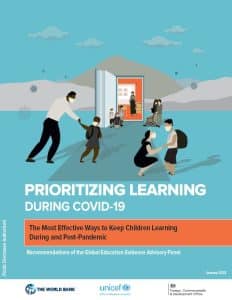
The short- and long-term impact of the Covid-19 crisis on children’s education, wellbeing, and future productivity is profound. Almost two years after schools began closing in most countries across the world, governments need to take urgent steps to limit the damage. Estimates suggest the economic cost of lost learning from the crisis will be in the trillions of US dollars if corrective action is not urgently taken. While many other sectors have rebounded when lockdowns ease, the damage to children’s education is likely to reduce children’s wellbeing and productivity for decades, making education disruption one of the biggest threats to medium- and long-term recovery from Covid-19 unless governments act swiftly. In addition to necessitating urgent recovery efforts, the pandemic offers a rare opportunity to rethink and reset education provision so children across all identities, socioeconomic backgrounds and circumstances can learn and thrive.
Rapid qualitative research to increase COVID-19 vaccination uptake: a research and intervention tool (WHO/Europe)
https://apps.who.int/iris/handle/10665/351117
This qualitative tool provides step by step guidance on how to design and conduct rapid qualitative research with different target groups to understand their barriers and drivers to COVID-19 vaccination. These insights can then be used to inform the development of interventions tailored to the target groups for successful COVID-19 vaccination uptake. Whilst the document focuses on COVID-19 vaccination, the described rapid approach can be used for any vaccination programme.
The Role of Trade in Developing Countries’ Road to Recovery (World Bank / WTO)
https://www.wto.org/english/tratop_e/devel_e/joint_policy_note_jan22.pdf
 A new joint study by the World Bank and the WTO highlights the major role played by trade in reducing poverty but notes that further measures are needed to support developing countries’ use of trade as a tool for growth. The study was presented at an online event on 24 January 2022, with the participation of three ministers from developing countries. It looks into how international trade can help developing countries recover from the COVID-19 pandemic, strengthen economic resilience to future global shocks, reduce poverty, mitigate carbon emissions and adapt to climate change. An estimated 100 million people have been pushed into extreme poverty because of the COVID-19 pandemic, note World Bank Group President David Malpass and WTO DG Okonjo-Iweala, in a joint foreword to the study. The current growth of trade is uneven, with women and other vulnerable groups lagging behind. While keeping trade open and global value chains functioning is helping to drive economic recovery, boosting developing countries’ capacity to trade will be essential to distribute the gains from trade more widely and to support a transition to a green economy, the study stresses.
UN/DESA Policy Brief #127: Covid-19 Pandemic Disruption – Implications on the full deployment of the United Nations Legal Identity Agenda
https://www.un.org/development/desa/dpad/publication/un-desa-policy-brief-127-covid-19-pandemic-disruption-implications-on-the-full-deployment-of-the-united-nations-legal-identity-agenda/
Countries are urged to implement the UN Legal Identity Agenda model as matter of priority to establish the necessary interoperability between various government’s components for effective monitoring and assessing impacts of policy decisions.
Economic Growth and Sustainable Development
2022 World Economic Situation and Prospects (WESP)
https://www.un.org/development/desa/dpad/wp-content/uploads/sites/45/publication/WESP2022_web.pdf
The UN’s key report on the global economy, released on 13 January 2022, shows that the rapid spread of the Omicron COVID-19 variant has put the brakes on a rapid recovery, counteracting signs of solid growth at the end of last year. The 2022 World Economic Situation and Prospects (WESP) report, produced by the UN Department of Economic and Social Affairs (DESA), cites a cocktail of problems that are slowing down the economy, namely new waves of COVID-19 infections, persistent labour market and lingering supply-chain challenges, and rising inflationary pressures. The slowdown is expected to carry on into next year. After an encouraging expansion of 5.5 per cent in 2021 — driven by strong consumer spending and some uptake in investment, with trade in goods surpassing pre-pandemic levels — global output is projected to grow by only 4.0 per cent in 2022 and 3.5 per cent in 2023.

https://aiforgood.itu.int/neural-network/
A new community platform powered by artificial intelligence (AI), launched on 1 February 2022 by the International Telecommunication Union (ITU), aims to step up global collaboration on the use of AI to drive sustainable development. The AI for Good Neural Network is designed to accelerate exchanges among government and industry, as well as to foster partnerships to achieve the Sustainable Development Goals (SDGs) set by the United Nations for 2030. AI for Good – organized by ITU in partnership with 40 organizations across the UN system and co-convened with Switzerland – provides the leading action-oriented, global, inclusive platform promoting AI to advance health, climate, gender, inclusive prosperity, sustainable infrastructure, and other global development priorities.

https://unece.org/info/publications/pub/364076
This brochure focuses on the automotive sector developments and governmental responses, as well as provides insights on the activities’ development performed by intergovernmental bodies of UNECE to enable assisted and automated driving as of September 2021. It further includes a short section aimed at providing clarity about various myths.
Blue Skies, Blue Seas: Air Pollution, Marine Plastics and Coastal Erosion in the Middle East and North Africa (World Bank)
https://openknowledge.worldbank.org/handle/10986/36912


https://www.wto.org/english/news_e/news22_e/devel_19jan22_e.htm
A new WTO publication launched on 19 January 2022 highlights that further support will be needed from the international community in the next decade to strengthen least-developed countries’ (LDC) participation in world trade. While LDCs have benefited over the past ten years from greater market access opportunities, flexibilities in implementing WTO rules and trade-related technical assistance, the COVID-19 pandemic has led to even greater challenges for these countries, hitting their exports hard.
Breaking Barriers: Female Entrepreneurs Who Cross Over to Male-Dominated Sectors (World Bank)
https://bit.ly/3B2WXhw
The report focuses on sectoral choice as one of the contributors to the gender gap in firm performance. It explores the difference in profits among female entrepreneurs who cross over into male-dominated sectors (MDS) compared to those who remain in traditionally female-concentrated sectors (FCS). The report provides a snapshot of the factors associated with being a female entrepreneur who crosses over to MDS, including the most salient cross-country ones that are associated with breaking into and surviving in these sectors. Based on this analysis, it offers evidence-based programs and policies which could support women to cross over into more profitable sectors and contribute to their business performance more generally.
Digital and Sustainable Trade Facilitation: Global Report 2021
https://www.unescap.org/kp/2022/untf-survey-2021-global
How Much Does Universal Digital Learning Cost? (UNICEF Policy Brief)
https://www.unicef-irc.org/publications/1301-how-much-does-universal-digital-learning-cost.html
COVID-19 school closures initially revealed more than 75% of children lacked access to critical digital learning opportunities. Three out of four were living in the poorest 40% of households. Digital learning is impossible without connectivity and electricity. However, in places like Chad, Malawi and Niger, the proportion of people with access to electricity is below 1 in 5. What efforts will ensure these children are not further left behind in future crises if schools are again closed? How much will universal access to digital learning cost? The answer is US$1.4 trillion. This paper estimates the cost of universalizing digital learning by 2030, in alignment with the conceptual framework of the Reimagine Education initiative. It provides a rationale for cost assumptions; classifies costs into enabling digital learning and delivering digital learning; and, finally, discusses financing achievability by comparing the estimated costs with current spending in education and other sectors.
How much it will cost in your country? For a localized costing, download the National Guide Price Generator from the dropdown menu.
Hunger Hotspots: FAO-WFP early warnings on acute food insecurity; February to May 2022 Outlook
https://www.wfp.org/publications/hunger-hotspots-fao-wfp-early-warnings-acute-food-insecurity-february-may-2022-outlook

 ILO Video download platform
https://videodownload.ilo.org/
The International Labour Organization (ILO) has launched a new video download platform for use by media and the general public. The online platform, which went live on 24 January 2022, features a wide selection of world of work video content produced by the ILO. It is organized into three separate libraries.
see also: https://bit.ly/3GYKU7c
Measuring rural poverty with a multidimensional approach: The Rural Multidimensional Poverty Index (FAO)
https://www.fao.org/documents/card/en/c/cb8269en
The majority of the world’s poor live in rural areas, but reliable and harmonised information on their numbers and conditions is difficult to come by. To help meet this deficiency in the fight against global hunger, the Food and Agriculture Organization of the United Nations (FAO) has published a report in collaboration with the Oxford Poverty and Human Development Initiative (OPHI), which introduces an innovative Rural Multidimensional Poverty Index (R-MPI). The R-MPI broadens existing methods for measuring rural poverty by taking a closer look at rural people’s capabilities: food security, the quality of their nutrition; their education, and living standards. Moreover, FAO and OPHI added two key aspects affecting the life of rural dwellers in particular: access (or the lack thereof) to adequate agricultural assets and exposure to environmental and other risks and social protection.
Mountain tourism – Towards a more sustainable path (FAO / UNWTO)
https://www.fao.org/documents/card/en/c/cb7884en

New Threats to Human Security in the Anthropocene (UNDP)
Report in English, Overview in English, French & Spanish: https://hdr.undp.org/en/2022-human-security-report

Prospects for children in 2022: a global outlook (UNICEF)
https://www.unicef.org/mena/reports/prospects-children-2022-global-outlook
 2022 sees us entering a third year of the pandemic, and the harm done to children is increasingly evident: A record rise in child poverty. Setbacks to progress on routine vaccinations. Disruption to education for an entire generation. That harm has emerged as an unintended side-effect of the world’s efforts to manage the crisis. COVID has been a uniquely dis-equalizing crisis. Lopsided access to vaccines aside, learning losses have been greatest among poorest children, and job losses have been disproportionately borne by women and youth. What next for the world’s children in the year ahead? As in the past two years, prospects for children will continue to hinge foremost on the pandemic and how it is managed. Our analysis zooms in on the next 12 months, taking an in-depth view of key trends impacting children – and helping all of us working to support children survive and thrive, to better understand where we are, where we are going and what we need to do.
Road Map on Statistics for Sustainable Development Goals – Second Edition (UNECE)
https://unece.org/statistics/publications/CES-roadmap-sdg-2


https://www.unep.org/resources/report/state-finance-nature-g20-report
G20 leading industrialized nations must embrace their role as influential leaders against climate change, by aligning development and economic recovery with international nature and climate goals, according to a new UN report, published on 27 January 2022. In its joint report on finance for nature in the G20 countries, the UN Environment Programme (UNEP), the World Economic Forum (WEF) and the Economics of Land Degradation Initiative, examined how wealthy nations can better support nature-based solutions (NbS). In addition to promoting sustainable farming and supply chains, or intiatives such as creating green spaces in cities to tackle rising heat, G20 States – a group representing many of the world’s most advanced economies – must address interrelated climate, biodiversity, and land degradation crises by increasing their annual investments in nature to $285 billion by 2050, said the State of Finance for Nature in the G20 report.
UN DESA Policy Brief No. 128: Addressing Climate Change Through Sport
https://www.un.org/development/desa/dpad/publication/un-desa-policy-brief-no-128-addressing-climate-change-through-sport/
Climate change is one of the most pressing issues of our times. Sport plays an important role as part of the solution. Sport is a key social platform that can reach and influence millions of peoples worldwide and raise awareness on climate change, promote a culture in favour of climate action, and champion sustainable behaviours.
UNFCCC website: The Ocean
https://unfccc.int/topics/ocean
The UNFCCC secretariat has launched new webpages on the ocean in response to a decision by governments at the UN Climate Change Conference COP26 in Glasgow last November. In addition to providing a hub to spotlight the mandates on the ocean, the new webpages also link to ocean science, including the Ocean and Climate Change Dialogue; information under the research and systematic observation agenda item and the IPCC; the Nairobi Work Programme focus area on Oceans, Coastal Areas and Ecosystems; the Technology Executive Committee work on coastal zones; and the Ocean and Coastal Zones pathway of the Marrakech Partnership. The UNFCCC secretariat will continue to support and expand engagement on the ocean moving forward.
World Employment and Social Outlook – Trends 2022 (ILO)
Report in English, Summary in English, French & Spanish: https://bit.ly/325AzXS
The International Labour Organization (ILO) has downgraded its forecast for labour market recovery in 2022, projecting a deficit in hours worked globally equivalent to 52 million full-time jobs, relative to the fourth quarter of 2019. The previous full-year estimate in May 2021 projected a deficit of 26 million full-time equivalent jobs. While this latest projection is an improvement on the situation in 2021, it remains almost two per cent below the number of global hours worked pre-pandemic, according to the ILO World Employment and Social Outlook – Trends 2022 (WESO Trends), released on 17 January 2022. Global unemployment is expected to remain above pre-COVID-19 levels until at least 2023. The 2022 level is estimated at 207 million, compared to 186 million in 2019. The ILO’s report also cautions that the overall impact on employment is significantly greater than represented in these figures because many people have left the labour force. In 2022, the global labour force participation rate is projected to remain 1.2 percentage points below that of 2019.
Working for a brighter, healthier future (WHO)
https://www.who.int/publications/i/item/working-for-a-brighter-healthier-future
The impacts of the COVID-19 pandemic go far beyond the suffering and death caused by the disease itself. It has disrupted education, mental well-being, and livelihoods, deepened existing inequalities and weakened past gains. For adolescents, these have lifelong consequences to their health and well-being. Data show that the considerable gains from investments in maternal and child health programmes do not last into adolescence. The decline in child mortality is not echoed by a similar drop in adolescent deaths. Of the estimated 1.2 billion adolescents worldwide, many have missed out on health services that consider their specific needs. Over 2000 adolescents die every day, mainly from preventable causes. This first WHO report on its work on adolescent health, “Working for a brighter, healthier future” illustrates WHO’s work across the range of issues in adolescent health and shows how WHO has increased its portfolio of research, set norms and standards, encouraged country support and advocacy, and extended the scope of its work at regional and country levels.

https://dust.aemet.es/
Forecasts and warnings of sand and dust storms in Europe, the Middle East and North Africa are now more readily accessible thanks to a new website designed to meet growing user needs for more information on these major hazards which affect weather, climate, the environment, health and economies in many parts of the world. The website is operated by a consortium of the Meteorological State Agency of Spain (AEMET) and the Barcelona Supercomputing Center (BSC-CNS), which supports WMO’s Regional Centre for Northern Africa, Middle East and Europe of the Sand and Dust Storm Warning Advisory and Assessment System (SDS-WAS). The Barcelona Dust Regional Center plays an important role in producing operational SDS-WAS products and in supporting research. It has helped develop tailored products for African countries and build capacity to use and disseminate the warnings and forecasts. There is an increasing need for accurate information and predictions, particularly over desert regions, such as Sahara and the Middle East, in order to support the development of early warning systems and mitigation plans.
Reporting and retrieval of lost fishing gear: recommendations for developing effective programmes (FAO / IMO)
https://www.fao.org/documents/card/en/c/cb8067en
Legal aspects of abandoned, lost and otherwise discarded fishing gear (ALDFG) (FAO / IMO)
https://www.fao.org/documents/card/en/c/cb8071en
 Fishing gear may be lost or discarded at sea, adding to the growing quantity of plastic waste at sea and on beaches. Two new studies from the global GloLitter Partnerships project, which aims to reduce sea-based marine plastic litter, address this phenomenon. The reports outline case studies which may offer a way forward to tackle abandoned, lost or otherwise discarded fishing gear, also referred to as ALDFG or ghost gear. ALDFG is the most harmful form of marine plastic litter for marine animals and habitats: it can impede safe navigation, damage beaches and reefs, and lead to economic losses for fisheries and other marine-dependent industries across the globe.
International Peace and Security
Concept note for the retreat on preventive diplomacy and mediation
English, French & Spanish: https://undocs.org/S/2022/21
Norway, in its capacity as President of the Security Council for the month of January 2022, held a President’s retreat on preventive diplomacy and mediation on 13 January. In order to guide the discussions, Norway, the Security Council President for January, prepared this concept note.
Concept note for the Security Council open debate on the theme “Protecting participation: addressing violence targeting women in peace and security processes”
English, French & Spanish: https://undocs.org/S/2022/22
The Security Council held a high-level open debate on the theme “Protecting participation: addressing violence targeting women in peace and security processes”, under the item entitled “Women and peace and security on 18 January 2022. In order to guide the discussions on this topic, Norway, the Security Council President for January, has prepared this concept
note.
Concept note for the Security Council high-level open debate on the theme “War in cities: protection of civilians in urban settings”
English, French & Spanish: https://undocs.org/S/2022/23
The Security Council held a high-level open debate on the theme “War in cities: protection of civilians in urban settings”, under the item entitled “Protection of civilians in armed conflict” on 25 January 2022. In order to guide the discussions on this topic, Norway, the Security Council President for January, has prepared this concept note.
Study on the evolution of the Children and Armed Conflict mandate 1996-2021
https://childrenandarmedconflict.un.org/2022/01/25-years-for-children-understanding-the-past-to-inspire-the-future/


https://www.un.org/unispal/
The United Nations Information System on the Question of Palestine (UNISPAL) website is an online collection of texts of United Nations resolutions, documents and publications concerning the question of Palestine, the Israeli–Palestinian conflict, and other issues related to the Middle East situation. With such a high volume of current and historical content, finding information can be challenging. The United Nations Department of Political and Peacebuilding Affairs (DPPA) wanted to make UNISPAL’s static search functionality more dynamic so that visitors could find information quickly and easily. As a solution, DPPA collaborated with the Office of Information and Communications Technology (OICT) to leverage artificial intelligence (AI) and develop a chatbot for the site. The “UNPal” chatbot, which took approximately two months to develop, was launched on UNISPAL on the International Day of Solidarity with the Palestinian People.
Human Rights
Identifying gender persecution in conflict and atrocities: A toolkit for documenters, investigators, and adjudicators of crimes against humanity (CUNY / MADRE / UN Women)
https://www.unwomen.org/en/digital-library/publications/2022/01/identifying-gender-persecution-in-conflict-and-atrocities
In conflicts and atrocities across the globe, armed actors perpetrate gender-based crimes amounting to persecution as a crime against humanity in an effort to reinforce oppressive, discriminatory gender narratives. Rarely documented, perpetrators are hardly ever held accountable for these crimes. As a result, their crimes of persecution are often excluded from consideration by international and domestic tribunals, and in effect, are left out of history. This toolkit for identifying gender persecution in conflicts and atrocities aims to close the accountability gap by providing a framework for recognizing and understanding illicit conduct that amounts to gender persecution to investigators, lawyers, advocates, documenters, first responders, and others who engage in identifying gender-based crimes in conflict and atrocity settings.
Humanitarian Affairs
Handbook on Recovery Institutions: A Guidebook for Recovery Leaders and Practitioners (UNDP)
https://www.undp.org/publications/handbook-recovery-institutions-guidebook-recovery-leaders-and-practitioners

Integrating Migration into Environment and Climate Change Interventions (IOM / UNDP / UNEP / EU)
https://eea.iom.int/sites/g/files/tmzbdl666/files/mmicd/environment-climate-change-toolkit.pdf


https://afghanistan.un.org/en/169578-united-nations-transitional-engagement-framework-tef-afghanistan
The UN team in Afghanistan has launched its One-UN Transitional Engagement Framework (TEF) to assist Afghans in 2022. The TEF is the overarching strategic planning document, ensuring the coordination of the UN team’s work to reduce the suffering of the people of Afghanistan by saving lives, sustaining essential services—such as health and education—and preserving essential community systems.
Justice and International Law
Audiovisual Library of International Law – new Lecture
- Climate Change: Air, Atmosphere and Climate Change / by Paolo Galizzi: https://legal.un.org/avl/ls/Galizzi_EL.html
- Reparations to Individuals for Violations of International Human Rights Law and International Humanitarian Law / by Claudio Grossman: https://legal.un.org/avl/ls/Grossman_HR.html
Labour Provisions in Trade Agreements Hub
https://www.ilo.org/LPhub/
The International Labour Organization (ILO) has launched a new global database on trade agreements containing labour provisions, paving the way for a more human-centred approach to trade policy. Aimed at policymakers, technical experts, and representatives of workers, employers and civil society, the Labour Provisions in Trade Agreements Hub (LP Hub) offers a comprehensive, structured compilation of the text of labour provisions in more than 100 regional trade agreements (RTAs) in about 140 economies. Labour provisions are obligations in trade agreements to protect and advance workers’ rights, including through different forms of cooperation and dialogue between trade unions, business organizations and the general public. Around half of trade agreements concluded in the last decade (2011-2020), contained labour provisions, compared to only 22 per cent in the previous decade (2001-2010).
Nuclear, Chemical and Conventional Weapons Disarmament
IAEA Preprint Repository
https://preprint.iaea.org/
Although many major research institutions and organizations have developed preprint repositories, the IAEA is one of the first international organizations to have launched its own. Preprints are preliminary versions of books, chapters or academic articles that are in the process of being published. Featuring them online allows interested readers to consult scientific and technical content by the IAEA in a single location faster. As a first step, the IAEA has made preprint versions of its books available to readers. There are currently over 60 preprints on the new IAEA Preprint Repository with more to be added in coming months.

https://bit.ly/3qA3htj
The IAEA’s first ever book by global thought leaders on nuclear law has just been published in e-book format, providing free access to a compilation of essays on this highly specialized legal field. Nuclear Law: The Global Debate echoes the tagline of the IAEA’s upcoming First International Conference on Nuclear Law (ICNL2022), to take place in Vienna from 25 to 29 April, and contains articles by leading scholars, policymakers and scientists in the field. Nuclear law underpins the entire nuclear sector, enabling the safe, secure and peaceful uses of nuclear technology for the benefit of humanity. The international legal instruments, standards and norms provide the framework in which those operating a nuclear power plant, transporting radioactive material for cancer therapy or those experimenting in a laboratory to develop COVID-19 testing kits work.

https://www.un.org/disarmament/unoda-gender-policy-2021-2025/
UNODA’s Gender Policy 2021-2025 provides an overarching framework for the Office to facilitate progress on gender-responsive disarmament, arms control and non-proliferation and contribute to gender equality, human rights and the elimination of gender-based violence. The Policy outlines Office-wide goals, as well as roles and responsibilities for achieving gender parity, inclusion, gender mainstreaming, and other strategic gender dimensions across UNODA policies, programmes, projects, and structures.
Newsletter Archive: https://unric.org/en/unric-info-point-library-newsletter-archive