
New UN websites & publications
TOPIC OF THE MONTH: Desertification
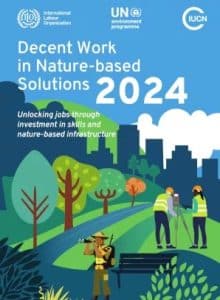
https://www.ilo.org/publications/decent-work-nature-based-solutions-2024-unlocking-jobs-through-investment
Investing in nature-based solutions (NbS) could create up to 32 million new jobs by 2030. This is according to this new report by the International Labour Organization (ILO), the International Union for Conservation of Nature (IUCN), and the UN Environment Programme (UNEP). Launched on 7 December 2024 at the 16th session of the Conference of the Parties (COP16) of the United Nations Convention to Combat Desertification (UNCCD), in Riyadh, Saudi Arabia, the Decent Work in Nature-based Solutions 2024 report calls for increased and more targeted investments to the countries with most potential for use of NbS.

https://www.unccd.int/resources/publications/economics-drought-investing-nature-based-solutions-drought-resilience
As droughts fueled by human destruction of the environment are projected to affect three in four people by 2050, investing in sustainable land and water management is essential to reduce their costs, which already exceed $307 billion per year globally. Drawing on a wealth of evidence and case studies from various countries —including Chile, India, Jordan, Kenya, Spain and Tunisia— this report makes the business case for nature-based solutions to drought — practices that restore ecosystem functions and soil health to enhance water cycling, storage, and supply in support of human wellbeing — for example, reforestation, grazing management, and the management, restoration and conservation of watersheds.

https://www.unccd.int/resources/publications/fashion-and-land
The fashion industry significantly influences land use, soil health and degradation through its fiber choices and production practices. From cotton’s high resource demands to the overgrazing linked to wool and cashmere, and the microplastic pollution of synthetic fibers, each material poses unique challenges. Emerging alternatives, such as agricultural waste fibers, offer promise but remain niche. Addressing the environmental pressures caused by the fast pace of consumption and material reliance requires sustainable practices across the fashion value chain. This publication, being launched at UNCCD COP16 in Saudi Arabia, highlights the connection between fashion and land, showcasing innovative solutions, policy frameworks and actionable strategies to reduce the industry’s impact and promote long-term environmental stewardship.

Report: https://www.unccd.int/resources/reports/global-threat-drying-lands-regional-and-global-aridity-trends-and-future
Science-policy brief: https://www.unccd.int/resources/brief/science-policy-brief-global-threat-drying-lands-regional-and-global-aridity-trends
The report was launched at the 16th conference of UNCCD’s nearly 200 Parties in Riyadh, Saudi Arabia (COP16), the largest UN land conference to date, and the first UNCCD COP to be held in the Middle East, a region profoundly affected by impacts from aridity. The report by UNCCD Science-Policy Interface (SPI) — the UN body for assessing the science of land degradation and drought — points to human-caused climate change as the primary driver of this shift. Greenhouse gas emissions from electricity generation, transport, industry and land use changes warm the planet and other human activities warm the planet and affect rainfall, evaporation and plant life, creating the conditions that increase aridity.

Report & Summary: https://www.unccd.int/resources/publications/ground-peace-land-restoration-international-peace-and-security
The report provides a comprehensive analysis of the linkages between land, peace and security in the context of the UNCCD Peace Forest Initiative, drawing insights from global research, case studies, and expert perspectives. It sets out the political case for investing in land and ecosystem restoration as a powerful contribution to international peace and security and calls for policymakers and practitioners working in the field of environmental restoration and peace-building to incorporate its findings and recommendations into their strategies for addressing land-related conflicts as a route towards sustainable peace.

https://www.unccd.int/resources/reports/harmony-action-land-restoration-linking-social-protection-financial-inclusion-and
This report serves as a roadmap for policymakers, drawing 2pathways to where the objectives of land restoration, social protection, financial inclusion and disaster risk management intersect. These synergies can make land restoration fair and equitable, respecting land rights and the tenure of those who often rely on these lands as both a home and as a source of livelihood. By centering inclusivity and equity, this approach aims to build a sustainable future in which all communities benefit from restored and resilient landscapes.

https://www.unccd.int/resources/reports/stepping-back-precipice-transforming-land-management-stay-within-planetary
This major new scientific report charts an urgent course correction for how the world grows food and uses land in order to avoid irretrievably compromising Earth’s capacity to support human and environmental well-being. Produced under the leadership of Prof. Dr. Johan Rockström at the Potsdam Institute for Climate Impact Research (PIK) in collaboration with the UN Convention to Combat Desertification (UNCCD), the report was launched as nearly 200 UNCCD member states began their COP16 summit on 2 December 2024 in Riyadh, Saudi Arabia. The report situates both problems and potential solutions related to land use within the scientific framework of the planetary boundaries, which has rapidly gained policy relevance since its unveiling 15 years ago.

https://www.unccd.int/resources/reports/sustainable-land-use-systems-path-forward-collectively-achieve-land-degradation
This report presents science-based evidence concerning sustainable land use systems (SLUS) and the potential of the SLUS approach to achieve land degradation neutrality (LDN) targets, reduce inequalities, achieve social justice, improve economic viability and, consequently, help achieve multiple United Nations sustainable development goals (SDGs) and targets. It aims to guide countries to use SLUS to apply more effective management of natural resources and the environment.

https://www.unccd.int/resources/publications/world-drought-atlas
As record-breaking droughts are becoming a new normal around the globe, the UN Convention to Combat Desertification (UNCCD) and the European Commission Joint Research Centre (JRC) launch the most comprehensive global publication on drought risks and solutions as an urgent wake-up call for world leaders and citizens. The World Drought Atlas depicts the systemic nature of drought risks for both specialist and non-specialist audiences. Through dozens of maps, infographics, and case studies, it illustrates how drought risks are interconnected across sectors like energy, agriculture, river transport, and international trade and how they can trigger cascading effects, fueling inequalities and conflicts and threatening public health.
UN in General
“Journal of the United Nations” launches global calendar
Have you ever wanted to view all the meetings of a particular UN organ in a calendar view? Now you can with the Global Calendar feature of the Journal of the United Nations. The Global Calendar allows you to view meetings of all or just specific intergovernmental bodies that you may be interested in on a month-by-month basis. It can be accessed from the sidebar beneath “Conferences and Summits” on the Journal of the United Nations website.
see also: https://www.un.org/en/delegate/journal-united-nations-launches-global-calendar
Security Council Resolutions
https://digitallibrary.un.org/
Full-text search for Security Council resolutions is here!
The United Nations Security Council adopted its first resolution, S/RES/1(1946), on 25 January 1946 – long before the current modes of online distribution of documents.
As of 30 November 2024, the Council has adopted 2,760 resolutions in pursuit of its duty to uphold international peace and security. These resolutions are adopted in open formal meetings, and the voting information is recorded in the respective meeting records.
The Dag Hammarskjöld Library digitized the historic collection of Security Council resolutions over two decades ago. However, due to limitations in technology at that time, the files did not allow for full-text searching.
To improve access and discovery, the Library launched a project to add text-searchable features to resolutions published before UN documents became fully digital in 1993. Using an optical character recognition (OCR) tool, we converted over 900 Security Council resolutions and related documents from images into searchable text. That meant processing more than 6,000 files in all official languages!
The Library’s ongoing digitalization initiative prioritizes the scanning of important documents issued by the Security Council, General Assembly, and Economic and Social Council in the public domain since the Organization’s founding.
Economic Growth and Sustainable Development

https://documents.worldbank.org/en/publication/documents-reports/documentdetail/099120424173017419/p1700301be9b560a61821b15190340120f8
The Europe and Central Asia region is highly heterogeneous, and water security challenges vary widely. Although relatively similar, some challenges are of a different size, especially given each country’s various geographical, cultural, economic, and political departure points. This assessment explores the main regional challenges and opportunities related to water security by delving into the situations faced by each of the three major subregions: the Danube, Central Asia, and the South Caucasus.
Community protection for the mpox response: a comprehensive set of actions (WHO)
https://www.who.int/publications/i/item/B09182
This is the first of a collection of technical briefs devoted to community protection for mpox. These briefs provide practical information for strengthening person- and community-centred responses to mpox. They are designed for use by people working with and among all affected communities to achieve desired outcomes for emergency mpox responses in all areas at risk.
Detecting Information Voids During Floods in the Central European Region (UNU-CRIS Insight Brief)
https://cris.unu.edu/detecting-information-voids-during-floods-central-european-region
This research aims to detect information voids (IVs) during the Central European floods, a critical issue exacerbated by climate change and increased urbanization. The study employs rapid pulse surveys as an innovative data collection method, enabling efficient outreach to a large sample size during emergencies. We propose an operational definition of IVs as a four-dimensional problem encompassing gaps in informational quality, quantity, sources, and channels. This nuanced understanding allows for targeted interventions in regions such as Belgium, Germany, and Poland, where similarities and differences in IVs are examined.

https://doi.org/10.4060/cd3044en
The Food and Agriculture Organization of the United Nations (FAO) has released its first major global assessment of salt-affected soils in 50 years. The report shows that nearly 1.4 billion hectares of land (just over 10 percent of the total global land area) are already impacted by salinity, with an additional one billion hectares at risk due to the climate crisis and human mismanagement. The report was presented on 11 December 2024 during the International Soil and Water Forum 2024 in Bangkok. The event, co-organized by FAO and Thailand’s Ministry of Agriculture and Cooperatives, discussed an action plan for halting and reversing soil degradation and water scarcity.

International Migration and Sustainable Development (UN DESA)
https://bit.ly/Megatrends3-international_migration
On 18 December 2024, International Migrants Day, UN DESA launched a comprehensive report examining the linkages between international migration and the social, economic and environmental dimensions of sustainable development. The report comes at a time of great need for balanced, fact-based analysis on migration. By strengthening the evidence base regarding the positive contributions of safe, orderly and regular migration, while highlighting the risks associated with unsafe or irregular movements, the report will support informed policymaking. It will also counter harmful and misleading narratives about migrants and migration.

https://hdl.handle.net/10986/42450
Plastic pollution is a significant global issue impacting ecosystems, livelihoods, and human health, prompting international efforts to create a legally binding instrument known as the Plastic Treaty. To address the scale and nature of plastic pollution and implement potential solutions, various stakeholders have developed numerous approaches, tools, methods, models, and information sources. These resources, including guidance documents, academic research, technical reports, decision support software, and publicly available data sets, cover a wide range of issues from assessing plastic pollution flows to evaluating policy solutions and financing. This report aims to inform national governments about key tools and toolkits specifically designed to help plan actions at the national level to combat plastic pollution.

https://doi.org/10.4060/cd3668en
Although living at altitude has never been easy – and mountain communities have long demonstrated exceptional ingenuity in thriving in harsh environmental conditions – the escalating impacts of climate change pose unprecedented challenges to mountain people, threatening their traditional ways of life and survival strategies. This publication discusses how mountain adaptation solutions contribute to addressing the climate crisis. All the case studies included here were provided by Mountain Partnership Members. By presenting their concrete adaptation efforts in mountain regions worldwide, we want to highlight the role of local actors, especially women farmers Indigenous Peoples and youth as principal agents of change. The publication is also a contribution to the celebration of International Mountain Day 2024, which takes the theme “Mountain solutions for a sustainable future – innovation, adaptation and youth”.

https://unctad.org/publication/trade-against-hunger
Global food insecurity has surged in recent years, reversing decades of progress in the fight against hunger. Conflict, climate shocks, poverty and economic instability are driving this crisis and threatening the global goal to eradicate hunger. The report examines how trade can help address food insecurity and prevent famine, outlining actions to stabilize food systems and build resilience against future shocks.
UN Climate Relief
https://climaterelief.un.org/


https://www.unwater.org/publications/un-water-analytical-brief-water-climate-mitigation
Water is necessary for many key climate mitigation measures, including for the clean energy transition and the natural and artificial removal of carbon dioxide from the atmosphere. Understanding water availability and constraints should assist in deciding on climate mitigation options and guide the design of climate mitigation projects. The UN-Water Analytical Brief on Water for Climate Mitigation discusses the dependency of climate mitigation on the use of water and the effective management of water resources and related services to ensure sustainable and effective outcomes.
Human Rights
Haiti Flash Report, 23 décembre 2024 : 207 personnes executees par le gang de Wharf Jeremie (Port-au-Prince)
https://binuh.unmissions.org/sites/default/files/flash_report_20241223_wharf_jeremie_fr.pdf
A little over two weeks after a surge of violence in the Cité Soleil commune of Haiti’s capital, Port-au-Prince, this UN report has concluded that more than 207 people were executed by the Wharf Jérémie gang. The report by the UN Integrated Office in Haiti (BINUH) and the Office of the UN High Commissioner for Human Rights (OHCHR) covers the period between 6 and 11 December, during which 134 men and 73 women were killed. Most of the victims were elderly people accused of practicing voodoo and causing the gang leader’s child’s illness. Other victims included those who tried to flee the area for fear of reprisals or were suspected of leaking information about the crimes to local media.
Policy Brief – Climate Change, Mental Health and Human Rights
https://www.ohchr.org/en/documents/policy-briefs/policy-brief-climate-change-mental-health-and-human-rights
Climate change has growing detrimental impacts on mental health and well-being.2 Research at the intersection of climate change and mental health already provides indications of foreseeable impacts that can be prevented. At the same time, more research and monitoring mechanisms are needed to enhance the effectiveness of proposed action that addresses some of the impacts of climate change while producing shared benefits for improving mental health and wellbeing. This brief builds on a contribution submitted by the Special Rapporteur in response to OHCHR’s call for inputs on mental health and human rights, which aims at informing a mandated consultation and comprehensive report on mental health and human rights, as per HRC resolution 52/12.
Position paper of the Special Rapporteur on Torture and other cruel, inhuman or degrading treatment in respect of the case of “Application of the Convention against Torture and Other Cruel, Inhuman or Degrading Treatment or Punishment (Canada and the Netherlands v. Syrian Arab Republic)”, before the International Court of Justice”
https://www.ohchr.org/en/documents/position-papers/position-paper-special-rapporteur-torture-and-other-cruel-inhuman-or
The Special Rapporteur on torture and other cruel, inhuman or degrading treatment or punishment, Dr. Alice Jill Edwards, has issued a position paper in respect of the case of “Application of the Convention against Torture and Other Cruel, Inhuman or Degrading Treatment or Punishment (Canada and the Netherlands v. Syrian Arab Republic)”, currently being examined by the International Court of Justice. The goal of the position paper, drafted on a voluntary basis for the consideration of all parties interested, is to promote, in the interest of justice, the human rights and fundamental freedoms, particularly the absolute prohibition of torture and other cruel, inhuman or degrading treatment or punishment, as enshrined in international law.

https://www.ohchr.org/en/documents/tools-and-resources/reparatory-justice-people-african-descent
The present publication focuses on reparatory justice for people of African descent. It acknowledges increased acceptance of the need to address the continuing impacts of enslavement and colonialism, including through reparatory justice. It takes stock of existing frameworks and initiatives and identifies areas for further consideration. It contains recommendations for States to take a comprehensive approach, grounded in international human rights law, that seeks to address legacies of the past in order to build societies that are free from systemic racism and racial discrimination. To achieve these objectives effectively, the approach should be participatory, gender-sensitive and inclusive, and should combine a plurality of measures, including, where appropriate, restitution, rehabilitation, satisfaction and guarantees of non-repetition.

https://data.unicef.org/resources/the-right-start-in-life-2024-update/
Over 500 million – or close to 8 in 10 – children under five have had their births registered in the last five years, reflecting notable strides in securing legal identity worldwide, according to this new UNICEF report released on 11 December 2024. Released on UNICEF’s 78th birthday, the report the latest update on the number of children registered since 2019, when global levels stood at 75 per cent. Despite the increase to 77 per cent today, 150 million – or around 2 in 10 – children under five remain unregistered and invisible to government systems.
Thematic Report: Attacks on hospitals during the escalation of hostilities in Gaza (7 October 2023 – 30 June 2024)
https://www.ohchr.org/en/documents/reports/thematic-report-attacks-hospitals-during-escalation-hostilities-gaza-7-october
This report published on 31 December 2024 by the UN Human Rights Office found that Israel’s pattern of deadly attacks on and near hospitals in Gaza, and associated combat, pushed the healthcare system to the brink of total collapse, with catastrophic effect on Palestinians’ access to health and medical care. The attacks, documented between 12 October 2023 and 30 June 2024, raise serious concerns about Israel’s compliance with international law, the report states. Medical personnel and hospitals are specifically protected under international humanitarian law, provided they do not commit, or are not used to commit, outside their humanitarian function, acts harmful to the enemy.
Humanitarian Affairs

https://dtm.iom.int/products/progress-2024
The IOM’s Global Data Institute (GDI) and Georgetown University’s Institute for the Study of International Migration (ISIM) collaborated on the second edition of the Periodic Global Report on the State of Solutions to Internal Displacement (PROGRESS). This analysis is primarily based on household level data collected through surveys in 11 displacement affected countries. Additionally, focus group discussions were conducted in 5 countries. The analysis draws on data from 15 distinct countries with the main purpose of providing people-centred and operationally relevant insights to inform decision-making for supporting IDPs along their solutions pathways.
A simplified and more efficient humanitarian system / by Jan Egeland and Joyce Msuya
https://www.unocha.org/publications/report/world/simplified-and-more-efficient-humanitarian-system
“Introduction: … This report lays out our proposals for how to ensure faster and more decisive humanitarian decision-making while wasting fewer resources on bureaucratic processes. In a nutshell, there is scope to reduce internal process, rationalize overlapping and large coordination bodies, prioritize between indispensable and optional international meetings and ensure our in-country presence is located where it is most effective, with focused leadership at national, regional and global levels. …”
see also: A simplified and more efficient humanitarian system: A message from USG Fletcher https://www.unocha.org/news/simplified-and-more-efficient-humanitarian-system-message-usg-fletcher
Justice and International Law
UN General Assembly adopts milestone cybercrime treaty
https://news.un.org/en/story/2024/12/1158521
https://www.unodc.org/unodc/en/cybercrime/convention/home.html
The General Assembly adopted on 24 December 2024 the United Nations Convention against Cybercrime, a landmark global treaty aimed at strengthening international cooperation to combat cybercrime and protecting societies from digital threats.
see also: Making the digital and physical world safer: Why the Convention against Cybercrime matters (UN News, 24 December 2024): https://news.un.org/en/story/2024/12/1158526
Drug Control, Crime Prevention and Counter-terrorism

Report & Country Profiles: https://www.unodc.org/unodc/en/data-and-analysis/glotip.html
Child trafficking, trafficking for forced labour and forced criminality are rising as poverty, conflict and climate leave more people vulnerable to exploitation, according to the 2024 Global Report on Trafficking in Persons published on 11 December 2024 by the United Nations Office on Drugs and Crime (UNODC). The Report records a 25 per cent increase in the number of trafficking victims detected globally in 2022 compared to 2019 pre-pandemic figures. Between 2019 and 2022, the global number of victims detected for trafficking for forced labour surged by 47 per cent.

https://www.upu.int/en/universal-postal-union/outreach-campaigns/illicit-goods
This new portal from the Universal Postal Union (UPU) provides postal operators with access to campaigns, tools and resources for tackling the growing threat of illicit trade and enhance global collaboration.
Newsletter Archive: https://unric.org/en/unric-info-point-library-newsletter-archive