
New UN websites & publications
TOPIC OF THE MONTH: Heatwaves & Extreme Heat

https://www.who.int/europe/publications/m/item/health-advice-for-hot-weather
Every year, high temperatures affect the health of many people, particularly older people, infants, people who work outdoors and the chronically ill. Heat can trigger exhaustion and heat stroke, and can aggravate existing conditions – such as cardiovascular, respiratory, kidney or mental diseases. The adverse health effects of hot weather are largely preventable through good public health practice.
Extreme heat risk reduction: Towards a common global framework (WMO / UNDRR)
https://www.undrr.org/publication/extreme-heat-risk-reduction-towards-common-global-framework


https://hdl.handle.net/10986/43344
Extreme heat is becoming one of the most lethal and underestimated threats to cities in Europe and Central Asia, exacerbating health risks, undermining productivity, and pushing infrastructure to its limits. This report presents new analysis showing that without urgent adaptation, heat-related deaths could double or triple, and economic losses could reach 2.5% of GDP by mid-century. The report identifies cities as both the frontline victims and potential leaders in building resilience, offering a roadmap of practical, high-impact actions. With targeted investments, cities can cool their environments, protect vulnerable populations, and safeguard economic performance in an increasingly hotter world.
Urban Extreme Heat Risk Management: Resource Package (UNDRR)
https://www.undrr.org/publication/urban-heat-risk-management-resource-package

Analysis of heat waves and urban heat island effects in central European cities and implications for urban planning (World Bank / GFDRR / ZAMG, 2024)
https://www.preventionweb.net/publication/analysis-heat-waves-and-urban-heat-island-effects-central-european-cities-and


https://www.unicef.org/eca/reports/beat-heat-2024
Half of all children living in 50 countries across Europe and Central Asia are exposed to frequent heatwaves – double the global average of 1 in 4 children. More than 92 million children are already exposed to frequent heatwaves in a region where temperatures are rising at a faster rate than in any other region worldwide. Heatwaves are set to increase in frequency and intensity in the coming years as a result of accelerated global warming. Rising temperatures are expected to increase the risk of heat stress in children in 23 countries across Europe and Central Asia, and urgent measures are needed to protect the most vulnerable people of all: the youngest children.
The coldest year of the rest of their lives: Protecting children from the escalating impacts of heatwaves (UNICEF, October 2022)
Report & Executive Summary in English, French & Spanish: https://uni.cf/3Up3L1x


https://www.preventionweb.net/publication/extreme-heat-preparing-heatwaves-future
This report offers concrete steps that humanitarians and decision-makers can take to mitigate extreme heat’s worst effects. It notes that in the coming decades, heatwaves are predicted to meet and exceed human physiological and social limits in regions such as the Sahel, the Horn of Africa and South and South-West Asia. Extreme heatwaves in these regions would result in large-scale suffering and loss of life, population movements and further entrenched inequality. The report also finds that, although the impacts of extreme heat are global, some people are hit harder than others. Building on a growing body of knowledge and good practice around early warning, anticipatory action and response systems to heatwaves, the report suggests the following five key steps to help the most vulnerable people: – Provide early information on heat waves to help people and authorities take timely action; – Support preparedness and expand anticipatory action, especially by local actors, often the first responders in emergencies; – Find new and more sustainable ways of financing local action; – Adapt humanitarian response to accelerating extreme heat; – Strengthen engagement across the humanitarian, development, and climate spheres.

https://www.ilo.org/publications/heat-work-implications-safety-and-health
Heat stress is having serious impacts on the safety and health of workers, as they are exposed to higher daily temperatures as well as more frequent and severe heatwaves. This report includes an analysis of national legislation to address heat stress from 21 countries across the world, identifying common provisions for workplace level measures.
UN in General

English: https://www.un.org/en/essential-un
French: https://www.un.org/fr/essential-un
Spanish: https://www.un.org/es/essential-un
What is the United Nations? This site is a primer for those who want to understand the fundamentals of this intergovernmental organization born out of the ashes of the Second World War. Explained are: the main areas of the UN’s activities; how it makes a difference to the world’s people; and how every citizen can get involved and make a contribution. Linking you to more explainer videos in English and in some of the other languages. Your basic questions answered. The Essential UN.

https://www.worldbank.org/library
The WBG Library has launched a new external website designed to better serve the global development community — including researchers, practitioners, students, librarians, WBG retirees, staff spouses and domestic partners, and all those interested in international development.
The new site connects you to:
• Library’s international development collections via OCLC-powered catalog
• Curated research guides and topical resources
• Open access resources that help promote WBG and development knowledge broadly
• Our communities and networks that help us grow

English: https://unric.org/en/info-point-library/un-research-guides/
French: https://unric.org/fr/ressources/documentation/guides-de-recherche/
Spanish: https://unric.org/es/recursos/guias-de-investigacion/
We have updated our special page on UN Research Guides / LibGuides / Biblioguías, issued by the Dag Hammarskjöld Library, UN Archives New York, United Nations Library & Archives Geneva, UN Library Vienna, World Bank Group Library, Library of the International Monetary Fund (IMF), Knowledge and Library Services Section of the UN Economic Commission for Africa (UNECA), Library of the International Labour Organisation (ILO), Library & Archives of the International Telecommunication Union (ITU), UNESCO Library and the Maritime Knowledge Centre (MKC) of the International Maritime Organization (IMO). Links to our UNRIC Library Backgrounders are also included. Currently there are ca. 300 different topics available in English, 90 in French and ca. 110 in Spanish.

https://www.understandingtheun.org/documents/The-UN-at-country-level-handbook.pdf
This handbook is intended to make the inner workings of the UN more transparent. It explains the work of the UN in-country, including the reforms that guide it. A comprehensive guide to the work of the UN at country level, it is the first of its kind. It presents a single reference guide, providing a clear overview of the operational role of the UN. Designed for diplomats and others working where the UN has a presence, the handbook is also tailored to those who may not deal with the Organization on a daily basis but need a solid understanding of its mandates and operations.

https://www.unwomen.org/en/digital-library/publications/2025/06/poster-women-political-leaders-2025
This poster presents data on women in executive positions, including Heads of State, Heads of Government, and Cabinet members heading ministries. Data as of 1 January 2025 reveal the persistent underrepresentation of women in executive leadership worldwide, underscoring that gender parity remains an unmet goal.
Only 25 countries are led by a woman, while women account for just 22.9 per cent of Cabinet ministers—a 0.4 percentage point decrease from 2024. Women continue to be largely concentrated in portfolios associated with gender equality, family and children’s affairs, and social affairs. In contrast, men remain overwhelmingly dominant in critical policy domains such defence, financial and fiscal affairs, and foreign affairs—positions that shape national agendas and global priorities.

2025 UN Ocean Conference – Outcome Document
Political Declaration “Our ocean, our future: united for urgent action” (Nice Ocean Action Plan)
Draft declaration in English, French & Spanish: A/CONF.230/2025/14 – https://undocs.org/A/CONF.230/2025/14
News Centre Story
UN ocean summit in Nice closes with wave of commitments (13 June 2025)
• English: https://news.un.org/en/story/2025/06/1164381
• French: https://news.un.org/fr/story/2025/06/1156416
• Spanish: https://news.un.org/es/story/2025/06/1539511
• Portuguese: https://news.un.org/pt/story/2025/06/1849516
Press Release
Nice Conference Adopts Declaration Underscoring Vital Importance of Ocean to Life on Our Planet, Essential Role in Mitigating Climate Change (SEA/2231, 13 June 2025)
• English: https://press.un.org/en/2025/sea2231.doc.htm
• French: https://press.un.org/fr/2025/mer2231.doc.htm

4th International Conference on Financing for Development – Outcome Document
Sevilla Commitment: Draft Resolution in English, French & Spanish: A/CONF.227/2025/L.1: https://undocs.org/A/CONF.227/2025/L.1
News Centre Story
With sustainable development under threat, Sevilla summit rekindles hope and unity (3 July 2025)
• English: https://news.un.org/en/story/2025/07/1165281
• French: https://news.un.org/fr/story/2025/07/1157056
• Spanish: https://news.un.org/es/story/2025/07/1540086
Press Release
‘Opening New Path’, Sevilla Platform for Action Envisions over 130 Specific Actions to Mobilize Development Resources, Spain’s President Says, as Conference Concludes (DEV/3472, 3 July 2025)
• English: https://press.un.org/en/2025/dev3472.doc.htm
• French: https://press.un.org/fr/2025/dev3472.doc.htm
Economic Growth and Sustainable Development

English, French & Spanish: https://www.unfpa.org/swp2025
German: https://www.dsw.org/publication/weltbevoelkerungsbericht-2025/
“Do you want kids?” Every day, people around the world ask themselves, and others, this question. But it also begs another: “Do you feel able to have children?” With over 8 billion people in the world, it’s a question that has become arguably more loaded. For some, this number is unsustainable, unequally distributed and will cause the planet’s demise. Others worry we’re in a “population collapse” – that societies cannot sustain their ageing, slowing demographics. Yet amid all the anxiety, few are asking people what they actually want. This year’s State of World Population report, asked these questions and more, revealing five little-known truths behind the headlines.

https://unctad.org/publication/world-investment-report-2025
Global foreign direct investment fell by 11%, marking the second consecutive year of decline and confirming a deepening slowdown in productive capital flows, according to the World Investment Report 2025, released on 19 June 2025 by UN Trade and Development (UNCTAD). Although global foreign direct investment (FDI) rose by 4% in 2024 to $1.5 trillion the increase is the result of, among other factors, volatile financial conduit flows through several European economies, which often serve as transfer points for investments. This year’s report comes ahead of the Fourth International Conference on Financing for Development (FFD4), where global leaders will address the widening gap between capital flows and development needs. The findings underscore the urgency of reshaping investment and finance systems to support inclusive and sustainable growth.
The 3 by 35 Initiative (WHO)
https://www.who.int/initiatives/3-by-35
The World Health Organization (WHO) launched on 2 July 2025 a major new initiative urging countries to raise real prices on tobacco, alcohol, and sugary drinks by at least 50% by 2035 through health taxes in a move designed to curb chronic diseases and generate critical public revenue. The “3 by 35” Initiative comes at a time when health systems are under enormous strain from rising noncommunicable diseases (NCDs), shrinking development aid and growing public debt.

https://climatepromise.undp.org/charged-for-change-renewable-energy-climate-action
This new study published on 2 July 2025 shows that coupling renewable energy targets with supportive development policies and investments would have major financial benefits. Such a shift would unlock US$20 trillion in cumulative savings in the energy sector, increase GDP by 21%, and increase average per capita GDP by $6,000 by 2060, compared to a business-as-usual scenario. The study, conducted by UNDP, the University of Denver’s Pardee Institute and Octopus Energy, set up to explore how time-bound renewable energy targets, backed by coherent policies and financing mechanisms, could unlock triple wins: cutting emissions, boosting economies and delivering real social benefits.

https://unesdoc.unesco.org/ark:/48223/pf0000394251
This UNESCO World Heritage Centre report addresses the intersection of three important concerns around impacts of climate change on cultural heritage, the Mediterranean region as a global climate hotspot, and cities as a significant source of greenhouse gas emissions as well as of climate action. It marks a milestone in UNESCO’s efforts to bridge the knowledge gap between climate science and heritage-based adaptation planning. Combining qualitative analysis of reports from cities and settlements and Earth observation data, the study provides both Earth system models and regional climate models to identify the hazards already experienced and projections for future climate risks that the World Heritage properties should prepare for. This publication aims to raise global awareness of the gravity and urgency of the climate crisis, as well as recognise cultural heritage as a valuable resource for climate action.
Closing the Gender Gap in Paid Parental Leaves (ILO Care Economy Brief)
https://www.ilo.org/publications/closing-gender-gap-paid-parental-leaves-better-parental-leaves-more-caring
This new brief from the International Labour Organization (ILO) reveals a global average gap of over five months in paid parental leave rights between men and women, calling for urgent action to close this gender gap. The publication is the first in the ILO’s new ILO Care Economy Brief series. Released to mark the 25th anniversary of the Maternity Protection Convention, 2000 (No. 183), it finds that mothers are entitled to an average of 24.7 weeks of paid parental leaves, while fathers receive just 2.2 weeks, a gap of over five months.
Community Action for Fresh Water platform (UNEP)
https://www.communityactionforfreshwater.org/


https://www.undp.org/publications/development-risk-protecting-gains-and-unleashing-opportunities-amid-crisis-0
UNDP’s new flagship report is anchored in a simple but urgent proposition: complex, interconnected risks are now a defining feature of our era, and development pathways that fail to account for these risks are unlikely to succeed. While the pace and pattern of development progress have diverged significantly across contexts, no country is immune to the disruptive impacts of these transitions. In fact, the engines of progress – rapid urbanization, technological innovation, economic globalization – have become, in many cases, sources of risk themselves. The report offers concrete recommendations and showcases promising practices from around the world – from community-led risk solutions to the integration of foresight tools in national planning. It draws on UNDP’s extensive work in crisis contexts and its commitment to prevention, peace, and sustainable development.

https://hdl.handle.net/10986/43347
This handbook aims to assist policy makers in developing strategic national-level approaches to artificial intelligence (AI), supporting the responsible development and deployment of AI for public good. It offers a hands-on, structured, yet adaptable framework that can help policy makers tailor strategic AI approaches adapted to their unique contexts. Without being normative or prescriptive, the framework and tools outlined in the handbook offer guidance and provide a collection of emerging good practices to help each country find the most suitable approach.

https://www.unccd.int/resources/publications/drought-hotspots-around-world-2023-2025
Fueled by climate change and relentless pressure on land and water resources, some of the most widespread and damaging drought events in recorded history have taken place since 2023, according to this UN-backed report launched on 2 July 2025. Prepared by the U.S. National Drought Mitigation Center (NDMC) and the UN Convention to Combat Desertification (UNCCD), with support from the International Drought Resilience Alliance (IDRA), this report provides a comprehensive account of how droughts compound poverty, hunger, energy insecurity, and ecosystem collapse.

https://bit.ly/GEP-June-2025-Chapter-4
Conflict and instability are taking a devastating toll on the 39 economies afflicted by them, driving up extreme poverty faster than anywhere else, intensifying acute hunger, and pushing several key development goals farther out of reach, according to the World Bank’s first comprehensive assessment of their plight in the aftermath of COVID-19. As conflicts have become more frequent and deadly in the 2020s, these economies are falling behind all other economies in key indicators of development, the analysis finds. Since 2020, their per capita GDP has shrunk by an average of 1.8% per year, while it has expanded by 2.9% in other developing economies. This year, 421 million people are struggling on less than $3 a day in economies afflicted by conflict or instability—more than in the rest of the world combined. That number is projected to rise to 435 million, or nearly 60% of the world’s extreme poor, by 2030. The new study underscores why the global goal of ending extreme poverty has been unattainable so far. It is now concentrated in areas of the world where progress is hardest. Of the 39 countries currently classified as facing conflict or instability, 21 are in active conflict.
https://globalplasticshub.org/
On 4 June 2025, the Global Partnership on Plastic Pollution and Marine Litter (GPML) – for which UNEP serves as the secretariat – launched the Global Plastics Hub, a one-stop platform for data, knowledge, and collaboration to end plastic pollution. The Hub is intended to offer a single point of access for accurate, up-to-date information on marine litter, plastic pollution, and related topics, as well as a virtual forum in which stakeholders can come together.

https://www.itu.int/en/ITU-D/Environment/Pages/Publications/GDC-25.aspx
Tech sector carbon emissions continued their rise in recent years, fueled by rapid advances in artificial intelligence (AI) and data infrastructure, according to Greening Digital Companies 2025. The report, produced by the International Telecommunication Union (ITU) and the World Benchmarking Alliance (WBA), tracks the greenhouse gas (GHG) emissions, energy use, and climate commitments of 200 leading digital companies as of 2023, the most recent year for which full data is available. While the annual report calls on digital companies to address their growing environmental footprint, it also indicates encouraging progress. Worldwide, more companies had set emissions targets, sourced renewable energy and aligned with science-based frameworks.

https://www.oecd.org/en/publications/investing-in-climate-for-growth-and-development_16b7cbc7-en.html
This new report, launched on 10 June 2025 by the Organisation for Economic Cooperation and Development (OECD) and UNDP, shows that aligning climate policies with economic and social priorities can lead to higher global GDP. It was presented at the Global NDC conference, that took place from 11-13 June in Berlin, Germany.
The report highlights how climate action has progressed significantly over the past decade, with clean energy investments surpassing those in fossil fuels, and net-zero targets now cover almost 90% of the global economy. Yet these efforts remain insufficient.
 Ocean for Development (UNDP)
https://www.undp.org/publications/ocean-development
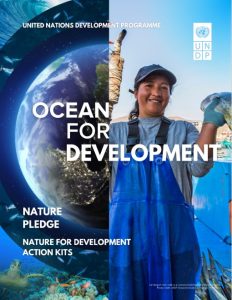
The world’s ocean is a vital foundation for sustainable development – supporting food security, livelihoods, climate resilience, and economic growth for billions of people. Yet today, our oceans face unprecedented threats, from overfishing and plastic pollution to rising sea temperatures and ecosystem collapse. This Action Kit, part of the Nature for Development Action Kit series, explores how healthy marine ecosystems and ocean-based solutions can drive progress across the SDGs. Designed for decision-makers and practitioners, it offers concrete entry points to advance development goals through ocean action, spanning sustainable fisheries, blue carbon, marine protection, finance, governance, and innovation.

https://hdl.handle.net/10986/43326
This report advocates for scaling up investments in the treatment of used water to transform it into ‘new’ water suitable for municipal and industrial use. It presents a compelling business case and outlines actionable roadmaps for governments and the private sector to transition toward sustainable water use. These investments are essential for ensuring inclusive water service delivery, job creation, and economic development. The report emphasizes the public sector’s role in shaping markets to attract private sector participation – as users, solution providers, and financiers by setting and enforcing water-related regulations, designing financial incentives, and investing in infrastructure. It highlights the importance of creating enabling environments through market design, pricing strategies, and regulatory frameworks that support the development of a robust ‘new’ water economy. The document also underscores the need for collaboration between public and private sectors, and where appropriate, the World Bank Group, to drive this transformation. A central focus is on generating ‘new’ water for municipal systems and industrial users, which can significantly enhance water security, reduce environmental impact, and support sustainable development. By turning wastewater into a valuable resource, the report envisions a future where water reuse becomes a cornerstone of resilient and inclusive urban and industrial growth.

https://www.who.int/publications/i/item/9789240111561
The global research agenda on public health and social measures (PHSM) during health emergencies sets research priorities across multiple infectious disease hazards until 2030. It has been developed using a multi-step consultation process involving expert discussions at the first global technical consultation on PHSM and two public surveys: one to define urgent research priorities for COVID-19 and one to identify medium- to long-term priorities using a multi-hazard approach. The research agenda features six overarching themes ranging across effectiveness, determinants of adherence and unintended health and socioeconomic consequences of PHSM implementation, hence reflecting the topic’s complex and intersectoral nature. The priority setting exercise aims at promoting a cohesive and systematic approach to generating robust, multidisciplinary and policy-relevant evidence to inform PHSM decision-making and implementation during future health emergencies.

https://library.wmo.int/records/item/69575-state-of-the-climate-in-asia-2024
The World Meteorological Organization’s State of the Climate in Asia 2024 report warns that the region is warming nearly twice as fast as the global average, driving more extreme weather and posing serious threats to lives, ecosystems, and economies. In 2024, Asia experienced its warmest or second warmest year on record, with widespread and prolonged heatwaves. Record-high sea surface temperatures and marine heatwaves affected vast areas, while sea level rise in the Pacific and Indian Oceans exceeded the global average, increasing risks for low-lying coastal areas.

Report in English: https://doi.org/10.4060/cd5886en
Overview in English, French & Spanish: https://openknowledge.fao.org/handle/20.500.14283/cd5619en
With 1.3 billion individuals aged 15 to 24 globally, the Food and Agriculture Organization of the United Nations (FAO) has released a comprehensive report on 3 July 2027, which examines and emphasizes the crucial role of youth in transforming agrifood systems to improve food security, nutrition, and economic opportunities. Notably, nearly 85 percent of global youth today live in low- and lower-middle-income countries, where agrifood systems are essential for livelihoods. Improving their inclusion in those systems could make a trillion-dollar difference in the global economy. The report delves into technical and policy initiatives designed to create decent job opportunities, enhance food security and nutrition, and enhance the resilience of young people to shocks. It highlights youth as key change agents in the agricultural sector, positioning them as the next generation of producers, processors, service providers, and consumers. They will confront a wide range of challenges, including increasing food production for a growing population, replacing an aging workforce, and adapting to the impacts of the climate crisis, water scarcity, and urbanization.
UN DESA Policy Brief No. 178: Assessing group-based inequalities across the life course for a more inclusive world
https://desapublications.un.org/policy-briefs/un-desa-policy-brief-no-178-assessing-group-based-inequalities-across-life-course
While there has been progress in promoting opportunities for all since the 1990s, group-based inequalities persist, including during childhood. Gaps between groups are not closing fast enough; the goal of leaving no one behind is likely to remain out of reach by 2030. This brief illustrates how inequality in opportunity between different population groups can be quantified using existing household survey data, drawing on analysis conducted for the 2025 edition of the World Social Report.
UN DESA Policy Brief No. 179: From the First to the Second World Summit for Social Development: reclaiming a broad vision of social progress
https://desapublications.un.org/policy-briefs/un-desa-policy-brief-no-179-first-second-world-summit-social-development-reclaiming
The World Social Report 2025 warns that piecemeal approaches are no match for the scale and interconnectedness of today’s challenges. Rising economic insecurity, persistent inequality, eroding trust, and social fragmentation demand coordinated responses grounded in a shared commitment to equality, social justice, and solidarity. The 2025 World Summit for Social Development offers a chance to reaffirm the Copenhagen Declaration and reapply its principles to current realities, restoring a holistic vision of social progress as the foundation of a more inclusive, resilient, and sustainable future.

https://unece.org/info/publications/pub/402989
This Guide for designating cycle route networks was elaborated with the objective to offer countries and their administrations, in particular those who start their work on cycling development, a suitable material for the purpose of designating cycle route networks at any geographical or administrative level such as national, regional or municipal levels. The Guide describes a set of steps to follow in an iterative way to put in place networks that will serve well their intended functions. The Guide is directed at transport professionals responsible for developing cycling at municipal, regional or national levels.
International Peace and Security

https://tinyurl.com/bdkrv2sv
To further advance multilateral discussions on this new and rapidly evolving issue, it is crucial to clarify what “the military domain” means and entails; to survey key applications of AI in military settings in order to understand the associated opportunities; and to analyse the challenges and consider recommendations for policy development at all levels. This report addresses each of these aspects in turn, drawing on UNIDIR’s research and analysis on these topics over the years. It then proposes a 10-step road map towards effective national and international governance of AI in the military domain.
Concept note for the Security Council high-level open debate on the theme “Poverty, underdevelopment and conflict: implications for the maintenance of international peace and security”
English, French & Spanish: https://docs.un.org/S/2025/349
The Security Council held a high-level open debate on 19 June 2025 on the theme “Poverty, underdevelopment and conflict: implications for the maintenance of international peace and security”. Guyana in its capacity as President of the Security Council for June 2025 prepared this concept note.
Concept note for the Security Council open debate on the theme “Children and armed conflict: effective strategies to end and prevent grave violations against children”
English, French & Spanish: https://docs.un.org/S/2025/366
The Security Council held an open debate on 25 June 2025 on the theme “Children and armed conflict: effective strategies to end and prevent grave violations against children”. Guyana in its capacity as President of the Security Council for June 2025 prepared this concept note.
Data Dashboards for Managing Exits from Armed Conflict
https://meac.unidir.org/
The United Nations Institute for Disarmament Research (UNIDIR) has launched interactive dashboards that reveal what leaving an armed group really looks like. The tool offers firsthand insights into reintegration, local security and community perceptions.
https://ukraine.ohchr.org/en/Deadly-drones-Civilians-at-risk-from-short-range-drones-in-frontline-areas-of-Ukraine-24-February-2022-30-April-2025
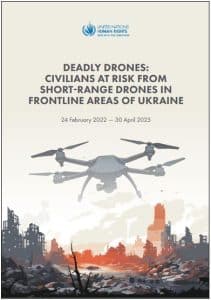
Attacks with short-range drones killed at least 395 civilians and injured 2,635 between February 2022 and April 2025, the UN Human Rights Monitoring Mission in Ukraine (HRMMU) said in this new bulletin published on 26 June 2025. It documents attacks in which drone operators targeted civilians driving private cars, taking the bus, walking outdoors, cycling, providing humanitarian assistance or evacuating civilians, and riding in clearly marked ambulances. The vast majority of the casualties (89 per cent) occurred in territory controlled by Ukraine as a result of attacks by the Russian armed forces.

https://doi.org/10.37559/WMD/25/Space/03
This report explores how artificial intelligence emerges as a novel tool that can potentially transform how space security is conceptualized and operationalized. The report highlights how AI offers many opportunities in outer space operations which can contribute to more effective threat mitigation strategies, and ultimately to building a more secure and peaceful space environment. AI also presents challenges – technical and regulatory- that the international community must bear in mind, particularly as States work to develop mechanisms for space security.
Human Rights

Report in English, Summary in English, French & Spanish: https://data.unicef.org/resources/child-labour-global-estimates-2024/
Nearly 138 million children were engaged in child labour in 2024, including around 54 million in hazardous work likely to jeopardize their health, safety, or development, according to new estimates released on 11 June 2025 by the International Labour Organization (ILO) and UNICEF. The latest data show a total reduction of over 20 million children since 2020, reversing an alarming spike between 2016 and 2020. Despite this positive trend, the world has missed its target of eliminating child labour by 2025. The report, released one day ahead of the World Day Against Child Labour and on International Day of Play, underscores a stark reality that while gains have been made, millions of children are still being denied their right to learn, play, and simply be children.

Civic Space Brief: Transnational Repression (OHCHR)
https://www.ohchr.org/en/documents/tools-and-resources/transnational-repression
Freedom of expression and elections in the digital age Report of the Special Rapporteur on the promotion and protection of the right to freedom of opinion and expression, Irene Khan (A/HRC/59/50, 11 June 2025, Advance edited version)
https://www.ohchr.org/sites/default/files/documents/hrbodies/hrcouncil/sessions-regular/session59/advance-version/a-hrc-59-50-aev.pdf
“I have written this report on freedom of expression and elections because I’m deeply concerned that there is a perfect storm that is destroying both our right to vote and our freedom of expression at the same time,” said Irene Khan, UN Special Rapporteur on freedom of opinion and expression. At the 59th session of the Human Rights Council in Geneva, Switzerland, Khan presented this report on the key vulnerabilities of the right to freedom of expression in electoral contexts in the digital age. The report draws information from extensive consultations led by Khan over the past year, including with civil society organizations, electoral institutions, human rights defenders, journalists, and representatives of social media companies. For Khan, there are three major trends threatening freedom of expression: a toxic political climate marked by authoritarian tendencies and the backsliding of human rights and democracies, social media flooded by disinformation and hate, and weakened traditional media being attacked and unable to debunk lies.
From economy of occupation to economy of genocide – Report of the Special Rapporteur on the situation of human rights in the Palestinian territories occupied since 1967 (A/HRC/59/23, Advance edited version)
https://www.ohchr.org/en/documents/country-reports/ahrc5923-economy-occupation-economy-genocide-report-special-rapporteur
Israel’s genocide against Palestinians is being sustained by a system of exploitative occupation and profit, a UN expert warned on 3 July 2025 in this new report to the Human Rights Council that reveals how corporate profiteering and monetary gain has enabled and legitimised Israel’s illegal presence and actions. “In the past 21 months, while Israel’s genocide has devastated Palestinian lives and landscapes, the Tel Aviv stock exchange soared by 213 percent (USD), amassing $225.7 billion in market gains—including $67.8 billion in the past month alone. For some, genocide is profitable,” said Francesca Albanese, the UN Special Rapporteur on the situation of human rights in the Palestinian territory occupied since 1967. Albanese’s report exposes the corporate infrastructure profiting from Israel’s economy of occupation — and its deadly transformation into an economy of genocide. The report underscores how Palestine has become the epicentre of a global reckoning, exposing the failure of international business and legal systems to uphold even the most basic rights of one of the world’s most dispossessed peoples.

https://www.unwomen.org/en/digital-library/publications/2025/06/afghanistan-gender-index-2024
Since the Taliban takeover in August 2021, UN Women has witnessed a deliberate and unprecedented assault on the rights, freedoms, and dignity of Afghan women and girls. UN Women’s 2024 Afghanistan Gender Index is the most comprehensive assessment of women’s empowerment and gender parity in the country since that turning point. The results are stark: Afghan women are being pushed out of nearly every sphere of life. Despite their resilience and refusal to be silenced, they are falling dramatically behind global benchmarks for human development. The index shows that nearly eight in ten young Afghan women are excluded from education, employment, and training—nearly four times the rate for men. It also finds that Afghanistan has the second-widest gender gap in the world, with a 76 per cent disparity between outcomes for women and men across health, education, financial inclusion, and decision-making. The index adapts the twin indices launched by UN Women and UNDP in 2023—the Women’s Empowerment Index and the Global Gender Parity Index—to the complex realities of Afghanistan.

https://tinyurl.com/3t89fz4j
The risks of gender-based violence (GBV), understood as violence perpetrated with the intent to punish those who are perceived as defying dominant gender and/or sexual norms and narratives, are compounded for women, girls, and people with diverse sexual orientation, gender identity, gender expression, and sex characteristics (SOGIESC). This report addresses a critical gap in global efforts to end gender-based violence and its intersections with discriminatory factors, by specifically focusing on the challenges related to data collection and evidence on the experiences of SOGIESC people. Despite a growing evidence base and accelerated efforts to develop fit-for-purpose research and data collection methods, significant quantitative and qualitative gaps remain in the understanding of the scale and particular manifestations of violence based on SOGIESC. The report raises the alarm on the urgent necessity for comprehensive, disaggregated, and inclusive data to accurately capture the diverse forms, prevalence, and profound impacts of violence faced by these often-marginalized populations. With a view to providing actionable solutions, the report maps existing approaches and methods to collect data; provides a snapshot of the landscape of existing evidence; highlights where the pressing gaps and challenges remain; and identifies promising ways forward to overcome challenges to data collection, uptake, and use.
Normative Advances on Technology-Facilitated Violence Against Women and Girls (UN Women)
https://www.unwomen.org/en/digital-library/publications/2025/06/normative-advances-on-technology-facilitated-violence-against-women-and-girls


https://www.ohchr.org/en/stories/2025/06/economies-work-all-podcast-series-human-rights-economy
Can human rights foster economies that promote equitable and sustainable societies? A Human Rights Economy does precisely that, by putting people and the planet at the centre of all economic decisions, with the goal of leaving no one behind. With a rise in extreme poverty, widening inequalities, a worsening climate emergency, and over half the world’s poorest countries spending more on paying off their debt than on health or education, it is clear that the current economic system is failing to deliver for people and the planet. “Economies that work for all,” a podcast series organized by UN Human Rights and the UN System Staff College – Knowledge Centre for Sustainable Development, looks into how economies and human rights can work hand in hand and unlock progress towards the 2030 Agenda. Structured in six episodes, “Economies that work for all” will discuss the concept of a Human Rights Economy through conversations with guests that include UN Human Rights Chief Volker Türk and five prominent economists who have dedicated their lives to advancing economic thinking and approaches that promote more just and sustainable societies, namely: Mariana Mazzucato, Jayati Ghosh, Kate Raworth, Grieve Chelwa, and Epsy Campbell.

https://www.ohchr.org/en/stories/2025/06/pathway-compassion
To raise awareness about pathways for regular migration, this new comic tells the story of one woman’s struggle to regularize her migration status and the power of solidarity to drive change. We need migration systems that ensure dignity and offer safe, stable and accessible pathways for regular migration and stay. Because people on the move deserve the chance to live safely, to thrive, and to belong.
The comic is accompanied by a non-paper Leveraging Regular Migration Pathways for Human Rights. The document seeks to help policymakers understand the range of human rights concerns and proposed solutions for human rights-based pathways for migration.

https://www.unrwa.org/resources/reports/protection-brief-situation-older-persons-gaza
This protection brief focuses on the heightened risks older persons face as a result of ongoing hostilities in Gaza. Older people have had essential roles in Gaza— leading communities, caring for relatives, and helping sustain collective memory. Limited mobility, chronic health conditions, and the collapse of health and support systems on which they previously depended all contribute to their vulnerability during the conflict, while frequent forced displacement, chronic shortages of food and clean water, and overcrowded and unhygienic living conditions further exacerbate the risks they face. The sheer scale of the crisis in Gaza has often masked their specific vulnerabilities and needs. Only a permanent ceasefire and unhindered humanitarian access can improve protection for civilians in Gaza, including older persons.
Humanitarian Affairs

https://www.unhcr.org/global-trends-report-2024
The number of people displaced by war, violence and persecution worldwide is untenably high, particularly as humanitarian funding evaporates, with the only bright spot being a pickup in returns, notably to Syria, UNHCR, the UN Refugee Agency, said on 12 June 2025. According to UNHCR’s annual Global Trends Report, there were 122.1 million forcibly displaced people by the end of April 2025, up from 120 million at the same time last year, representing around a decade of year-on-year increases in the number of refugees and others forced to flee their homes. The main drivers of displacement remain large conflicts like Sudan, Myanmar and Ukraine, and the continued failure to stop the fighting.

https://dtm.iom.int/reports/europe-migrants-travelling-europe-land-and-sea-journeys-vulnerabilities-and-needs-0
This report is based on a total of 17,468 surveys collected in 9 countries in 2024, complemented with information and data from IOM field staff and enumerators, as well as from dedicated focus group discussions with migrants and practitioners in those countries. A route-based approach was adopted when preparing this report, where the route is taken as the main unit of analysis and a multi-country perspective is used to read data coming from a variety of sources.

https://globalcompactrefugees.org/media/oecd-unhcr-safe-pathways-v-final
Nearly 1 million people from eight countries with high asylum recognition rates were offered entry permits into 38 destination countries via work, family and study permits between 2019 and 2023, according to this new report, released on 10 June 2025 by UNHCR, the UN Refugee Agency, and the Organisation for Economic Co-operation and Development (OECD). In 2023 alone, nearly 255,000 entry permits were issued to refugees from countries with high asylum recognition rates. That is a 14 per cent jump over 2022, building on an already significant 39 per cent rise from 2021. An additional 30,000 people from the nationalities covered benefited from sponsorship schemes to other countries. Not only did 2023 surpass pre-pandemic levels, it exceeded a previous peak in 2017, making it the most successful year on record since UNHCR and the OECD began tracking this data in 2010.
Nuclear, Chemical and Conventional Weapons Disarmament

https://unidir.org/publication/deploying-the-arms-control-and-disarmament-toolbox/
This publication explores how United Nations (UN) peace operations can better address conflict-related sexual violence (CRSV) by integrating arms control and disarmament tools. Drawing on a review of mission mandates, operational guidance and insights from focus groups in missions countries such as the Central African Republic, the Democratic Republic of the Congo, Haiti, and South Sudan, the report highlights how tools like disarmament, demobilization, and reintegration, weapons and ammunition management, community violence reduction, and arms embargoes can be cross- leveraged to prevent CRSV. The report finds that, despite clear links between the proliferation of small arms and light weapons and CRSV, UN peace operations continue to overlook weapons-related issues in their efforts to address sexual violence. The report offers concrete recommendations to strengthen gender-responsive arms control in support of both immediate protection and long-term prevention.
Drug Control, Crime Prevention and Counter-terrorism

https://unicri.org/Publication-Access-Justice-Digital-Age-Empowering-Victims-Africa
Africa’s digital transformation is progressing rapidly, unlocking remarkable socio-economic opportunities across the continent. However, this transformation is also giving rise to a growing array of cyberthreats, with women and girls disproportionately affected. As internet penetration deepens, the gap between technological progress and legal safeguards is becoming more pronounced, exposing critical vulnerabilities in existing protection mechanisms. This new report explores how cybercrime is impacting access to justice in four African countries (Namibia, Sierra Leone, South Africa and Uganda) and offers a broader perspective on challenges and responses across the continent. It highlights the pressing need for national and regional responses that are inclusive, coordinated and evidence-based.

https://www.unodc.org/unodc/en/data-and-analysis/world-drug-report-2025.html
A new era of global instability has intensified challenges in addressing the world drug problem, empowering organized crime groups and pushing drug use to historically high levels, says the UN Office on Drugs and Crime (UNODC) in the World Drug Report 2025 launched on 26 June 2025. The report includes special chapters on drug trafficking and organized crime; the impact of drug use on the health of people who use drugs, their families, communities, and society; and the impact of drugs on the environment in Europe.
Newsletter Archive: https://unric.org/en/unric-info-point-library-newsletter-archive