
New UN websites & publications
TOPIC OF THE MONTH: Walking and Cycling

https://www.who.int/europe/publications/m/item/let-s-get-moving!-100-reasons-to-walk-and-cycle-more—brochure
Walking and cycling are much more than just ways to get around – they can be life-changing! From boosting our mood and strengthening our body to protecting the environment and enhancing community well-being and the local economy, walking and cycling offer countless benefits. Join us as we explore 100 compelling reasons to make walking and cycling a part of our daily routine and their promotion a key objective for health, transport, environment and urban planning professionals and policy-makers. These reasons are backed by the latest scientific evidence, complemented by personal experiences from people across the WHO European Region.
see also: Let’s Get Moving! 100 Reasons to Walk and Cycle (WHO/Europe): https://www.who.int/europe/event/let-s-get-moving!-100-reasons-to-walk-and-cycle-more

https://www.who.int/publications/i/item/9789240109902
As the 8th UN Global Road Safety Week kicked off around the world under the theme “Make walking and cycling safe,” the World Health Organization (WHO) launched a new toolkit to help governments promote active mobility – by making it safer. Each year, nearly 1.2 million people lose their lives on the roads, more than a quarter of them while walking or cycling. Yet, only 0.2% of the roads worldwide are equipped with cycle lanes, and far too many communities lack basics like sidewalks or safe pedestrian crossings. Despite their benefits, fewer than one-third of countries have national policies to promote walking and cycling. WHO’s new toolkit aims to fill that gap with practical, evidence-based guidance for policymakers, urban planners, health advocates and civil society.

https://hdl.handle.net/10986/42923
The Case for Cycling Infrastructure Investments presents CyclingMax, a cost-benefit analysis tool designed to assist decision-makers in evaluating investments in cycling infrastructure. The report highlights the multiple benefits of cycling infrastructure, including safety improvements, environmental impacts, health benefits, and travel time savings. It provides detailed case studies from various cities, demonstrating the tool’s application and the significant socioeconomic returns of cycling investments. The report also outlines the methodology and parameters used in the CyclingMax tool, emphasizing its user-friendly design and flexibility in accommodating different project scenarios. Overall, the report underscores the importance of strategic investments in cycling infrastructure for sustainable urban mobility and improved quality of life.

https://unece.org/info/publications/pub/397453
This document represents a significant milestone as it marks the first-ever pan-European Master Plan dedicated to walking. The Master Plan was adopted by the THE PEP Steering Committee in its twenty-second session October 28-30, 2024.
The development of a pan-European Master Plan on Walking is embedded in the Vienna Declaration to put the promotion of walking, due to its numerous benefits for health, environment, local economy, and social inclusiveness, at the forefront of mobility policies.
The Master Plan on Walking was developed under THE PEP (Transport, Health and Environment Pan-European Programme) and EHP (European Environment and Health Process) collectively “THE PEP/EHP Partnership on Healthy Active Mobility“.

https://unece.org/info/THE-PEP/pub/390416
Most public transport journeys start and end with a walk. In fact, walking can constitute half the time spent on multimodal trips and can be the main element of what people remember afterwards. This policy brief, which was developed as part of the preparation of a pan-European master plan on walking under the Transport, Health and Environment Pan-European Programme (THE PEP), provides insights into how to support better integration between walking and public transport and reach a higher share of people walking and using public.

https://unece.org/info/publications/pub/376491
In some countries in the pan-European region, cycling is not viewed as an equal mode of transport and is not fully incorporated into national policies on transport, health and environment, nor, in many cases, is it included in curriculums for future town planners. A systematic plan, adopted internationally, will help national and local stakeholders streamline their efforts to promote cycling in order to address the aforementioned issues. National cycling plans are strategically important policy documents, providing a framework for expanding cycling at various policy levels and supporting regional and local authorities’ efforts.
Walking and Cycling in Africa – Evidence and Good Practice to Inspire Action (UN-Habitat / UNEP, July 2022)
https://www.unep.org/resources/report/walking-and-cycling-africa-evidence-and-good-practice-inspire-action

The report sets out recommendations for governments and other stakeholders and makes the case for retaining, enabling and protecting those already moving in the most sustainable way possible. Developed by the UN Environment Programme (UNEP), the United Nations Human Settlements Programme (UNHabitat) and the Walk21 Foundation, it provides the evidence, knowledge and key actions required to ensure transport decisions made today will deliver safer, more sustainable and resilient networks in the future.
UN in General

2025 UN Ocean Conference – Nice, France, 9 June – 13 June 2025
English: https://sdgs.un.org/conferences/ocean2025
French: https://sdgs.un.org/fr/conferences/ocean2025
Spanish: https://sdgs.un.org/es/conferences/ocean2025
The high-level 2025 United Nations Conference to Support the Implementation of Sustainable Development Goal 14: Conserve and sustainably use the oceans, seas and marine resources for sustainable development (the 2025 UN Ocean Conference) will be co-hosted by France and Costa Rica and held in Nice, France, from 9 – 13 June 2025. The overarching theme of the Conference is “Accelerating action and mobilizing all actors to conserve and sustainably use the ocean”. The Conference aims to support further and urgent action to conserve and sustainably use the oceans, seas and marine resources for sustainable development and identify further ways and means to support the implementation of SDG 14. It will build on existing instruments to form successful partnerships towards the swift conclusion and effective implementation of ongoing processes that contribute to the conservation and sustainable use of the ocean.

4th International Conference on Financing for Development – Sevilla, Spain, 30 June – 3 July 2025
English: https://financing.desa.un.org/ffd4
French: https://financing.desa.un.org/fr/ffd4
Spanish: https://financing.desa.un.org/es/ffd4
The Fourth International Conference on Financing for Development (FFD4) provides a unique opportunity to reform financing at all levels, including to support reform of the international financial architecture and addressing financing challenges preventing the urgently needed investment push for the SDGs. FFD4 Conference will be held in FIBES Sevilla Exhibition and Conference Centre. The International Conferences on Financing for Development are the only space where leaders from all governments, along with international and regional organizations, financial and trade institutions, businesses, civil society and the UN System unite at the highest levels, fostering stronger international cooperation.
Progress towards the Sustainable Development Goals: Report of the Secretary-General (A/80/81-E/2025/62, 29 April 2025)
English, French & Spanish: https://docs.un.org/A/80/81
“Summary: In accordance with General Assembly resolution 70/1, the present report provides a global overview of the progress made since 2015 towards the attainment of the Sustainable Development Goals, using inputs from more than 50 international and regional organizations. The data contained herein are derived from indicators in the global indicator framework developed by the Inter-Agency and Expert Group on Sustainable Development Goal Indicators, which was adopted by the Assembly on 6 July 2017 (see Assembly resolution 71/313).
https://unstats.un.org/UNSDWebsite/undatacommons/
Introducing UN Data, a powerful tool for extracting insights from data available across the UN system. Search and explore high-quality datasets and digital public goods right at your fingertips to empower and expedite evidence-based decision-making.
see also: The world’s gateway to labour statistics: ILO joins UN Data platform: ILO data on labour and the world of work is now part of a new global platform that is accessible to the UN and the world at large (29 May 2025): https://ilostat.ilo.org/blog/the-worlds-gateway-to-labour-statistics-ilo-joins-un-data-platform/
Economic Growth & Sustainable Development

https://iris.who.int/handle/10665/381496
The digital environment, from social media to AI-driven platforms, is a documented risk to the mental health of children and adolescents in the WHO European Region – but countries can already work to protect them. That is the overarching conclusion in a new policy brief developed by WHO/Europe, together with the Polish Ministry of Health and the Digital Transformations for Health Lab (DTH-Lab). This policy brief combines a review of current evidence and policies with a call for governments, industry and civil society to take immediate action to make digital spaces safer, healthier and more equitable for young people.

https://www.worldbank.org/en/region/lac/publication/ia-educacion-superior-inteligencia-artificial
The Artificial Intelligence revolution is transforming higher education at an unprecedented pace, offering innovative opportunities to personalize university learning experiences, support professors and researchers in their daily tasks, and optimize the management of educational institutions. This innovative document brings together the main advances driven by artificial intelligence (AI), a powerful tool that offers practical solutions.
https://openknowledge.worldbank.org/handle/10986/43183
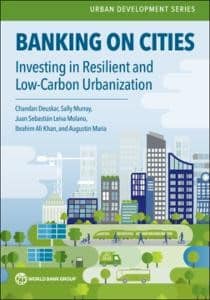
Cities around the world are responsible for ever-growing shares of people, assets, and economic activities vulnerable to climate disasters. They are also responsible for the majority of the world’s carbon emissions. Cities in low- and middle-income countries still have a window of opportunity to grow in resilient and low-carbon ways, to protect their populations and build strong and sustainable economic foundations. What are the resilient and low-carbon investments that these cities could make in the coming decades? How much will these investments cost, and where can cities look for resources to pay for these investments? These are the questions that this publication considers. It provides the most comprehensive and up-to-date assessment of key resilient and low-carbon investment costs in major urban sectors in all low- and middle-income countries to 2050. These include investments in urban transportation, energy-efficient buildings, solid waste management, water and wastewater, flood protection, and heat resilience.

https://library.wmo.int/records/item/69496-baseline-assessment-of-drought-impact-monitoring
This publication provides a baseline assement on the current status of collecting drought impacts and related monitoring efforts from around the world. It provides a review of the various drought impact collection efforts as well of food, water security and livelihood monitoring systems. There is an overview of data characteristics that are needed for drought impact collection, on how to put drought impact data to use, and recommendations and conclusion. This guideline was developed by the WMO/GWP Integrated Drought Management Programme (IDMP) with vital contributions from the U.S. National Drought Migitation Center (NDMC).

https://www.unicef.org/innocenti/reports/child-well-being-unpredictable-world
Children in many of the world’s wealthiest countries saw marked declines in their academic performance, mental wellbeing, and physical health in the period since the start of the COVID-19 pandemic, according to analysis published on 13 May 2025 by UNICEF Innocenti – Global Office of Research and Foresight. Report Card 19 compares data from 2018 and 2022, offering a perspective on how the COVID-19 pandemic and global shutdowns affected children in 43 OECD and EU countries. Since the last comparable Report Card five years ago, the Netherlands and Denmark retained their rankings as the top two places to be a child, based on measures of mental wellbeing, physical health, and skills, followed by France. However, the report warns many countries experienced sharp declines in children’s academic skills following the pandemic – particularly foundational abilities such as reading and mathematics. School shutdowns of between three and 12 months forced many children to learn remotely and led to learning losses. The extent to which children are behind where they should be academically is estimated to be between seven months and one year, on average, the report says. Setbacks were most severe for children from disadvantaged families.

https://unhabitat.org/effective-climate-governance-in-intermediary-cities-a-focus-on-climate-mitigation
As the world races toward a sustainable future, intermediary cities emerge as crucial players in effective climate mitigation. This guide offers practical insights into balancing economic development, environmental stewardship and social equity within these pivotal urban hubs. It delves into strategies such as climate-sensitive budgeting, urban planning and policy incentives that foster green transitions. Designed for urban managers, climate champions and national or regional governments, this guide provides a roadmap for crafting resilient climate actions and navigating climate-smart urbanization. It also serves as a valuable resource for the private sector, academics, civil society and other United Nations agencies aiming to collaborate on or support climate initiatives. Equip yourself with the tools to drive meaningful climate action and lead your city toward a resilient, sustainable future.

https://unece.org/sites/default/files/2025-05/Electrification%20of%20mobility%20ENG.pdf
To meet the Paris Agreement’s target of limiting global warming to below 2°C, rapid decarbonization across all sectors—including transport—is essential. Yet, transport remains one of the fastest-growing sources of energy demand and greenhouse gas emissions, still dominated by fossil fuel use. This new UNECE publication highlights the critical role of electric vehicles (EVs) in transforming the transport sector. It examines how EVs can reduce emissions, lower air pollution, and enhance energy security. The report explores policy instruments, adoption drivers, and the infrastructure needed to support widespread e-mobility—offering insights to help countries align transport systems with sustainable development goals.
European Health Information Gateway – Assistive Technology (WHO/Europe)
https://gateway.euro.who.int/en/datasets/assistivetech/


https://www.ifad.org/en/w/publications/food-security-nutrition-and-climate-resilience-evidence-review
This report presents an analysis of the impact and cost-effectiveness of 40 common interventions in food security, nutrition and climate resilience. These include interventions related to production systems, post-harvest management and processing, food availability and affordability, financial services, governance, nutritional health and behaviour change communication. The report aims to provide a resource for policymakers in the food and nutrition space to understand the evidence behind various interventions.
Generative AI and Jobs: A Refined Global Index of Occupational Exposure (ILO Working Paper 140)
https://www.ilo.org/publications/generative-ai-and-jobs-refined-global-index-occupational-exposure
This ILO Working Paper refines the global measurement of occupational exposure to generative AI by combining task-level data, expert input, and AI model predictions. It offers an improved methodological framework to assess how GenAI may impact jobs across countries and sectors.
see also Research Brief: https://www.ilo.org/publications/generative-ai-and-jobs-2025-update

https://www.ilo.org/publications/innovative-approaches-taken-workers%E2%80%99-organizations-drive-formalization
The report showcases concrete actions taken by trade unions to organize, represent, and provide meaningful services to workers in the informal economy while preventing the informalization of those in the formal economy. It highlights how trade unions have helped workers gain access to rights and protections, enforce labour standards, reduce decent work deficits, and prevent the informalization of jobs within the formal economy. It also underscores the strategic role unions have played in putting ILO Recommendation No. 204 into practice and in developing innovative pathways toward formalization.

https://www.undp.org/publications/men-gender-equality-workplace-safe-respectful-and-inclusive-organizational-culture
This comprehensive guidance note was developed to address the persistent issue of gender inequality within organizational settings, particularly focusing on engaging men as active participants in fostering a gender-equal workplace. The guidance aims to translate UNDP’s strategic commitment to gender equality into actionable practices that involve men not just as beneficiaries but as proactive agents of change. This document is structured to provide a clear framework for understanding and transforming the organizational gender culture that often underpins gender disparities.
It begins with a detailed analysis of the existing gender culture within organizations, identifying both barriers and potential drivers for change that can lead to more inclusive workplace environments. The note emphasizes the critical role of men in challenging and changing gender norms, supported by practical steps and strategies encapsulated in the “ABC of Change” guidelines—Allyship, Bystander Action, and Collective Pressure. Each section proposes specific actions and behaviours that men can adopt to contribute effectively to gender equality, backed by examples and insights from current research and practice.
This note not only serves as a resource for UNDP personnel but is also a blueprint for other organizations seeking to engage men in gender equality initiatives. Through its comprehensive approach, the document aims to foster a culture of equality where both men and women can thrive.
https://hdl.handle.net/10986/42610
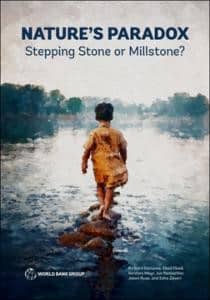
The research presented in this report focuses on the interaction between social exclusion and natural capital—the world’s stock of natural resources and environmental assets, which include soil, water, and air. It seeks to determine how socially excluded populations fit into their wider environment, asking whether their lands are in less productive geographies, they endure disproportionately higher levels of pollution, their usage patterns of natural capital lead to more rapid depletion, they are systematically denied equivalent access to the environmental amenities and natural resources they need for a decent life on a livable planet, and so on.

English & French: https://library.wmo.int/records/item/69495-state-of-the-climate-in-africa-2024
Extreme weather and climate change impacts are hitting every single aspect of socio-economic development in Africa and exacerbating hunger, insecurity and displacement, according to the World Meteorological Organization (WMO) State of the Climate in Africa 2024 report, released on 12 May 2025. The year 2024 was the warmest or second-warmest year, depending on the dataset, and the past decade has been the warmest on record. Sea-surface temperatures around the continent were at record levels, with particularly rapid warming in the Atlantic Ocean and the Mediterranean Sea. Marine heatwaves impacted the biggest area since measurements started in 1993, it says.
UN DESA Policy Brief No. 174: Leveraging strategic foresight to mitigate artificial intelligence (AI) risk in public sectors
https://desapublications.un.org/policy-briefs/un-desa-policy-brief-no-174-leveraging-strategic-foresight-mitigate-artificial
By leveraging collective intelligence and scenario planning, strategic foresight exercises can help ensure that AI technologies are developed and deployed responsibly, thereby increasing the likelihood of their positive contribution to sustainable and inclusive growth. Such forward-thinking methodologies are critical to mitigating risks and harnessing AI’s transformative power in advancing the SDGs.

Women lead for learning (UNESCO)
https://unesdoc.unesco.org/ark:/48223/pf0000393701
Although the global majority of teachers are women, this new UNESCO report provides evidence that a glass ceiling still bars women from leadership positions in education. The report also shows how women leaders in education often have a positive impact on inclusion, addressing challenges which disproportionately affect girls, and tend to support professional development for teachers, and foster a collaborative culture.

https://www.who.int/teams/social-determinants-of-health/equity-and-health/world-report-on-social-determinants-of-health-equity
This global report published by the World Health Organization (WHO) on 6 May 2025 highlights that the underlying causes of ill health often stem from factors beyond the health sector, such as lack of quality housing, education and job opportunities. The report shows that such determinants can be responsible for a dramatic reduction of healthy life expectancy – sometimes by decades – in high- and low-income countries alike. For example, people in the country with the lowest life expectancy will, on average, live 33 years shorter than those born in the country with the highest life expectancy. The social determinants of health equity can influence people’s health outcomes more than genetic influences or access to health care.
International Peace and Security

https://collections.unu.edu/eserv/UNU:10171/YPS_Thematic_Review_2025.pdf
The 2025 Peacebuilding Fund (PBF) Thematic Review on Youth, Peace and Security (YPS), led by UNU-CPR and commissioned by the Peacebuilding Support Office (PBSO) in partnership with UNFPA, UNICEF and the Climate Security Mechanism, outlines programmatic best practices and lessons learned on youth participation in peacebuilding. It draws on examples from 41 projects supported by the PBF spanning 33 countries and territories between 2018-2022.
Concept note for the Security Council high-level open debate on the theme “Strengthening maritime security through international cooperation for global stability”
English, French & Spanish: https://docs.un.org/S/2025/300
During the presidency of Greece, the Security Council held a high-level open debate on the theme “Strengthening maritime security through international cooperation for global stability” in connection with the item entitled “Maintenance of international peace and security” on 20 May 2025. This concept note was prepared to guide discussions on the topic of the debate.
Concept note for the Security Council open debate on the theme “Protecting civilians in armed conflict: addressing emerging threats, ensuring the safety of civilians, humanitarian and United Nations personnel, journalists and media professionals and enhancing accountability mechanisms”
English, French & Spanish: https://docs.un.org/S/2025/301
During the presidency of Greece, the Security Council held a high-level open debate on the theme “Protecting civilians in armed conflict: addressing emerging threats, ensuring the safety of civilians, humanitarian and United Nations personnel, journalists and media professionals and enhancing accountability mechanisms” in connection with the item entitled “Protection of civilians in armed conflict” on 22 May 2025. This concept note was prepared to guide discussions on the topic of the debate.

https://unesdoc.unesco.org/ark:/48223/pf0000393473
The new Issue Brief on Freedom of Expression, Artificial Intelligence, and Elections, developed by UNESCO and UNDP, draws on the lessons learnt from the 2024 Massive Open Online Course (MOOC) Freedom of Expression, Artificial Intelligence, and Elections and the ‘super election year’. This Issue Brief provides key elements on how AI influences freedom of expression in elections. It also explores how to harness the benefits of AI for the information ecosystem during elections in line with human rights while avoiding negative consequences. Finally, it shares some of the approaches that practitioners and partners have been exploring to navigate a fast-evolving context.

https://hdcentre.org/insights/monitoring-of-social-media-provisions-in-peace-agreements-brief-by-hd-build-up-and-un-dppa/
A critical and evolving aspect of contemporary conflict mediation is the impact of social media on conflict dynamics and the mediation process. Mediators are beginning to address this impact through standalone social media agreements, pre-process codes of conduct or the inclusion of specific social media clauses in broader ceasefire or peace agreements. This brief aims to address the understudied challenge of how to implement and monitor social media provisions in peace agreements. It is the outcome of a tabletop exercise with mediators, ceasefire practitioners, technical experts and researchers convened by Build Up, the Centre for Humanitarian Dialogue (HD) and the UN DPPA Mediation Support Unit in January 2024.

https://peacekeeping.un.org/en/profiles-protection-25-years-of-protection-of-civilians-united-nations-peacekeeping
This inspiring new series from the Department of Peace Operations features the life-saving work of UN peacekeepers in protecting civilians from conflict and violence. The series was launched during Protection of Civilians Week in New York. Since 1999, sixteen UN peacekeeping operations have been explicitly mandated by the Security Council to protect civilians from the threat of physical violence. Today, five UN missions – MINUSCA in the Central African Republic, MONUSCO in the Democratic Republic of the Congo, UNIFIL in Lebanon, UNISFA in the Abyei region, and UNMISS in South Sudan – have such protection of civilians mandates. Together, these missions account for more than 95 per cent of all UN personnel deployed around the world. The “Profiles in Protection” series tells the remarkable stories of civilian, military, and police personnel who have used their roles in peacekeeping missions to save many lives.
Human Rights

https://www.unfpa.org/publications/legal-commitments-sexual-and-reproductive-health-and-reproductive-rights-all
Through SDG indicator 5.6.2 (Number of countries with laws and regulations that guarantee full and equal access to women and men aged 15 years and older to sexual and reproductive health care, information and education), UNFPA has compiled the first comprehensive global data set on sexual and reproductive health and reproductive rights, covering 73 per cent of the world’s countries. This report provides the most recent data on SDG indicator 5.6.2, outlines the methodology by which these data are collected and discusses the key findings from the data across four broad areas: maternal health; family planning and contraception; comprehensive sexuality education; and sexual health and well-being.

Publication & Brief: https://tinyurl.com/yyje6z3n
In 2024, UN Women’s Independent Evaluation Service conducted a corporate evaluation of UN Women’s approach to Eliminating violence against women and girls (VAWG) prevention and response. The evaluation assessed the relevance, adaptability, and effectiveness of UN Women’s work amid intersecting global crises, as well as the sustainability of its efforts and alignment with key partners. The findings highlight UN Women’s responsiveness to evolving challenges, especially during COVID-19, and its contributions to survivor-centred services and legal reforms.
“They are hunting us”: systematic drone attacks targeting civilians in Kherson – Independent International Commission of Inquiry on Ukraine (A/HRC/59/CRP.2, 28 May 2025)
https://www.ohchr.org/sites/default/files/documents/hrbodies/hrcouncil/coiukraine/a-hrc-59-crp2-en.pdf
Russian armed forces have committed murder of civilians as crimes against humanity using drones, concludes the Independent International Commission of Inquiry on Ukraine in a new report. From July 2024, Russian forces have recurrently killed and injured civilians in an area stretching over more than 100 kilometres along the right bank of the Dnipro River in Kherson Province. The drone attacks have been widespread, systematic and conducted as part of a coordinated state policy, the report said. The attacks followed a regular pattern and the same modus operandi, demonstrating that they were planned, directed, and organized. There is no information suggesting that Russian military and civilian authorities have taken any steps to prevent or stop the commission of the crimes.
Humanitarian Affairs

https://www.internal-displacement.org/global-report/grid2025/
An unprecedented 83.4 million people were living in internal displacement at the end of 2024, according to the Global Report on Internal Displacement 2025 (GRID) from the Internal Displacement Monitoring Centre (IDMC), released on 13 May 2025. Conflict continued to drive much displacement. Last year alone, 20.1 million new conflict-related internal displacements were recorded, with 9.1 million coming from just two countries: Sudan and the Democratic Republic of Congo (DRC). The total of 83.4 million internally displaced people at the end of 2024 is an increase of 7.5 million from the 2023 figure of 75.9 million people, which was also a record.

https://www.unwomen.org/en/digital-library/publications/2025/05/at-a-breaking-point-the-impact-of-foreign-aid-cuts-on-womens-organizations-in-humanitarian-crises-worldwide
Women-led and women’s rights organizations are on the frontlines of today’s humanitarian crises—but many are at risk of disappearing. As global needs rise due to conflict, climate change, and displacement, deep cuts to foreign aid are threatening organizations that provide life-saving services for women and girls. The report highlights the steep consequences of shrinking humanitarian support. Programmes that protect women and girls are being cut back just as needs intensify. Women’s organizations serving refugees, LGBTIQ+ people, women with disabilities, and Indigenous communities report rising violence and harmful coping strategies like child marriage and survival sex. But the report also shows resilience. Many women’s organizations are adjusting their strategies and calling on the international community to act.

Community-Based Resilience-Building: A UNDP Guidance Note (UNDP)
https://www.undp.org/publications/community-based-resilience-building-undp-guidance-note
This Guidance Note complements UNDP’s Crisis Offer with a comprehensive approach to community-based resilience-building that spans disaster risk management, climate adaptation, health risk management, conflict prevention, peace building, and ecosystem management. The Guidance offers generic principles and entry points for UNDP programme design and implementation, while outlining key considerations, supported by case studies, tools and references.

https://www.undrr.org/gar/gar2025
Disasters are increasingly expensive and their impacts under-estimated. The Global Assessment Report on Disaster Risk Reduction (GAR) 2025, highlights how direct disaster costs have grown to approximately $202 billion annually, but that the true costs of disasters is over $2.3 trillion when cascading and ecosystem costs are taken into account. The burden of this cost- and the debt it creates- disproportionately fall on developing countries, but it doesn’t need to be this way. Published by the United Nations Office for Disaster Risk Reduction (UNDRR), the GAR 2025 report outlines how aligning investments with risk realities can break spirals of debt, uninsurability, and increasing humanitarian needs.

https://publications.iom.int/books/iom-digital-identity-toolkit-immigration-and-border-governance-unit
The Digital Identity Toolkit is designed to strengthen stakeholders’ understanding of how to establish and implement digital identity systems, with a strong emphasis on human rights, including privacy, security, and key technological considerations. The toolkit serves as a practical resource for policymakers and practitioners seeking to operationalize and implement digital identity frameworks. Its primary audience includes decision-makers and policymakers who possess a foundational understanding of government services as well as general IT and technological concepts.

https://www.unicef.org/lebanon/reports/shattered-childhoods
Children in Lebanon are struggling to recover from a devastating war. In the aftermath of months of bombardments, they are facing prolonged and intensified vulnerability due to physical injuries, emotional shocks, loss of learning and inadequate nutrition, which are all threatening their health and development. The new UNICEF Child-focused Rapid Assessment (CfRA) exposes the profound toll of war on children, revealing the collapse of their support systems and the escalating risks of exploitation and deep emotional trauma. With schools damaged or destroyed, their education—and future—hangs in the balance, while the loss of safe water and healthcare endangers their very survival. Beyond the immediate devastation, the war’s lasting consequences will reshape generations to come. This report’s data was collected in early January, just as several governments announced further aid cuts—meaning the reality for many children is likely even more dire than these figures suggest.

https://publications.iom.int/books/standard-operating-procedures-determining-legal-identity-migrants-without-proof-legal
Identifying migrants without proof of legal identity is complex, requiring structured procedures. To support this, IOM has developed Standard Operating Procedures (SOPs) that provide step-by-step guidance to ensure consistency, efficiency and compliance with international standards. Adaptable to national contexts, the SOPs assist immigration and border authorities, law enforcement and other key stakeholders in verifying identity while safeguarding human rights. They outline processes such as screening, data collection and identity verification, emphasizing privacy, non-discrimination and access to justice. Designed for continuous improvement, the SOPs encourage periodic review, training and quality assurance. By establishing clear roles and procedures, they support a transparent and rights-based approach to migrant identification.

https://dtm.iom.int/reports/syrian-arab-republic-communities-return-index-round-1-15-march-05-april-2025
This new report from the International Organization for Migration (IOM), released on 14 May 2025, shows that the lack of economic opportunities and essential services pose the greatest challenge for Syrians returning to their communities, highlighting the critical need for international support to help Syria recover. The Communities of Return Index Report assessed conditions in 1,100 communities and neighbourhoods between March and April, where approximately 1.87 million displaced Syrians – both internally displaced and returnees from abroad – have already returned. According to the report, many communities face unreliable access to electricity, clean water, and healthcare, while gaps in civil documentation hinder returnees from accessing essential services or claiming housing and land rights. Livelihood opportunities are scarce, as agricultural activity and local markets struggle to recover. At the same time, shelter reconstruction is slow, and unresolved property issues continue to stagnate long-term reintegration.
Drug Control, Crime Prevention and Counter-terrorism

https://www.unodc.org/documents/data-and-analysis/Crimes%20on%20Environment/ECR25_P2b_Minerals_Crime.pdf
The growing demand for minerals is amplifying the risks of crime, corruption and instability in the mineral supply chain, says a new study from the UN Office on Drugs and Crime (UNODC) released on 20 May 2025. In Minerals Crime: Illegal Gold Mining, part two of the Global Analysis on Crimes that Affect the Environment, UNODC examines the motivations driving diverse actors to engage in minerals crime, as well as the destinations of the unprocessed metals and minerals and the proceeds from their trade. Organized crime groups and corporations as well as individual actors are involved in illegal gold mining and trafficking, the study finds. Organized crime groups have increasingly embedded themselves in gold supply chains, attracted by the sector’s high profitability and the rising value of gold. Drug trafficking organizations in Latin America have expanded into illegal gold mining, taking advantage of established drug smuggling routes and infrastructure. Revenues from gold are then reinvested into other criminal operations. In Africa, however, some organized crime groups operate exclusively in gold, while others use gold profits to fund armed activity, challenge state authority or fuel conflict.

https://www.unodc.org/roseap/uploads/documents/Publications/2025/Synthetic_Drugs_in_East_and_Southeast_Asia_2025.pdf
The illicit manufacture and trafficking of synthetic drugs from the Golden Triangle have grown exponentially, according to a report released on 28 May 2025 by the United Nations Office on Drugs and Crime (UNODC). The explosive growth has led to a record amount of methamphetamine seizures in East and Southeast Asia, totaling 236 tons, marking a 24 per cent increase compared to 2023. The report shows that the production and trafficking of methamphetamine in Shan State, Myanmar, have significantly increased since 2021. Thailand remained the main transit and destination point for methamphetamine trafficked from Myanmar and recorded the largest quantity of methamphetamine seizures in the region, including one billion tablets of yaba – a combination of methamphetamine and caffeine popular in many parts of Southeast Asia due to its easy availability and low price. At the same time, transnational drug trafficking groups have increasingly exploited emerging trafficking routes to evade law enforcement detection.
Newsletter Archive: https://unric.org/en/unric-info-point-library-newsletter-archive