
New UN websites & publications
TOPIC OF THE MONTH: Women’s Rights

https://www.unwomen.org/en/digital-library/publications/2025/03/womens-rights-in-review-30-years-after-beijing
Women’s and girls’ rights are facing unprecedented growing threats worldwide, from higher levels of discrimination to weaker legal protections, and less funding for programmes and institutions that support and protect women. This UN Women report, published ahead of the UN 50th International Women’s Day on 8 March, shows that in 2024 nearly a quarter of governments worldwide reported a backlash on women’s rights. Despite important progress, only 87 countries have ever been led by a woman, and a woman or girl is killed every 10 minutes by a partner or member of her own family. Digital technology and artificial intelligence spread harmful stereotypes, while the digital gender gap limits women’s opportunities. In the past decade, the world registered a disturbing 50 percent increase in the number of women and girls living in conflict, and women’s rights defenders confront daily harassment, personal attacks and even death. Recent global crises—like COVID-19, the climate emergency, soaring food and fuel prices—are only increasing the urgency to respond.

https://www.unwomen.org/en/digital-library/publications/2024/09/brochure-equal-is-greater-time-to-act-for-gender-equality-and-womens-empowerment-and-rights
Equal is greater. Equal adds up. When actions deliver for women and girls, everyone benefits. The world has a plan to achieve gender equality and the rights and empowerment of women and girls. That plan is the Beijing Declaration and Platform for Action (BPfA). As the BPfA turns 30, UN Women launches efforts to mobilize action and investment to achieve gender equality, rights, and empowerment of all women and girls. Through six priority areas of action, and by putting youth at the centre of these efforts, equal is achievable. Find out in this brochure how everyone can take action to achieve an equal world where all voices are heard, all rights are respected, and all people enjoy equal opportunity.

https://www.unwomen.org/en/digital-library/publications/2025/03/adolescent-girls-rights-over-30-years
Despite significant achievements in areas such as education over the last three decades, millions of adolescent girls across the world today are still out of school, ill-equipped for the future, facing gaps in life-saving health services, and at risk of harmful practices such as child marriage, female genital mutilation, violence and abuse. This new report—launched by UNICEF, Plan International and UN Women ahead of International Women’s Day—reviews how adolescent girls’ lives have changed in the last 30 years since the Beijing Platform for Action was endorsed by 189 governments in 1995.
Women and the economy: 30 years after the Beijing Declaration (ILO)
https://www.ilo.org/publications/women-and-economy-30-years-after-beijing-declaration
Thirty years after the Beijing Declaration and Platform for Action set out an ambitious agenda for equality, women still face significant barriers in the economy, according to this new International Labour Organization (ILO) brief released on the occasion of International Women’s Day. Despite employment gaps between women and men narrowing from 27.1 to 23.1 percentage points since 1991, women’s employment rates remain far below men’s, with only 46.4 per cent of working-age women employed in 2024, compared to 69.5 per cent of men. At the current pace of progress, achieving equality in employment rates would take almost two centuries.
UN in General
https://unric.org/en/unric-library-backgrounder-plastic-pollution/
This new backgrounder provides an overview of the information available on plastic pollution throughout the UN system.
International Nuclear Information System (INIS)
https://www.iaea.org/resources/databases/inis

Institutional IP Policies Database (WIPO)
https://www.wipo.int/en/web/technology-transfer/institutional-ip-policies-database
The Institutional IP Policy Database has been revamped. This valuable resource has been upgraded providing a faster and more intuitive search facility, making it easier to find just what you need. With over 1,500 institutional intellectual property (IP) policy documents, guidelines and templates from more than 700 institutions, the expanded content is a treasure trove of resources for researchers.
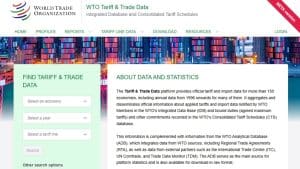
https://ttd.wto.org/en
WTO Tariff & Trade Data, an online platform providing enhanced access to official tariff and trade figures for over 150 economies, was launched on 4 March 2025. The database — currently in its beta version for preliminary release —includes bilateral trade datasets, time series views, and reports on export and import patterns by product and trade partner. It was presented to WTO members at an informal meeting of the Committee on Market Access, which defines and administers the dissemination policy of the databases.
Economic Growth and Sustainable Development

https://wmo.int/publication-series/2023-year-review-climate-driven-global-renewable-energy-potential-resources-and-energy-demand
The report finds that climate-informed and diversified energy solutions are essential if the world is to meet targets to triple renewable energy capacity and double energy efficiency by 2030. The report looks at 2023 – a year which saw a transition from a La Niña to an El Niño phenomena, affecting key climatic variables for the energy sector such as wind speed, solar radiation, precipitation and temperature. It was also the warmest year on record, until this record was broken again in 2024. The report was jointly produced by the World Meteorological Organization (WMO), the International Renewable Energy Agency (IRENA) and the Copernicus Climate Change Service (C3S), operated by the European Centre for Medium-Range Weather Forecasts (ECMWF). It was released ahead of the Sustainable Energy for All Global Forum in Barbados on 12-13 March 2025.

https://www.who.int/europe/publications/i/item/9789289061681
Prominent health warning labels on alcoholic beverages are essential for raising awareness that consuming alcohol can lead to cancer. This simple and inexpensive measure can empower consumers to make informed choices that can help reduce alcohol-related harms. This new report from WHO/Europe underscores the urgent need for mandatory, standardized labelling on alcoholic beverages. Alcohol causes about 800 000 deaths annually in the WHO European Region, home to the heaviest drinkers in the world. Many countries of the Region have yet to make significant progress in implementing alcohol harm reduction policies. Despite cancer being the leading cause of alcohol-attributable deaths in the European Union (EU), public awareness of the link between alcohol and cancer remains alarmingly low.

https://unece.org/info/publications/pub/399669
Housing affordability is one of the most urgent challenges facing the UNECE region, particularly its urban areas. Escalating housing prices, stagnant income growth, and increasing construction costs are placing significant financial pressure on households. This report, developed by the UNECE Real Estate Management Advisory Group, offers a thorough analysis of the crisis. Drawing on data from 32 member States and insights from a 2024 survey, it identifies the key drivers of the affordability gap, including demographic shifts, regulatory barriers, and economic inequalities. It examines the complex dynamics between housing demand and supply, highlighting the disproportionate impact on vulnerable populations. The report provides actionable recommendations for policymakers and good practices for improving housing affordability, stressing the importance of multi-level collaboration, data-driven decision-making, and equity-oriented strategies.

https://www.unicef.org/media/167781/file/250210_Fragile_Beginnings_.pdf.pdf
Children today face a new set of challenges that were unimaginable just a generation ago. Across the world, climate change and environmental degradation are threatening child survival, health and well-being. Given children’s unique metabolism, physiology and developmental needs, no group is more vulnerable to environmental harm. Exposure can impact children early and have a lifelong effect. This brief examines the growing body of research on the unique vulnerabilities of children: in utero and at birth, during infancy and childhood and throughout adolescence. Its purpose is to enable evidence-based advocacy and action on children’s environmental health.
Economic Benefits from Deep Integration: 20 years after the 2004 EU Enlargement (IMF Working Paper No. 2025/047)
https://doi.org/10.5089/9798229001960.001
EU enlargement has stalled since the last member joined over ten years ago, marking the longest period without expansion since 1973. This elapsed time contrasts with the potential income gains membership promises. Drawing on the biggest EU enlargement in 2004 and employing a synthetic difference-in-difference estimator on regional data, we estimate that EU membership has increased per capita incomes by more than 30 percent. Capital accumulation and higher productivity contributed broadly equally, while employment effects were small. Gains were initially driven by the industrial sector and later by services. Despite substantial regional heterogeneity in gains—larger for those with better financial access and stronger integration in value chains prior to accession—all regions that joined the EU benefited. Moreover, existing members benefited too, with average income per capita around 10 percent higher. The estimated gains suggest that deep integration carries significant additional economic benefits beyond simple trade unions, providing valuable lessons for future EU enlargement and regional integration efforts elsewhere.

https://unece.org/sites/default/files/2025-02/2422244_E_PDF_WEB_0.pdf
The Economic Commission for Europe (UNECE) has launched this new guide that explores the multifaceted benefits of incorporating food-producing trees into urban landscapes. This guide emphasizes the role of urban forests in enhancing food security, improving community well-being, and mitigating the impacts of climate change. Food trees not only provide nutritious food for urban residents but can also contribute to a healthier environment, stronger communities, and a more sustainable urban future.

https://www.unsdsn.org/resources/europe-sustainable-development-report-2025/
The Europe Sustainable Development Report 2025 (6th edition), produced by the SDSN’s SDG Transformation Center with support from the Heinrich-Böll-Stiftung European Union, assesses Sustainable Development Goal (SDG) progress across the European Union (EU). This year’s report demonstrates an overall lag in SDG progress across the EU, with the pace of SDG progress over the 2020-2023 period more than two times lower (+0.8 points) than the 2016-2019 period (+1.9 points), as well as persistent social, environmental, and biodiversity challenges across the EU. These findings underscore the need for the new EU leadership to reaffirm its commitment to the SDGs.

https://doi.org/10.4060/cd3900en
This technical study authored by IFAD, FAO and WFP highlights the role of discriminatory social institutions, unequal power relations and agency in influencing climate resilience processes for sustainable agrifood systems. It also defines core characteristics of gender transformative change in climate resilience programming and presents a collection of climate change interventions that address different dimensions of gender transformative change and the management of disaster risks in agrifood systems. The main audience for this study consists of food security, agriculture, climate and gender practitioners and experts with an interest in gender transformative change in interventions related to climate adaptation and disaster risk management. The paper was developed in the framework of the Joint Programme on Gender Transformative Approaches for Food Security and Nutrition (JP GTA).

Generation plastic: Unpacking the impact of plastic on children (UNICEF)
https://www.unicef.org/reports/generation-plastic
The report provides an overview of how plastics are impacting children’s health and future, shares efforts of children and youth around the world to tackle plastics, and recommends actions to better protect children from its harms.
https://earlywarningsforall.org/site/early-warnings-all/global-observatory-ews-investments
Early warning systems (EWS) are proven lifesavers in the event of disasters – and with the climate crisis driving up the frequency and intensity of extreme weather events, we urgently need global EWS coverage. The Early Warnings for All (EW4All) initiative has been gathering pace since its launch by Secretary-General António Guterres in 2022, but with so many significant partners investing in this important area outside the scope of the initiative, there is a need for a big-picture view that can identify gaps and synergies, and improve efficiencies. To address the challenge of fragmented financing for these vital systems, the United Nations Office for Disaster Risk Reduction (UNDRR) and the World Meteorological Organization (WMO) launched the Global Observatory for Early Warning System Investments to systematically tag and track such investments.

https://doi.org/10.58338/APOC5995
UNESCO has launched this toolkit, an innovative resource designed to help youth organizations integrate Media and Information Literacy (MIL) into their policies, strategies, and operations. Developed in collaboration with CIVIX Colombia and partially supported under the UNESCO “Social Media 4 Peace” project, funded by the European Union, it offers practical, step-by-step guidance to build capacity and empower youth-led initiatives in embedding MIL into their work.

https://unesdoc.unesco.org/ark:/48223/pf0000392477
This new UNESCO report, released on International Mother Language Day on 21 February 2025, highlights the urgent need to include multilingualism in education systems so that children learn in a language they understand. Today, 40 % of people globally lack access to education in the language they speak and understand fluently. In some low- and middle-income countries, this figure rises to 90%. More than a quarter of a billion learners are affected. As migration increases, linguistic diversity is becoming a global reality, and classrooms with learners from diverse language backgrounds are more common. Over 31 million displaced youth are facing language barriers in education. The report provides guidance to Ministries of Education and key educational stakeholders on how to implement multilingual education policies and practices, with the goal of creating educational systems that benefit all learners.

https://openknowledge.fao.org/handle/20.500.14283/cd3989en
Many of the new satellites currently in Earth’s orbit are equipped to provide revolutionary tools and data to improve global food security and strengthen agrifood systems. This new report from the Food and Agriculture Organization of the United Nations (FAO) and the United Nations Office for Outer Space Affairs (UNOOSA) aims to inform and guide an array of experts and policy makers on the various intersections of space technology and farming, forestry and land-use management as well as climate and environmental trends.

https://www.unescwa.org/publications/meaningful-voluntary-national-reviews-countries-conflict
Countries in conflict face a complex set of challenges that may hamper their ability to undertake adequate follow-up and review of the 2030 Agenda for Sustainable Development, including a meaningful voluntary national review (VNR). The present document offers insight into the distinctive VNR experiences of countries in conflict, highlighting practical approaches and lessons learned. Without being prescriptive, it provides a collection of bite-sized information and illustrative country cases to inspire national Sustainable Development Goal coordination teams in countries in conflict to alter their approach for a more meaningful VNR. Information was collected through a desk review of the VNRs of 22 selected countries, including 9 from the Arab region. To elucidate nuances, lessons and recommendations not captured in the VNRs, detailed interviews were conducted with senior members of national VNR teams and United Nations country teams in 12 of the reviewed countries. Information is presented along the following six key VNR aspects: the timing and motives for undertaking a VNR; coordination structures; the link to national planning; contribution to peacebuilding; the evidence-base; and inclusion and participation.

https://unece.org/info/publications/pub/399384
This policy brief offers policymakers and decision-makers a comprehensive overview of how sustainably grown and sourced wood can significantly reduce the carbon footprint of urban built environments. By highlighting the carbon and technical advantages of wood as a low-carbon building material, the policy brief encourages stakeholders and provides guidance on how to promote the increased use of wood from sustainable sources as a key building material in low-carbon urban construction across the UNECE region and beyond.
Reimagining Industrial Policy for Sustainable Development: A Framework for the 21st Century (United Nations Economist Network, Policy Brief)
https://www.un.org/sites/un2.un.org/files/2025/02/unen_policy_brief_feb_2025.pdf
This UNEN Policy Brief discusses how future industrial policy is now being shaped by many factors and that these policies must be crafted to promote sustainable development, encourage innovation, and balance economic, social, and environmental goals.
Safe listening for video gameplay and esports (WHO / ITU)
https://www.itu.int/rec/T-REC-H.872-202410-I/en
Ahead of World Hearing Day 2025, the World Health Organization (WHO) and the International Telecommunication Union (ITU) highlighted the first global standard for safe listening in video gameplay and esport activities, which aims to reduce the risk of and prevent hearing loss among gamers. Previously, no safe listening guidelines or standards existed for video gameplay devices or software. Video gameplay and esports are rapidly becoming one of the largest entertainment industries worldwide. About 3 billion people play video games on devices such as personal computers, video game consoles, and mobile phones, yet most devices and games lack safe listening features to protect users from harmful noise. However, gamers risk permanent hearing loss from prolonged exposure to loud sounds while gaming or listening to music. Children are particularly vulnerable due to their lower sound tolerance and growing interest in gaming. Through the provision of information, warnings and safe listening features, the new standard aims to inform video game players of the risk to hearing loss from loud video gameplay activities and raise awareness about how they can practice safe listening.

https://unece.org/info/publications/pub/399805
Forest-based materials are used for a wide variety of products in a circular bioeconomy and innovation continues to refine existing and to develop new applications. The considerations addressed in this study include the growing demand for renewable forest-based raw materials and energy as well as the drive for a reduction in global reliance on fossil fuels. Additionally, there are considerations for climate change, pollution, and waste, as well as the phasing out of single-use and fossil-plastics, that create opportunities and challenges for the forest sector. To further support a sustainable and circular bioeconomy and the potential for a positive relationship with forests, public and private sector actors need to continue efforts that will effectively address the environmental, economic, and social aspects of a transition.

Temporary labour migration: Towards social justice? (ILO)
https://doi.org/10.54394/TGOF6029
This book explores the challenges and policy dilemmas of temporary labour migration worldwide. An interdisciplinary team of imminent experts offers insights on governance, worker protections and policy innovations to promote fair migration.
UN DESA Policy Brief No. 171: Leveraging Critical Energy Transition Minerals: policy pathways for sustainable development
https://desapublications.un.org/policy-briefs/un-desa-policy-brief-no-171-leveraging-critical-energy-transition-minerals-policy
Developing countries with extensive critical energy transition mineral reserves have the potential to harness these resources for economic growth and sustainable development. However, doing so involves significant economic, environmental and social risks. Strong governance, strategic national policies and effective international cooperation are essential to maximize sustainable development benefits and avoid the so-called resource curse.

https://www.undp.org/publications/undp-gender-and-recovery-toolkit
The Gender and Recovery toolkit is a practical resource in the hands of UNDP personnel to help government, civil society and other partners put gender equality at the core of immediate and long-term recovery processes. It shows how to incorporate gender perspectives and women’s participation throughout the recovery programme cycle – from assessment, strategic planning and framing of results to budgeting and implementation, and monitoring and evaluation. The toolkit emphasizes the need to address the root causes of gender inequality and fragility by transforming power dynamics
Coronavirus Disease (COVID-19)

https://www.who.int/europe/publications/i/item/WHO-EURO-2025-11095-50867-77134
When WHO lifted the Public Health Emergency of International Concern (PHEIC) status for COVID-19 on 5 May 2023, it signalled a transition from the acute phase of the pandemic towards a period of sustained response and recovery. As part of this move, WHO/Europe published a regional transition plan in June 2023 that outlined a comprehensive roadmap for the year to May 2024. The key goal was to ensure resilient health systems, able to respond to future emergencies and maintain essential services at all times, through strategic and sustainable investment. Now, 18 months on, WHO/Europe has published this new report identifying the milestones, lessons learned and challenges which occurred as part of the implementation of the WHO European Region COVID-19 transition plan.
International Peace and Security
Concept Note for the Security Council high-level open debate on the theme “Practicing multilateralism, reforming and improving global governance”
English, French & Spanish: https://undocs.org/S/2025/78
In its capacity as President of the Security Council for the month of February, China organized an open debate on “Maintenance of international peace and security: practicing multilateralism, reforming and improving global governance” on 18 February 2025. In order to guide the discussions on this topic, China has prepared this concept note.

https://www.undp.org/arab-states/publications/syria-socio-economic-assessment
As the United Nations Development Programme (UNDP) assesses the impact of almost 14 years of conflict in Syria, it is important to note that the collapse of the previous regime at the end of 2024 may have opened a window of opportunity, placing Syria at the threshold of a new era. While there are hopeful signs, the road to a new Syria remains long and fraught with obstacles. The task of recovery—both in terms of socio-economic and physical reconstruction—is immense and should not be underestimated. Bringing Syria back on a path towards peace and prosperity is essential for long-term stability in the region. This report examines several scenarios for how quickly the economy could return to its 2010 level.

Three years since the full-scale invasion of Ukraine: Key facts and findings about the impact on human rights (24 February 2022 to February 2025)
https://hrmmu-3-year-update.my.canva.site/
This fact sheet summarizes the cumulative impact of the Russian Federation’s full-scale invasion of Ukraine on human rights and civilian protection. It is based on the monitoring, documentation, and public reporting by the United Nations Human Rights Monitoring Mission in Ukraine (HRMMU).
Development of Africa

Report in English & French, Overview in English, French & Spanish: https://unctad.org/publication/economic-development-africa-report-2024
The report examines how African economies can strengthen resilience to trade risks caused by interconnected shocks across political, economic, energy, technological and climate fronts. It calls for stronger intra-African trade, strategic investments in transport and technology infrastructure, bolder economic reforms and better use of innovative financial tools. It provides a blueprint to reduce dependence on external markets, expand regional trade networks and leverage the continent’s young population, abundant resources and growing markets to unlock the $3.4 trillion potential of the African Continental Free Trade Area.
Human Rights

Committee on the Elimination of Discrimination against Women: Gender Equality. Non-Discrimination. Women & Girls’ Rights
https://www.ohchr.org/en/documents/tools-and-resources/cedaw-gender-equality-non-discrimination-women-girls-rights
10-page information brochure

https://www.ohchr.org/sites/default/files/documents/issues/ucm/events/international-conf-sanctions-business-hr/gps-sanctions-business-hr.pdf
Commentary: https://www.ohchr.org/sites/default/files/documents/issues/ucm/commentary-gpssbhr-2025.pdf
The Special Rapporteur on unilateral coercive measures and human rights, Alena Douhan, announced on 25 February 2025 the publication of the finalised versions of Guiding Principles on Sanctions, Business and Human Rights and a Commentary thereto. The expert noted that the Guiding Principles and their Commentary explain how existing international legal standards shall be applied in the context of sanctions; remind States of their responsibility to abide by and uphold international human rights standards; and reiterate States’ responsibility to ensure through administrative and judicial measures that businesses under their jurisdiction and/or control, operating in sanctions contexts, do not violate human rights, including extraterritorially.
Impact of arms transfers on human rights: Report of the Office of the United Nations High Commissioner for Human Rights (A/HRC/58/41)
English, French & Spanish: https://docs.un.org/A/HRC/58/41
States and the private sector must do more to tackle the devastating human rights impact of arms transfers, this UN Human Rights Office report published on 4 March says. Amid the highest number of violent conflicts since World War II, such transfers and the diversion of arms are contributing to internal repression, human rights violations and abuses, and serious violations of international humanitarian law, the report warns. The report details challenges related to corruption and conflicts of interest in the arms sector, as well as gaps between what States and the private sector should do – and what they do in practice – to prevent, address and mitigate the negative human rights impact of arms transfers.
see also: International arms transfers and human rights (OHCHR Information Note): https://www.ohchr.org/en/documents/tools-and-resources/international-arms-transfers-and-human-rights

Key asks for state regulation of AI
Issued By: Office of the High Commissioner for Human Rights
Delivered To: The public on the occasion of the Paris AI Summit, 10 February 2025
https://www.ohchr.org/en/documents/tools-and-resources/key-asks-state-regulation-ai

Report, Executive Summary & Infographics: https://www.ohchr.org/en/documents/country-reports/ohchr-fact-finding-report-human-rights-violations-and-abuses-related
Bangladesh’s former Government and security and intelligence services, alongside violent elements associated with the Awami League party, systematically engaged in a range of serious human rights violations during last year’s student-led protests, this report by the UN Human Rights Office has found. Drawing on testimony of senior officials and other evidence, it also found an official policy to attack and violently repress anti-Government protesters and sympathisers, raising concerns as to crimes against humanity requiring urgent further criminal investigation.

OHCHR Flyer: Working Group on the use of mercenaries as a means of violating human rights and impeding the exercise of the right of peoples to self-determination
https://www.ohchr.org/en/documents/tools-and-resources/flyer-working-group-use-mercenaries-means-violating-human-rights-and

https://www.unicef.org/sudan/reports/sudans-child-rape-and-sexual-violence-crisis
The conflict that erupted in Sudan in April 2023 has driven millions of people from their homes. All parties to the conflict have been accused of abuses of human rights, including grave violations of children’s rights. The conflict has spawned a humanitarian crisis – famine, disease and displacement – that has grabbed headlines. But less often reported is the severe protection crisis, especially the widespread perpetration of sexual violence against children. This report highlights the voices of courageous and resilient women and girls interviewed by UNICEF in an effort to increase the attention, protection and aid children in Sudan receive. No person, no child, should have to endure these horrors.
Humanitarian Affairs

https://thedocs.worldbank.org/en/doc/133c3304e29086819c1119fe8e85366b-0280012025/original/Gaza-RDNA-final-med.pdf
Reconstruction and recovery needs in Gaza are estimated to require $53 billion, according to this new report released on 18 February 2025. The report analyzes damages and losses as well as recovery and reconstruction needs across almost all sectors of the Palestinian economy based on data from October 2023-October 2024. The report, jointly produced by the World Bank Group, the United Nations and the European Union, puts forward a roadmap for sequencing recovery efforts along with their associated costs in the short and medium term. It underscores the importance of a closely coordinated multisectoral response involving all stakeholders. The report further notes that the speed, scale and scope of recovery and reconstruction will be shaped by factors such as governance arrangements, entry to and mobility within the Gaza strip for people and goods, law and order, and safety and security.

https://globalprotectioncluster.org/index.php/publications/2147/reports/report/global-report-law-and-policy-internal-displacement-implementing
This report presents an overview – global and by region – of key law and policy developments related to prevention, protection and solutions for IDPs that occurred since the publication of the first Global Report on Law and Policy on Internal Displacement, also reflected in UNHCR’s IDP Law and Policy Dashboard. The report then delves more deeply into the implementation of existing frameworks. Drawing evidence from 15 countries addressing displacement (Afghanistan, Azerbaijan, Central African Republic, Colombia, Democratic Republic of Congo, Ethiopia, Georgia, Honduras, Iraq, Mexico, Niger, Nigeria, Somalia, Ukraine and Yemen), the research reviews the legal, policy and institutional response by affected States in order to identify challenges, lessons learnt, good practices and opportunities to strengthen implementation and ensure enjoyment of rights.
Ukraine – Fourth Rapid Damage and Needs Assessment (RDNA4): February 2022 – December 2024
http://documents.worldbank.org/curated/en/099022025114040022
Three years into Russia’s invasion of Ukraine, an updated joint Rapid Damage and Needs Assessment (RDNA4) released on 25 February 2025 by the Government of Ukraine, the World Bank Group, the European Commission, and the United Nations currently estimates that as of 31 December 2024, the total cost of reconstruction and recovery in Ukraine is $524 billion (€506 billion) over the next decade, which is approximately 2.8 times the estimated nominal GDP of Ukraine for 2024.
Drug Control, Crime Prevention and Counter-terrorism

https://www.unodc.org/unodc/en/data-and-analysis/tip-studies.html
Visa-free entry, temporary protection and targeted anti-trafficking measures across Europe for refugees from Ukraine are effectively mitigating trafficking and smuggling risks, suggests this new study from the United Nations Office on Drugs and Crime (UNODC), launched on 19 February 2025 in Kyiv. Next week marks three years since the beginning of the full-scale invasion of Ukraine. This UNODC study examines the extent and risks of trafficking in persons and smuggling of migrants between February 2022 and December 2024, drawing on official data, statistics and information; available literature; a survey of over 1,600 refugees from Ukraine; and interviews with key informants and refugees.
Newsletter Archive: https://unric.org/en/unric-info-point-library-newsletter-archive