
New UN websites & publications

Policy Brief: COVID-19 and the Need for Action on Mental Health (13 May 2020)
https://bit.ly/3cvpK1g
 Although the COVID-19 crisis is, in the first instance, a physical health crisis, it has the seeds of a major mental health crisis as well, if action is not taken. Good mental health is critical to the functioning of society at the best of times. It must be front and centre of every country’s response to and recovery from the COVID-19 pandemic. The mental health and wellbeing of whole societies have been severely impacted by this crisis and are a priority to be addressed urgently.
see also: https://www.un.org/en/coronavirus/mental-health-services-are-essential-part-all-government-responses-covid-19
COVID-19 and Human Rights: We are all in this together (April 2020)
https://bit.ly/2zml671

see also: https://www.un.org/en/un-coronavirus-communications-team/we-are-all-together-human-rights-and-covid-19-response-and
Policy Brief: A Disability-Inclusive Response to COVID-19 (May 2020)
https://bit.ly/2SJZo3N
 Easy to read MS Word document: https://bit.ly/3fmIUs9
EPUB file: https://bit.ly/2Wxhasg
Watch Executive Summary (International Sign Language): https://bit.ly/3bBotVg
This Policy Brief highlights the impact of COVID- 19 on persons with disabilities and in doing so, outlines key actions and recommendations to make the response and recovery inclusive of persons with disabilities. While the brief contains specific recommendations focusing on key sectors, it identifies four overarching areas of action that are applicable for all.
see also: https://www.un.org/en/coronavirus/we-have-unique-opportunity-design-and-implement-more-inclusive-and-accessible-societies
Policy Brief: The Impact of COVID-19 on older persons (May 2020)
https://bit.ly/2X4SXtE
 The COVID-19 pandemic is causing untold fear and suffering for older people across the world. As of 26 April, the virus itself has already taken the lives of some 193,710 people1, and fatality rates for those over 80 years of age is five times the global average.2 As the virus spreads rapidly to developing countries, likely overwhelming health and social protection systems, the mortality rate for older persons could climb even higher. Less visible but no less worrisome are the broader effects: health care denied for conditions unrelated to COVID-19; neglect and abuse in institutions and care facilities; an increase in poverty and unemployment; the dramatic impact on well-being and mental health; and the trauma of stigma and discrimination. This policy brief elaborates on these impacts and identifies both immediate and longer-term policy and programmatic responses needed across four key priorities for action.
see also: https://www.un.org/en/coronavirus/our-response-covid-19-must-respect-rights-and-dignity-older-people
The Secretary-General’s UN COVID-19 Response and Recovery Fund (April 2020)
https://bit.ly/3bBkZCa
 The United Nations COVID-19 Response and Recovery Fund is a UN inter-agency fund mechanism established by the UN Secretary-General to help support low- and middle-income programme countries overcome the health and development crisis caused by the COVID-19 pandemic and support those most vulnerable to economic hardship and social disruption. This factsheet summarizes the scope of the Fund and governance structure. Access the Report, here: Shared Responsibility, Global Solidarity: Responding to the socio-economic impacts of COVID-19.
A UN framework for the immediate socio-economic response to COVID-19 (April 2020)
https://bit.ly/3cLI2eE
 This report sets out the framework for the United Nations’ urgent socio-economic support to countries and societies in the face of COVID-19, putting in practice the UN Secretary-General’s Shared Responsibility, Global Solidarity report on the same subject. It is one of three critical components of the UN’s efforts to save lives, protect people, and rebuild better, alongside the health response, led by the World Health Organization (WHO), and the humanitarian response, as detailed in the UN-led COVID-19 Global Humanitarian Response Plan.
see also: https://www.undp.org/content/undp/en/home/news-centre/news/2020/UN_sets_out_COVID_social_and_economic_recovery_plan.html
United Nations Guidance Note on Addressing and Countering COVID-19 related Hate Speech (11 May 2020)
https://bit.ly/2zNGen7
 On 11 May 2020, the Special Adviser on the Prevention of Genocide released a ‘Guidance Note on Addressing and Countering COVID-19 related Hate Speech.’ The guidance note follows the Secretary-General’s global appeal to address and counter hate speech on 8 May 2020 and builds on the UN Strategy and Plan of Action on Hate Speech. It provides recommendations to Member States, civil society, media and other relevant stakeholders for addressing and countering COVID-19-related hate speech.
see also: https://www.un.org/en/coronavirus/we-must-act-now-strengthen-immunity-our-societies-against-virus-hate
UNRIC Library Backgrounder on the Novel Coronavirus (COVID-19)
The library backgrounder is now also available in a shortened Spanish version.
English: https://unric.org/en/unric-library-backgrounder-novel-coronavirus/
French: https://unric.org/fr/fiche-d-information-nouveau-coronavirus/
Spanish: https://unric.org/es/informacion-general-nuevo-coronavirus
Basic Psychosocial Skills – A Guide for COVID-19 Responders (Final draft) https://interagencystandingcommittee.org/iasc-reference-group-mental-health-and-psychosocial-support-emergency-settings/basic-psychosocial
 Basic psychosocial support skills are at the core of any Mental Health and Psychosocial Support (MHPSS) intervention. Such skills are also indispensable for many others involved in the COVID-19 response, whether they identify as an MHPSS provider or not. Thus, this guide is meant for all COVID-19 responders. This Basic Psychosocial Skills Guide is a project by the Inter-Agency Standing Committee Reference Group on Mental Health and Psychosocial Support in Emergency Settings. The project was supported by member agencies of the IASC MHPSS RG, with extensive inputs from COVID-19 survivors and COVID-19 responders from all sectors in the following countries: Australia, Bangladesh, Bulgaria, Bolivia, Canada, Denmark, Democratic Republic of Congo, Egypt, Ethiopia, Greece, India, Iraq, Italy, Jamaica, Kenya, Laos, Liberia, Morocco, Myanmar, Netherlands, Philippines, Portugal, Rwanda, South Africa, Spain, Sri Lanka, Sweden, Switzerland, Syria, Uganda, UK, USA. They all responded to a survey to help us draft this guide and make it more relevant to their mental health and psychosocial needs. The initial draft was then opened up to further feedback from COVID-19 survivors and COVID-19 responders through review and additional in-depth interviews. The final guide incorporates this feedback. A big thank you to these responders – who include food supply, distribution, law enforcement, health professionals, protection actors, transportation workers, managers and others – for completing our surveys and influencing this guide. This is a guide developed for and by responders around the world. The IASC MHPSSS RG acknowledge Espe for his illustrations in this publication. We hope that this guide will help to orient responders from different countries, from different sectors, on how to integrate psychosocial support into their daily COVID-19 responses and how to make a difference in well-being of people they communicate with during the COVID-19 pandemic.
Changing Sails: Accelerating Regional Actions for Sustainable Oceans in Asia and the Pacific (ESCAP)
https://www.unescap.org/sites/default/files/publications/CS76%20Theme%20Study.pdf
 The well-being of oceans in the Asia-Pacific region are edging closer to a tipping point due to the unprecedented pace of marine pollution, overfishing and climate change in recent years. However, a new report released on 13 May 2020 by the United Nations Economic and Social Commission for Asia and the Pacific (ESCAP) suggests that the temporary shutdown of activities as well as reduced human mobility and resource demands due to the COVID-19 pandemic may provide marine environments the much-needed breathing space for them to recover. The report also suggests that large-scale recovery investments being put in place by governments have the potential to turn the tide towards improving marine sustainability and resilience in the post-COVID 19 world if they catalyse a shift towards sustainable practices such as green shipping and decarbonization, and low-impact fisheries, aquaculture and tourism.
COVID-19 and its human rights dimensions – OHCHR Guidance
English: https://www.ohchr.org/EN/NewsEvents/Pages/COVID19Guidance.aspx
French: https://www.ohchr.org/FR/NewsEvents/Pages/COVID19Guidance.aspx
Spanish: https://www.ohchr.org/SP/NewsEvents/Pages/COVID19Guidance.aspx
Specific Guidance is available on the following topics: Emergency measures, Civic Space, Detention, Children in detention, Migrants, Women, LGBTI people, Persons with disabilities.
COVID-19: A 10-point action plan to strengthen international trade and transport facilitation in times of pandemic (UNCTAD)
https://unctad.org/en/PublicationsLibrary/presspb2020d3_en.pdf
As countries adopt radical measures to bring the coronavirus pandemic under control, international trade and transport systems are under tremendous stress. Early evidence shows that international trade is collapsing, threatening access to goods and critical supplies. In response, this new UNCTAD policy brief, released on 27 April 2020, outlines a ten-point action plan to help industries involved in the movement of goods keep free-flowing trade afloat during the COVID-19 crisis and its aftermath.
COVID-19: Lockdown exit strategies for Africa
https://www.uneca.org/publications/covid-19-lockdown-exit-strategies-africa
In the current context of the coronavirus disease 2019 (COVID-19) pandemic, policymakers are confronted with decisions that may prove to be among the most difficult of their careers. To contain the COVID-19 pandemic, unprecedented measures are being taken globally. In Africa, at least 42 countries have imposed partial or full lockdowns on the movements and activities of their people. Experience around the world suggests that such interventions effectively suppress the spread of COVID-19. The lockdowns, however, pose considerable economic costs that, in turn, threaten lives, put livelihoods at risk and exacerbate poverty. Consequently, there is great interest in exit strategies for the COVID-19 lockdowns that preserve lives while protecting livelihoods. The challenge is that critical decision-making in these times is fraught with uncertainty. The present report sets out some of the exit strategies being proposed and tried around the world and outlines the risks involved for African countries.
COVID-19: How social and economic sectors are responding (ILO)
https://www.ilo.org/global/topics/coronavirus/sectoral/lang–en/index.htm
The COVID-19 crisis is having a devastating effect on all social and economic sectors. In a series of briefs, the ILO analyses how the pandemic is affecting the functioning of these sectors and how they are responding to alleviate its effects.
The following briefs are currently available: Action on the global garment industry; The impact on agriculture and food security; Tourism sector; Maritime shipping & fishing; Education sector; Public emergency services; Civil aviation; Textiles, clothing, leather and footwear industries; Automotive industry and Food retail.
COVID-19 & Immigration Detention: What Can Governments and Other Stakeholders Do?
https://migrationnetwork.un.org/sites/default/files/docs/un_network_on_migration_wg_atd_policy_brief_covid-19_and_immigration_detention_0.pdf
Around the world today, we are witnessing the severe impacts of the use of migration-related detention on migrants, asylum-seekers and refugees during the COVID-19 pandemic – indefinite detention in overcrowded facilities for some, prolonged situations of irregularity and fear of detention for others, heightened risk of infection for all: migrants, staff, their families, and their communities. On 28 April 2020, the United Nations Network on Migration released urgently needed practical recommendations with guidance for States and stakeholders on preventing and responding to COVID-19 in the context of immigration detention. By focusing on the development of non-custodial alternatives based in the community, the brief highlights steps that several governments have already taken to swiftly release migrants from detention and to provide access to healthcare, housing and other services regardless of migration status. The Network looks forward to feedback from all partners and to updating these recommendations on an ongoing basis.
COVID-19 and children, in the North and in the South (UNICEF)
https://www.unicef-irc.org/publications/pdf/DP-2020-02.pdf
This paper, published by UNICEF’s Office of Research-Innocenti, aims to document the likely direct and indirect impacts of the COVID-19 crisis in developed and developing countries. It also aims to identify potential urgent measures to alleviate such impacts on children. Thirty-three years after the UNICEF report, ‘Adjustment with a Human Face’, the authors warn of the effects of the pandemic which are likely to be considerable and comparable to the recession and debt crisis of the 1980s. The heavy costs for children can only be avoided with systematic and concerted efforts on the part of governments and the international community, to provide extensive financial and social support for the poor, and to invest in the health and education systems, in order to offset the negative impact of the virus-induced recession.
COVID-19 and the Rights of Persons with Disabilities: Guidance (OHCHR)
https://www.ohchr.org/Documents/Issues/Disability/COVID-19_and_The_Rights_of_Persons_with_Disabilities.pdf
While the COVID-19 pandemic threatens all members of society, persons with disabilities are disproportionately impacted due to attitudinal, environmental and institutional barriers that are reproduced in the COVID-19 response. Many persons with disabilities have pre-existing health conditions that make them more susceptible to contracting the virus, experiencing more severe symptoms upon infection, leading to elevated levels of death. During the COVID-19 crisis, persons with disabilities who are dependent on support for their daily living may find themselves isolated and unable to survive during lockdown measures, while those living in institutions are particularly vulnerable, as evidenced by the overwhelming numbers of deaths in residential care homes and psychiatric facilities. Barriers for persons with disabilities in accessing health services and information are intensified. Persons with disabilities also continue to face discrimination and other barriers in accessing livelihood and income support, participating in online forms of education, and seeking protection from violence. Particular groups of persons with disabilities, such as prisoners and those who are homeless or without adequate housing, face even greater risks.
Disease pandemics and the freedom of opinion and expression: Report of the Special Rapporteur on the promotion and protection of the right to freedom of opinion and expression (A/HRC/44/49, 23 April 2020)
English, French & Spanish: http://undocs.org/A/HRC/44/49
“Summary: The present report of the Special Rapporteur on the promotion and protection of the right to freedom of opinion and expression, David Kaye, is being submitted to the Human Rights Council pursuant to Council resolution 34/18. In the report the Special Rapporteur registers alarm that some efforts to combat the coronavirus disease (COVID-19) pandemic may be failing to meet the standards of legality, necessity and proportionality. The Special Rapporteur highlights five areas of concern, showing that access to information, independent media and other free expression rights are critical to meeting the challenges of pandemic.”
Emergency Measures and COVID-19: Guidance (OHCHR)
https://www.ohchr.org/Documents/Events/EmergencyMeasures_COVID19.pdf
As Governments face the formidable challenge of protecting people from COVID-19, UN High Commissioner for Human Rights Michelle Bachelet has called on them to ensure human rights are not violated under the guise of exceptional or emergency measures. States are able to restrict some rights to protect public health under human rights law, and also have certain additional powers if a state of emergency threatening the life of the nation is publicly declared. In either case, the restrictions need to be necessary, proportionate, and non-discriminatory. They also need to be limited in duration and key safeguards against excesses must be put in place. Certain rights, including the right to life, the prohibition against torture and other ill-treatment, and the right not to be arbitrarily detained continue to apply in all circumstances. To help States in their response to COVID-19, the UN Human Rights Office issued new policy guidance on 27 April 2020 on emergency and exceptional measures.
Export Prohibitions and Restrictions (WTO)
https://www.wto.org/english/news_e/news20_e/rese_23apr20_e.htm
Eighty countries and customs territories so far have introduced export prohibitions or restrictions as a result of the COVID-19 pandemic according to a new report by the Word Trade Organization (WTO) released on 23 April 2020. The report, which is based on information from official sources and news outlets, draws attention to the current lack of transparency at the multilateral level and long-term risks that export restrictions pose to global supply chains and public welfare. The new export prohibitions and restrictions mostly cover medical supplies such as face masks, pharmaceuticals, ventilators and other medical equipment, the report finds. Some of the measures have extended the controls to other products such as food and toilet paper.
Framework for reopening schools (UNESCO / UNICEF / World Bank / WFP)
https://www.unicef.org/media/68366/file/Framework-for-reopening-schools-2020.pdf
 As countries grapple with severe disruptions to education caused by COVID-19, several UN agencies – as part of the Global Education Coalition – issued new guidelines on 30 April 2020 to help Governments make decisions on safely reopening schools for the world’s 1.3 billion students affected by ongoing closures. Launched in March by the UN Educational, Scientific and Cultural Organization (UNESCO), UN Children’s Fund (UNICEF), World Food Programme (WFP) and World Bank, the Coalition works to foster inclusive learning opportunities.
From the Great Lockdown to the Great Meltdown: Developing Country Debt in the Time of Covid-19 (UNCTAD)
https://unctad.org/en/PublicationsLibrary/gdsinf2020d3_en.pdf
 The UN trade and development body set out on 23 April 2020 urgent measures needed to head off a looming debt disaster in developing countries reeling from the economic fallout from the coronavirus pandemic. UNCTAD released a report that calls for a global debt deal for the developing world. It underlines the vital need for decisive action to provide substantive debt relief to developing countries to free up sorely needed resources to respond to the raging pandemic. On 30 March, UNCTAD called for a $2.5 trillion coronavirus crisis package for developing countries. Even prior to the COVID-19 crisis, many of these countries faced high and rising shares of their government revenues going to debt repayments, squeezing health and social expenditures.
ICAO Handbook for CAAs on the Management of Aviation Safety Risks related to COVID-19
https://www.icao.int/safety/SafetyManagement/Pages/COVID-19-Safety-Risk-Management.aspx
ICAO has developed a new publication aimed at helping countries to address the aviation safety risks arising due to the global effects of the COVID-19 pandemic. Produced specifically for national aviation regulators and civil aviation authorities (CAAs), the new Handbook for CAAs on the Management of Aviation Safety Risks related to COVID-19 (ICAO Doc 10144) was developed with the support of aviation experts serving on the ICAO Safety Management Panel. An ICAO State letter will be issued to encourage Member States to take advantage of this new handbook.
ILO Monitor: COVID-19 and the world of work. 3rd Edition
https://www.ilo.org/wcmsp5/groups/public/—dgreports/—dcomm/documents/briefingnote/wcms_743146.pdf
The continued sharp decline in working hours globally due to the COVID-19 outbreak means that 1.6 billion workers in the informal economy – that is nearly half of the global workforce – stand in immediate danger of having their livelihoods destroyed, warns the International Labour Organization. According to the ILO Monitor third edition: COVID-19 and the world of work, released on 29 April 2020, the drop in working hours in the current (second) quarter of 2020 is expected to be significantly worse than previously estimated. Compared to pre-crisis levels (Q4 2019), a 10.5 per cent deterioration is now expected, equivalent to 305 million full-time jobs (assuming a 48-hour working week). The previous estimate was for a 6.7 per cent drop, equivalent to 195 million full-time workers. This is due to the prolongation and extension of lockdown measures. Regionally, the situation has worsened for all major regional groups. Estimates suggest a 12.4 per cent loss of working hours in Q2 for the Americas (compared to pre-crisis levels) and 11.8 per cent for Europe and Central Asia. The estimates for the rest of the regional groups follow closely and are all above 9.5 per cent.
see also: “Country policy responses”: https://www.ilo.org/global/topics/coronavirus/country-responses/lang–en/index.htm
Measuring the impact of COVID-19 with a view to reactivation (ECLAC)
https://www.cepal.org/en/publications/45477-measuring-impact-covid-19-view-reactivation
The coronavirus (COVID-19) pandemic is affecting the economies of Latin America and the Caribbean through external and domestic factors, the combined effect of which will lead to the worst contraction that the region has ever undergone, exceeding those seen in 1914 and 1930. According to the latest estimates, an average regional contraction of -5.3% is forecast for 2020, ECLAC indicated on 21 April 2020 while launching a new report.
Migrants and the COVID-19 pandemic: An initial analysis (IOM)
https://publications.iom.int/system/files/pdf/mrs-60.pdf
This paper analyzes the specific ways migrants have been affected by the pandemic and presents a diversity of measures adopted in migrants’ host and home countries to prevent, mitigate and address its negative impacts. By doing so, it aims to provide insights for more -inclusive and effective COVID-19 policies and operations.
“Seven Actions”: A guide to protect African women’s rights during COVID-19 (OHCHR / AU)
https://www.ohchr.org/Documents/Issues/Women/7ActionsFinal.pdf
UN Human Rights and the Africa Union have jointly developed new guidance on the possible actions African States could take, in accordance with their human rights obligations, to avoid discrimination against women and girls in their responses to COVID-19. As with previous outbreaks, including Ebola and Zika, policies and public health efforts around the globe do not appear to adequately address the short and long-term gendered impacts of COVID-19, including on the human rights of affected populations. Measures taken in fact risk perpetuating and deepening existing gender-based inequalities and discrimination. As in other parts of the world, women and girls in Africa are most likely to bear the brunt end of the virus.
The social challenge in times of COVID-19 (ECLAC)
English: https://www.cepal.org/en/publications/45544-social-challenge-times-covid-19
Spanish: https://www.cepal.org/es/publicaciones/45527-desafio-social-tiempos-covid-19
 To cope with the socioeconomic effects of the crisis caused by the coronavirus (COVID-19) disease, the Economic Commission for Latin America and the Caribbean (ECLAC) proposes that governments ensure immediate temporary cash transfers to meet basic needs and sustain household consumption, which will be crucial for achieving a solid and relatively quick reactivation. In addition, in the long term, the organization reiterates that these transfers should be made permanent, extending beyond people in situations of poverty and reaching the broad social strata of the population that are very vulnerable to becoming poor, which would enable moving towards a universal basic income to guarantee the basic right to survival, according to a new report unveiled on 12 May 2020 by the Commission’s Executive Secretary, Alicia Bárcena.
Strengthening Preparedness for COVID-19 in Cities and Urban Settings (WHO)

This document is to support local authorities, leaders and policy-makers in cities and other urban settlements in identifying effective approaches and implementing recommended actions that enhance the prevention, preparedness and readiness for COVID-19 in urban settings, to ensure a robust response and eventual recovery. It covers factors unique to cities and urban settings, considerations in urban preparedness, key areas of focus and preparing for future emergencies.
UN/DESA Policy Briefs
https://www.un.org/development/desa/en/covid-19.html
DESA’s COVID-19 Portal features a series of policy briefs on COVID-19, which draw on unique expertise from around the Department. Since 1 April 2020, the following briefs have been published:
• #75: COVID-19: Reaffirming State-People Governance Relationships
• #74: Resilient institutions in times of crisis: transparency, accountability and participation at the national level key to effective response to COVID-19
• #73: The impact of COVID-19 on sport, physical activity and well-being and its effects on social development
• #72: COVID-19 and sovereign debt
• #71: COVID-19 pandemic deals a huge blow to the manufacturing exports from LDCs
• #70: The Impact of COVID-19 on Indigenous Peoples
• #69: Leaving no one behind: the COVID-19 crisis through the disability and gender lens
• #67: Protecting and mobilizing youth in COVID-19 responses
• #66: COVID-19 and the least developed countries
• #65: Responses to the COVID-19 catastrophe could turn the tide on inequality
• #64: The COVID-19 pandemic puts Small Island Developing economies in dire straits
• #63: The COVID-19 pandemic: A speedy and balanced recovery of Europe will remain critical for the world to return to the trajectory of sustainable development
• #62: The COVID-19 pandemic: a wake-up call for better cooperation at the science–policy–society interface
• #61: COVID-19: Embracing digital government during the pandemic and beyond
• #60: Commodity exporters face mounting economic challenges as pandemic spreads
• #59: Corona crisis causes turmoil in financial markets
• #58: COVID-19: Addressing the social crisis through fiscal stimulus plans
 UN Innovation Update: COVID-19 Special Edition
https://bit.ly/2VKoFww
This Special Edition of the Quarterly Innovation Update highlights how UN Entities are leveraging innovative approaches to respond to the COVID-19 pandemic.
Wildlife Crime: Pangolin scales
https://www.unodc.org/documents/wwcr/2020/Wildlife_crime_Pangolin_UNODC.pdf
 The outbreak of COVID-19 has been linked to a coronavirus originating in wild bats that jumped to people via an intermediary animal, with pangolins among the leading suspects. These reclusive and nocturnal mammals are killed for their meat and their scales, which have been used medicinally in both Asia and Africa. The wild meat of pangolins is considered a delicacy, sold in wet markets, which could have served as a possible ground zero for the virus. The majority of all emerging infectious diseases originated from animals and were transferred to humans. Wildlife trafficking contributes to the tragedy, making it a threat not only to the environment and our natural heritage, but to human health and security. Pangolins are the most trafficked mammal in the world, with seizures of illegal cargo originating in Africa and intended for Asian markets having increased tenfold since 2014, according to the United Nations Office on Drugs and Crime (UNODC). The UNODC research, which included field work, was released to mark International Mother Earth Day and will be included in the Office’s World Wildlife Crime Report to be published in June.
UN in General

UN Member States on the Record website now offers a search for representatives’ credentials: https://library.un.org/unms
General Assembly – Procedure for taking decisions during COVID-19
https://www.un.org/pga/74/covid-19/
available now:
- Decision number: 74/544: Procedure for taking decisions of the General Assembly during the coronavirus disease 2019 (COVID-19) pandemic
- Decision number: 74/555: Extension of the procedure for taking decisions of the General Assembly during the coronavirus disease (COVID-19) pandemic
- Step-by-Step process for consideration of draft decisions/resolutions in accordance with General Assembly decision 74/544 of 27 March 2020 entitled “Procedure for taking decisions of the General Assembly during the Coronavirus disease 2019 (COVID-19) pandemic”
- Decision-making of the General Assembly by a vote (excluding elections) without a plenary meeting during the coronavirus disease (COVID-19) pandemic
- Alternative Mechanisms to Hold Elections Without Plenary Meetings
- E-voting Process Excluding Elections
Dag Hammarskjöld Library Digitization Update – Human Settlements
The global discussion on human settlements began as early as 1965 when the General Assembly identified inadequate housing as one of the most urgent problems necessitating immediate solutions and called upon all nations to mobilize resources and make strong efforts to improve the housing conditions for millions of people.
Researchers can now delve into the UN Conference on Human Settlements documentation which was recently digitized by the Dag Hammarskjöld Library: https://bit.ly/2z3Igiu
Economic Growth and Sustainable Development
2020 Global Report on Food Crises
http://www.fightfoodcrises.net/food-crises-and-covid-19/en/
 On 21 April 2020 an international alliance of UN, governmental, and nongovernmental agencies working to address the root causes of extreme hunger have released a new edition of their annual Global Report on Food Crises. The report indicates that at the close of 2019, 135 million people across 55 countries and territories experienced acute food insecurity* (IPC/CH Phase 3 or above). Additionally, in the 55 food-crisis countries covered by the report, 75 million children were stunted and 17 million suffered from wasting in 2019. This is the highest level of acute food insecurity and malnutrition documented by the Network since the first edition of the report in 2017. Additionally, in 2019, 183 million people were classified in Stressed (IPC/CH Phase 2) condition — at the cusp of acute hunger and at risk of slipping into Crisis or worse (IPC/CH Phase 3 or above) if faced with a shock or stressor, such as the COVID-19 pandemic. More than half (73 million) of the 135 million people covered by the report live in Africa; 43 million live in the Middle East and Asia; 18.5 million live in Latin America and the Caribbean. The key drivers behind the trends analysed in the report were: conflict, (the key factor that pushed 77 million people into acute food insecurity), weather extremes (34 million people) and economic turbulence (24 million).
El Niño Southern Oscillation (ENSO) effects on fisheries and aquaculture
http://www.fao.org/documents/card/en/c/ca8348en
 While considerable resources are invested in seasonal forecasts and early-warning systems for food security, not enough is known about El Niño’s impact on the fisheries and aquaculture sectors, even though its name was given in the 1600s by fishers off the coast of Peru. To remedy that, FAO is publishing, in partnership with French National Research Institute for Sustainable Development (IRD France), the report El Niño Southern Oscillation (ENSO) effects on fisheries and aquaculture. This report captures the current state of knowledge on the impacts of ENSO events across sectors, from food security to safety at sea, from fish biology and fishing operation to management measures. El Niño is widely known as a climate pattern that begins over the Pacific Ocean but wreaks havoc on ecosystems in land and water far away from its origin. Its consequences include droughts and major harvest shortfalls in large swatches of Africa and Indonesia, forest fires in Australia, and serious flooding in South America.
Frontier technologies to protect the environment and tackle climate change (ITU)
https://www.itu.int/en/action/environment-and-climate-change/Documents/frontier-technologies-to-protect-the-environment-and-tackle-climate-change.pdf
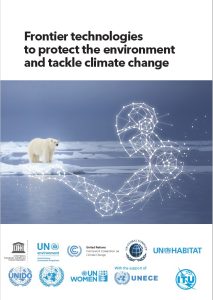 From cutting emissions in cities to natural disaster risk reduction, smart water management and precise climate monitoring, frontier technologies in fields such as artificial intelligence, 5G and robotics demonstrate considerable potential to support the battle against climate change, highlights a new ITU/UN report. The report was released to mark the occasion of Earth Day 2020. The UN report investigates eight fields of innovation: Artificial intelligence (AI); Internet of Things (IoT); 5G; clean energy technology; digital twin; robotics; Space 2.0 technologies; and digitalization and Big Data.
Global Climate in 2015–2019 (WMO)
https://library.wmo.int/doc_num.php?explnum_id=10251
 In the 50 years since the first celebration of Earth Day, the physical signs of climate change and impacts on our planet have gathered pace, reaching a crescendo in the past five years, which were the hottest on record. That trend is expected to continue, according to the World Meteorological Organization (WMO). … Temperature is just one climate indicator. Others include atmospheric carbon dioxide (CO2), ocean heat and acidification, sea level, glacier mass balance and Arctic and Antarctic sea ice. All indicators showed an acceleration of climate change in the past five years, according to the final report on the Global Climate 2015-2019, released to mark the 50th anniversary of Earth Day. COVID-19 may result in a temporary reduction in greenhouse gas emissions, but it is not a substitute for sustained climate action. And it will make it more difficult to tackle weather, climate and water-related hazards which are becoming more acute because of climate change.
Global Forest Resources Assessment 2020 (FAO)
Digital report: http://www.fao.org/forest-resources-assessment/2020/en/
Key findings – English: http://www.fao.org/3/CA8753EN/CA8753EN.pdf
Key fndings – French: http://www.fao.org/3/CA8753FR/CA8753FR.pdf
Key findings – Spanish: http://www.fao.org/3/CA8753ES/CA8753ES.pdf
The FRA 2020 Main Report will be published later in the year.

International solidarity and climate change: Report of the Independent Expert on human rights and international solidarity (A/HRC/44/44, 1 April 2020)
English, French & Spanish: https://undocs.org/A/HRC/44/44
Summary: The present report is the third submitted to the Human Rights Council by the Independent Expert on human rights and international solidarity, Obiora Chinedu Okafor. In the report, submitted pursuant to Council resolution 35/3, the Independent Expert discusses the issue of human rights-based international solidarity in the context of climate change.
Introduction: In the present report, the Independent Expert engages with one of the thematic priorities that he established for his mandate, namely the enjoyment, or lack thereof, of human rights-based international solidarity in the context of climate change. This subject is consistent with the promise made in his first report to the Human Rights Council (see A/HRC/38/40) to examine matters that lie at the intersection of international solidarity and climate change. An important goal of the report is to better illuminate the role of human rights-based international solidarity in responding to climate change, which is a common concern of humanity. A complementary objective is to strengthen the appreciation of the role that the lack of human rights-based international solidarity plays in exacerbating the challenges brought upon the world by climate change.
Journalism, ‘Fake News’ and Disinformation: A Handbook for Journalism Education and Training (UNESCO)
https://en.unesco.org/fightfakenews

International Peace and Security
Concept note for the open video teleconference on “Youth and peace and security: towards the fifth anniversary of the youth and peace and security agenda: accelerating implementation of resolution 2250 (2015) and 2419 (2018)”
English, French & Spanish: https://undocs.org/S/2020/302
The Security Council held an open video teleconference entitled “Towards the fifth anniversary of the youth and peace and security agenda: accelerating implementation of resolutions 2250 (2015) and 2419 (2018)” on 27 April 2020. The Dominican Republic, Security Council President for April, has prepared this concept note and guidelines.
Concept note for the Arria-formula meeting on the theme “Seventy-five years from the end of the Second World War on European soil –lessons learned for preventing future atrocities, responsibility of the Security Council”
English, French & Spanish: https://undocs.org/S/2020/352
The Security Council held a high-level open Arria-formula meeting by videoconference on 8 May 2020, on the theme “Seventy-five years from the end of the Second World War on European soil – lessons learned for preventing future atrocities, responsibility of the Security Council”. Estonia, the Security Council President for May, has prepared this concept note and guidelines.
Concept note for the Security Council open videoconference meeting on the theme “Ensuring transparency, efficiency and effectiveness in the work of the Security Council”
English, French & Spanish: https://undocs.org/en/S/2020/374
Estonia, in its capacity as President of the Security Council for the month of May 2020, in collaboration with Saint Vincent and the Grenadines, as Chair of the Informal Working Group on Documentation and Other Procedural Questions, held an open videoconference on the theme “Ensuring transparency, efficiency and effectiveness in the work of the Security Council” under the item “Implementation of the note by the President of the Security Council (S/2017/507)” on 15 May 2020. In order to help to guide the debate, Estonia and Saint Vincent and the Grenadines has prepared this concept note.
Concept note for the Arria-formula meeting on the theme “Cyberstability, conflict prevention and capacity-building”
English, French & Spanish: https://undocs.org/S/2020/389
An Arria-formula meeting of the Security Council on the theme “Cyberstability, conflict prevention and capacity-building” will be held on 22 May 2020. It will take place by videoconference, organized by the Permanent Mission of Estonia to the United Nations, in cooperation with the Permanent Missions of Belgium, the Dominican Republic, Indonesia and Kenya to the United Nations. Estonia, the Security Council President for May, has prepared this concept note.
Engaging with Insider Mediators – Sustaining peace in an age of turbulence (UNDP)
https://bit.ly/3dgNRAP
 This Guidance Note explores the relevance of insider mediation in 21st century practice-policy landscape, seeks to foster an understanding of the theoretical and practical underpinnings of the ‘insider mediation’ concept and provide practical knowledge and a step-by-step guide to engaging with insider mediators. Case studies are used throughout the Guidance Note to highlight how insider mediators work on a wide range of thematic issues, including peace processes, natural resource-related conflicts, electoral-related violence, building social cohesion and addressing religious and faith-related issues.
Operations Manual for Incident and Emergency Communication (IAEA)
https://www-pub.iaea.org/MTCD/Publications/PDF/EPR_IEComm%202019%20web.pdf
In case of a nuclear or radiological emergency, what do national authorities need to do to respond and how quickly? How do they communicate with other countries’ emergency responders and the IAEA when every second counts? A new and updated Operations Manual provides the answers to these and other questions that arise in emergency response. The “Operations Manual for Incident and Emergency Communication” describes in detail the steps that authorities and international organizations need to take to notify other countries and the IAEA of an event and how to request help during a nuclear or radiological emergency. Information in the manual applies to all countries and relevant international organizations and is of particular importance to those that have signed the Convention on Early Notification of a Nuclear Accident (‘Early Notification Convention’) and the Convention on Assistance in the Case of a Nuclear Accident or Radiological Emergency (‘Assistance Convention’), which represent approximately three quarters of the IAEA’s 171 Member States.
State of global peace and security in line with the central mandates contained in the Charter of the United Nations: Report of the Secretary-General (A/74/786, 6 April 2020)
English, French & Spanish: https://undocs.org/A/74/786
Summary: The present report is submitted pursuant to General Assembly resolution 72/243, in which the Assembly called upon the Secretary-General to submit to it a report on the state of global peace and security in line with the central mandates contained in the Charter of the United Nations at its seventy-fourth session. In the report, the evolving nature of armed conflict and violence is highlighted and seven major trends related to global peace and security today are examined. Areas of progress and areas in which solutions are still wanting are noted in the report, along with opportunities and persistent challenges faced by the international community. As such, it serves as a contribution to the reflections that will take place during the seventy-fifth anniversary year of the United Nations and throughout the Nelson Mandela Decade of Peace. In that regard, it also serves to honour the spirit and wisdom of one of the world’s great humanists, a man who believed in, and fought for, a better future. Indeed, as Mr. Mandela himself declared, “peace is not just the absence of conflict; peace is the creation of an environment where all can flourish, regardless of race, colour, creed, religion, gender, class, caste or any other social markers of difference”.
Youth and peace and security: Report of the Secretary-General (S/2020/167, 2 March 2020)
English, French & Spanish: https://undocs.org/S/2020/167
The present report is submitted pursuant to resolution 2419 (2018), in which the Security Council requested me to submit a report on the implementation of resolutions 2419 (2018) and 2250 (2015). The present report is the first one on youth and peace and security since the Security Council adopted resolution 2250 (2015), in which the essential role of young people in preventing and resolving conflicts and in sustaining peace was recognized. That recognition has gained further momentum in the years since and was reaffirmed in Council resolution 2419 (2018) and in a statement by the President of the Council made in December 2019 (S/PRST/2019/15).
Human Rights
The Case for a Human Rights Approach to the Rule of Law in the EU (OHCHR) https://europe.ohchr.org/EN/Stories/Documents/Publication.pdf
 The UN Human Rights Regional Office for Europe launched this publication on 14 May 2020. Respect for the rule of law, which is a precondition for human rights and democracy, is in decline worldwide. The phenomenon has found fertile ground in the unprecedented circumstances created by the COVID-19 pandemic. The independence of the judiciary, transparent and accountable governance, media freedom, and the separation of powers can no longer be taken for granted. Yet, so far, EU member States and EU institutions have appeared divided on the matter. As the EU embarks on a new initiative to deepen monitoring of the rule of law in its member States, the publication suggests drawing on the rich expertise and experience of the United Nations’ human rights machinery.
Freedom & Creativity: Defending art, defending diversity (UNESCO)
https://en.unesco.org/creativity/publications/freedom-creativity-defending-art-defending
 UNESCO sheds light on the current advances and challenges in the legal protection of artistic freedom, the protection of the social and economic rights of artists and cultural professionals, and the monitoring of artistic freedom. Released on the occasion of World Press Freedom Day 2020, this special edition of the Global Report series builds on the recommendations put forth in the chapter “Promoting the freedom to imagine and create” in UNESCO’s 2018 Global Report to assess whether progress has been made, to determine what efforts are still required and what new challenges have emerged. At a time when the COVID-19 pandemic is disrupting the entire cultural value chain – creation, production, distribution and access – and considerably weakening the status of artists and culture professionals, who most often lack access to conventional social protection mechanisms, this report provides an overview of the challenges encountered and the efforts that governments and civil society are making to maintain sustainable, free and diverse environments for creation, dissemination and access to cultural life. The report, produced with the support of the Swedish International Development Cooperation Agency, is the result of research carried out before the current health crisis. Nevertheless, it reveals flaws in artistic freedom that this crisis will only exacerbate, and progress that may be built upon.
Human Rights: A Media Guide to the new UN independent experts (2020)
https://www.ohchr.org/EN/NewsEvents/Pages/DisplayNews.aspx?NewsID=25871&LangID=E
The United Nations Human Rights Council appointed in March, at its 43d session, 12 new independent experts to its fact-finding and monitoring mechanisms. Currently, there are 56 mandates: 44 thematic ones and 12 mandates related to countries and territories, with a total of 80 human rights experts. Who are the new independent experts? What is their role? And how can you contact them?
Humanitarian Affairs
Communication during Disaster Recovery (World Bank)
http://hdl.handle.net/10986/33685
 This guide provides practical guidance for governments regarding how to effectively communicate with communities during the recovery phase following an emergency. It explains how to identify communication needs and presents best fit communication methods and strategies to deploy to support disaster recovery frameworks (DRF) and recovery strategies. For the purposes of this guide, recovery communication includes sending, gathering, managing, and evaluating information. Communication flows between governments and communities can be one-way, whereby information is sent out to communities, and or two-way, whereby communities have an opportunity to voice their views and opinions to governments. This guide focuses on external government communication with individuals and communities. It was commissioned by The World Bank’s Global Facility for Disaster Reduction and Recovery (GFDRR) working in collaboration with the United Nations Development Programme (UNDP) and the European Union (EU).
A Region on the Move: 2019 Mobility Overview in the East and Horn of Africa and the Arab Peninsula (IOM)
https://migration.iom.int/system/tdf/reports/IOM_RoMR_2019.pdf
 This year’s A Region on the Move report aims to provide an overview of the main population movement trends in the East and Horn of Africa region (EHoA) in 2019.1 Home to an estimated population of 322 million, of which 42 per cent are under the age of 15, the region hosted 6.5 million international migrants at mid-year 2019.2 With more than six million internally displaced persons (IDPs) and more than three million refugees and asylum-seekers recorded by the end of the year,3 countries in the region continue to experience significant levels of internal and crossborder mobility, including intra- and extra-regional movements. Migration in the region is still triggered by a combination of persistent insecurity and conflict, harsh climatic conditions, public heath emergencies alongside socio-economic drivers and more traditional seasonal and livelihood factors. In 2019, the region observed a growing trend in intercommunal clashes, particularly in Ethiopia, Somalia and South Sudan, in addition to abnormal climatic events such as a severe drought, devastating floods and a critical desert locust invasion, all of which affected the EHoA in its entirety. Meanwhile, multiple countries reinforced their preparedness efforts to counter the risk of cross-border transmissions of the Ebola Virus Disease (EVD) from the neighbouring Democratic Republic of the Congo. Similar to previous years, most migration trends captured through flow monitoring were motivated by economic reasons in 2019. The region continues to be characterized by large movements towards the Arab Peninsula – along the Eastern Route – with 138,213 migrant crossings to Yemen from the Horn of Africa, notwithstanding the 120,825 returns of Ethiopian nationals led by the Government of the Kingdom of Saudi Arabia in 2019 alone. Comparatively, the number of arrivals of EHoA migrants registered across European arrival points in Greece, Italy and Spain fell from 4,624 in 2018 to 3,452 in 2019.
Justice and International Law
UN Audiovisual Library of International Law – New Audio Lectures
- Professor Leila Nadya Sadat on “Heads of State and Other Officials before the International Criminal Court”: https://bit.ly/2L1WiUz
- Ambassador Marja Lehto, Senior Expert of Public International Law at the Ministry for Foreign Affairs of Finland, on “Protection of the Environment in Armed Conflicts”: https://bit.ly/35bp4LG
- Steven Hill, Former Legal Adviser of NATO, on “Legal Aspects of the Work of NATO”: https://bit.ly/3fIJZuz
Nuclear, Chemical and Conventional Weapons Disarmament
Rethinking Unconstrained Military Spending (UNODA Occasional Paper No. 35, April 2020)
https://front.un-arm.org/wp-content/uploads/2020/04/op-35-web.pdf
This publication addresses the issue of military spending from various angles by examining the impact of military expenditures on international security; the relationship between military spending and the achievement of the 2030 Agenda for Sustainable Development; the importance of gender perspectives in rethinking unconstrained military spending; and lessons learned from economic conversion movements. It has been published in support of the Sustainable Development Goals and the Secretary-General’s Agenda for Disarmament to promote renewed research and analysis on the relationship between military spending and economic and social development.
Drug Control, Crime Prevention and Counter-terrorism
dataUNODC
UNODC’s new data portal makes its reliable global data on drugs and crime easier to access and visualize
https://dataunodc.un.org/
For years, the United Nations Office on Drugs and Crime (UNODC) has been providing reliable global data on drugs and crime. Following launch of its new data portal, dataUNODC, on 11 May 20202 users will not only find the data they are looking for, but will also be given a more user friendly interface to visualize and download all statistical information produced by UNODC. For example, recently released statistics about prisons and prisoner populations are now also available on data UNODC, showing that overcrowding of prisons is a global phenomenon. Overcrowding of prisons constitutes an infringement of prisoners’ human rights and is also a source of major concern in the current emergency situation linked to the COVID-19 pandemic.
Newsletter Archive: https://unric.org/en/unric-info-point-library-newsletter-archive