
New UN websites & publications
UN in General
 Climate Action Portal
https://www.un.org/climatechange
The revamped UN climate action portal has been revamped and offers content in six languages, including on the road to net zero, the Paris Agreement, the SG’s six climate-positive actions, climate finance, youth in action, climate solutions, and much more.
Climate Change Indicators Dashboard
https://climatedata.imf.org/
The International Monetary Fund (IMF) launched on 7 April 2021 a new Climate Change Indicators Dashboard—an international statistical initiative to address the growing need for data in macroeconomic and financial policy analysis to facilitate climate change mitigation and adaptation. The Dashboard is a single platform that brings together experimental climate change indicators that allows comparison across countries. The indicators have been developed in cooperation with international organizations and other agencies including the Organisation for Economic Co-operation and Development (OECD), the World Bank Group (WBG), the United Nations (UN), the European Commission, the European Statistical Office (Eurostat), the Food and Agriculture Organization (FAO), the International Energy Agency (IEA) and the National Oceanic and Atmospheric Administration (NOAA). The indicators presented are the result of estimates from IMF staff and other publicly available data sources.
Coronavirus Disease (COVID-19)

Anticipate, prepare and respond to crises: Invest now in resilient OSH (Occupation Safety and Health) systems (ILO)
 Report & Summary in English: https://bit.ly/3eESabh
French: https://bit.ly/3dXmAqg
Spanish: https://bit.ly/3sZeSjM
The COVID-19 pandemic has highlighted the workplace dangers faced by key workers who need far greater protection to do their jobs safely, the International Labour Organization (ILO) said on 27 April 2021. A new report by the ILO, released to mark World Day for Safety and Health at Work, found that 7,000 health workers have died since the outbreak of the crisis, while 136 million health and social care workers are at risk of contracting COVID-19 through work. The document looks at how countries can minimize the risks for everyone in the workplace, in the event of future health emergencies. It also highlights the mental health pressures associated with the pandemic: one in five healthcare workers globally, has reported depression and anxiety symptoms.
COVID-19 and Humanitarian Access: How the pandemic should provoke systemic change in the global humanitarian system (UNU-CPR)

This report examines the pandemic’s impact on humanitarian access and operations. The analysis is based on developments in Colombia, Myanmar, Nigeria, South Sudan, and Yemen. The report finds that the pandemic has contributed to significantly greater humanitarian needs in many settings, alongside a high likelihood of longer-term socio-economic risks that may push more people into vulnerability. At the same time, a combination of factors has acted against humanitarian access and delivery, including: restrictions of travel into and within countries; quarantining and other restrictions on group activities; increased bureaucratic hurdles by governments and other actors; and a global financial downturn that has reduced overseas spending. One of the recommendations for governments, donors, the UN, and local, non-governmental organizations is to build a coherent, multi-scalar approach to risk. The surge in international support to meet the humanitarian crisis is an important part of the response to COVID-19, but it does not capture the full picture. So-called secondary effects include a downward spiral in the livelihoods of vulnerable populations and a weakened ecosystem of economies that will be poorly positioned to support them. Interviewees pointed to the need to gather highly localized data in order to understand the specific risks facing communities but also to understand their longer-term trajectories within bigger political economies. Putting resources into risk analysis that brings local, national, and regional information together into a systemic understanding will allow the humanitarian community to pivot from response to preparedness.
COVID-19 and the State of Global Mobility in 2020 (IOM / MPI)
https://bit.ly/3xHm4EH

COVID-19, culture and cultural rights: Report of the Special Rapporteur in the field of cultural rights, Karima Bennoune (A/HRC/46/34, 17 February 2021)
English, French & Spanish: https://undocs.org/A/HRC/46/34
“Summary: The coronavirus disease (COVID-19) pandemic is a cataclysm for cultural rights, threatening a global “cultural catastrophe” with severe, long-lasting consequences for human rights if effective action is not taken immediately. In the present report, the Special Rapporteur in the field of cultural rights surveys the negative impacts of COVID-19 on culture and cultural rights worldwide, and the positive potential of culture and cultural rights, and the right to science, to enhance rights-respecting solutions and build resilience. The report also contains relevant recommendations for action.”

https://bit.ly/2QItVkS
After more than a decade of hard-won gains in the fight against poverty, the number of poor people in Myanmar could double as a result of the combined impacts of the COVID-19 pandemic and the ongoing political crisis, according to new research released on 30 April 2021 by the United Nations Development Programme (UNDP). The study warns that, if unchecked, the combined effect of these two crises could push up to 12 million people into poverty. That could result in as much as 25 million people – nearly half of Myanmar’s population – living below the national poverty line by early 2022, a level of impoverishment not seen in the country since 2005. The analysis indicates that, by the end of 2020, 83 per cent of households had reported that their incomes had been, on average, slashed almost in half due to the pandemic. With these unprecedented circumstances, the number of people living below the poverty line in Myanmar is estimated to have increased by 11 percentage points as a result of the socio-economic effects of the COVID-19 crisis. And according to the projections outlined in the report, the worsening security, human rights, and development situation in Myanmar since February 2021 could cause another sharp rise in the country’s poverty rate – driving it up by an additional 12 percentage points by early next year.
Comprehensive Study on the Impact of COVID-19 on the Least Developed Country Category
https://bit.ly/2Sb1OLt
Upon request of the Economic and Social Council of the United Nations, the Committee for Development Policy undertook a comprehensive on the impact of COVID-19 on the LDC category. It has two main intended uses. First, it is an input to the 2021 triennial review, meant to enable the Committee to incorporate fully into its triennial reviews the impact of the COVID-19 crisis on LDCs and countries graduating from the LDC category. Second, it is an input to a possible contribution by the Committee to the forthcoming fifth United Nations Conference on the Least Developed Countries, to be held in Doha from 23 to 27 January 2022. As a result, the study contains suggestions for support for LDCs and graduating countries in the light of the COVID-19 pandemic. The study consists of three main chapters. Chapter II contains a review of the impacts of COVID-19 in LDCs. Chapter III discusses the implications on LDC graduation by exploring the multiple linkages between the COVID-19 pandemic and the LDC criteria. Chapter IV contains a review of ongoing international support for LDCs to address the COVID-19 pandemic, covering bilateral and multilateral institutions.
Container Shipping in Times of COVID-19: Why freight rates have surged, and implications for policymakers (UNCTAD Policy Brief No. 84, April 2021)
https://unctad.org/system/files/official-document/presspb2021d2_en.pdf
When the Ever Given megaship blocked traffic in the Suez Canal for almost a week in March, it triggered a new surge in container spot freight rates, which had finally started to settle from the all-time highs reached during the COVID-19 pandemic. Shipping rates are a major component of trade costs, so the new hike poses an additional challenge to the world economy as it struggles to recover from the worst global crisis since the Great Depression. Container rates have a particular impact on global trade, since almost all manufactured goods – including clothes, medicines and processed food products – are shipped in containers. This UNCTAD policy brief examines why freight rates surged during the pandemic and what must be done to avoid a similar situation in the future.
Estimates of Global E-Commerce 2019 and Preliminary Assessment of COVID-19 Impact on Online Retail 2020 (UNCTAD Technical Notes on ICT for Development No.18)
https://unctad.org/system/files/official-document/tn_unctad_ict4d18_en.pdf
The dramatic rise in e-commerce amid movement restrictions induced by COVID-19 increased online retail sales’ share of total retail sales from 16% to 19% in 2020, according to estimates in an UNCTAD report published on 3 May 2021. The United Nations Conference on Trade and Development (UNCTAD) released the report as it hosted a two-day meeting on measuring e-commerce and the digital economy. According to the report, online retail sales grew markedly in several countries, with the Republic of Korea reporting the highest share at 25.9% in 2020, up from 20.8% the year before (Table 1). Meanwhile, global e-commerce sales jumped to $26.7 trillion in 2019, up 4% from 2018, according to the latest available estimates. This includes business-to-business (B2B) and business-to-consumer (B2C) sales, and is equivalent to 30% of global gross domestic product (GDP) that year.
Frequently Asked Questions: The COVAX Humanitarian Buffer (IASC)
https://interagencystandingcommittee.org/emergency-directors-group/frequently-asked-questions-covax-humanitarian-buffer-21-april
This FAQ document has been prepared by the Inter-Agency Standing Committee (IASC) Working Group on COVID-19 vaccines. The Working Group was tasked by the IASC Emergency Directors Group to work with Gavi, the Vaccine Alliance, on the establishment of the COVAX Humanitarian Buffer. These FAQs are intended for all IASC entities, humanitarian partners, and external stakeholders. The FAQs will be updated and re-circulated as required to ensure they reflect the most relevant and up-to-date information.
Frontline: Preparing Healthcare Systems for Shocks from Disasters to Pandemics
https://openknowledge.worldbank.org/handle/10986/35429
 This new World Bank report offers recommendations to better prepare health systems to respond to a wide range of shocks, from seasonal demand surges, to pandemics, climate change, and disasters. The report was funded by the Japan-World Bank Program for Mainstreaming Disaster Risk Management in Developing Countries (Japan Program). From flood-induced cholera outbreaks to earthquake casualties and zoonotic diseases, health care systems play a crucial role in mitigating the illnesses and deaths caused by emergencies. Countries’ ability to provide reliable essential healthcare during emergencies is critical to protect people’s well-being. For example, World Health Organization data for 80 countries show that around 1.4 million fewer people received necessary care for tuberculosis in 2020 from a year ago from pandemic disruptions. The report applies lessons learned from disaster risk and emergency management practices to propose five areas of priority actions for more reliable, shock-resistant healthcare services.
Global Report on Food Crises – 2021
https://www.wfp.org/publications/global-report-food-crises-2021
The number of people facing acute food insecurity and needing urgent life and livelihood-saving assistance has hit a five-year high in 2020 in countries beset by food crises, an annual report launched today by the Global Network Against Food Crises (GNAFC) – an international alliance of the UN, the EU, governmental and non-governmental agencies working to tackle food crises together – has found. Conflict, economic shocks – including due to COVID-19, extreme weather – pushed at least 155 million people into acute food insecurity in 2020. The stark warning from the 2021 Global Report on Food Crises reveals that conflict, or economic shocks that are often related to COVID-19 along with extreme weather, are continuing to push millions of people into acute food insecurity. The report reveals that at least 155 million people experienced acute food insecurity at Crisis or worse levels (IPC/CH Phase 3 or worse) – or equivalent – across 55 countries/territories in 2020 – an increase of around 20 million people from the previous year, and raises a stark warning about a worrisome trend: acute food insecurity has kept up its relentless rise since 2017 – the first edition of the report.
Highlights: One Year on from the Release of My Hero is You, April 2021 (IASC)
https://bit.ly/3aKoWXE
 One year ago, during March 2020, over 1700 children from 104 countries helped to create a children’s storybook on COVID-19 that has reached many hundreds of thousands of children worldwide and became a success story of global reach. The children’s storybook My Hero is You, how kids can fight COVID-19, was initially launched in six languages, and one year later, there are now over 138 translations and more than 50 multimedia adaptations and accessible formats available. My Hero is You is a project of the Inter-Agency Standing Committee Reference Group on Mental Health and Psychosocial Support in Emergency Settings (IASC MHPSS RG). This Reference Group is a unique collaboration of United Nations agencies, national and international nongovernmental organizations and international agencies providing mental health and psychosocial support in emergency settings. The IASC MHPSS RG used storytelling to share mental health messages on COVID-19 with children. The book for 6-11 year-olds explains to children how they can protect themselves and others from COVID-19 and how to manage difficult emotions related to this pandemic.
How to End the COVID-19 Pandemic by March 2022 (World Bank Policy Research Working Paper No. 9632)
https://openknowledge.worldbank.org/handle/10986/35454
How can the world reach herd immunity against COVID-19 before the second anniversary of the pandemic, or March 2022? A study of vaccine demand and supply answers this question. A target of vaccinating 60 percent of the population in each country by March 2022 is likely sufficient to achieve worldwide herd immunity under a baseline scenario with limited mutation. Achieving this target appears feasible given stated production capacity of vaccine manufacturers and the pace of current and historical vaccination campaigns. Considering existing pre-purchase contracts for vaccines, achieving this target requires addressing a procurement gap of just 350 million vaccine courses in low- and middle-income countries. Immediate additional donor funding of about $4 billion or in-kind donations of excess orders by high-income countries would be sufficient to close this gap. There are additional challenges along the path to achieving world-wide herd immunity—including supply chain issues, trade restrictions, vaccine delivery, and mutations. Overall however, this analysis suggests multilateral action now can bring an end to the acute phase of the pandemic early next year.
Impact of the COVID-19 pandemic on violations against children in situations of armed conflict
https://bit.ly/3nKW5HL
The COVID-19 pandemic has severely impacted the UN’s capacity to monitor and verify grave violations against children in armed conflict and hampered ongoing efforts to engage parties to conflict to end and prevent the violence. Available data demonstrate an increase in recruitment and use, sexual violence and ill-treatment in detention, the new study shows. Based on information gathered by the United Nations on the ground and from partners, the study addresses the preliminary impact of the COVID-19 pandemic (and related control measures) on children affected by armed conflict and on the monitoring and reporting capacities to further assess the long-term impact on children’s rights and to ensure appropriate responses. The study covers the year 2020 and was produced by the Office of the Special Representative of the Secretary-General for Children and Armed Conflict (OSRSG CAAC) with the generous support of the United Kingdom. It focuses on five countries on the CAAC agenda: Afghanistan, the Central African Republic, Colombia, the Democratic Republic of the Congo, and the Sudan.
Maritime Transport and the COVID-19 Crew Change Crisis: A Tool to Support Human Rights Due Diligence (ILO / UNHCR / UN Global Compact)
https://unglobalcompact.org/library/5886
 A wide-ranging human rights checklist has been issued on 6 May 2021 to business enterprises engaged with the maritime industry to protect seafarers stranded on ships due to new COVID-19 variants and government-imposed travel restrictions, under a joint initiative by the UN Global Compact, the UN Human Rights Office, the International Labour Organization (ILO) and the International Maritime Organization (IMO). The Human Rights Due Diligence Tool for cargo owners and charterers has been issued amid concerns that the number of crew stranded working beyond their contracts at sea by COVID-19 restrictions could surge from the current level of 200,000, potentially returning to the peak of 400,000 seafarers at the height of the crew change crisis in September 2020. UN agencies hope the new guidance will help ensure that the working conditions and human rights of seafarers are respected and comply with international standards.
Reducing public health risks associated with the sale of live wild animals of mammalian species in traditional food markets (WHO Interim guidance, 12 April 2021)
https://www.who.int/publications/i/item/WHO-2019-nCoV-Food-safety-traditional-markets-2021.1
To reduce the public health risks associated with the sale of live wild animals for food in traditional food markets, WHO, OIE (Organisation for Animal Health) and UNEP have issued guidance on actions that national governments should consider adopting urgently with the aim of making traditional markets safer and recognizing their central role in providing food and livelihoods for large populations. In particular, WHO, OIE and UNEP call on national competent authorities to suspend the trade in live caught wild animals of mammalian species for food or breeding purposes and close sections of food markets selling live caught wild animals of mammalian species as an emergency measure. Although this document focuses on the risk of disease emergence in traditional food markets where live animals are sold for food, it is also relevant for other utilizations of wild animals. All these uses of wild animals require an approach that is characterized by conservation of biodiversity, animal welfare and national and international regulations regarding threatened and endangered species.
UN/DESA Policy Brief Series
UN DESA experts are working to help decision makers around the world navigate tough choices and to find ways to recover better from the COVID-19 crisis. Watch this space for the latest research, analysis and policy advice from UN DESA, an effort to support and complement the United Nations Secretary-General’s initiatives in response to the COVID-19 crisis and the Decade of Action to deliver the Sustainable Development Goals.
Newly published:
- #99: Why does corporate sustainability reporting matter to rebuilding better? https://www.un.org/development/desa/dpad/publication/un-desa-policy-brief-99-why-does-corporate-sustainability-reporting-matter-to-rebuilding-better/
- #100: Effective blended finance in the era of COVID-19 recovery: https://www.un.org/development/desa/dpad/publication/un-desa-policy-brief-100-effective-blended-finance-in-the-era-of-covid-19-recovery/
- #101: Challenges and Opportunities for Indigenous Peoples’ Sustainability:
https://www.un.org/development/desa/dpad/publication/un-desa-policy-brief-101-challenges-and-opportunities-for-indigenous-peoples-sustainability/ - #102: Population, food security, nutrition and sustainable development:
https://www.un.org/development/desa/dpad/publication/un-desa-policy-brief-102-population-food-security-nutrition-and-sustainable-development/ - #103: Transformational partnerships and partnership platforms: https://www.un.org/development/desa/dpad/publication/un-desa-policy-brief-103-transformational-partnerships-and-partnership-platforms/
UNCTAD COVID-19 Response Portal
https://unctad.org/programme/covid-19-response/impact-on-trade-and-development-2021
The global economy’s uneven recovery from COVID-19 continues and the unequal distribution of vaccines will affect countries’ abilities to recover from the crisis, UNCTAD warned on 4 May 2021 in a new portal tracking the pandemic’s impact on trade and development. The portal seeks to enhance policymakers’ understanding of the wide-ranging impact of the pandemic and help them design suitable recovery policies.
UNESCO report: Museums around the World in the face of COVID-19
English: https://unesdoc.unesco.org/ark:/48223/pf0000376729_eng
French: https://unesdoc.unesco.org/ark:/48223/pf0000376729
 UNESCO has published a report providing a provisional assessment of the situation of 104,000 museums in the face of COVID-19, based on data provided by 87 Member States in an online survey conducted last March. The report confirms museums’ vulnerability one year into the pandemic. In 2020, museums were closed for an average of 155 days, and since the beginning of 2021, many of them have again had to shut their doors, resulting, on average, in a 70% drop in attendance and a 40-60% decline in revenue compared to 2019. The report describes measures taken by museums, including awareness-raising campaigns and reinforced security protocols. It notes a significant reduction in public funding, in some cases as high as 40%, affecting almost half of the museums in the States that responded to the survey.
 Vaccination Demand Observatory
https://vaccinationdemandobservatory.org/
To combat vaccine hesitancy worldwide, PGP, (The Public Good Projects), UNICEF and Yale Institute for Global Health launched the Vaccination Demand Observatory on 29 April 2021. As countries begin rolling out COVID-19 vaccination, public health experts know that the last inch — getting the vaccine from vial to arm — can be the hardest. Public uncertainty in the current pandemic has been exacerbated by an “infodemic,” a confusing epidemic of information and misinformation. The Vaccination Demand Observatory (The Observatory) is developing tools, training, technical support and research to equip in-country teams to mitigate the impact of misinformation and mistrust on all vaccines. This programme is organized in three pillars: social listening analytics and insight generation, a training and education program to tackle challenges related to all vaccines, and a communications lab. The Vaccine Acceptance Interventions Lab (VAIL) will draw upon behavioural and social research and insights from social listening to develop engaging, relevant content to fill information gaps. VAIL also will develop “inoculation” messages to vaccinate people against vaccine misinformation. The content and programs will be rapid field tested for tone, format and behavior change impact before being implemented.
Economic Growth and Sustainable Development
2020: The Non-COVID Year in Disasters – Global Trends and Perspectives
https://www.undrr.org/publication/2020-non-covid-year-disasters
 The year 2020 rivalled 2016 as the world’s hottest recorded year despite the absence of a strong El Niño effect. Apart from the COVID-19 pandemic, the year was dominated by climate-related disasters. These were largely responsible for the 389 recorded events which resulted in 15,080 deaths, 98.4 million people affected, and economic losses of at least US$171.3 billion. The statistics used in this report are drawn from the latest updates in the emergency events database, EM-DAT, maintained by the Centre for Research on the Epidemiology of Disasters (CRED, UClouvain). At the outset, it is acknowledged that these statistics pale in comparison with the ongoing COVID-19 pandemic which by the year’s end had claimed almost two million lives, resulted in more than 90 million confirmed cases, trillions of dollars in economic losses, and “extreme poverty back up to levels not seen in a generation” as the UN Secretary-General has said. In comparison to the previous two decades (2000-2019), 2020 was higher than the annual average in terms of number of recorded events and the annual average of economic losses, which is US$151.6 billion. There were considerably fewer deaths compared to the annual average of 61,709 and fewer people directly affected compared to the annual average of 201.3 million people.
2021 Global Report on Food Crises (WFP)
https://www.wfp.org/publications/global-report-food-crises-2021
 The number of people facing acute food insecurity and needing urgent life and livelihood-saving assistance has hit a five-year high in 2020 in countries beset by food crises, an annual report launched on 5 May 2021 by the Global Network Against Food Crises (GNAFC) – an international alliance of the UN, the EU, governmental and non-governmental agencies working to tackle food crises together – has found. Conflict, economic shocks – including due to COVID-19, extreme weather – pushed at least 155 million people into acute food insecurity in 2020. The stark warning from the 2021 Global Report on Food Crises reveals that conflict, or economic shocks that are often related to COVID-19 along with extreme weather, are continuing to push millions of people into acute food insecurity. The report reveals that at least 155 million people experienced acute food insecurity at Crisis or worse levels (IPC/CH Phase 3 or worse) – or equivalent – across 55 countries/territories in 2020 – an increase of around 20 million people from the previous year, and raises a stark warning about a worrisome trend: acute food insecurity has kept up its relentless rise since 2017 – the first edition of the report.
ARIES for SEEA
https://seea.un.org/content/aries-for-seea
An innovative artificial intelligence (AI) tool that will make it easier for countries to measure the contributions of nature to their economic prosperity and well being was launched on 29 April 2021 by the United Nations and the Basque Centre for Climate Change (BC3). Developed by the Statistics Division of the United Nations Department of Economic and Social Affairs (UN DESA), the UN Environment Programme (UNEP) and BC3, the new tool can vastly accelerate implementation of the new ground-breaking standard for valuing the contributions of nature that was adopted by the UN Statistical Commission last month. The tool makes use of AI technology using the Artificial Intelligence for Environment and Sustainability (ARIES) platform to support countries as they apply the new international standard for natural capital accounting, the System of Environmental-Economic Accounting (SEEA) Ecosystem Accounting. The new open-source and user-friendly digital tool, called the ARIES for SEEA Explorer, enables, for the first time, rapid and standardized yet customizable ecosystem accounting anywhere on Earth.
Ecosystem Restoration Playbook: A practical guide to healing the planet
https://www.worldenvironmentday.global/get-involved/ecosystem-restoration-playbook
 Food, water, medicine, energy: the planet’s ecosystems provide the essentials of life, so long as they’re taken care of. Unfortunately, that hasn’t been happening. During the last several decades, human development has pushed many of the world’s forests, savannahs and other natural systems to the brink of collapse. To counteract that decline, the United Nations Environment Programme and several partners are launching a practical guide to restoring ecosystems. It provides tips to individuals, communities, businesses and government agencies, high-lighting how they can revive the natural spaces around them. The guide comes just ahead of the launch of the United Nations Decade on Ecosystem Restoration, a global drive to halt the degradation of land and oceans, protect biodiversity, and rebuild ecosystems. The practical guide contains pointers on how people can design their own restoration project, clean up their town, and green their home, business or school. It also outlines how citizens can halt the purchase of unsustainable products and shift towards plant-based diets, which have less impact on the environment. Finally, the guide showcases ways for people to hold public discussions about the value of ecosystems, and covers how they can stage online campaigns to draw attention to climate change and nature loss. Along with those pointers, the document features an overview of the main ecosystem types, from forests and farmlands to rivers and coasts. It lists the benefits they provide, some of the biggest threats they face, and outlines ways in which they can be restored. It also provides links to organizations with expertise in restoration, includes the UN Decade’s visual identity, and features a list of hashtags, like #GenerationRestoration and #WorldEnvironmentDay, to help maximize the exposure of restoration projects.

http://www.fao.org/3/cb2372en/CB2372EN.pdf
In 1991, the European Union became the 161st Member of the Food and Agriculture Organization of the United Nations (FAO), marking an institutional breakthrough: it was the first time that FAO welcomed a Member Organization. The European Union–FAO partnership has since been sound and growing, as evidenced by the upward trend of the European Union’s voluntary contributions in recent years. This has enabled FAO to work extensively across the globe and in those regions where assistance is most needed.
Food Systems and Nutrition: Handbook for parliamentarians N°32
English: http://www.fao.org/publications/card/en/c/CB2005EN
French: http://www.fao.org/publications/card/en/c/CB2005FR
Spanish: http://www.fao.org/publications/card/en/c/CB2005ES

poor nutrition is estimated at $3.5 trillion per year. Recent research on the worldwide burden of disease has found that a suboptimal diet is responsible for more deaths than any other risk. Every country in the world is affected by one or more forms of malnutrition. Being one of the major global multi-sectoral issues, it is crucial that it be addressed by the world’s parliaments.
Global Dementia Observatory Knowledge Exchange Platform (WHO) http://globaldementia.org/
 A new online platform to facilitate the exchange of information and knowledge on dementia is being launched on 5 May 2021. The new tool contains key resources to support the implementation of the Global action plan on the public heath response to dementia 2017-2025 and its seven action areas. It provides a space for stakeholders to share resources, such as policies, guidelines, case studies and examples of good practice, to facilitate mutual learning and promote the exchange of knowledge in the area of dementia. Anyone can submit resources to the new platform. A comprehensive review process is undertaken for each new resource submitted before it is posted online to ensure that these meet quality and good practice criteria. Reviewers are dementia experts, people with lived experience of dementia and members of the WHO Secretariat. Users can search resources by country, region or language, and narrow down their searches by type of resources. Users of the platform are also invited to leave comments and rate resources to further enhance discussion about ways to promote and strengthen dementia practice.
Global Forest Goals Report 2021
Report & Overview: https://www.un.org/esa/forests/outreach/global-forests-goal-report-2021/index.html
 The Global Forest Goals Report 2021 is the first evaluation of where the world stands in implementing the United Nations Strategic Plan for Forests 2030, providing a snapshot of actions being taken for forests, while stressing that it is necessary to meet the 2030 deadline in the Plan. The report finds that while the world had been making progress in key areas such as increasing global forest area through afforestation and restoration, these advances are also under threat from the worsening state of our natural environment. The world is combatting unprecedented, worldwide crises on multiple fronts, from the devastating impacts of the coronavirus disease (COVID-19) pandemic, to the escalating impacts of climate change and a biodiversity crisis. For each of these complex global challenges, forests and forest-dependent people are both a casualty and an important part of the solution. The report has been produced in two versions: the full report provides an overview of progress towards the Global Forest Goals, including country actions taken, infographics, and success stories; and a shorter “Overview of Progress” version which highlights overall progress towards each of the six Global Forest Goals.
Integrated National Financing Framework Knowledge Platform
https://inff.org/
A global knowledge platform on Integrated National Financing Frameworks (INFF), jointly developed by DESA/FSDO, UNDP and the European Commission, was launched in April. The knowledge platform supports a growing community of practice on INFFs, and is also home for guidance on INFF building blocks developed by the Inter-agency Task Force on Financing for Development.
 Making the WHO European Region SAFER. Developments in alcohol control policies, 2010–2019 (WHO/Europe)
https://bit.ly/2QonoLu
Although the WHO European Region has experienced an overall decrease in alcohol consumption levels, this trend is only associated with the progress achieved by a small number of countries mainly from the eastern part of the Region. With a few notable exceptions, western European countries, including countries within the European Union (EU), have made little or no progress in the reduction of alcohol consumption. This dynamic is highlighted in the new WHO/Europe report, launched on 15 April 2021. The report assesses the latest steps Member States have made towards implementing evidence-based and effective alcohol control measures.
The measurement and monitoring of water supply, sanitation and hygiene (WASH) affordability: a missing element of monitoring of sustainable development goal (SDG) targets 6.1 and 6.2
Report & Summary: https://www.who.int/publications/i/item/9789240023284
 Universal access to safe drinking water, sanitation and hygiene, a human right enshrined in the 2030 Global Goals, can only be reached if countries monitor and address affordability, according to a new report from WHO and UNICEF, released on 3 May 2021. The report comes at a time when the economic shocks of the COVID-19 pandemic reverberate through household and national budgets just as awareness of the importance of hygiene in infection prevention and control soars. But an estimated 3 billion people worldwide still do not have a handwashing facility with water and soap at home and an estimated 2.2 billion people do not have access to safe drinking water. Little progress has been made in integrating affordability into national and global monitoring of WASH services. One problem is that there is no universally agreed definition of affordability; no commonly agreed approaches to assessing and monitoring it. Affordability goes beyond the monetary. For example, when people struggle to access WASH services that meet the national minimum standard, close to home, they also incur health, time and social costs, much of it borne by women and children.
Measuring and Monitoring progress towards the Sustainable Development Goals (UNECE)
https://unece.org/unece-and-sdgs/publications/measuring-and-monitoring-progress-towards-sustainable-development-goals
 More robust monitoring and measuring systems are required to meet the Sustainable Development Goals (SDGs), according to a UNECE report on Measuring and Monitoring progress towards SDGs that uses a “nexus” approach to chart a course for more “joined up” activities. High-quality statistics are vital for all stakeholders – from national governments, local authorities, regional and global organizations, civil society, the private sector and the general public – to measure progress towards the SDGs and take informed action. However, the new report finds that the unprecedented data demands of the 2030 Agenda bring important measurement and monitoring challenges for all countries, underscoring that cooperation and collaboration remain a challenge despite strong progress being made at national, regional and global levels. It also stresses that measuring and monitoring sustainable development goes beyond purely statistical activities, calling for a holistic approach to ensure the 2030 Agenda flows through all policies and initiatives. This is vital to ensure that, for example, infrastructure projects are aligned with SDG targets, and that trade or transport policymakers ask the right questions to ensure that all aspects of sustainability are taken into account.
Natural Resource Nexuses in the ECE region (UNECE)
https://unece.org/sustainable-energy/publications/natural-resource-nexuses-ece-region-0
The 2030 Agenda and its Sustainable Development Goals (SDGs) provide an ambitious and comprehensive framework that opens new perspectives for policymaking and international cooperation. Its integrated character highlights the linkages and complementarities that exist between different goals and targets. UNECE is supporting countries to address these key sustainable development challenges through an integrated, multisectoral approach leveraging UNECE norms, standards and conventions, and by building capacities and providing policy assistance. At the crossroads of all UNECE programmes and expertise, four high-impact “nexus” areas have been identified where multiple SDGs converge: Sustainable use of natural resources; Sustainable and smart cities for all ages; Sustainable mobility and smart connectivity; Measuring and monitoring progress towards the SDGs. This publication discusses the complex interactions and feedback loops between human and natural systems affecting the natural resource base involving seven hotspots and provides several recommendations.
 The Ocean InfoHub (OIH) Project
https://oceaninfohub.org/
The Ocean Infohub (OIH) Project has launched its first website to find useful information about OIH objectives and services. Published in February 2021, the OIH community is invited to discover the latest news and events of the project, as well as regions where the project is implemented and their official partners. Through this website, the OIH team would like to assist experts and ocean scientists in the dissemination of digital technology and sharing of ocean data. Supported by the Government of Flanders, Kingdom of Belgium, and implemented by the IODE Project Office of the Intergovernmental Oceanographic Commission of UNESCO (IOC-UNESCO), the OIH Project aims to improve access to global ocean information, data and knowledge products for sustainable development. It also focuses on fostering the discovery and interoperability of existing information systems through the development of the Ocean Data and Information System (ODIS) architecture.
People-Smart Sustainable Cities (UNECE)
https://unece.org/housing/publications/people-smart-sustainable-cities-E
 Localizing the Sustainable Development Goals at the urban level is crucial to deliver on the 2030 Agenda, stresses UNECE in a new report that advocates for a “cities-based” and “people-smart” approach to sustainable development. With cities today as the driving force in economic, social, and cultural life and at the heart of environmental transformations, they must be paid particular attention in national, international and multilateral debates and policies – an approach being put into practice by UNECE’s Forum of Mayors. This is especially crucial in the UNECE region, where urban areas host over 75% of the population in Europe, 80% in North America, and close to 50% in Central Asia. Drawing on concrete experiences from across the Pan-European region and North America – which, from Copenhagen to Ottawa and from Paris to Riga and Kyiv, is home to many cities leading sustainability action – the report outlines key trends and policy priorities to leverage “people-smart” sustainable urban development, and highlights how UNECE tools can support efforts on the ground.
Spending on health in Europe: entering a new era (WHO/Europe)
https://apps.who.int/iris/bitstream/handle/10665/340910/9789289055079-eng.pdf
A new report from the WHO Barcelona Office for Health Systems Financing has highlighted the need for governments to maintain a higher level of public spending on health for the wider benefit of society despite expected budgetary pressures following the pandemic. The report, “Spending on health in Europe: entering a new era”, is the first in-depth analysis of health spending across all 53 Member States of the WHO European Region over nearly two decades.
 SDG Investor Platform
https://sdginvestorplatform.undp.org/
The United Nations Development Programme (UNDP) and the UN Secretary-General’s Global Investors for Sustainable Development (GISD) Alliance launched on 14 April 2021 the ‘SDG Investor Platform,’ an innovative tool to facilitate private sector investments that contribute to furthering the Sustainable Development Goals (SDG). According to the OECD’s latest data, developing countries are facing a shortfall of USD 4.2 trillion in the financing they would need this year to keep them on track for the 2030 Agenda for Sustainable Development. Reallocating just 1.1% of the total assets held by banks, institutional investors, or asset managers would be sufficient to fill the gap in SDG financing. Building on the SDG Investor Maps – created by UNDP’s SDG Finance initiative SDG Impact – and leveraging on UNDP’s presence in more than 170 countries and territories, the SDG Investor Platform – established in partnership with the GISD Alliance – provides private sector investors with access to country level market intelligence, including on-the-ground insights on the local investment landscape and investor connections. SDG Investor Maps is a unique tool that allows investors to identify the impact/sustainability areas that, combined with high return, can be game-changers in their portfolio. To date, it has identified over 200 investment opportunities in 14 countries covering a wide range of sectors, from food and beverage to healthcare and infrastructure, where financial promise and impact potential to advance the SDGs coalesce. The production of SDG Investor Maps is expected to grow further in 2021 and 2022 across all continents.
 Second World Ocean Assessment (WOA II)
https://www.un.org/regularprocess/woa2launch
The Second World Ocean Assessment (WOA II) is the major output of the second cycle of the Regular Process for Global Reporting and Assessment of the States of the Marine Environment, including Socioeconomic Aspects. It is the newest outcome of the only integrated assessment of the world’s ocean at the global level covering environmental, economic and social aspects. OA II is a collective effort of interdisciplinary writing teams made up of more than 300 experts, drawn from a pool of over 780 experts from around the world. It provides scientific information on the state of the marine environment in a comprehensive and integrated manner to support decisions and actions for the achievement of Sustainable Development Goals, in particular goal 14, as well as the implementation of the United Nations Decade of Ocean Science for Sustainable Development.
State of the Global Climate 2020 (WMO)
https://library.wmo.int/index.php?lvl=notice_display&id=21880
 Extreme weather combined with COVID-19 in a double blow for millions of people in 2020. However, the pandemic-related economic slowdown failed to put a brake on climate change drivers and accelerating impacts, according to a new report compiled by the World Meteorological Organization (WMO) and an extensive network of partners. The report on the State of the Global Climate 2020 documents indicators of the climate system, including greenhouse gas concentrations, increasing land and ocean temperatures, sea level rise, melting ice and glacier retreat and extreme weather. It also highlights impacts on socio-economic development, migration and displacement, food security and land and marine ecosystems. 2020 was one of the three warmest years on record, despite a cooling La Niña event. The global average temperature was about 1.2° Celsius above the pre-industrial (1850-1900) level. The six years since 2015 have been the warmest on record. 2011-2020 was the warmest decade on record.
 The State of the World’s Midwifery 2021 (ICM / UNFPA / WHO)
https://www.unfpa.org/sowmy
Millions of lives of women and newborns are lost, and millions more experience ill health or injury, because the needs of pregnant women and skills of midwives are not recognized or prioritized. The world is currently facing a shortage of 900 000 midwives, which represents a third of the required global midwifery workforce. The COVID-19 crisis has only exacerbated these problems, with the health needs of women and newborns being overshadowed, midwifery services being disrupted and midwives being deployed to other health services. These are some of the key takeaways from the 2021 State of World’s Midwifery report by UNFPA (the UN sexual and reproductive health agency), WHO (World Health Organization), International Confederation of Midwives (ICM) and partners, which evaluates the midwifery workforce and related health resources in 194 countries.
State of World Population 2021: My Body is My Own – Claiming the right to autonomy and self-determination
English, French & Spanish: https://www.unfpa.org/sowp-2021
German summary: https://www.dsw.org/vorstellung-des-unfpa-weltbevoelkerungsberichts-2021/

WTO Trade Cost Index
http://tradecosts.wto.org/
Trade policy barriers such as tariffs and regulations account for at least 14 per cent of trade costs according to estimates from the WTO Trade Cost Index launched on 30 April 2021. The index measures the cost of trading internationally relative to trading domestically, finding that the costs to export are higher for women, smaller businesses and unskilled workers.
WTO Trade Monitoring Database
https://tmdb.wto.org/en
Trying to find information on what WTO members are doing on services? A new addition to the WTO’s Trade Monitoring Database allows anyone to search for laws, regulations or other measures adopted by members relating to trade in services, either by member, by services sector, or both.
see also: https://www.wto.org/english/news_e/news21_e/serv_20apr21_e.htm
International Peace and Security
Concept note for the Security Council open debate on the subject of “sexual violence in conflict”
English, French & Spanish: https://undocs.org/S/2021/333
The Security Council held an open debate on the subject of “sexual violence in conflict” on 14 April 2021 in a virtual format. The Security Council President for April, Viet Nam, has prepared this concept note.
Concept note for the Security Council open debate on the theme “Protection of objects indispensable to the survival of the civilian population”
English, French & Spanish: https://undocs.org/S/2021/335
The Security Council held an open debate in virtual format on the theme “Protection of objects indispensable to the survival of the civilian population” under the item entitled “Protection of civilians in armed conflict” on 27 April 2021. The Security Council President for April, Viet Nam, has prepared this concept note.
Concept note for the Security Council high-level meeting on the theme “Maintenance of international peace and security: upholding multilateralism and the United Nations-centred international system”
English, French & Spanish: http://undocs.org/S/2021/416
The Security Council held on 7 May 2021 a high-level meeting on the theme “Maintenance of international peace and security: upholding multilateralism and the United Nations-centred international system”. In order to guide the discussions on this topic, the Security Council President for May 2021, China, has prepared this concept note.
Concept note for the Security Council open debate on the theme “Peace and security in Africa: addressing root causes of conflict while promoting post-pandemic recovery in Africa”
English, French & Spanish: http://undocs.org/S/2021/420
The Security Council will hold on 19 May 2021 a high-level open debate on the theme “Peace and Security in Africa: addressing root causes of conflict while promoting post-pandemic recovery in Africa”. In order to guide the discussions on this topic, the Security Council President for May 2021, China, has prepared this concept note.
Peacebuilding and Authoritarianism: The Unintended Consequences of UN Engagement in Post-Conflict Settings (UNU-CPR)
http://collections.unu.edu/eserv/UNU:8035/UNU_Peacebuilding_FINAL_WEB.pdf
 This project explores the ways in which peacebuilding may unintentionally enable authoritarian tendencies, despite its stated goal of more inclusive forms of governance. The authors build on scholarship that has analysed the impacts of democratization efforts in post-conflict settings, and the substantial literature describing how authoritarian systems may prove resilient to external efforts to transform them, including by instrumentalizing democratic institutions, controlling resources, and emplacing political structures that tend to centralize authority in a small elite. While helpful in understanding the politics of authoritarian rule, this literature seldom offers an analysis of the causal relationships between peacebuilding and authoritarianism, leaving policymakers and practitioners without a clear framework to understand the impact of their interventions. The fact that peacebuilding is one amongst many factors influencing authoritarianism means that its possible contribution to tendencies of centralization and political repression often go unnoticed. The analysis illustrates how these dynamics play out in a range of country settings where the UN has invested significantly in peacebuilding support. The analysis compares across in-depth country case studies on the Democratic Republic of the Congo, Haiti, and Cambodia, and draws on an assessment of peacebuilding funding flows in eight other countries. One of the more striking findings from this research is that some settings with the most intensive peacebuilding support to core government functions have had little to no improvements in governance scores and have, in fact, worsened. The project aims to provide a usable framework and set of recommendations for policymakers and practitioners to avoid some of the common pitfalls and ensure that peacebuilding support is not distorted or co-opted.
Peacekeeping Operations Fact Sheet: 28 February 2021 (DGC/1634/Rev.237, February 2021)
English: https://peacekeeping.un.org/sites/default/files/peacekeeping_facsheet_02_2021_english_1.pdf
French: https://peacekeeping.un.org/sites/default/files/pk_factsheet_02_2021_french.pdf
Special Political Missions Fact Sheet: 28 February 2021 (DGC/2166/Rev. 212, March 2021)
English: https://unric.org/en/wp-content/uploads/sites/15/2021/05/SPM-Factsheet-02_2021_English.pdf
French: https://unric.org/en/wp-content/uploads/sites/15/2021/05/SPM-Factsheet-02_2021_French.pdf
Les dynamiques du soutien et de la participation à l’extrémisme violent : Comprendre les attitudes des jeunes Maliens à l’égard de l’extrémisme violent (UNICRI / ICCT)
https://bit.ly/3aH9yLI
Quand la musique cesse : Les conséquences du terrorisme sur la jeunesse malienne (UNICRI / ICCT)
https://bit.ly/3aDSnug
 Le projet MERIT était un projet pluriannuel, mis en œuvre par UNICRI et le Centre International de lutte contre le Terrorisme – La Haye (ICCT par ses sigles en anglais) avec le soutien de l’ambassade royale du Danemark à Bamako. MERIT a été mis en œuvre en étroite collaboration avec les acteurs locaux, nationaux et internationaux, notamment la MINUSMA, l’administration pénitentiaire malienne, le ministère des affaires religieuses et les organisations de la société civile, et en partenariat avec divers membres de la communauté internationale. Le projet avait deux objectifs principaux. Le premier était de faciliter la réhabilitation et la
  réintégration des délinquants extrémistes violents maliens pendant et après leur détention, à travers le renforcement des capacités et la conception d’une procédure d’évaluation des risques. Le second objectif était de prévenir l’extrémisme violent en dehors du contexte carcéral, en promouvant des alternatives à la violence. À cet égard, UNICRI et ICCT ont organisé des activités de formation, de mentorat et d’autonomisation sur mesure pour les jeunes maliens afin de favoriser la résilience, de développer des récits alternatifs à la violence et de renforcer leur rôle en tant que moteurs du changement. Un élément clé du projet a été le développement d’activités de recherche. En tenant compte du besoin essentiel de s’appuyer sur une recherche fondée sur des preuves afin de maximiser l’efficacité des efforts pour prévenir et contrer l’extrémisme violent, UNICRI et ICCT ont fourni une analyse complète des raisons derrière la propagation de la violence extrémiste au Mali.
Development of Africa
Framework for Boosting Intra-African Trade in Agricultural Commodities and Services (FAO / AU)
English, French & Portuguese: http://www.fao.org/documents/card/en/c/cb3172en

 Survey of Impact of COVID-19 on African Trade Finance
https://bit.ly/3asCMxo
African Export-Import Bank (Afreximbank), in collaboration with the United Nations Economic Commission for Africa (ECA), the African Development Bank (AfDB) and Making Finance Work for Africa Partnership (MFW4A) released on 15 April 2021 the African Trade Finance Survey Report which provides a better understanding of the trade finance landscape across Africa and how it has evolved during the COVID-19 pandemic. The report is the first of its kind, surveying 185 banks from across Africa, representing more than 58% of total assets held by African banks.
Human Rights
 The Chilling: Global trends in online violence against women journalists (UNESCO)
https://en.unesco.org/publications/thechilling
The discussion paper presents an edited extract from a forthcoming interdisciplinary study carried out by the International Center for Journalists (ICFJ). The first of its kind in terms of its scope and methodology, it is based on a global survey of 901 journalists from 125 countries; long-form interviews with 173 journalists and experts; two big data case studies assessing over 2.5 million social media posts directed at prominent journalists Maria Ressa (The Philippines – laureate of the 2021 Guillermo Cano World Press Freedom Prize) and Carole Cadwalladr (UK); 15 detailed country case studies; and a literature review covering hundreds of scholarly and civil society research publications.
In our own words – children’s rights in the digital world
https://bit.ly/2QNmSag
How do you make a legal document about children, child-friendly? Get the children to re-write it. The legalese of the Child Rights Committee’s recent publication of General Comment 25, on the rights of children in the digital environment received a user-friendly make over. “In Our Own Words” is a collaboration between the 5Rights Foundation and more than 300 children from across the globe. Through workshops and seminars, participants distilled the dense, legalese of this international human rights opinion into an understandable essence.
see also: https://unhumanrights.medium.com/in-our-own-words-28c5305f1837
Humanitarian Affairs
Displaced on the frontlines of climate change
https://storymaps.arcgis.com/stories/065d18218b654c798ae9f360a626d903
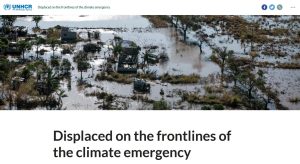 On 22 April 2021, Earth Day, UNHCR, the UN Refugee Agency, released a new data visualization ‘Displaced on the frontlines of climate change’ that shows how the climate emergency is converging with other threats to drive new displacement and increase the vulnerability of those already forced to flee. The data visualization explores how disasters linked to climate change may worsen poverty, food insecurity and access to natural resources in ways that can stoke instability and violence. The impacts of our changing climate are being felt worldwide, but countries already struggling with conflict, poverty and high levels of displacement are dealing with some of the most severe effects. From Afghanistan to Central America, droughts, flooding, and other extreme weather events are hitting those least equipped to recover and adapt.
Families of Missing Migrants: Their Search for Answers, the Impacts of Loss and Recommendations for Improved Support – Country Report: United Kingdom (IOM)
https://publications.iom.int/books/families-missing-migrants-united-kingdom-their-search-answers-impacts-loss-and-recommendations
 When a person goes missing, the existing laws, procedures and inter-state cooperation enable families to make the necessary arrangements and reach closure about the loss of their loved ones. A new report – released on 30 April 2021 – from the International Organization of Migration (IOM)’s Global Migration Data Analysis Centre and Missing Migrants Project shows this is not the case for people across the United Kingdom who have missing migrant relatives. Over the past two years, IOM GMDAC has carried out qualitative research funded by Switzerland’s Federal Department of Foreign Affairs with families searching for missing migrants in several countries. The twin aims of the research are to amplify the voices of the families of missing migrants and develop a series of recommendations to drive action to support them. This new report shows that cases of missing migrants in the UK extend far beyond the English Channel. Nearly 300 people are known to have died since 1999 along the northern coast of France, Belgium and the Netherlands, in the English Channel or shortly after crossing into the United Kingdom, according to records collected by IOM’s Missing Migrants Project and the Institute of Race Relations. But the number of missing migrants en route to the UK is likely to be much higher. Many of the families involved in the research did not know the whereabouts or fate of their relatives in the Mediterranean Sea crossing and elsewhere.
From Digital Promise to Frontline Practice: New and Emerging Technologies in Humanitarian Action (OCHA)
https://www.unocha.org/sites/unocha/files/OCHA%20Technology%20Report.pdf
 New and emerging technologies have the potential to support a paradigm shift in the humanitarian system from reaction to anticipation by enabling earlier, faster and potentially more effective humanitarian action, a new report published by OCHA has found. The report underscores that artificial intelligence can facilitate analysis and interpret vast and complex humanitarian data sets to improve projections and decision-making. Mobile applications, chatbots and social media can create immediate feedback loops with people affected by humanitarian crises. And, as showcased by the COVID-19 pandemic, businesses, education and health services can be shifted to virtual environments overnight. But the report also highlights that such advantages come with complex challenges and risks. For example, inadequate data protection and privacy can cause harm, intensify insecurities and hinder the principled delivery of humanitarian assistance. Unequal connectivity, access to technology or digital literacy can exacerbate core vulnerabilities and intensify gender biases, while incomplete data sets about affected people can lead to digital discrimination. Among the report’s conclusions is that technology is not an end in itself, and its adoption alone cannot shift a paradigm. Rather, investment in technology must be made together with efforts to ensure that it is responsible, sustainable and inclusive and that it protects, above all, human life and dignity. Undertaken jointly with affected communities and partners across sectors, such converging efforts could powerfully enable transformation in the years to come.
 I am Human (UNHCR)
https://www.unhcr.org/6082ba4e4.pdf
Many of those who find themselves in the UK without a nationality face major obstacles trying to navigate the country’s statelessness determination procedure, and hence experience prolonged periods in legal and personal limbo, according to a new study released on 26 April 2021 by UNHCR, the UN Refugee Agency. To better understand the situation faced by stateless people in UK, UNHCR interviewed a selection of those who had an ongoing application or had been recently recognised as stateless. The resulting report lays out the challenges they face, for example in obtaining evidence to support a statelessness leave application.
Leave No Migrant Behind: The 2030 Agenda and Data Disaggregation (IOM)
https://publications.iom.int/books/leave-no-migrant-behind-2030-agenda-and-data-disaggregation
 The International Organization for Migration (IOM) is launching a new guide to help practitioners disaggregate data related to the Sustainable Development Goals (SDGs) by migratory status, to address the needs of migrants and highlight their contributions to sustainable development. To date, disaggregation of global development data by migratory status remains low. Migrants are largely invisible in official SDG data. As the global community approaches 2030, very little is known about the impact of the 2030 Agenda on migrants. Despite a growing focus worldwide on data disaggregation, namely the breaking down of data into smaller sub-categories, there is a lack of practical guidance on the topic that can be tailored to address individual needs and capacities of countries. Developed by IOM’s Global Migration Data Analysis Centre (GMDAC), the guide centres on nine SDGs focusing on hunger, education, and gender equality among others. The document is the first of its kind, in that it seeks to address a range of different categorization interests and needs related to international migrants and suggests practical steps that practitioners can tailor to best fit their context.
Mediterranean Lasagne of Migration Governance: What is the Way Forward for the Regions in Governing the Euromestic Sphere? An EU-Centric Perspective (UNU-CRIS Working Paper #2, April 2021)
https://cris.unu.edu/sites/cris.unu.edu/files/WP21.02%20-%20Sime%20.pdf
The European migration crisis is a resourceful case for analysing the evolution of complex interregionalism. The Mediterranean turbulences shed light on the challenges associated with the existing modes of multilateral cooperation. The strengths, deficiencies and challenges of the multi-layered migration governance identified amidst the European migration crisis should be considered valuable empirical developments for further academic reflection on the evolution of multi-level, multilateral and issue-specific governance. An initial exploration of interregional interactions proves that each multilateral setting creates unique dynamics, issue framing and perceptions of viable solutions which do not complement neat and hierarchical multi-level governance. If a single Mediterranean space is a subject of discussions and joint actions for more than ten multilateral constellations (with similar-yet-distinct membership composition) what does it say about interest articulation and representation towards the United Nations in the context of the best modalities for the neo-Westphalian world order?
Our Thoughts: Rohingya share their experiences and recommendations (ACAPS / IOM)
 https://bit.ly/3dY5Sab
For months, if not years, many Rohingya in the camps have continuously reported that they are unable to provide meaningful input into decision-making within the response and have their thoughts heard. In late 2020, the IOM Communicating with Communities (CwC) and ACAPS-NPM teams decided to undertake a large-scale exploration of Rohingya thoughts and perspectives. Three years after the influx, this report is a critical exploration of accountability and inclusiveness in the humanitarian response. The research sought to go beyond ‘whether Rohingya people are consulted’ to understand Rohingya thoughts on the response and how they feel treated by response actors. Intrinsic in this report is the understanding that the Rohingya community and the response itself are diverse and complicated, with many different dynamics that require age, ability, gender, and other aspects to be considered.
Piloting the Independent Commission for Voices in Crises (ICVIC)
https://www.unocha.org/sites/unocha/files/FINAL_Proposal-Independent_Commission_for_Voices_in_Crisis_20.04.2021.pdf
At a virtual event held on 22 April 2021 by the Center for Global Development, the Under-Secretary-General for Humanitarian Affairs and Emergency Relief Coordinator, Mark Lowcock, outlined a proposal to improve accountability within the humanitarian aid sector and to help ensure that people in crisis get the help they actually want. The document sets out a proposal for the ICVIC, whose purpose would be to help shift the international humanitarian response towards one that delivers what people want rather than what it can provide. The ICVIC would pilot approaches to elevating and making more visible the priorities and needs identified by affected people to senior decision makers, and to independently evaluate how well the international humanitarian response delivers against those needs.
see also: https://www.unocha.org/story/usg-unveils-proposal-piloting-independent-commission-voices-crises
Reimagining Migration Responses: Learning from children and young people who move in the Horn of Africa (UNICEF-IRC)
https://www.unicef-irc.org/publications/1194-reimagining-migration-responses-learning-from-children-and-young-people-who-move-in-the-horn-of-africa.html
 The number of international migrants under 18 is rising, accelerated by complex and fast-evolving economic, demographic, security and environmental drivers. Based on interviews carried out with 1,290 migrant children and young people in Ethiopia, Somalia and Sudan, this report helps address the evidence gap on children and young people migrating in the Horn of Africa by providing a better understanding of their protective environments; their access to services and resources; and their perceptions of safety, well-being and trust in authorities and other providers. It concludes by offering policy and programme recommendations to rethink child protection approaches for migrants in the region.
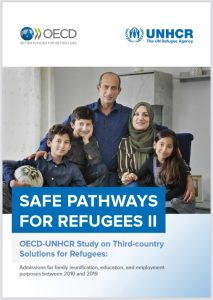 Safe Pathways for Refugees II: OECD-UNHCR Study on Third-country Solutions for Refugees: Admissions for family reunification, education, and employment purposes between 2010 and 2019
https://bit.ly/3xOQ4hN
A new study released on 5 May 2021 shows that 1.5 million people from nations driving major refugee movements were admitted by 35 OECD countries and Brazil on family, work and study permits in the decade just prior to the COVID-19 pandemic. The latest report by UNHCR, the UN Refugee Agency, and the OECD, the Organisation for Economic Co-operation and Development examines admissions from 2010 to 2019 of people from seven countries propelling displacement: Afghanistan, Eritrea, Iran, Iraq, Somalia, Syria and Venezuela. Out of the 1.5 million non-humanitarian permits issued within the decade to help people from these countries, 156,000 were granted in 2019 alone. This exceeds an annual target of 120,000 set in a global resettlement and complementary pathways strategy launched by governments, civil society and UNHCR.
World Migration Report – New Data Visualization Platform
https://worldmigrationreport.iom.int/wmr-2020-interactive/
The International Organization for Migration’s (IOM) flagship publication has launched a dynamic new webpage that connects fact-based narratives on migration with interactive data visualizations on some of the latest global migration data and information. It is the first microsite of its kind since the World Migration Report (WMR) series began more than two decades ago. It is available in the three IOM official languages (English, French and Spanish).
Justice and International Law
From Justice for the Past to Peace and Inclusion for the Future: A Development Approach to Transitional Justice (UNDP)
https://www.undp.org/content/dam/undp/library/km-qap/UNDP-From-Justice-for-the-Past-to-Peace-and-Inclusion.pdf
Comprehensive transitional justice processes supports the achievement of Agenda 2030, by promoting justice, peace, quality education and gender equality as a vehicle towards for more inclusive justice systems. Through more than 10 years, UNDP has been supporting transitional justice processes with an integrated approach to support sustaining peace. This strategic report covers a wide range of UNDP’s support to transitional justice processes providing good practices, country cases and key strategic alliances with UN partners, such as OHCHR, UN Women, and UN peace missions. The report looks to: Outline the main areas of UNDP’s work in transitional justice; Share successful experiences and current challenges from countries around the world; Offer recommendations for strategic transitional justice programming. The key areas highlighted in the report are participatory processes, institutional transformation for proper accountability, reparations programmes and conflict prevention and sustaining peace to promote resilience and social cohesion for affected communities. Key lessons and recommendations are also outlined for practitioners to consider when designing and implementing transitional justice programmes and to draw out key findings and recommendations as well as identifies opportunities for more investment in transitional justice moving forward.
Newsletter Archive: https://unric.org/en/unric-info-point-library-newsletter-archive