
New UN websites & publications
TOPIC OF THE MONTH: UN80

Building our future together
English: https://www.un.org/en/UN80
Spanish: https://www.un.org/es/UN80
The UN’s 80th Anniversary, with the theme “Building Our Future Together,” aligns with the Pact of the Future, which aims to renew multilateral institutions and advance key goals by 2025. By connecting the anniversary to the Pact’s implementation, the UN highlights the importance of global cooperation for a better future, a message also reflected in the UN Pavilion at Expo 2025 Osaka.

https://trello.com/b/o8J1iGvA/un80-for-non-un-entities
The official logo for the 80th Anniversary of the United Nations has been created by the United Nations for use with activities and programmes which commemorate the 80th Anniversary of the Organization. Entities outside of the United Nations System and non-Member States, including not-for-profit organizations and private sector entities are requested to refer to this Trello Board for branding and guidelines for use.

English, French & Spanish: https://www.un.org/en/delegate/page/2025-edition-un-card
The Department of Global Communications has released the 2025 edition of The UN Card, featuring the logo of the UN’s 80th Anniver-sary. The card succinctly shows how the work of the United Nations and its agencies affects the lives of people around the globe.
The cards are available in the 6 official languages – Arabic, Chinese, English, French, Russian, and Spanish. The Department of Global Communications has published The UN Card annually since 2009.
UNRIC will also publish this card in the following languages: Dutch, German, Greek.

https://research.un.org/en/UN80
To celebrate the 80th anniversary of the United Nations, the Dag Hammarskjöld Library is presenting an exploration of 80 key documents that have shaped the United Nations and our world. The selected documents represent watershed moments in the UN’s history, from the ground-breaking 1948 Universal Declaration of Human Rights, which established fundamental protections for all people, to the transformative 2015 Paris Agreement that created our framework for global climate action and the 2024 Pact for the Future.
UN in General

updated version March 2025
English: https://tinyurl.com/4dxbxw5r
German: https://tinyurl.com/mr2b2scv
This Chart is intended to provide a graphical reflection of the functional organization of the United Nations system and is for informational purposes only. The relevant rules of the organization concerned should be consulted in order to establish the legal status, functions and reporting lines of each entity shown in this Chart. The Chart does not include all offices or entities of the United Nations system.
The Chart is currently available in English. All other official languages – Arabic, Chinese, French, Russian and Spanish – will be ready to download in the coming weeks.
English: https://www.un.org/digital-emerging-technologies/
French: https://www.un.org/digital-emerging-technologies/fr
Spanish: https://www.un.org/digital-emerging-technologies/es
The Office for Digital and Emerging Technologies helps the UN address more effectively the opportunities and challenges posed by today’s rapidly evolving technological landscape. A key focus for the Office is supporting the follow-up and implementation of the Global Digital Compact, including its decisions on global cooperation on AI governance.
Economic Growth and Sustainable Development

https://www.unwomen.org/en/digital-library/publications/2025/04/30-years-of-beijing-platform-for-action-an-intersectional-approach-to-gender-and-disability-inclusion
This policy paper is focused on diverse groups of socially marginalized women with diverse disabilities. It highlights how the 12 critical areas of concern from the Beijing Platform for Action have progressed or faced continuing entrenched barriers and dealt with new challenges in the 30 years since the United Nations’ Fourth World Conference on Women held in Beijing.

https://www.undp.org/asia-pacific/publications/afghanistan-socio-economic-review
This report paints a sobering picture of the state of Afghanistan’s economy and the livelihoods and wellbeing of the Afghan people. The economy grew for the first time since the Taliban’s take-over of power in 2021, by 2.7%, but significant and deep-rooted economic challenges remain. Subsistence insecurity of the population increased in 2024, reversing some of the gains made in 2023, and the report notes significant gaps between regions, between rural and urban areas, and for vulnerable groups. Women, IDPs and returnees were particularly hard hit. Political uncertainty, the ongoing economic crisis, and the impact of climate and economic shocks continue to limit prospects for recovery. The report calls for urgent action to address the ongoing crisis, including lifting the restrictions on women, continuing to provide humanitarian and basic needs support, and strengthening and supporting the private sector to ensure a sustainable and inclusive recovery.

https://knowledge.unv.org/evidence-library/the-contribution-of-volunteering-in-human-mobility-contexts
This United Nations Volunteers’ research paper highlights the role of volunteers in helping people on the move. It shows through evidence how volunteering fills in gaps in humanitarian assistance and protection, supports gender equality and inclusion, helps prevent and respond to disasters, and assists migrants in settling into new communities.
Europe and Central Asia Regional Overview of Food Security and Nutrition 2024: Managing water sustainably for improved food security and nutrition (FAO / IFAD / UNECE / UNICEF / WHO / WMO)
https://doi.org/10.4060/cd4739en

European State of the Climate 2024 (Copernicus / WMO)
https://library.wmo.int/idurl/4/69475

The Global Impact of AI: Mind the Gap (IMF Working Paper No. 2025/076)
https://doi.org/10.5089/9798229008570.001
This paper examines the uneven global impact of AI, highlighting how its effects will be a function of (i) countries’ sectoral exposure to AI, (ii) their preparedness to integrate these technologies into their economies, and (iii) their access to essential data and technologies. We feed these three aspects into a multi-sector dynamic general equilibrium model of the global economy and show that AI will exacerbate cross-country income inequality, disproportionately benefiting advanced economies. Indeed, the estimated growth impact in advanced economies could be more than double that in low-income countries. While improvements in AI preparedness and access can mitigate these disparities, they are unlikely to fully offset them. Moreover, the AI-driven productivity gains could reduce the traditional role of exchange rate adjustments due to AI’s large impact in the non-tradable sector—a mechanism akin to an inverse Balassa-Samuelson effect.
The greening of agricultural policies in Germany: A case study (FAO)
https://doi.org/10.4060/cd4950en


Report in English, Overview in English, French & Spanish: https://hdr.undp.org/content/human-development-report-2025
Digital Report: https://report.hdr.undp.org/
Human development progress is experiencing an unprecedented slowdown according to the 2025 Human Development Report released on 6 May 2025 by the United Nations Development Programme (UNDP). The report shows how Artificial Intelligence (AI) could reignite development. Instead of seeing sustained recovery following the period of exceptional crises of 2020-2021, the report reveals unexpectedly weak progress. Excluding those crisis years, the meagre rise in global human development projected in this year’s report is the smallest increase since 1990.

https://interconnectedrisks.org/
Human-made climate change is already causing record heat and disasters, yet fossil fuel consumption and emissions are still reaching new heights. Over two billion tonnes of household waste are produced each year, causing harm globally, yet the amount is projected to double by 2050. Global wealth has surged but so has inequality. Trends like these are causing risks and hardship worldwide, and it is largely known what needs to be done to fix them. Why don’t we change course? The new Interconnected Disaster Risks report finds that to create lasting change, we must look beyond superficial fixes and question our assumptions and the societal structures that lead us to behave as we do.
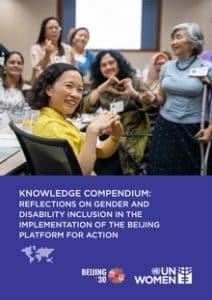
https://www.unwomen.org/en/digital-library/publications/2025/04/knowledge-compendium-reflections-on-gender-and-disability-inclusion-in-the-implementation-of-the-beijing-platform-for-action
The United Nations Inter-Agency Working Group on Gender and Disability Inclusion (UNWGGDI) collected case studies for the Beijing+30 review process, looking at lessons learned and good practices on gender, disability inclusion, and intersectionality. UN Women received a total 32 case studies from six UN entities (UN Women, UNEP, UNESCO, UNFPA, UNICEF, and UNOPS) and two UN Country Teams represented by the UN Resident Coordinator’s Offices in India and Honduras. This knowledge compendium aims to share reflections for UN entities, Member States, policymakers, and civil society organizations. It synthesizes best practices, innovative approaches, and collaborative efforts to enhance sustainable development and human rights for all. By ensuring that the rights and needs of women and girls with disabilities are adequately addressed, this document reinforces the commitment of the UN system and its stakeholders to a more equitable and inclusive future.

https://unesdoc.unesco.org/ark:/48223/pf0000393205.locale=en
UNESCO published this new policy brief on 11 April 2025, calling on European and national policymakers to support a better integration of ocean-related content into national curricula. Ocean Literacy refers to an understanding of the ocean’s influence on people and people’s influence on the ocean. As the world grapples with pressing challenges such as climate change, biodiversity loss, and economic stability, this policy brief highlights Ocean Literacy as a foundational element in education systems. It synthesizes case studies from nine countries and proposes solutions to help foster a new generation of ocean-minded citizens.

https://www.ilo.org/publications/revolutionizing-health-and-safety-role-ai-and-digitalization-work
This new report from the International Labour Organization (ILO) explores how artificial intelligence (AI), digitalization, robotics and automation are reshaping occupational safety and health (OSH) in workplaces worldwide. It highlights how these emerging technologies are improving worker health and well-being while underscoring the need for proactive policies to address new risks. By taking on hazardous tasks, assisting in surgeries, and optimizing logistics, robots help reduce risks and improve efficiency. AI-powered systems enhance safety and health monitoring, and streamline tasks and operations, easing workloads and driving innovation – even in traditionally low-tech sectors. However, the report stresses the need for proactive policies to ensure these technologies are implemented safely and equitably.

https://social.desa.un.org/issues/indigenous-peoples/state-of-the-worlds-indigenous-peoples-sowip
As the planet heats up and the push to decarbonise gathers pace, Indigenous Peoples – long among the world’s most effective environmental stewards – are once again being left behind, this new UN report reveals. Launched on 24 April 2025, the report exposes a stark imbalance: while Indigenous Peoples make up just six per cent of the global population, they safeguard 80 per cent of the planet’s remaining biodiversity – yet receive less than one per cent of international climate funding. The report offers a sobering assessment of climate action that is not only lacking in urgency, but in fairness. From green energy projects imposed without consent to policy decisions made in rooms where Indigenous voices are absent, these communities are too often excluded from climate solutions, displaced by them, and denied the resources to lead the way. The publication, overseen by the UN, brings together contributions from Indigenous leaders, researchers and the World Health Organization (WHO), combining case studies, data and lived experience from seven distinct regions of the world.
UN DESA Policy Brief No. 173: SDGs as a Framework for Addressing the Root Causes of Crisis
https://desapublications.un.org/policy-briefs/un-desa-policy-brief-no-173-sdgs-framework-addressing-root-causes-crisis
Converging crises have become a defining challenge of our time and have imposed high costs on developing countries. Reducing poverty and inequality and investing in healthcare and social protection are critical to building resilience against the impact of crises. The SDGs provide an effective roadmap to build such resilience capacity.
Unlocking the Potential of an Ageing Workforce (UNECE Policy Brief on Ageing No. 30)
https://unece.org/info/publications/pub/401338
This policy brief focuses on the challenges of an ageing workforce and available policy strategies to unlock its full potential. It presents policy examples from the UNECE region aimed at readying the workforce for the future, retaining older workers in the workforce and re-engaging older workers beyond normal retirement age. Finally, the policy brief also offers a checklist of effective measures to address the challenges of an ageing workforce.

https://knowledge.unv.org/evidence-library/volunteer-work-among-older-persons-trends-and-policy-implications-for-ageing-societies
This research paper released by United Nations Volunteers (UNV) and the International Labour Organization (ILO) discusses the concepts of active and healthy ageing and how volunteerism plays an important role. It explores the demographics of older volunteers, both globally and in snapshots of specific countries, and discusses the policy implications for volunteerism promotion among older persons as a win-win for active ageing.
World Social Report 2025: A New Policy Consensus to Accelerate Social Progress (UN DESA / UNU-WIDER)
https://social.desa.un.org/issues/world-social-report

see also: 6 takeaways from the World Social Report 2025 (UN DESA, 5 May 2025): https://www.un.org/en/desa/6-takeaways-world-social-report-2025
International Peace and Security

https://unidir.org/publication/achieving-depth-subsea-telecommunications-cables-as-critical-infrastructure/
Today, submarine fibre-optic telecommunications cable systems are the backbone of our data and communications infrastructure, essential to the general functioning and integrity of the internet and the broader information and communications technology (ICT) ecosystem. While satellites and the new constellations in low Earth orbit are breaking ground, especially in terms of lowering costs and accessibility, they are still no match to the high capacity and low latency that today’s subsea cable systems provide. As more countries are connected, the security and resilience of the infrastructure becomes ever more critical. This study sets out to understand what it means in policy and practice when governments qualify or designate subsea telecommunications cables as critical infrastructure (CI).

https://unidir.org/publication/pathways-to-action-harnessing-arms-flows-data-for-conflict-early-warning/
The number of armed conflicts is at a record high since the Second World War, and they have become more complex, with devastating humanitarian and long-term impacts. Early warning of armed conflicts is thus essential, as it enables anticipatory action to prevent their outbreak, escalation and relapse, or to mitigate their consequences. Conflict early-warning efforts need access to all relevant data that can improve their performance. Data on flows of conventional arms and ammunition could be relevant for such efforts: weapons flows into unstable regions have long been considered as a possible signal of a future outbreak, escalation or relapse of armed conflict. However, arms flow data is only used sporadically for early warning, and its potential remains underexplored. To address this gap, the UNIDIR, Conflict Armament Research (CAR), the Peace Research Institute Oslo (PRIO) and the Violence and Impacts Early-Warning System (VIEWS) launched the initiative ‘Building Bridges and Incubating Ideas for Stronger Conflict Prevention: Harnessing Arms and Ammunition Flow Data for Early Warning’ to foster use of arms flow data for more effective early warning. This insight distills the key takeaways and pathways for action that emerged from expert exchanges within this joint initiative.
Human Rights

https://www.who.int/publications/i/item/9789240107281
Urgent measures are needed to curtail the rising “medicalization” of female genital mutilation (FGM) and to engage health workers to prevent the practice, according to a new guideline published on 28 April 2025 by the World Health Organization (WHO). While the health sector plays a key role in stopping FGM and supporting survivors, in several parts of the world, evidence suggests the practice is now increasingly performed by health workers. As of 2020, an estimated 52 million girls and women were subjected to FGM at the hands of health workers – around 1 in 4 cases. The new WHO guideline provides recommendations to both prevent the practice and ensure evidence-based care for survivors, covering actions for the health sector, governments, and affected communities.

https://reliefweb.int/report/afghanistan/women-and-girls-crisis-2024-gender-analysis-humanitarian-sectors-afghanistan
The humanitarian crisis in Afghanistan is unfolding against a backdrop of ongoing suppression of women’s rights, where the needs of Afghan women and girls frequently remain unmet due to entrenched gender inequalities, systemic barriers, and deeply embedded cultural norms restricting their rights and participation across all aspects of society. Consequently, despite considerable efforts, existing humanitarian response plans risk overlooking the specific needs and vulnerabilities of women and girls in Afghanistan. This research brief provides a comprehensive analysis of the interplay between humanitarian efforts and the suppression of women’s rights in Afghanistan. It emphasizes the critical necessity of integrating gender-responsive programming more robustly to effectively address existing gaps. Specifically designed to inform humanitarian cluster contributions to the Afghanistan Humanitarian Needs and Response Plan 2025, this brief utilizes up-to-date data to propose strategic adjustments for each cluster. These recommendations aim to ensure that humanitarian responses explicitly prioritize and adequately address the distinct needs of Afghan women and girls.
Humanitarian Affairs

https://dtm.iom.int/products/the-annual-global-overview-of-migration-routes-2024
The Annual Overview of Migratory Routes aims to provide a global snapshot of migration in 2024 from a route-based perspective. This approach investigates routes across national and regional boundaries, requiring a multi-country perspective and holistic view of human mobility, which considers people at origin, in transit, and at their destinations. By using this approach, the report seeks to provide an overview of the main dynamics along some of the world’s key migratory routes. It aims to investigate the interconnections between this global network of interdependent routes, bringing together data and analyses from all of IOM’s Regional Data Hubs and the global network of Displacement Tracking Matrix (DTM) operations. This report provides a comprehensive global snapshot of the latest trends and data on key migratory dynamics on major routes every four months and on an annual basis.
Unbroken: Tales of the Rohingya Women from the Camps of Cox’s Bazar, Bangladesh – Women’s Participation Project (WPP) (IOM)
https://tinyurl.com/3j6juyc5
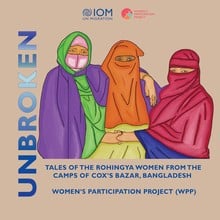
51 per cent of the Rohingya community are female. In the camps, women and girls have were exposed to various risks, including gender-based violence. To address the issues of women and girls, IOM launched the Women’s Participation Project (WPP), which strives to empower women, encouraging their active engagement in decision-making processes and amplifying their voices in camp governance through forming a women committee through Site Management and Site Development (SMSD). Through this initiative, women are not just participants; they are the strong network of sisterhood in the community, dedicated to uplifting their peers through invaluable information, spirited awareness campaigns, dynamic meetings, and the joyful sharing of their skills.
In this book, we set out to uncover the inspiring stories of the women committee members of WPP, their childhoods, experiences in their homelands, and journeys to the camps. Within the camps, they face daily struggles for survival. Yet we witness the remarkable resilience of these women, who refuse to give up on life despite the overwhelming challenges they encounter. Each narrative reflects the transformative power of hope and faith that has accompanied them. We believe these stories will uplift and empower all women to pursue their dreams with unwavering determination and never give up on life and their aspirations.

https://reliefweb.int/report/syrian-arab-republic/voices-syrians-2025-dawn-new-era
After 14 years of fighting, displacement, and violence, more than 70 per cent of Syria’s population—over 16 million people—require humanitarian aid and protection, compared to only five per cent in the first year of the conflict. Over 14 million people do not have enough food to eat, with millions more teetering on the brink of hunger. … Through this publication, the UN Office for the Coordination of Humanitarian Affairs (OCHA) aims to offer a glimpse into the reality of a new Syria—and the challenges and opportunities that define this moment—through the voices of those directly affected.
Justice and International Law

https://hdl.handle.net/10986/43050
The Women, Business and the Law Manual and Guide (WBL M&G) outlines the production and dissemination process for WBL reports and underlying data, serving as an official source of information for WBL Team members and stakeholders. It aims to consolidate and codify WBL rules and protocols comprehensively, building on established practices to inform data collection, validation, report preparation, and dissemination steps. Additionally, it describes processes to protect the WBL Team from undue influence, detailing resources available to report and address such instances. The document ensures transparency, quality, and integrity of WBL data and research, and is updated annually at the start of each data collection cycle to align with best practices and accurately describe the systems and procedures implemented by the WBL Team.
Newsletter Archive: https://unric.org/en/unric-info-point-library-newsletter-archive