

Heatwaves, forest fires, floods… and suddenly climate change is back on the front pages. However, the world often gives the impression it is only just realising the scale of the disaster.
Yet it’s not for lack of warnings. This year, in the wake of a series of heatwaves, we’re revisiting the scientists’ findings: Europe is warming faster than the rest of the planet. And we’ve known that for years. Since 2022, we’ve been aware that it’s warming twice as fast…
Growth generates pollution that the planet cannot absorb
Since the early 1970s, with the Meadows Report, warnings were made about the impact of economic growth on the environment. Although the concern at the time was that there would not be enough oil to meet demand, the report indicated that growth was causing very high levels of pollution and that it was likely the planet could not absorb an unlimited amount.
The following decade saw the creation of the largest group of experts on the issue: the IPCC.
The IPCC: producing climate reports since 1990
In 1988, two UN agencies established the Intergovernmental Panel on Climate Change (IPCC). The World Meteorological Organization (WMO) and the United Nations Environment Programme (UNEP) set up this permanent scientific body well before the issue of climate change reached the general public.
Global warming is real (1990)
In 1990, the IPCC published its first assessment report, reflecting the views of 400 scientists. It stated that global warming was real and urged immediate action to tackle it.
Even then, the international community recognised that the climate risk warranted dedicated global expertise.
The threat is becoming clearer, year after year
1995 – First mention of a ‘detectable human influence’ on the climate.
“The question is not whether climate change is happening, but whether, in the face of this emergency, we ourselves can change fast enough,” stated Secretary General Kofi Annan in 2006.
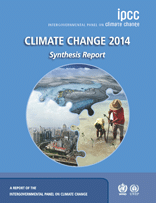
2014 – Human activity is extremely likely (more than 95 per cent) to be the main cause of global warming since the mid-20th century.
“We are the last generation that can put an end to climate change,” said UN Secretary-General Ban Ki-moon in 2015.
2018 – A detailed report exposes the consequences of a 1.5-degree rise in temperatures.
2022 – A new report refers to ‘irreversible damage’.
This report is an “atlas of human suffering and a damning indictment of failed climate leadership,” declared UN Secretary General António Guterres, denouncing a “criminal abdication of leadership”.
In his view, it was already high time to point the finger at those responsible and to ‘sound the death knell’ for coal and fossil fuels.
“You have been telling us for over three decades of the dangers of allowing the planet to warm. The world listened, but it didn’t hear,” added Inger Andersen, Executive Director of UN Environment, during the presentation of the IPCC report.

Over 30 years of climate summits
Whilst scientists are sounding the alarm, the UN’s diplomatic machinery is moving forward.
1992: The Earth Summit in Rio led to the United Nations Framework Convention on Climate Change (UNFCCC, known as UN Climate), which came into force in 1994. UN Climate has been organising COPs ever since.
1997: The Kyoto Protocol set out the first quantified commitments to reduce greenhouse gas emissions for industrialised countries.
2015: The Paris Agreement is the first to set a target for everyone: to limit global warming to below 2 °C, and if possible to below 1.5 °C, by the end of this century compared with the start of the industrial era.
Lack of political will
Whether it was Kofi Annan, then Ban Ki-moon and finally António Guterres, all the Secretaries-General of the United Nations have condemned the lack of political will and emphasised the need to act swiftly within the framework of international commitments.
Before them, in 1995, Boutros Boutros-Ghali had predicted in an opinion piece that all these issues would be raised on a global scale and that they can only be addressed to a very limited extent at the level of the nation-state.
A few years after the hope sparked by the Paris Agreement, UN Climate published a synthesis report in 2021 confirming that global efforts were largely insufficient.
The United Nations had then warned that the total of these commitments was putting us on course for a rise of around +2.7 °C compared with pre-industrial levels, moving dangerously away from the thresholds set by the Paris Agreement.
“Humanity has a choice: cooperate or perish. It is either a Climate Solidarity Pact – or a Collective Suicide Pact,” declared the UN Secretary-General in November 2022 at COP27 in Sharm el-Sheikh, Egypt.
Pointing out that the planet was rapidly approaching tipping points that could make “climate chaos” irreversible, the UN chief added, “we are on a highway to climate hell with our foot on the accelerator.”
USEFUL LINKS
UN Climate Chief: Recent weeks show the dangers of fossil fuel dependency
Climate: Historic ICJ opinion on the obligations of States
Climate, biodiversity, waste: 8 good solutions from around the world