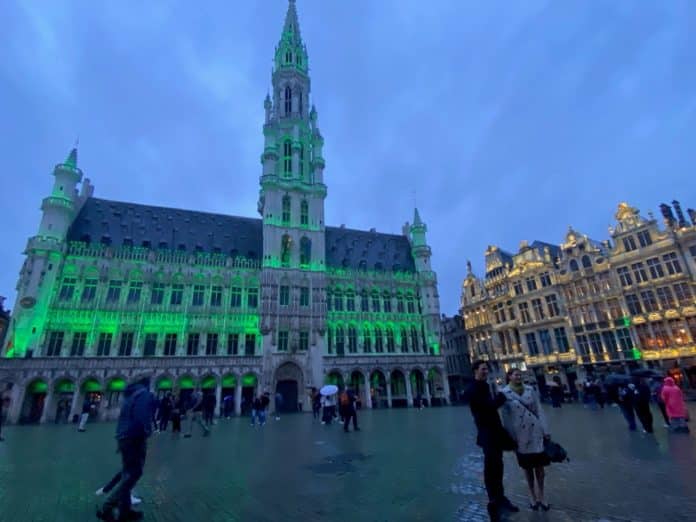
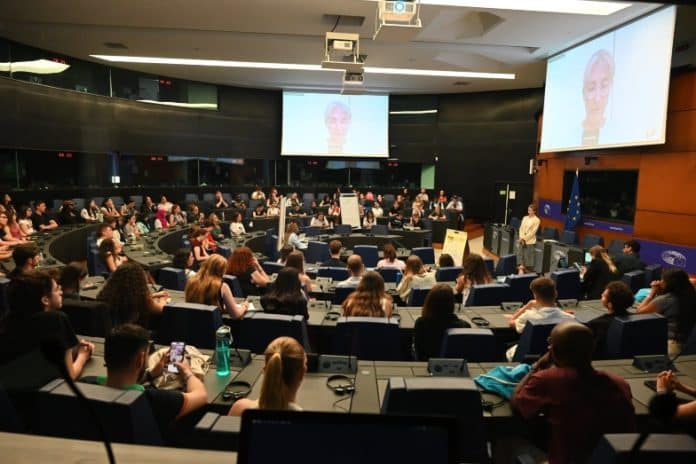
Civil society leaders, diplomats, and policymakers at a Brussels event called for reforms to the United Nations system, deeper global cooperation, and a renewed commitment to shared values to address an era of overlapping global crises, or “polycrises”. These sentiments were expressed at a panel discussion entitled “International Cooperation in a Time of Polycrises – How to Adapt to Today’s Challenges”, hosted by the United Nations Regional Information Centre and the Belgian Foreign Ministry, which took place on 10 June 2025.
Representatives from Belgium and the UN emphasised that today’s crises, ranging from climate change and geopolitical conflict to economic instability and democratic erosion, are increasingly interconnected and cannot be addressed in isolation, nor by any country on its own.
Climate crisis: a crises multiplier
“We must hold the line and stay on course,” Annemarie Van der Avort, Director of Environment and Climate at the Belgian Foreign Ministry, declared in her opening remarks, stressing the importance of working together on issues like climate change and ocean protection. “Long-term threats can only be tackled through multilateralism.”
Climate change was highlighted as a crisis multiplier that exacerbates poverty, displacement, and political instability. The ongoing UN Ocean Conference, taking place concurrently, was cited as an example of global leadership and multilateral cooperation leading to concrete action.
Fragility on the rise, funding declining
Another key theme was the intersection of fragility and poverty. Data shared at the event indicated that by 2040, up to 92% of those living in extreme poverty may reside in fragile, conflict-affected environments. “Yet, funding for both humanitarian aid and long-term development is falling, especially for countries with the least strategic appeal to donor governments,” warned Wim Schalenbourg, Fragility and Nexus Coordinator at the Belgian Foreign Ministry.
“We need to shift from reactive defence and security investments to addressing root causes of fragility and conflict and reverse the trend of declining development aid to fragile contexts,” Mr Schalenbourg continued.
This message is particularly significant given Belgium’s planned 25% cut to foreign aid over the next five years.
Trust: the foundation of Multilateralism
Speakers agreed that the UN system, as currently structured, needs to be reformed to act more quickly and effectively.
Rory Keane, Head of the Brussels United Nations Liaison Office for Peace and Security, highlighted the essential role the EU and its Member States, including Belgium, can play in supporting the necessary reforms in the multilateral system as outlined in the Pact for the Future. Already during Belgium’s latest presidency of the UN Security Council (2019-2020), efforts were made to present a unified EU position on various issues with a focus on multilateral solutions to crises.
Beyond institutional reform and funding concerns, experts highlighted a foundational issue: the need to rebuild trust.
“No matter how perfect the structures are on paper, they cannot function without trust. We need to rebuild it from the ground up.” Mr. Keane noted, “Multilateralism is ultimately about trust. Reform is essential, but so is trust.”
Drawing a historical parallel, he pointed to the early days of the European Union, where post-World War II countries began cooperation through practical economic agreements, including the European Coal and Steel Community. Small, pragmatic initiatives can sometimes lay the foundation for deeper collaboration, especially when political space is limited.
A more recent example of the UN investing in practical, high-impact initiatives is the Black Sea Grain Initiative, which helped improve global food security.
A path forward: the Pact for the Future
The event concluded with a consensus that more pragmatic initiatives should be identified and grounded in the universal values of human rights, equality, the rule of law, and a rules-based international order, as enshrined in the UN Charter and the Universal Declaration of Human Rights.
In the face of growing authoritarianism, climate disasters, and humanitarian crises, speakers urged European leaders, including those from Belgium, to protect and promote these universal values: a working multilateral future is a joint responsibility, a process led by both the UN and Member States.
The Pact for the Future, agreed in September 2024 by UN Member States, is “the best roadmap to emerge from the polycrises,” Mr. Keane stated. It calls for structural reform, digital cooperation, turbocharging the Sustainable Development Goals, prioritising peace and security, and utilising UN good offices while giving youth a voice and promoting more meaningful engagement with various stakeholders, including civil society and local authorities.