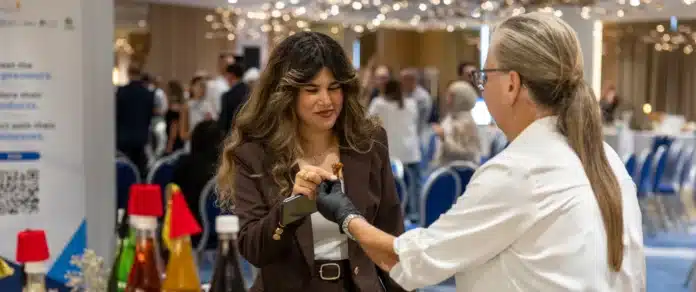
FAO Chief Scientist Charles Spillane visited Brussels on 24 and 25 September to participate in the EU AgRI 2040 Conference and exchange with research and innovation partners on how science and innovation can contribute to more sustainable, resilient and competitive agrifood systems.
Opened by the EU Commissioners Christophe Hansen (Agriculture and Food) and Ekaterina Zaharieva (Startups, Research and Innovation), the event brought together policymakers, researchers and innovation actors to discuss the future of agrifood research and innovation and how stronger partnerships can help translate knowledge and new ideas into impact.
Speaking during a panel discussion on partnerships for research and innovation, Charles Spillane emphasized the need for new ways of working together that focus on results and involve farmers throughout the innovation process:
“We need more effective agrifood research, innovation partnerships, and financing architectures that incentivise institutions to jointly deliver impacts for farmers, value chains, environment and society, with farmers continually involved and engaged from the outset.”

His intervention also highlighted the importance of bringing different institutions and expertise together around shared challenges, while ensuring that farmers are active partners in innovation from the beginning. This means connecting scientific knowledge with local experience and ensuring that research responds to the realities of those working across agrifood systems.
Alongside the conference, the Chief Scientist met with a range of research and innovation partners in Brussels to exchange perspectives and explore opportunities for further collaboration. Discussions covered areas including One Health, sustainable plant protection, climate resilience, digital agriculture, sustainable bioeconomy, food security and nutrition, animal and plant health, as well as fisheries and aquaculture.
The exchanges also considered participatory approaches such as Living Labs and opportunities to strengthen connections between research, innovation, and implementation.
Across his engagements in Brussels, the Chief Scientist conveyed a strong message: Addressing the complex challenges facing agrifood systems requires stronger connections between science, innovation and the people who ultimately put solutions into practice. Building effective partnerships and involving farmers from the outset can help ensure that innovation responds to real needs and contributes to tangible outcomes for agrifood systems, the environment and society.