

As climate change continues to cause biodiversity loss and soil degradation, the pressure on global food systems is increasing. Many farmers are searching for ways to produce food while working with nature, instead of against it, to restore the resources upon which agriculture depends.
Regenerative farming is emerging as a powerful solution to some of these problems. Among its champions is Dutch farmer Yanniek Schoonhoven, founder and CEO of Regeneration Academy, who has been implementing sustainable practices at her farm La Junquera in Murcia, Spain.
What are some of the challenges facing your farm?
The biggest challenges are water scarcity, soil erosion, desertification, biodiversity loss, rural depopulation and a loss of hope in the farming community. La Junquera is a 1,100-hectare rainfed farm in one of the most desertified areas of the Iberian Peninsula, with only around 300 mm of rainfall a year.
How have you tackled these challenges? And do you believe your farm will exist 50 years from now?
We tackle them by farming with the landscape instead of against it: swales, ponds, keyline design, vegetation strips, ground cover, compost, holistic grazing, crop diversification, tree planting and restoring natural areas. We have already seen organic matter increase by 1% on average in non-irrigated land, pollinators rise by around 30%, and erosion reduced by swales. Yes, I believe the farm can exist in 50 years, but only if regeneration stays the economic, ecological and social basis of the farm.
How has regenerative farming changed your view of humans within ecosystems?
It has made me see humans not as separate from nature, but as a keystone species with responsibility. We can degrade landscapes very quickly, but we can also restore water cycles, soil life, biodiversity and community when we act with humility and long-term care.
What does a sustainable diet look like?
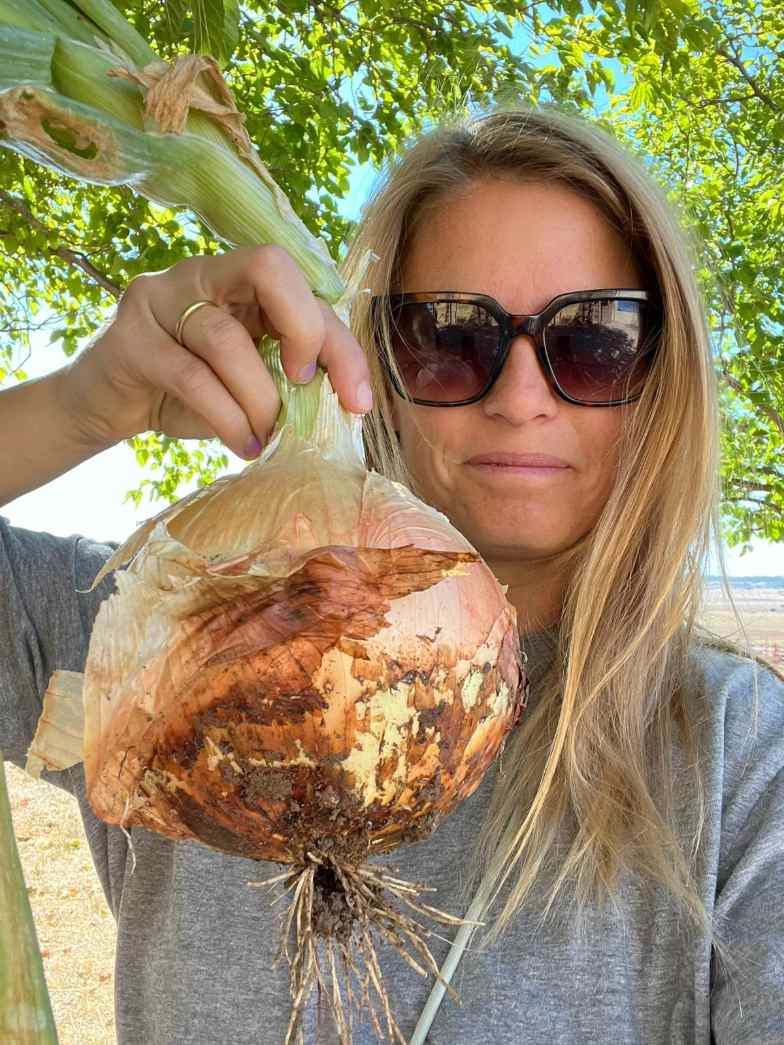
A sustainable diet is mostly seasonal, local, organic, diverse and plant-rich, with animal products only where they come from systems that genuinely improve landscapes, such as well-managed grazing. It is also a diet that values farmers and does not hide ecological costs.
What support do farmers need to transition?
Farmers need fair prices, transition finance, technical advice, long-term policy (longer than four years, please), access to markets, less bureaucracy! And evidence from real farms. Most importantly, they need support during the risky years before soil health and farm economics improve.
Why engage wider audiences, especially young people?
Because regeneration is not only a farming technique; it is a cultural shift. The Regeneration Academy exists to educate young people, entrepreneurs, farmers and students to become leaders in regenerative agriculture and ecosystem restoration. Young people bring energy, questions and new business models to rural areas.
As a female farmer, what challenges have you encountered?

Agriculture is still often male-dominated, and as a woman you sometimes have to prove your knowledge more than others. They still tend to call my husband for things that have to be discussed with me. I could get angry at that, but I also realise these shifts take time so I don’t take it personally. I try to lead by listening, connecting people, communicating clearly, and creating space for collaboration rather than ego.
What does a truly sustainable and biodiverse agricultural system look like in the future?

It looks like a mosaic: productive fields, trees, hedgerows, wetlands, grazing animals, wild areas, pollinators, local processing and strong rural communities. There is no battle between productive land and the wild; it is all a complex ecosystem that keeps each other in balance.
To commemorate World Environment Day on 5 June and EU Green Week, Yanniek was a panelist at the Ciné ONU screening in Brussels of Arne Focketyn’s EAT MORE TREES. The event was organised by UNRIC, the UN Environment Programme and the European Commission’s DG Environment.