
New UN websites & publications
TOPIC OF THE MONTH: Rio Conventions
Rio Conventions Synergy Platform
https://rioconventions.org/
Addressing climate change, biodiversity loss and land degradation requires an integrated response. The UN Convention to Combat Desertification (UNCCD), the Convention on Biological Diversity (CBD) and the United Nations Framework Convention on Climate Change (UNFCCC), which emerged from the 1992 Rio Earth Summit, work hand in hand to align efforts on ecosystem restoration, sustainable land management and nature-based climate solutions.
Strengthening synergies across policies, data, capacity-building and science ensures that actions in one area support and accelerate progress in others. Joint work enhances national implementation, fosters inclusive governance and advances shared global Sustainable Development Goals. Only by working together can the Rio Conventions effectively heal humanity’s relationship with nature to build a more resilient, sustainable future.
see also: Rio Conventions step up collaboration with new synergies platform (17 September 2025): https://www.unccd.int/news-stories/stories/rio-conventions-step-collaboration-new-synergies-platform
 UNRIC Library Backgrounders
https://unric.org/en/info-point-library/backgrounders/
- Biodiversity: | English | French |
- Climate Change: | English | French |
- Desertification: | English | French |
UN in General
https://www.un.org/en/mun/toolkit
On the occasion of United Nations Day, 24 October 2025, and in the year marking the 80th anniversary of the UN Charter, the Department of Global Communications is launching a new Model UN mini-simulation toolkit jointly developed with the World Federation of United Nations Associations (WFUNA).
This toolkit has been created to make Model UN more accessible, inclusive and adaptable for high schools, colleges and Model UN clubs and organizations worldwide. It provides teachers, organizers and students with a practical and engaging introduction to diplomacy and the work of the United Nations, focusing on the United Nations Environment Assembly (UNEA) and the urgent challenge of marine plastics and litter.
The resource is designed for classroom use, offering a four-session simulation package complete with teacher guidance, student worksheets and background materials. It builds on the existing suite of Model UN resources—which includes the Getting Started Guide and the Model UN Resources—while reflecting the General Assembly’s 2023 recognition of the importance of Model UN in fostering youth engagement with multilateralism, diplomacy and global cooperation.

https://www.upu.int/en/publications/150th-anniversary/the-world-as-a-single-postal-territory-the-upus-role-in-history
Marking the close of the UPU’s 150th anniversary celebrations, this new publication revisits the UPU’s unique place in global history. Originating from the first UPU Historians’ Colloquium held in Berne in 2024, the volume gathers over twenty scholars who explore how postal exchanges have influenced diplomacy, trade and multilateral cooperation. Produced in partnership with La Poste Group (France), the Historical Committee for the Post and the SIRICE research centre, the book is structured around five thematic sections tracing the Union’s institutional evolution, sovereignty and governance, and the material dimensions of postal services. Each chapter offers new insights into how the postal sector has shaped global developments, from decolonization to international trade.
Economic Growth and Sustainable Development
https://www.unep.org/resources/adaptation-gap-report-2025
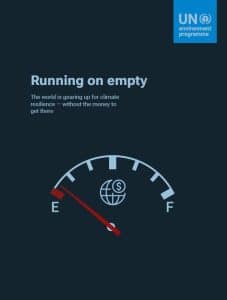
Amid rising global temperatures and intensifying climate impacts, a yawning gap in adaptation finance for developing countries is putting lives, livelihoods and entire economies at risk, according to the Adaptation Gap Report 2025: Running on Empty from the United Nations Environment Programme (UNEP). Released to inform negotiations at COP30 in Belém, Brazil, the report finds that while adaptation planning and implementation are improving, adaptation finance needs in developing countries by 2035 are over US$310 billion per year – 12 times as much as current international public adaptation finance flows.
https://unece.org/info/publications/pub/408933
This publication provides an overview of the state of forests in Europe, North America, Caucasus and Central Asia, showing their importance for sustainable global development. Drawing on data from diverse sources, it explores important aspects of forest ecology and management, including the distribution, diversity and health of forests across the entire region. It shows how our forests are changing, how much wood is growing and being harvested, while also examining the crucial roles forests play in climate regulation, biodiversity conservation, and the crucial benefits they offer to people and our economies.
https://hdr.undp.org/content/2025-global-multidimensional-poverty-index-mpi
Nearly 8 in 10 people living in multidimensional poverty – 887 million out of 1.1 billion globally – are directly exposed to climate hazards such as extreme heat, flooding, drought, or air pollution, according to this new report released on 17 October 2025 by the United Nations Development Programme (UNDP) and the Oxford Poverty and Human Initiative (OPHI) at the University of Oxford. The 2025 Global Multidimensional Poverty Index (MPI) report, released ahead of the COP30 climate summit in Brazil, presents new evidence that the climate crisis is reshaping global poverty. By overlaying climate hazard data with multidimensional poverty data for the first time, the findings reveal a world where poverty is not just a standalone socio-economic issue but one that is deeply interlinked with planetary pressures and instability.
see also: Poverty & climate hazards – How overlapping crises create more hardship for hundreds of millions: https://feature.undp.org/poverty-climate-hazards/
https://unesdoc.unesco.org/ark:/48223/pf0000395990
Afghanistan’s education system is facing a worsening crisis, with serious implications for literacy, skills development, gender equality – and millions of futures. According to the Afghanistan Education Situation Report 2025 released by UNESCO and UNICEF, more than 90 per cent of 10-year-olds in the country cannot read a simple text, a stark sign of “schooling without learning.” UNESCO and UNICEF reiterate their call for the immediate and unconditional reopening of schools and universities to Afghan girls and women, alongside expanded inclusive learning opportunities and sustained investment in foundational education.
https://tinyurl.com/bdhpfztt
Sweeping aid cuts are dismantling the very organizations that are critical to ending violence against women and girls. This new UN Women report, based on a global survey of 428 women’s rights and civil society organizations, finds that on the back of cuts by governments, more women are at risk of suffering violence with services diminishing and advocacy silenced. More than a third of organizations surveyed, 34 per cent, have suspended or shut down programmes to end violence against women and girls and more than 40 per cent have scaled back or closed life-saving services such as shelters, legal aid, psychosocial and healthcare support due to immediate funding gaps. 78 per cent reported reduced access to essential services for survivors, while 59 per cent perceived an increase in impunity and normalization of violence. Almost one in four said they had to suspend or completely halt interventions designed to prevent violence before it occurs.

https://www.unaids.org/en/resources/documents/2025/breaking-inequality-pandemic-cycle
This report by world-leading economists, public health experts, and political leaders released on 3 November 2025 ahead of G20 meetings shows that inequality is making the world more vulnerable to pandemics. In landmark findings based on two years of research and convenings around the world, the new report shows that high levels of inequality are linked to outbreaks becoming pandemics and that inequality is undermining national and global responses, making pandemics more disruptive, deadly, and longer in duration. The report also shows that pandemics increase inequality, fuelling a cycle that research shows is visible not just for COVID-19, but also for AIDS, Ebola, Influenza, Mpox and beyond.

English, French & Spanish: https://climatepromise.undp.org/research-and-reports/climate-counts-pocketbook
Interactive platform: https://feature.undp.org/climate-counts/
Climate change is impacting every aspect of our lives. Yet sometimes it can feel abstract or difficult to grasp. Numbers can help make it concrete. They give us a way to see the scale of the problem, the urgency of action and the promise of solutions. Climate Counts invites people around the world to explore 30 facts about the climate crisis that explain the urgency of action and the promise of solutions, while combating disinformation. From 1 to 30, each number highlights a powerful fact paired with an eye-catching visual, drawing attention to key areas – from energy, adaptation and finance to nature, gender, health and justice.

https://www.undp.org/publications/debunking-tobacco-industry-misinformation
This report was created in partnership by UNDP and the Secretariat of the WHO FCTC. It provides evidence-based guidance to help governments identify and counter misinformation disseminated by the tobacco industry. It highlights the industry’s long-standing tactics to distort facts, obstruct tobacco control measures, and undermine tobacco control. The product categorizes common myths promoted by the industry—such as claims that tobacco control harms economies, reduces tax revenue, or leads to illicit trade—and systematically refutes them with empirical data and global experience. It emphasizes that strong tobacco control policies contribute to economic growth, poverty reduction, and sustainable development, aligning with the SDGs. The piece underscores the importance of safeguarding public policy from industry interference, in line with Article 5.3 of the WHO FCTC. By strengthening multisectoral coordination, transparency, and accountability, governments can effectively prevent industry influence and advance global health objectives. The publication concludes that debunking misinformation is not only critical for protecting health but also for promoting social justice, environmental sustainability, and equitable development outcomes.
https://www.who.int/publications/i/item/9789240114623
The World Health Organization (WHO) has published the PHSM Decision Navigator, a first of its kind framework designed to support governments in navigating complex decisions on PHSM during health emergencies. PHSM are vital in reducing the risk and scale of infectious disease transmission and lowering hospitalization and deaths. Examples include contact tracing, quarantine and isolation, mask use, ventilation, school or workplace measures, mobility restrictions and travel requirements.

https://mcr2030.undrr.org/extreme-heat-scorecard
Heatwaves are one of the most severe effects of climate change and record-breaking temperatures are increasing in both frequency and intensity. Urban areas are especially vulnerable, with roughly half of all cities having faced increased heat exposure in the last forty years. As the world’s population continues to urbanise, local governments have an important opportunity and responsibility to act early, reduce exposure, and build long-term urban resilience to extreme heat. The Extreme Heat Risk Management Scorecard, developed as an addendum to the Disaster Resilience Scorecard for Cities, aims to support sub-national and local governments in assessing and strengthening their heat risk management efforts. It draws on global guidance and good practices, including the MCR2030 Urban Heat Risk Management Resource Package and Flames of Change: Innovating heat and wildfire governance for inclusive communities, along with a growing body of research, case studies, and tools designed to support cities in developing effective and equitable responses to extreme heat.
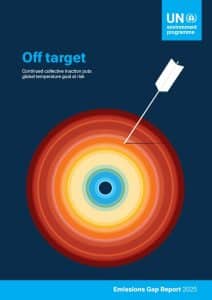
https://www.unep.org/resources/emissions-gap-report-2025
This UN Environment Programme (UNEP) assessment of available new climate pledges under the Paris Agreement finds that the predicted global temperature rise over the course of this century has only slightly fallen, leaving the world heading for a serious escalation of climate risks and damages. UNEP’s Emissions Gap Report 2025: Off Target finds that global warming projections over this century, based on full implementation of Nationally Determined Contributions (NDCs), are now 2.3-2.5°C, compared to 2.6-2.8°C in last year’s report. Implementing only current policies would lead to up to 2.8°C of warming, compared to 3.1°C last year.
https://www.unep.org/resources/report/financing-responsible-supply-energy-transition-minerals-sustainable-development
The financial system, governance and regulation of mineral exploration and mining must be reformed to ensure greater capital flows and a clean energy transition, say the authors of this new report by the UN Environment Programme-hosted International Resource Panel, released on 9 October 2025. With mineral extraction rising to 50% of annual global raw material extraction up from 31% in 1970, financing responsible mining will be critical to a successful and fair energy transition. The report analyses demand, production, trade, and financing of key minerals, highlighting high-concentration regions such as Africa, China, and South America, and presents a series of recommendations for driving finance and investment into responsible mining.

https://www.undrr.org/publication/flames-change-ii-urban-action-extreme-heat-across-europe-and-asia
The aim of the report is to examine how cities across Europe and Central Asia are addressing extreme urban heat, which has become the new normal and part of an uncertain future. It focuses on providing an account of on-the-ground, lived experiences that may be relevant for other local governments across the region. By drawing on questionnaire responses, case studies, and desk research. This report forms part of a series of knowledge products focused on managing (extreme) urban heat. The report concludes that urban heat and the urban heat island effect are pressing risks across Europe and Central Asia, with varied policy responses but shared challenges. Overcoming these barriers requires integrated, well-financed strategies, strong leadership, and political will. Embedding urban heat management within broader climate adaptation and disaster risk reduction frameworks—and ensuring coherence across policies and initiatives—is essential to building resilient urban environments for the future.
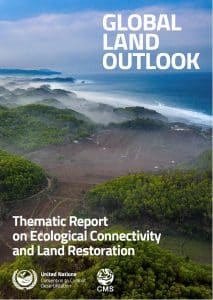
https://www.unccd.int/resources/reports/glo-thematic-report-ecological-connectivity-and-land-restoration
Nearly one-third of the Earth’s land surface has already been profoundly transformed by human activity, leaving ecosystems degraded and fragmented, according to this new report, launched on 11 October 2025 at the International Union for Conservation of Nature (IUCN) World Conservation Congress in Abu Dhabi. Produced by the United Nations Convention to Combat Desertification (UNCCD) and the Convention on the Conservation of Migratory Species of Wild Animals (CMS), the study shows that Earth’s landscapes are interconnected like a living mosaic, held together by the movement of species and the natural flow of water, nutrients and energy. But today these lifeline networks of rivers, forests and grasslands – are increasingly under threat, disrupting and diminishing the functioning of natural systems.
https://www.who.int/publications/i/item/9789240116139
The World Health Organization (WHO) warns that less than one in three countries around the world has a national policy to address the growing burden of neurological disorders, responsible for over 11 million deaths globally each year. The WHO’s new Global status report on neurology released on 14 October 2025 shows that neurological conditions now affect more than 40% of the global population – over 3 billion people. The top 10 neurological conditions contributing to death and disability as of 2021 were stroke, neonatal encephalopathy, migraine, Alzheimer’s disease and other dementias, diabetic neuropathy, meningitis, idiopathic epilepsy, neurological complications linked to preterm birth, autism spectrum disorders, and cancers of the nervous systems.
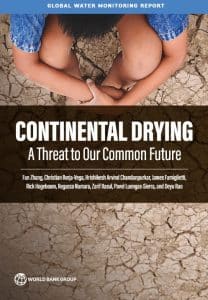
https://www.worldbank.org/en/publication/continental-drying-a-threat-to-our-common-future
The world is losing 324 billion cubic meters of freshwater every year, enough to meet the needs of 280 million people annually, according to the first edition of the Global Water Monitoring Report released on 4 November 2025 by the World Bank. These losses are driven by worsening droughts and unsustainable land and water practices, including poor pricing policies, weak coordination, deforestation, wetland degradation, and excessive irrigation. The report, provides the most detailed picture yet of global freshwater decline, and offers a roadmap for reversing the trend through smarter policy and investment.

https://unece.org/environment-policy/publications/guidance-note-implementation-source-sea-management-transboundary
Around 80% of marine pollution originates on land — from agriculture, cities, and industries — and is carried downstream into the ocean, with far reaching impacts. This can harm fisheries, tourism and communities hundreds of kilometres downstream. At the same time, issues in coastal or marine areas can also affect upstream businesses and communities. Incorporating holistic “source-to-sea management” in transboundary water cooperation is therefore pivotal to tackling the complex challenges that span land, freshwater, coastal and marine ecosystems. To support this, the first ever comprehensive guidance on implementing source-to-sea management in transboundary basins has been published on 14 October 2025. The new Guidance Note for the Implementation of Source-to-Sea Management in Transboundary Basins offers a practical pathway for countries to overcome divides between sectors and jointly manage shared waters from source to sea.

https://unece.org/info/Statistics/pub/407877
As interest in societal well-being grows, national statistical offices are increasingly called upon to measure the quality of people’s lives beyond traditional economic indicators. This publication provides a comprehensive and practical guide to measuring well-being ‘here and now’, focusing on outcomes that reflect individuals’ actual living conditions and subjective experiences. The Guidelines examine the key principles in international and national well-being frameworks and propose ten dimensions of well-being, along with a corresponding list of indicators to measure each dimension. It offers guidance on the compilation and communication of well-being indicators as well as on developing a national framework for measuring well-being. Building on existing international work, this publication serves as a reference tool for improving the relevance, comparability, and usability of well-being statistics across countries.
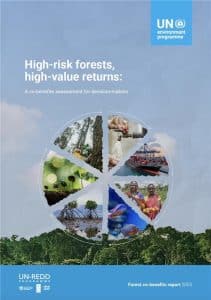
https://www.unep.org/resources/report/high-risk-forests-high-value-returns-co-benefits-assessment-decision-makers
This report examines the global significance of conserving “high-risk forests” or tropical forests with high deforestation risk, covering about 391 million hectares. It finds that these forests, while most at risk of being lost, are also among the most essential to people and the planet. Protecting them prevents major carbon emissions and delivers multiple co-benefits, including water and soil regulation, rainfall recycling, pollination, food security, and livelihoods for 25 million materially poor people who depend on fuelwood and non-timber products. Conservation of these forests also helps avoid an estimated US$81 billion in climate-related damages annually. The report highlights that these ecosystem services are particularly critical for women and Indigenous Peoples, whose well-being and resilience are closely tied to forest resources. While acknowledging potential trade-offs with agriculture and timber use, it emphasizes that integrating development and protection can maximize shared benefits. By combining spatial data on forest value and deforestation risk, the report offers policymakers, investors, and governments practical guidance to direct finance and action where it delivers the greatest climate, biodiversity, and social returns.
Inclusive policies and programmes to address homelessness: Report of the Secretary-General (A/80/316, 11 August 2025)
English, French & Spanish: https://docs.un.org/A/80/316
Homelessness is rising in every region and must be addressed as a structural crisis rooted in inequality, unaffordable housing, and weak social protection, according to this new United Nations report presented on 9 October 2025 to the General Assembly. Prepared by UN-Habitat on behalf of the UN Secretary-General, the report Inclusive Policies and Programmes to Address Homelessness urges governments to shift from short-term emergency responses to long-term, rights-based housing solutions.

Handbook: https://publications.iom.int/books/handbook-businesses-remediation-migrant-worker-grievances-conceptualizing-grievance
Operational Guidelines: https://publications.iom.int/books/operational-guidelines-businesses-remediation-migrant-worker-grievances-practical-guidance
The International Organization for Migration (IOM) has launched two new guides to help businesses respond more effectively to grievances raised by migrant workers. The resources aim to make grievance systems fairer, m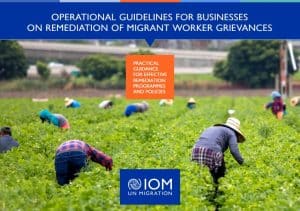
Maximizing climate and health co-benefits: an overview of existing evidence on food, energy, and urban infrastructure systems and transitions (UNU-IIGH)
https://tinyurl.com/5n757ys6
This new policy brief from the United Nations University – International Institute for Global Health (UNU-IIGH) developed in collaboration with the Alliance for Health Policy and Systems Research explores evidence-based pathways to deliver mutually reinforcing benefits for climate mitigation, public health, and equity. The brief emphasizes that while climate change mitigation and health improvement are closely aligned, not all climate actions directly enhance health or equity outcomes. Instead, focusing on health co-benefits (the positive impacts of climate policies on health) can drive more ambitious, inclusive, and sustainable climate action.
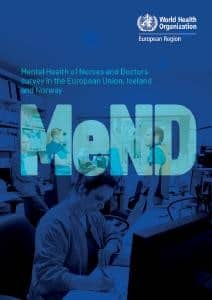
https://iris.who.int/handle/10665/383077
Doctors and nurses in Europe are working in conditions that harm their mental health and well-being, with a worrying proportion experiencing passive suicidal thoughts or thoughts of hurting themselves. That is the key finding of a landmark new WHO/Europe survey released on World Mental Health Day, 10 October 2025. The Mental Health of Nurses and Doctors (MeND) survey is the largest to date, with over 90 000 responses collected and analysed from all 27 countries of the European Union, plus Iceland and Norway. The findings, including country breakdowns, reveal the true cost of years of underinvestment in Europe’s health systems and health workforce.
Open-access repository for sustainable software options (ITU)
https://github.com/sustainable-software-guidelines/Sustainable-Software-Development
Growing reliance on artificial intelligence (AI) and ever larger data centres continue driving up energy consumption and greenhouse gas emissions, despite the potential for digitalization to cut emissions across other sectors. In a step toward long-term digital sustainability, partners from the tech industry have come together with the International Telecommunication Union (ITU) to launch an open-access repository listing sustainable software practices worldwide. The new repository enables access to practical, actionable solutions that can help digital developers, system architects, and any organization using technologies meet international standards, enhance efficiencies across their value chain, and reduce their environmental impact.
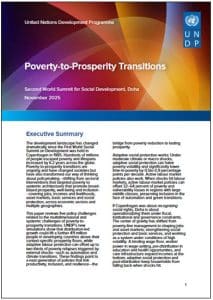
https://www.undp.org/publications/poverty-prosperity-transitions
Thirty years after the first World Summit for Social Development in Copenhagen, a new generation of social challenges demands a new kind of response. This paper, launched at the 2025 World Summit for Social Development in Doha, redefines how countries can achieve lasting prosperity in an age of climate volatility, debt pressures, and rapid technological change. Drawing on new UNDP simulations across 126 developing countries, the paper finds that distribution-led growth could lift 411 million people above context-specific prosperity floors, while adaptive social protection could halve poverty volatility and reduce time spent in poverty by up to 0.9 percentage points per decade.
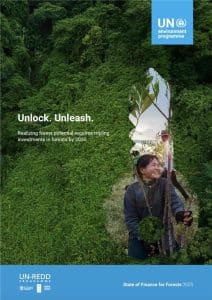
https://www.unep.org/resources/report/state-finance-forests-2025
This first State of Finance for Forests (SFF) report provides a global overview of public and private forest finance in 2023, comparing current flows with the investments needed to realize forests’ potential to address climate change, biodiversity loss, and land degradation. It integrates key private finance channels and nature-related asset classes such as certified commodity supply chains, impact investing, carbon and biodiversity markets, philanthropic funding, and private capital mobilized through public finance. The report finds that forests remain significantly underfunded: annual investment must increase from US$84 billion in 2023 to US$300 billion by 2030 and US$498 billion by 2050, leaving an annual gap of about US$216 billion.
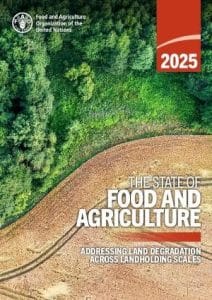
https://doi.org/10.4060/cd7067en
Approximately 1.7 billion people live in areas where crop yields are falling because of human-induced land degradation – a pervasive and silent crisis that is undermining agricultural productivity and threatening ecosystem health worldwide. The alarming figure comes from the latest The State of Food and Agriculture (SOFA) report by the Food and Agriculture Organization of the United Nations (FAO), released on 3 November 2025 during an event at its headquarters in Rome. The report delivers a clear message: land degradation is not just an environmental issue – it impacts agricultural productivity, rural livelihoods and food security. SOFA 2025 provides the most comprehensive analysis to date of how human-driven land degradation impacts crop yields, identifies global vulnerability hotspots, and examines where these losses intersect with poverty, hunger and other forms of malnutrition.
UN DESA Policy Brief No. 182: Leaving No One Behind (LNOB): A Pathway that Delivers
https://desapublications.un.org/policy-briefs/un-desa-policy-brief-no-182-leaving-no-one-behind-lnob-pathway-delivers
This policy brief highlights five dimensions where exclusion is often observed—affordability, access, governance, participation and external shocks, among others—and illustrates how governments are responding in each through policy examples and observations. Insights are drawn from 2024–2025 country implementation updates from thirteen countries that announced commitments at the 2023 SDG Summit, as well as 2025 Voluntary National Review (VNR) reports from three additional countries with such commitments. The analysis is intended to inform global policy discussions, including, as relevant, the World Social Summit under the title Second World Summit for Social Development.
https://hdl.handle.net/10986/43859
Nearly three years after ChatGPT’s launch, the generative artificial intelligence landscape remains in rapid flux. Using high-frequency website traffic data from Semrush, this paper tracks global adoption patterns for the 60 most-visited consumer-facing generative artificial intelligence tools through mid-2025.
WTO Monthly Merchandise Trade Statistics – new interactive tool
https://ttd.wto.org/en/analysis/monthly-trade-dashoard#short-term-insights
This new WTO Monthly Merchandise Trade Statistics interactive tool provides access to bilateral trade data for over 120 economies and more than 200 of their trading partners across 72 product categories. The tool, contained in the WTO’s Tariff and Trade Data portal, is updated weekly and draws on statistics from Trade Data Monitor (TDM), which sources trade data from government offices and agencies across the world.
WTO Resource Hub for Parliamentarians
https://www.wto.org/english/forums_e/parliamentarians_e/resources_hub_parliamentarians_e.htm
The Secretariat of the World Trade Organization has launched this new resource hub for parliamentarians on the WTO website, with the aim of providing legislators with timely updates on trade issues, direct access to key resources and information on training opportunities related to the multilateral trading system. The hub is intended to strengthen the link between parliaments and global trade rules, providing guidance to parliamentarians on the ratification of WTO agreements, the implementation of commitments and engagement on trade issues.
International Peace and Security
https://www.undp.org/publications/2025-voluntary-national-reviews-through-lens-peaceful-just-and-strong-institutions
The 2025 report “Voluntary National Reviews through the Lens of Peaceful, Just and Strong Institutions (SDG 16)” assesses how countries embed SDG 16 within national priorities, policies, and reporting systems. It asks whether targets on peace, justice, and strong institutions are integrated into development strategies; how progress is tracked; which data and statistical systems underpin monitoring; to what extent evidence informs policymaking; and how digital innovations are used to enhance transparency, accountability, and participation. Designed as a practical resource, the report equips governments and partners with approaches to strengthen implementation and advocacy, highlighting concrete examples of target integration, documenting measurable progress, and showcasing initiatives that advance inclusion, access to justice, and effective, accountable institutions. A dedicated focus on digitalization illustrates how open data, e-services, and participatory platforms are helping institutions become more responsive, trustworthy, and citizen-centred.
Concept note for the Security Council briefing on climate and security on the theme “Environmental impact of armed conflict and climate-driven security risks”
English, French & Spanish: https://docs.un.org/S/2025/687
Sierra Leone, in its capacity as President of the Security Council for the month of November 2025, held a thematic briefing on 6 November 2005, in connection with the item entitled “Threats to international peace and security” on climate and security on the theme “Environmental impact of armed conflict and climate-driven security risks”. This concept note was prepared for the event.
Concept note for the Security Council high-level open debate on the theme of conflict-related food insecurity, entitled “Framing the global dialogue: addressing food insecurity as a driver of conflict and ensuring food security for sustainable peace”
English, French & Spanish: https://docs.un.org/S/2025/688
Sierra Leone, in its capacity as President of the Security Council for the month of November 2025, will hold a high-level open debate on 17 November 2025, under the agenda item “Threats to international peace and security” on the theme of conflict-related food insecurity, entitled “Framing the global dialogue: addressing food insecurity as a driver of conflict and ensuring food security.” This concept note was prepared for the event.
https://linktr.ee/SheStandsForPeace
As part of the High-Level Commemoration of the 25th anniversary of United Nations Security Council Resolution 1325 on Women, Peace and Security (WPS), the African Union Commission and the United Nations Office to the African Union (UNOAU) launched the third edition of the She Stands for Peace book series in Windhoek on 16 October 2025. The She Stands for Peace series celebrates African women peacebuilders, mediators, and advocates whose work continues to shape the continent’s peace and security landscape. The third edition, produced jointly by UNOAU and the AUC, profiles a new generation of trailblazing women who are transforming their communities and driving forward the promise of inclusive and sustainable peace.
Women and peace and security: Report of the Secretary-General (S/2025/556, 5 September 2025)
English, French & Spanish: https://docs.un.org/S/2025/556
The world is experiencing the highest number of active conflicts since 1946, creating unprecedented risks and suffering for women and girls. The 2025 UN Secretary-General’s report on Women, Peace and Security warns that 676 million women now live within 50 kilometers of deadly conflict, the highest level since the 1990s. Civilian casualties among women and children quadrupled compared to the previous two-year period, and conflict-related sexual violence increased by 87 per cent in two years. Issued on the 25th anniversary of Security Council resolution 1325, which committed the international community to women’s full participation and protection in peace and security, the report warns that two decades of progress are unraveling.
see also: UN Women Infographic: UN Secretary-General’s annual report on women and peace and security (2025): https://tinyurl.com/yeyrfm5z
see also: UN Women Brief – Advancing the intersections of gender, climate, peace, and security through the women, peace and security framework: https://tinyurl.com/zmerasc3
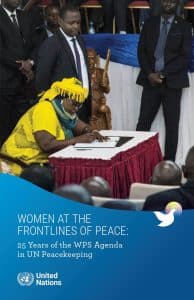
https://peacekeeping.un.org/en/women-frontlines-of-peace-25-years-of-wps-agenda-un-peacekeeping
For over 75 years, UN Peacekeeping has operated in some of the world’s most complex and fragile environments, where gender inequality is most acute, yet where the Women, Peace and Security (WPS) agenda holds transformative potential. As we commemorate the 25th anniversary of the Security Council Resolution 1325 (2000) on WPS, it remains a political and strategic imperative, central to the success of peacekeeping efforts and the pursuit of inclusive and sustainable peace. This report presents a reflection on 25 Years of the implementation of the Women Peace and Security agenda in UN Peacekeeping settings. It highlights progress, acknowledges persistent challenges, and calls for renewed commitment, focusing on women’s full, equal, and meaningful participation in peace and political processes, and women’s meaningful participation in UN Peacekeeping.
Human Rights

https://publications.iom.int/books/legal-identity-gender-and-migration-understanding-barriers-access
Access to legal identity is essential for inclusion, rights and protection. Yet, millions of people, especially women and girls, face persistent barriers. This report explores these challenges in global and local contexts and report highlights how gaps in legislation, institutional obstacles, digital divides and entrenched social norms can exclude women and girls. Based on desk research and case studies from three countries, the report reveals how legal, cultural and economic factors hinder access to civil registration and identity documents. The study emphasizes the necessity of gender-responsive reforms, targeted awareness campaigns and inclusive digitalization efforts.
Humanitarian Affairs
https://publications.iom.int/books/children-move-north-africa-and-along-key-routes-trends-vulnerabilities-and-experiences
This analysis provides an in-depthanalysis of the experiences, vulnerabilities and resilience of migrant children traversing critical migration routes across North Africa, West Africa, and the Mediterranean. Utilizing extensive quantitative data, qualitative research and frontline testimonies, the report highlights migration trends, underlying drivers, and child protection risks and trends along those routes. The report analyses key quantitative and qualitative data along migratory routes, adopting a routes-based framework that takes a multi-country, multi-stage perspective to assess migration dynamics and protection risks. It explores conditions and experiences across key geographic points – origin, transit and destination. This approach highlights how different locations and phases of migration are interlinked, shaping both the routes taken and the lived experiences of children. The key routes analysed are the Central Mediterranean, Western Mediterranean and West African Atlantic Routes.
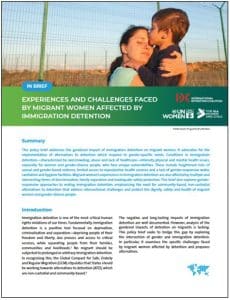
https://tinyurl.com/ynxfuk8a
Immigration detention is a punitive practice that deprives migrants of liberty and exposes women to profound risks. This policy brief examines how detention systems—marked by overcrowding, abuse, and a lack of healthcare—harm migrant women and gender-diverse people, compounding trauma and violating their human rights. It documents sexual and gender-based violence, denial of reproductive health care, and inadequate Water, Sanitation and Hygiene (WASH) facilities, all of which erode dignity and well-being. Through a feminist, intersectional lens, this policy brief highlights how structural discrimination and restrictive migration policies magnify these harms. It calls attention to the urgent need for non-custodial, community-based alternatives to detention that protect rights, provide access to services, and enable migrants to live with dignity while their cases are resolved.
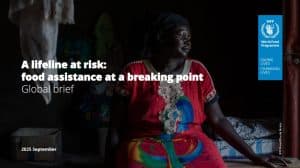
https://www.wfp.org/publications/lifeline-risk-food-assistance-breaking-point-global-brief
The United Nations World Food Programme (WFP) warned on 15 October 2025 that six of its most critical humanitarian operations are facing severe pipeline breaks by year end, putting more lives at risk, as global humanitarian funding dries up. Without additional resources, millions of vulnerable people could be left without lifesaving food assistance at a time when global hunger has soared to record highs. The warning comes at a time when this new report issued by WFP finds that cuts to WFP food assistance could push 13.7 million current food aid recipients from crisis (IPC3) to emergency (IPC4) levels of hunger – a one-third increase.
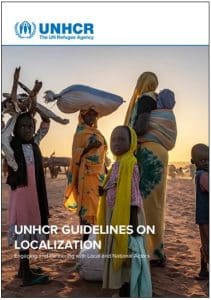
UNHCR Guidelines on Localization: Engaging and Partnering with Local and National Actors
https://data.unhcr.org/en/documents/details/119014
The UNHCR Guidelines on localization provide a common framework and structured approach to help UNHCR implement its commitments to localization, rooted in the principle of “as local as possible, as international as necessary.” They outline key principles, practical steps, and promising practices to strengthen equitable and meaningful collaboration and partnerships with local and national actors.

https://www.unhcr.org/media/working-women-led-organizations-including-those-led-forcibly-displaced-and-stateless-women
This guide provides practical guidance on promoting engagement with organizations led by women, particularly those led by forcibly displaced and stateless women. It is mainly directed at UNHCR staff, but it is of interest also to partners and to UNHCR donors and supporters.
Justice and International Law
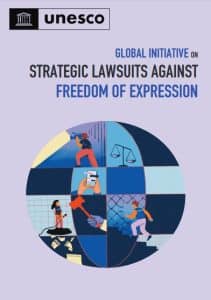
https://unesdoc.unesco.org/ark:/48223/pf0000396103
Powerful actors increasingly resort to legal action to silence media and critical voices. This new UNESCO report, launched during the 2025 IPI World Congress, reveals how strategic lawsuits against public participation (SLAPPs) exploit financial, security or cybercrime laws to intimidate journalists and restrict public debate. These practices inflict severe personal and professional harm, from reputational damage and job loss to hefty fines and imprisonment. The report outlines four main action areas to help the legal community counter these abuses: legal reform, knowledge resources, capacity-building and peer networks. Combined, these measures aim to strengthen the role of judicial actors and ensure that laws cannot be weaponized to silence journalists and stifle free expression.
Nuclear, Chemical and Conventional Weapons
https://www.doi.org/10.37559/MEWMDFZ/2025/ExtraRegRole
This report analyses the role of extraregional States, particularly the five nuclear-weapon states (NWS) under the Non-Proliferation Treaty, in establishing a future Middle East Weapons of Mass Destruction-Free Zone. It examines the protocols and relevant implications to the Middle East from established nuclear-weapon-free zones, and explores three key areas: defining the zone of application, securing negative security assurances and addressing maritime-related issues. hese challenges involve navigating sovereignty disputes, foreign military bases, maritime boundaries and NWS reservations or interpretive statements to the protocols. The report emphasizes the need for early and sustained engagement through proactive dialogue, and balancing regional security objectives with NWS strategic interests.
Drug Control, Crime Prevention and Counter-terrorism
https://unicri.org/Publication-Social-Re-Use-of-Seized-and-Confiscated-Assets-Good-Policies-and-Practices
This new guide showcases international case studies, practical recommendations, and innovative models demonstrating how the recovery and social re-use of illicitly acquired assets can strengthen the rule of law, build public trust, and advance the 2030 Agenda for Sustainable Development. The publication was funded by the European Union, through the Directorate-General for Neighbourhood and Enlargement Negotiations (DG NEAR), within the framework of the project “Support to Eastern Partnership Countries to Enhance Asset Recovery II”.
Newsletter Archive: https://unric.org/en/unric-info-point-library-newsletter-archive