
What is the crisis about?
(Updated 8 April 2026) For 50 years, Algeria has hosted Sahrawi refugees, making it the world’s 2nd longest-standing refugee situation. It is estimated that 173,600 individuals in five camps need humanitarian aid.
The so-called Sahrawi refugees live in five camps near the town of Tindouf in Western Algeria, characterized by temperatures that can exceed 50 degrees Celsius and very low rainfall. The harsh and isolated desert with frequent sandstorms, limits livelihood and economic opportunities.
Background on the situation
A conflict between Morocco and the Polisario Front over Western Sahara’s sovereignty has gone on since Spain withdrew from the area in 1975.
The political situation remains unsolved, so refugee camps have been the only alternative for Sahrawi refugees. The status quo has fuelled frustration and disillusionment, especially among young people.
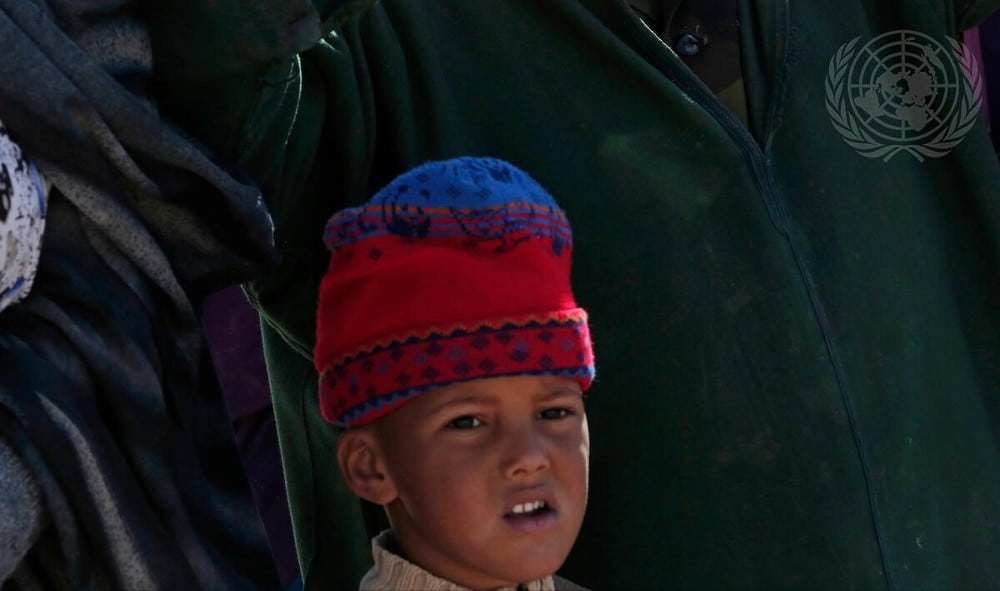
Impact on the people
60% are economically inactive, and a third are without any source of income whatsoever. Global acute malnutrition affects almost 11 percent of children aged 6 months to 59 months. Anaemia affects more than half of the children in that age bracket, and women of reproductive age.
Poor diets and lack of nutritional awareness result in problems including mineral and vitamin deficiencies and overweight/obesity in women.
The Sahrawi people are at risk of losing their culture and their identity due to the protracted nature of this political impasse.

UN Photo/Evan Schneider
UN Response to the Crisis
Western Sahara has been on the United Nations list of Non-Self-Governing Territories since 1963 following the transmission of information on Spanish Sahara by Spain under Article 73 of the Charter of the United Nations.
The United Nations Mission for the Referendum in Western Sahara (MINURSO) was established by the Security Council resolution 690 in 1991 in accordance with settlement proposals accepted in 1988 by Morocco and POLISARIO).
The settlement plan provided for a transitional period for the preparation of a referendum in which the people of Western Sahara would choose between independence and integration with Morocco. The referendum has still not taken place.
The United Nations has long been engaged in the search for a peaceful solution to the conflict over Western Sahara. On 6 October 2021, the Secretary-General appointed Staffan de Mistura as his Personal Envoy for Western Sahara to provide good offices on behalf of the Secretary‑General.
UN agencies in the field
In addition to its traditional in the refugee camps, the UN Refugee Agency has since 2002 built a “humanitarian bridge” between the Western Sahara Territory and the refugee camps in Algeria.
The World Food Programme (WFP) has been supporting the most vulnerable refugees since 1986, at the request of the Government of Algeria, covering basic food and nutrition needs.
Make a difference and get involved:
Your voice matters! Share this article on your social media and talk about this crisis in your network.
You can also choose to help through the UN agencies involved.
- Donate to WFP
- Donate to UNHCR
- (Updated 8 April 2026)