
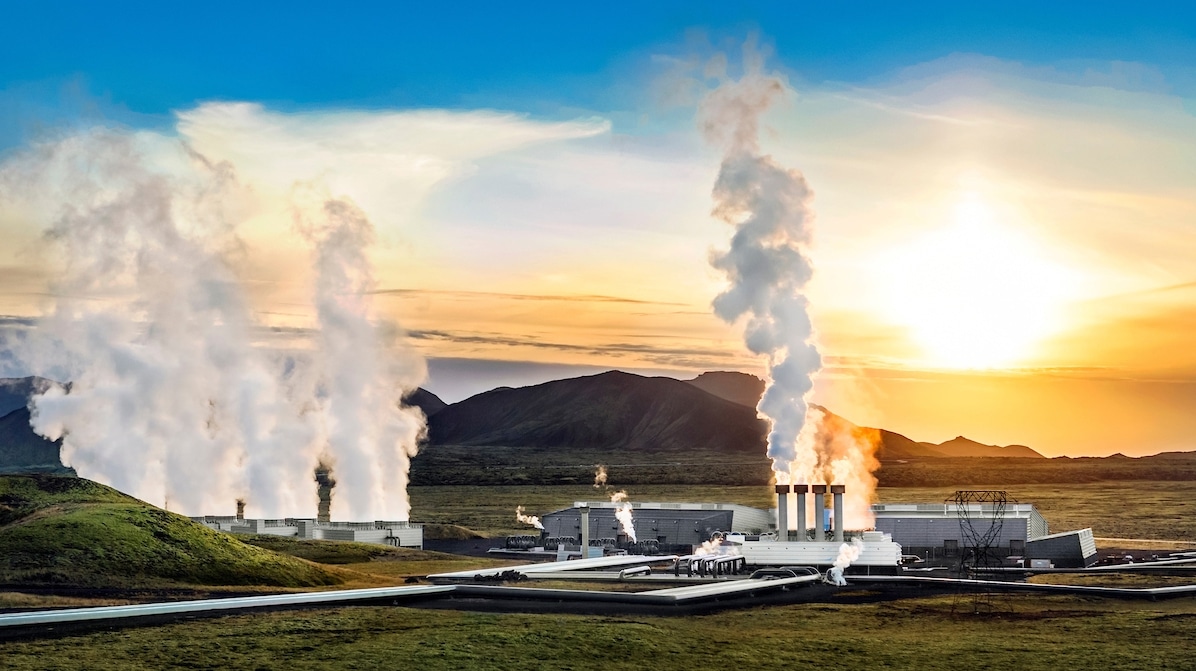
Focus has shifted to alternative sources such as geothermal energy, now that the demand for clean energies has soured due to climate change.
Superhot rock energy, a technique that is being developed by Reykjavík Energy, the energy and utility company of the Icelandic capital, in collaboration with private companies. It might pave the road for large scale electricity production from geothermal energy in the vicinity of some of the world´s biggest urban areas such as Beijing, Los Angeles and Tokyo.
According to Clean Air Task Force, 2% of the geothermal energy within 3 to 10 km of Earth’s surface could provide the equivalent of 2,000 times the current energy demand of the United States.

Superhot rocks
Superhot rock energy is different from the current use of geothermal energy. The current geothermal power stations use hot fluids already in place, but the new technique harnesses heat from hot but dry regions via the closed-loop circulation of pressurized fluid. The fluid absorbs thermal energy from the high-temperature rock surfaces and then conveys the heat to the surface for practical use.

Reykjavik Energy has vast experience includes various geothermal research projects involving deep drilling and/or extreme heat.
Geothermal energy is anything but new since it has been used for bathing and heating for centuries and increasingly to generate electricity. Reykjavik Energy, the energy and utility company of the Icelandic capital, has used geothermal water for the heating of homes for almost a century and in total 90% of all houses in Iceland enjoy this kind of heating.
Iceland: 30% of electricity
In addition to warming up the homes of the Icelandic capital in cold winters, Reykjavik Energy has also been a pioneer in using geothermal energy to produce electricity. Currently 30% of Icelandic electricity comes from geothermal sources. The reasons are obvious for any recent visitor to Iceland. Right now, volcanic activity is easily visible from airplanes 20-30 kilometers from the international airport of Keflavik and less than 40 kilometers from the capital.

The same volcanic activity that has permitted production of electricity also depends on the upwelling of hot groundwater at locations with high near-surface heat.
Paris has potential
In the greater Paris area in France, geothermal energy has been utilized for heating for more than half a century, supplying heat to 250,000 households. However, the French capital does not have the same high level of heat as Reykjavik just under the surface. Its use of geothermal energy for electricity has therefore not been possible.
This could change with the introduction of superhot rock energy technology. This implies drilling deeper than before and injecting water into superhot dry crystalline rock: 374°C or above. The injected water travels rapidly through existing rock fractures and gathers very large volumes of heat energy. The water returns to the surface as steam, which can then be used to produce power in electric turbines.
Iceland is a highly suitable place for piloting superhot rock demonstration projects, having superhot temperatures relatively close to the surface. This enables a demonstration of the technical feasibility of superhot rock geothermal energy.

“By harnessing the immense potential of superhot rock, we can deliver a sustainable, carbon-free energy solution that is not only cost-competitive but also consistently available,” says Hera Grímsdóttir, CDO of Reykjavik Energy.
From Beijing to Los Angeles via Athens
Superhot rock energy could have the potential to provide long-term, scalable, renewable baseload power in many more places around the world at a scope and cost equivalent to fossil fuels according to Kjartan Örn Ólafsson, CEO & Co-Founder of the Iceland-based Transition Labs company, a partner of Reykjavik Energy.
He points out that some of the biggest cities in the world have the potential to harness superhot rock geothermal energy at sites within 1-200 kilometers. These cities include Beijing, Jakarta, Los Angeles, Mexico City and Tokyo as well as European cities such as Athens, Hanover and Nice.

This project, with Reykjavík Energy in collaboration with Transition Labs and Clean Air Task Force, aims for a first of a kind commercial production from superhot rock and similar research is concurrently being made in New Zealand.
The advantages of superhot rock energy are obvious. It is sustainable since it is constantly generating and virtually inexhaustible. However, it has until now, been l, where deep drilling has not been necessary.
It is important, however, to point out that superhot rock energy is still under development, and more work is needed to help it reach its full potential at a cost that is competitive with mature energy technologies.


