
Bottom trawling is one of the most widespread methods of fishing used today; some 25% of the world’s fish is caught using this method. It is highly profitable because of the substantial harvests and its low selectivity regarding sizes and species caught. However, there are growing concerns about the overall ecosystem impacts of bottom trawling. While the United Nations and other organisations have highlighted the detrimental effects of bottom trawling and raised concerns about its impact on biodiversity and climate, scientific voices are more important than ever in shaping public understanding and policy responses.

UNRIC spoke with Dr. Bryce D. Stewart, marine ecologist and fisheries expert, who contributed to the landmark documentary “Ocean with David Attenborough,” screened earlier this week at the Ciné-ONU event in Brussels and ahead of the United Nations Ocean Conference, taking place in Nice from 9 to 13 June. Dr. Stewart, a Senior Research Fellow at the United Kingdom’s Marine Biological Association and an Associate Professor at the University of Plymouth, shares his firsthand insights from decades of research. He speaks about scallop dredging, the state of the seabed and offers hope for the power of the ocean to bounce back with the proper protections.
What is trawling, what is dredging, and what is the impact of these methods on marine ecosystems?
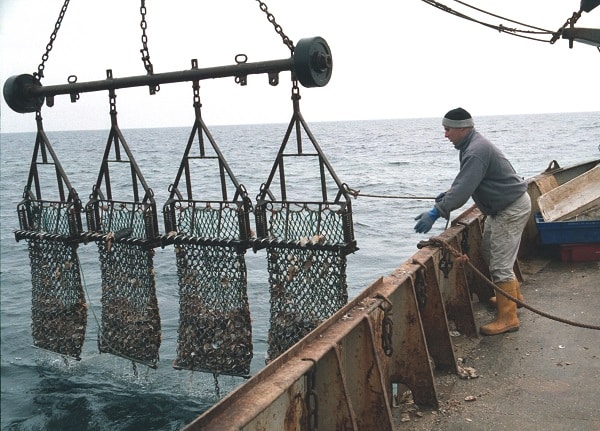
Trawling refers to towing a net behind a boat to catch fish or shellfish. It may be done near the surface (pelagic trawling) or along the seabed (demersal or bottom trawling) or even just above the bottom (semi-pelagic trawling). Dredging uses heavy metal frames with small nets attached and often metal teeth to rake the seabed for shellfish such as scallops. Bottom trawling and dredging can damage the seabed and harm the species that live there. It causes a loss of biodiversity and reduces the complexity of seabed habitats by removing structurally complex species living on the seabed. This is significant because such habitats are key nursery and feeding areas for a wide range of species, including commercially important fish and shellfish. They also result in high bycatch rates of non-target species such as crustaceans, echinoderms, fish, and even sea turtles in some areas.

How widespread is trawling, and where does it occur in the UK and EU?
Bottom-towed fishing gear like trawls and dredges accounts for about 25% of the world’s catch of wild seafood. Many of the most valuable fish species in the EU and UK, for example, Nephrops prawns, cod, haddock, and anglerfish, are predominantly caught using bottom trawls. Scallop dredging is also a major industry, particularly in the UK and France.
Tell us about your involvement in the film “Ocean with David Attenborough.”
I worked with Silverback Films and Open Planet Studios to film the sequences of scallop dredging as a part of a scientific study to better understand and help mitigate the effects of dredging on the seabed and marine life. Working with the film crew was a great experience. The crew was highly professional and committed to capturing the best footage. I also advised on the film’s script to ensure it presented a scientifically accurate depiction of marine life and conservation efforts.
How did you capture the footage of trawling?
Initially, the crew was unable to find a commercial vessel to film scallop dredging. They contacted me and asked if we could collaborate on a scientific study. Although I have researched scallop fisheries and their effects for over two decades, I knew that placing high-definition cameras on dredges would provide a range of new insights. Using standard cameras encased in steel housings, we successfully filmed dredges in action. This innovative setup revealed new insights into how dredging affects the seabed.
You have said that the ocean can “bounce back at an astonishing rate” if marine ecosystems are protected properly – what evidence from your research supports that hopeful message?
There is a wealth of scientific evidence showing that marine ecosystems can bounce back spectacularly when protected. I have also been lucky enough to witness this with my own eyes. Since 2010, I have been leading a research team on the Isle of Arran, in Scotland, which is featured in the film. The film highlights the negative effects of scallop dredging around Arran, but there is another side to the story. After a long campaign by local residents through the Community of Arran Seabed Trust, a small area in Lamlash Bay was fully protected from all fishing in 2008. Based on the rapid recovery of that area, the much larger (280 km2) South Arran Marine Protected Area (MPA) was enacted in 2016. The vast majority of this MPA is open to low-impact forms of fishing, such as potting for crabs and lobsters, and diving for scallops. However, scallop dredging is completely banned. Through our scientific surveys, we have demonstrated a dramatic 8.5-fold increase in king scallop density in the South Arran MPA after it was protected. There have also been significant increases in total species density and species richness of all marine life since protection. In the fully protected area in Lamlash Bay there is also much higher seabed coverage of kelp and other marine algae, along with hydroids, anemones, and echinoderms, than in areas still open to dredging. We also know from tagging studies that as lobster numbers build up in Lamlash Bay, they are moving out onto areas open to fishing.

How do current UK regulations around dredging and trawling affect the health of marine ecosystems? Are Marine Protected Areas (MPAs) being enforced effectively?
The UK has a very extensive network of MPAs covering 38% of the UK’s seas. While that sounds impressive and seabed habitats are now protected from trawling and dredging in several MPAs, many still lack management plans and/or appropriate enforcement. Quite a few MPAs set up to protect seabed habitats and species are still partially or totally open to trawling and dredging. Illegal fishing in MPAs is, by nature, hard to quantify. Still, it does happen, and there was recently a successful prosecution for using bottom-towed fishing gear in the Offshore Brighton Marine Conservation Zone.
What needs to change to achieve sustainable fishing and ocean recovery?

Appropriately designed, managed, and enforced MPAs have an important role to play for improving the health of our seas. MPAs can protect and recover crucial habitats and species, while also providing benefits to surrounding fisheries through the spillover of larvae, juveniles, and adult fish and shellfish. However, they must be established in collaboration with as wide a range of stakeholders as possible to ensure they are implemented fairly and equitably. This management process should be backed by scientific evidence rather than politics or lobbying. We also need to embrace and support innovation by the fishing industry as it strives to reduce its environmental impact by adapting gear and fishing practices. A great example of this is the recent discovery that scallops can be attracted into crab and lobster pots using specially designed lights – otherwise known as ‘Scallop Discos’. While this emerging method doesn’t yet provide the quantity of scallops that dredging does, it has a significantly lower impact on the seabed and the wider environment.
See also:
Ocean with David Attenborough: “If we save the sea, we save our world”