

What does the United Nations mean to the United Kingdom, one of the organisation’s founding members, and what does the UK mean to the UN?
A historic relationship

The origin of the UN Charter, the founding document of the UN, can be traced back to the Atlantic Charter, signed on 14 August 1941 by United States President Franklin D. Roosevelt and UK Prime Minister Winston Churchill. This proposed a set of common principles on which they based their “hopes for a better future for the world” and referred to the future “establishment of a wider and permanent system of general security”.
The UN Charter granted the UK permanent membership of the Security Council, along with China, France, the Russian Federation and the United States. These member states have a special voting power known as the “right to veto”.
The first-ever session of the UN General Assembly, the main policy-making organ of the UN, was held in London on 10 January 1946. A major commemoration to mark the 80th anniversary of this meeting took place in London in 2026.
In his speech to the UN General Assembly in September 2024, UK Prime Minister Keir Starmer spoke of his “deep belief in the principles of this body and the value of international cooperation.” He emphasised how “our success in Britain can never be separated from events beyond our shores. Global challenges rebound on us at home.”
Congratulating the UN as it turned 80 in 2025, His Majesty King Charles III said: “The U.N. is a powerful testament to our collective determination for a better world.”
The UK is one of the top suppliers to the UN system

The UN sources goods and services from countries across the globe, and the UK is the fifth ranked supplier country by procurement value to the UN system, according to statistics from the UN Procurement System Portal.
UK companies provided $462.57 million in goods and $389 million in services in 2024, totalling $851.6 million in contracts with the UN. This was an increase in $159 million compared to 2023.
The largest contracts with the UK are for pharmaceuticals, contraceptives and vaccines ($356.3 million); followed by management and administrative services ($101.9 million); and thirdly engineering and research services ($90.2 million).
Most UN purchases through the UK are designated for UNICEF, the UN’s children’s charity, which provides more than 45% of the world’s children with vaccines, saving three million lives each year. Thanks to vaccines, the world is close to eradicating polio. Vaccination against measles, rubella and tetanus is also bringing us towards the elimination of these diseases in most geographic areas.
The UK’s contribution to the UN general budget
The budget for the UN Secretariat totals $3.45 billion for 2026, and the UK’s contribution is $127.96 million, which it paid in full at the start of the year.
Payments to the UN are based on a state’s relative ability to pay, calculated through a series of criteria such as the size of a country’s economy and its income per capita.
The UN is also made up of a vast range of agencies, funds, programmes and peacekeeping missions which are funded separately. Member states can choose to make voluntary contributions to entities such as the World Food Programme. WFP supported more than 100 million people worldwide in 2025.
When you add up the regular UN Secretariat and peacekeeping budgets, the annual average cost of the UN for each person on the planet is around £1, roughly the same cost as a packet of crisps.
Peacekeeping and the UK

The UK is one of the top contributors to UN peacekeeping, which helps countries navigate the path from conflict to peace.
For the 2024-2025 period, the UK contributed 5.36% of the UN peacekeeping budget, ranking fifth after the United States, China, Japan, and Germany.
The UK contributes personnel to various UN peacekeeping operations globally. Since 2019, this has included operations in Cyprus, the Democratic Republic of the Congo, Lebanon, Libya, Mali, Somalia and South Sudan.
As of 31 December 2025, the UK had 249 personnel seconded to work with UN peacekeeping. The majority (219) are deployed to the UN Peacekeeping Force in Cyprus, set up in 1964 to prevent fighting between the Greek Cypriot and Turkish Cypriot communities on the island.
Brits and the UK in the UN system
In 2024, 2435 Brits were working for the UN Secretariat and UN agencies, funds and programmes across the globe. Former British diplomat Tom Fletcher is the UN Humanitarian Chief. Guy Ryder of the United Kingdom is Under-Secretary-General for Policy. Former British Prime Minister Gordon Brown is Special Envoy of the Secretary-General for Global Education.
In addition, a total of 378 staff work for the UN in the UK.
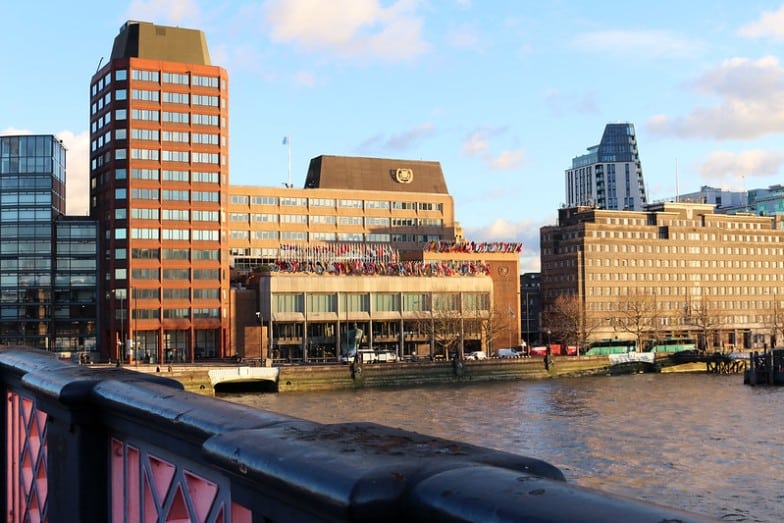
The majority (253) work at the International Maritime Organization, the UN’s specialised agency responsible for the safety and security of shipping, which is headquartered in London. Other UN organisations with staff in the UK include the International Organization for Migration (IOM), the World Health Organization (WHO), the UN Refugee Agency (UNHCR), the UN agency for children, UNICEF, the World Food Programme (WFP) and UNFPA, the UN sexual and reproductive health agency. The United Nations Association–UK, or UNA-UK, is a charity independent from the UN that supports the aims of the United Nations.
More than 60 land-based UNESCO Designated Sites exist in the United Kingdom, Crown Dependencies and Overseas Territories. Canterbury Cathedral, Stonehenge and the Royal Botanical Gardens, Kew are among the UK’s UNESCO World Heritage Sites. Glasgow and Liverpool are UNESCO Cities of music.
The UN’s influence in the UK
The Sustainable Development Goals are a set of 17 goals adopted by all UN Member States to end poverty, protect the planet and ensure people and planet enjoy peace and prosperity by 2030. Across the UK, cities, businesses, charities, education institutions, media organisations, to name but a few, incorporate the SDGs into their operations.
The city of Bristol, for example, has mapped its goals to each SDG. In Leicester, De Montfort University is a United Nations Academic Impact SDG Hub for Sustainable Development Goal 11: Sustainable Cities and Communities. It leads a network that aims to build better cities and communities across the world.
British media conglomerate Sky Group, Open Planet and Studio Silver Back are among the British media that are members of the SDG Media Compact, a UN alliance of news and entertainment companies to accelerate progress towards achieving the SDGs.
Education is one of the key SDGs, and British Council, the UK’s international organisation for cultural relations and educational opportunities, has collaborated with the UN to increase education on the goals.
Glasgow was the location for the 2021 UN Climate Climate Change Conference (COP26), which brought together 120 world leaders and over 40,000 participants and led to the signing of the Glasgow Climate Pact.
Familiar faces at the UN

Many well-known faces in the UK are ambassadors for the UN system. Among them is David Beckham, a Goodwill Ambassador for UNICEF since 2005. Olympic gold medallist Mo Farah is a Global Goodwill Ambassador for IOM, the International Organization for Migration. Singer Ellie Goulding is a Global Environmental Ambassador for the UN Environment Programme.
Powerful storytelling is essential to communicate the UN’s values and goals. Broadcaster Sir David Attenborough is a United Nations Champion of the Earth and released his latest documentary, ‘Ocean with David Attenborough’ ahead of the 2025 UN Ocean Conference. Meanwhile British filmmaker Richard Curtis is a UN Advocate for the SDGs and has led efforts to communicate about the goals to people all over the world. Former UN Secretaries-General Kofi Annan and Ban Ki-moon joined international non-governmental organisation The Elders which has its headquarters in London.
Find out more: